
Legislative Activity
Track Mark's sponsored bills, co-sponsored legislation, and voting record
This Act updates the federal definition of a manufactured home by removing the permanent chassis requirement and mandates that states certify equal treatment for these homes across financing, taxes, and sales.
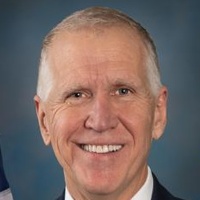
Thom Tillis
Senator
NC
Thom Tillis
Senator
NC
The Housing Supply Expansion Act of 2025 updates federal law by removing the requirement that manufactured homes must sit on a permanent chassis to qualify under federal safety standards. This Act mandates that all states must certify to HUD within one year that they treat these homes equally across financing, taxation, and sales regulations. States failing to certify risk having the sale of non-chassis manufactured homes prohibited within their borders. The law also requires annual compliance updates and federal coordination to ensure consistent treatment of these housing types.
This act mandates that HUD and USDA create a joint agreement to streamline environmental reviews and processes for housing projects funded by both agencies.

Jerry Moran
Senator
KS
Jerry Moran
Senator
KS
The Streamlining Rural Housing Act of 2025 directs the Departments of Housing and Urban Development (HUD) and Agriculture (USDA) to create a joint agreement to coordinate environmental reviews for housing projects they jointly fund. This aims to eliminate redundant processes by establishing a lead agency and allowing for the mutual acceptance of environmental documentation. The bill also mandates the creation of an advisory group composed of various housing stakeholders to ensure efficient implementation without compromising resident safety or environmental standards.
This Act establishes a public database for appraisal data to promote fairness and grants consumers the right to challenge potentially flawed or discriminatory property valuations.
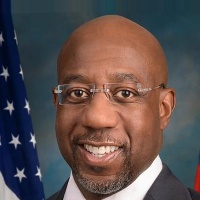
Raphael Warnock
Senator
GA
Raphael Warnock
Senator
GA
The Appraisal Modernization Act establishes a public database containing detailed historical and ongoing real estate appraisal data from federal mortgage entities to promote transparency and combat bias. It also grants consumers the right to request a reconsideration of value or a second appraisal if they believe their home's valuation was unsupported, flawed, or discriminatory. Lenders must follow specific procedures for handling these consumer challenges and ordering new appraisals when necessary.
The Access to Birth Control Act mandates that pharmacies must promptly dispense or facilitate access to contraception and related medications, prohibiting interference or misinformation.
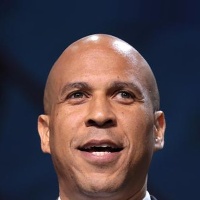
Cory Booker
Senator
NJ
Cory Booker
Senator
NJ
The Access to Birth Control Act aims to ensure that individuals can easily obtain FDA-approved contraception and related medications without systemic barriers. This legislation mandates that pharmacies must promptly dispense birth control or immediately facilitate a transfer or order if the item is out of stock. Furthermore, the bill prohibits intimidation, interference, or misleading information when customers seek these essential healthcare services.
This bill authorizes the creation and sale of commemorative coins for the 2028 Los Angeles Olympic and Paralympic Games and the 2034 Salt Lake City Winter Olympic and Paralympic Games to help fund their hosting and legacy programs.

Alejandro Padilla
Senator
CA
Alejandro Padilla
Senator
CA
This Act authorizes the creation and sale of commemorative coins to celebrate the upcoming 2028 Summer Olympic and Paralympic Games in Los Angeles and the 2034 Winter Olympic and Paralympic Games in Salt Lake City. The Secretary of the Treasury is empowered to mint various denominations of gold, silver, and clad coins for each event, with designs reflecting American participation. A mandatory surcharge on each coin sold will directly fund the respective organizing committees for the Games and their legacy programs, provided the government recovers all minting costs first.
This bill reauthorizes and extends dedicated federal funding for Type 1 Diabetes research and diabetes programs for Native Americans through fiscal year 2027.

Susan Collins
Senator
ME
Susan Collins
Senator
ME
The Special Diabetes Program Reauthorization Act of 2025 extends critical funding for both Type 1 Diabetes research programs and diabetes programs serving Native Americans. This legislation secures specific annual appropriations of \$160 million for fiscal years 2026 and 2027, along with a transition allocation in late 2027. The bill ensures continued financial support for these vital public health initiatives through the end of 2027.
This resolution officially recognizes June 2025 as LGBTQ Pride Month to honor the community's history, acknowledge ongoing struggles, and celebrate their contributions to the nation.

Tina Smith
Senator
MN
Tina Smith
Senator
MN
This resolution officially recognizes June 2025 as LGBTQ Pride Month to honor the history, struggles, and significant contributions of the LGBTQ community in the United States. It acknowledges past and ongoing discrimination while celebrating key legal milestones toward equality. The Senate encourages the nation to use this month to learn about inequality and celebrate the community's achievements both domestically and globally.
This Act extends the deadline for certain legally married couples to amend past tax filings to claim joint filing benefits based on Revenue Ruling 2013-17.

Elizabeth Warren
Senator
MA
Elizabeth Warren
Senator
MA
The Refund Equality Act of 2025 extends the deadline for certain legally married couples to amend past tax returns filed separately before September 16, 2013, based on Revenue Ruling 2013-17. This allows these couples to now file jointly for those years, extending the statute of limitations for filing the joint return and claiming related refunds or credits. These extensions are strictly limited to changes resulting from recognizing their marital status for federal tax purposes.
This bill awards the Congressional Gold Medal to honor the extraordinary service and bravery of Army and Navy nurses who served during World War II.

Tammy Baldwin
Senator
WI
Tammy Baldwin
Senator
WI
This bill authorizes the creation and presentation of a Congressional Gold Medal to honor the extraordinary service and sacrifice of Army and Navy nurses who served during World War II. The medal recognizes their bravery in combat zones, dedication despite facing discrimination, and critical role in saving countless lives. The Secretary of the Treasury will strike the medal, which will ultimately be housed at the Smithsonian Institution. The Act also permits the sale of bronze duplicates to cover production costs.
This Act establishes the Intelligence Community Technology Bridge Fund to accelerate the transition of promising technologies from research to operational use by supporting small businesses and nontraditional contractors.

John Cornyn
Senator
TX
John Cornyn
Senator
TX
The Intelligence Community Technology Bridge Act of 2025 establishes a dedicated fund to accelerate the transition of promising technologies from research into operational use within the Intelligence Community (IC). This fund allows the IC to provide financial assistance, including grants or equity investments, to businesses and nonprofits developing mission-critical solutions. Priority for this funding will be given to small businesses and nontraditional defense contractors to broaden the supplier base.
The Equal Dignity for Married Taxpayers Act of 2025 systematically updates the Internal Revenue Code to use gender-neutral language when referring to married couples and spouses, without altering existing tax rules.

Ron Wyden
Senator
OR
Ron Wyden
Senator
OR
The Equal Dignity for Married Taxpayers Act of 2025 is a legislative update designed to modernize the Internal Revenue Code by ensuring gender-neutral language is used when referencing married taxpayers and their spouses. This bill systematically replaces outdated gendered terms like "husband and wife" or "his" with inclusive terms such as "married couple" and "spouse." The changes are purely linguistic, ensuring consistency across tax rules without altering any existing tax liabilities or deductions.
The Women’s Health Protection Act of 2025 establishes a federal right to access abortion services without medically unnecessary state restrictions and protects the right to travel for care.
Tammy Baldwin
Senator
WI
Tammy Baldwin
Senator
WI
The Women’s Health Protection Act of 2025 establishes a federal right to access abortion services without facing state-imposed restrictions that are not medically necessary for comparable procedures. This Act prohibits states from enacting targeted regulations that create hurdles for abortion access, protects the right to travel out of state for care, and allows individuals and the Attorney General to sue to enforce these protections. Ultimately, the bill aims to ensure equitable access to reproductive healthcare decisions based on a provider's good-faith medical judgment.
This bill eases the tax burden on Intelligence Community employees by expanding moving expense deductions and excluding related reimbursements from taxable income following required relocations.

Tom Cotton
Senator
AR
Tom Cotton
Senator
AR
The Intelligence Community Workforce Agility Protection Act of 2025 aims to support intelligence community personnel by simplifying the tax treatment of required relocations. This bill allows intelligence community employees and appointees to utilize specific moving expense deductions when changing duty stations. Furthermore, it ensures that reimbursements for qualified moving expenses related to these official relocations are excluded from taxable income.
The Election Worker Protection Act of 2025 establishes federal grants for state election worker recruitment and safety, enhances penalties for threatening or harassing election workers, and provides resources to protect their personal information.

Amy Klobuchar
Senator
MN
Amy Klobuchar
Senator
MN
The Election Worker Protection Act of 2025 establishes federal grants to states for recruiting, training, and securing election workers, while also enhancing the Department of Justice's resources to address threats. The bill creates new federal crimes prohibiting the harassment, doxxing, and intimidation of election workers involved in federal elections. Furthermore, it empowers election officials to remove disruptive poll observers and strengthens protections for election worker personal information.
The SECURE Act creates a pathway to permanent residency for certain immigrants with Temporary Protected Status or Deferred Enforced Departure history, while strictly protecting their application information from general immigration enforcement.

Chris Van Hollen
Senator
MD
Chris Van Hollen
Senator
MD
The Safe Environment from Countries Under Repression and Emergency (SECURE) Act creates a new pathway for certain immigrants with Temporary Protected Status (TPS) history to apply for permanent residency within the U.S. This legislation also establishes strict confidentiality protections for applicants against immigration enforcement actions based on their application information. Furthermore, the bill mandates detailed reporting to Congress regarding the conditions in countries whose TPS designations are terminated. Finally, it ensures that eligibility for this new status does not preclude applicants from seeking other immigration benefits.
This bill reauthorizes the Healthy Food Financing Initiative by establishing specific annual funding levels through fiscal year 2029, sourced from the Commodity Credit Corporation.

Kirsten Gillibrand
Senator
NY
Kirsten Gillibrand
Senator
NY
The Healthy Food Financing Initiative Reauthorization Act of 2025 secures dedicated funding for the Healthy Food Financing Initiative through fiscal year 2029 and beyond. This bill authorizes the Secretary to allocate increasing amounts, starting at \$25 million in 2025 and stabilizing at \$50 million annually from 2029 onward. The funding will be sourced from the Commodity Credit Corporation.
This Act modernizes tax-exempt bond financing by expanding eligible manufacturing facilities, significantly increasing bond limits, and raising financing caps for first-time farmers, with future adjustments indexed to inflation.

Joni Ernst
Senator
IA
Joni Ernst
Senator
IA
The Modernizing Agricultural and Manufacturing Bonds Act significantly increases the dollar limits for tax-exempt bonds used for manufacturing projects, expanding the definition of eligible facilities to include certain intangible property creation. Additionally, the bill raises the financing cap for first-time farmers accessing private activity bonds from $\$450,000$ to $\$1,000,000$. Both sets of increased limits will be automatically adjusted for inflation starting in future years.
This resolution designates June 2025 as "Great Outdoors Month" to recognize the significant economic and health benefits of outdoor recreation.
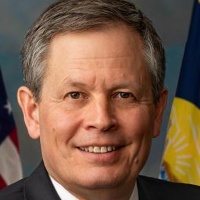
Steve Daines
Senator
MT
Steve Daines
Senator
MT
This resolution officially designates June 2025 as "Great Outdoors Month" to celebrate the significant economic impact and health benefits of outdoor recreation. It recognizes that the outdoor sector contributes trillions to the U.S. economy and supports millions of jobs. The measure encourages all Americans to responsibly enjoy outdoor activities during this designated month and beyond.
The Insurrection Act of 2025 establishes strict, multi-step requirements and timelines for the President to use the Armed Forces domestically, making military intervention a last resort subject to immediate Congressional review and judicial oversight.

Richard Blumenthal
Senator
CT
Richard Blumenthal
Senator
CT
The Insurrection Act of 2025 completely rewrites the rules governing the President's authority to deploy the U.S. Armed Forces domestically, establishing military intervention as a strict last resort. It mandates specific, severe conditions—such as overwhelming insurrection or widespread denial of constitutional rights—and requires the President to issue a detailed proclamation and consult with Congress before deployment. Any initial deployment automatically expires after seven days unless Congress passes a resolution of approval.
The Keeping Obstetrics Local Act aims to stabilize rural maternity care through enhanced hospital funding, expand postpartum coverage under Medicaid, invest in the maternal health workforce, and mandate transparency regarding unit closures.
Ron Wyden
Senator
OR
Ron Wyden
Senator
OR
The Keeping Obstetrics Local Act is a comprehensive bill designed to stabilize rural and safety-net hospitals providing maternity care through enhanced financial support, including minimum Medicaid payment rates and anchor payments. It also expands continuous Medicaid and CHIP coverage for new mothers for a full year postpartum and invests in the maternal health workforce by supporting emergency staffing and simplifying cross-state provider enrollment. Finally, the act mandates greater transparency by requiring hospitals to give advance public notice of obstetric unit closures and report more detailed operational data to Medicare.