
Legislative Activity
Track Mark's sponsored bills, co-sponsored legislation, and voting record
The ADVERSARIES Act mandates a federal review to assess national security risks and export control vulnerabilities posed by U.S.-domiciled affiliates of restricted foreign entities.
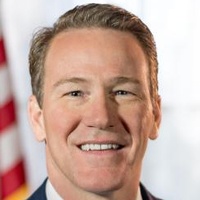
Jon Husted
Senator
OH
Jon Husted
Senator
OH
The ADVERSARIES Act mandates a comprehensive government review to assess how U.S.-based affiliates of restricted foreign entities may be exploiting loopholes to bypass export controls. This legislation aims to identify national security risks posed by foreign adversary access to sensitive technology and services. The findings will be reported to Congress to help strengthen U.S. export regulations and protect critical infrastructure.
This bill establishes a ten-year statute of limitations for both civil and criminal enforcement actions related to violations of the Export Control Reform Act of 2018.
Jon Husted
Senator
OH
Jon Husted
Senator
OH
This bill amends the Export Control Reform Act of 2018 to establish a ten-year statute of limitations for both civil and criminal enforcement actions. This ensures that legal proceedings for export control violations must be initiated within a decade of the date the violation occurred.
The BIS STRENGTH Act authorizes the Bureau of Industry and Security to recruit and appoint highly qualified outside experts to address critical technical expertise gaps in national security and export control.
Jon Husted
Senator
OH
Jon Husted
Senator
OH
The BIS STRENGTH Act authorizes the Bureau of Industry and Security (BIS) to bypass standard civil service hiring requirements to recruit up to 25 highly qualified outside experts for specialized roles. This temporary authority aims to address critical knowledge gaps in export controls and technological oversight. The bill also mandates annual reporting to Congress to ensure transparency and evaluate the impact of these appointments on the agency's mission.
The China AI Power Report Act requires federal agencies to produce comprehensive annual reports assessing the People's Republic of China's artificial intelligence capabilities, semiconductor supply chains, and national security implications.
Jon Husted
Senator
OH
Jon Husted
Senator
OH
The China AI Power Report Act requires the Secretary of Commerce and the Secretary of State to produce comprehensive annual reports assessing the People's Republic of China’s (PRC) advancements in artificial intelligence. These reports will evaluate critical areas including AI chip development, semiconductor fabrication, AI model capabilities, and the effectiveness of U.S. export controls. By analyzing these technological developments and their national security implications, the Act aims to provide Congress with the data necessary to monitor and address the PRC's growing AI power.
This bill authorizes the Commandant of the Coast Guard to enter into intergovernmental support agreements to improve operational efficiency and community collaboration.

Christopher Murphy
Senator
CT
Christopher Murphy
Senator
CT
The Strengthening Coast Guard Communities Act of 2026 authorizes the Commandant of the Coast Guard to enter into intergovernmental support agreements to improve operational efficiency. This legislation streamlines administrative processes while ensuring congressional oversight by requiring notification to relevant committees whenever this authority is exercised.
This bill officially renames the USPS facility at 10660 Page Avenue in Fairfax, Virginia, as the "Congressman Gerald E. Connolly Post Office Building."
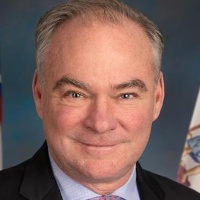
Timothy Kaine
Senator
VA
Timothy Kaine
Senator
VA
This bill officially renames the United States Postal Service facility located at 10660 Page Avenue in Fairfax, Virginia. The building will now be known as the "Congressman Gerald E. Connolly Post Office Building." This designation applies to all current and future federal references to the post office.
This resolution designates August 22–30, 2026, as "National Park Week" to celebrate the history, economic impact, and preservation of the National Park System.
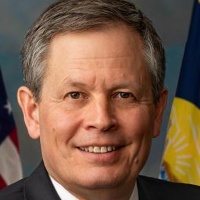
Steve Daines
Senator
MT
Steve Daines
Senator
MT
This resolution designates August 22 through August 30, 2026, as "National Park Week" to honor the National Park Service’s history and ongoing contributions. It recognizes the vital role these parks play in recreation, education, and the economy while encouraging the public to celebrate and support the preservation of our national treasures.
This resolution designates August 16, 2026, as "National Airborne Day" to honor the historic contributions and sacrifices of United States airborne forces.
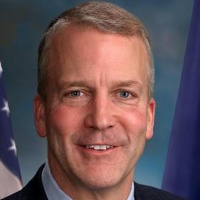
Dan Sullivan
Senator
AK
Dan Sullivan
Senator
AK
This resolution designates August 16, 2026, as "National Airborne Day" to honor the historic contributions and sacrifices of United States airborne forces. It recognizes the anniversary of the first official Army parachute jump and pays tribute to the bravery of airborne units serving from World War II to the present day.
This bill directs the CDC to conduct a comprehensive study on suicide risk factors among construction workers and provide Congress with policy recommendations to improve prevention efforts.

Catherine Cortez Masto
Senator
NV
Catherine Cortez Masto
Senator
NV
The Constructing the Path to Suicide Prevention Act directs the CDC to conduct a comprehensive study on the suicide risk factors specifically faced by construction workers. This legislation aims to identify key employment, organizational, and individual contributors to these tragedies. Ultimately, the findings will be used to provide Congress with evidence-based policy recommendations to improve mental health support and suicide prevention within the construction industry.
The Civil Nuclear Export Act of 2026 expands the Export-Import Bank’s authority to finance civil nuclear energy projects and increases lending capacity for transformational exports to compete with China.

James Risch
Senator
ID
James Risch
Senator
ID
The Civil Nuclear Export Act of 2026 updates the Export-Import Bank Act to facilitate the international financing of civil nuclear energy projects. The bill expands the Bank’s lending authority and includes civil nuclear technology under the Program on China and Transformational Exports. Additionally, it provides new flexibility for the Bank’s lending caps and default rate monitoring to support these strategic exports.
This bill establishes a federal duty of care and safety requirements for online platforms regarding minors, mandates algorithmic transparency and user choice regarding content personalization, and sets enforcement mechanisms.

Marsha Blackburn
Senator
TN
Marsha Blackburn
Senator
TN
The Kids Online Safety Act establishes a comprehensive "duty of care" requiring online platforms to design features that mitigate specific harms to minors, such as those related to mental health and exploitation. It mandates that platforms provide minors with default, restrictive safety settings and robust parental controls over data sharing and recommendations. Furthermore, the legislation demands significant transparency regarding algorithmic ranking systems and grants the FTC enforcement authority.
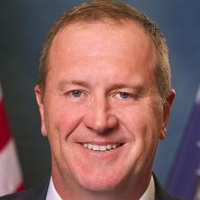
The National Plan for Epilepsy Act directs the Secretary of Health and Human Services to review and improve federal epilepsy research, prevention, and care programs to enhance health outcomes for those affected by the condition.
Eric Schmitt
Senator
MO
Eric Schmitt
Senator
MO
The National Plan for Epilepsy Act directs the Secretary of Health and Human Services to conduct a comprehensive review of federal epilepsy programs, research, and care strategies. By collaborating with stakeholders and identifying knowledge gaps, the Act aims to improve health outcomes, enhance treatment, and better support individuals living with epilepsy. The resulting report will provide Congress with actionable recommendations to strengthen federal efforts and coordination in epilepsy prevention and care.
This bill mandates gender-neutral occupational standards across the Armed Forces, prohibits gender-based assignment exclusions, and requires enhanced congressional oversight and reporting on military performance standards and operational effectiveness.

Mazie Hirono
Senator
HI
Mazie Hirono
Senator
HI
This bill mandates gender-neutral standards for all occupational specialties and assignments across the U.S. Armed Forces, prohibiting gender-based exclusions. It establishes rigorous, science-based performance requirements and increases transparency through enhanced annual reporting and congressional oversight. Additionally, the legislation requires the Department of Defense to provide Congress with comprehensive, unredacted reviews regarding the operational effectiveness of ground combat units.
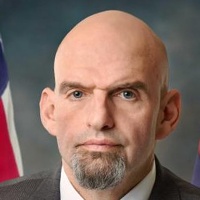
This bill authorizes a feasibility study for designating Washington's 1753 diplomatic mission route from Williamsburg, Virginia, to Fort LeBoeuf, Pennsylvania, as a National Historic Trail.
John Fetterman
Senator
PA
John Fetterman
Senator
PA
This act authorizes a feasibility study for designating the route of George Washington's 1753 diplomatic mission as a National Historic Trail. The proposed trail spans approximately 500 miles from Williamsburg, Virginia, to Fort LeBoeuf, Pennsylvania. This study will assess the historical significance and potential for national recognition of this critical pre-Revolutionary War journey.
This bill mandates the Secretary of the Interior to issue a specific right-of-way for an emergency exit from the Blue Ridge Parkway near Wintergreen, contingent upon meeting three certification requirements.
Timothy Kaine
Senator
VA
Timothy Kaine
Senator
VA
The Wintergreen Emergency Egress Act mandates the Secretary of the Interior to issue a specific right-of-way for an emergency exit from the Blue Ridge Parkway near Milepost 9.6. This issuance is conditional upon the Secretary certifying that alternative non-federal routes have been evaluated, a fire behavior analysis is complete, and all necessary environmental reviews are finalized. This legislation aims to secure a vital emergency egress route for the Wintergreen area.
This Act expands the Shenandoah Valley Battlefields National Historic District into parts of West Virginia and additional Virginia counties while authorizing ongoing funding and administrative support for the region's preservation.

Jim Justice
Senator
WV
Jim Justice
Senator
WV
The Shenandoah Valley Battlefields National Historic District Boundary Expansion and Partnership Act of 2026 expands the existing historic district to include four additional counties across Virginia and West Virginia. This legislation updates the district's management framework, authorizes dedicated annual funding for operations and land preservation, and requires a report on replicating this successful partnership model elsewhere in the National Park System.
The Right to IVF Act of 2026 establishes a federal right to fertility treatments, mandates comprehensive insurance coverage for ART and IUI, and expands access to these services for veterans and federal employees.

Tammy Duckworth
Senator
IL
Tammy Duckworth
Senator
IL
The Right to IVF Act of 2026 establishes a federal right to access assisted reproductive technology (ART) and intrauterine insemination (IUI) by overriding restrictive state laws. The bill further expands family-building support by mandating comprehensive fertility coverage for military service members, veterans, federal employees, and those enrolled in private insurance, Medicare, or Medicaid. These measures aim to ensure equitable, affordable access to fertility treatments nationwide.
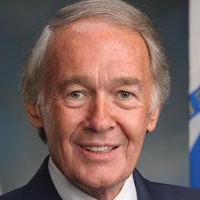
This bill mandates a six-year extension for the sale of the Alzheimer’s semipostal stamp, with all proceeds dedicated to funding medical research at the National Institutes of Health.
Edward Markey
Senator
MA
Edward Markey
Senator
MA
This bill mandates that the United States Postal Service continue selling the Alzheimer’s semipostal stamp for an additional six years. Proceeds from these sales will be transferred to the National Institutes of Health to support ongoing medical research into Alzheimer’s disease.
This Act directs CISA to establish resources, a voluntary incident registry, and a technology improvement program to strengthen cybersecurity protections for K–12 schools and educational agencies.
Marsha Blackburn
Senator
TN
Marsha Blackburn
Senator
TN
The Enhancing K–12 Cybersecurity Act directs the Cybersecurity and Infrastructure Security Agency (CISA) to strengthen the digital defenses of the nation’s schools. The bill establishes a centralized information exchange for cybersecurity best practices, creates a voluntary incident registry to track emerging threats, and launches a technology improvement program to provide schools with essential security tools and training.
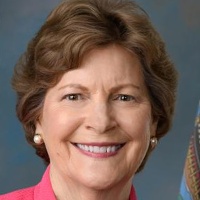
The INSULIN Act of 2026 aims to lower healthcare costs by capping out-of-pocket insulin prices, increasing pharmacy benefit manager transparency, accelerating generic and biosimilar competition, and expanding access programs for the uninsured.
Jeanne Shaheen
Senator
NH
Jeanne Shaheen
Senator
NH
The Improving Needed Safeguards for Users of Lifesaving Insulin Now Act of 2026 aims to lower insulin costs by capping out-of-pocket expenses for insured patients and increasing transparency for pharmacy benefit managers. The bill also fosters competition by accelerating the approval of generic and biosimilar drugs and establishes new support programs to provide affordable insulin access for uninsured individuals.