Legislative Activity
Track Peter's sponsored bills, co-sponsored legislation, and voting record
This bill blocks major oil and gas companies from obtaining new Gulf of Mexico leases until they renegotiate older, royalty-free leases to include price-based royalty payments.
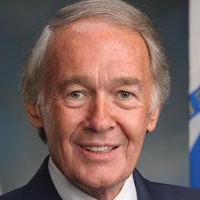
Edward Markey
Senator
MA
Edward Markey
Senator
MA
The Stop Giving Big Oil Free Money Act aims to eliminate unwarranted financial benefits for certain oil and gas companies operating in the Gulf of Mexico. It prevents companies holding specific older leases that lack price caps from obtaining new leases unless they renegotiate those existing leases to include mandatory royalty payments above certain price thresholds. Furthermore, the bill adjusts the terms for royalty suspension on some existing leases, setting new price triggers that will take effect in late 2026.
This Act explicitly defines tar sands products as crude oil for excise tax purposes and grants the Secretary authority to include other hazardous fuel products under existing oil tax rules.
Edward Markey
Senator
MA
Edward Markey
Senator
MA
The Tar Sands Tax Loophole Elimination Act amends the tax code to explicitly classify tar sands products as "crude oil" for excise tax purposes. This ensures that various oil sands derivatives are subject to existing petroleum excise taxes. The bill also grants the Secretary authority to include other fuel products under these tax rules if they pose a significant environmental hazard when spilled.
This bill grants the FCC expanded authority to directly pursue unpaid fines for telemarketing violations and strengthens its power to regulate automated telephone equipment.
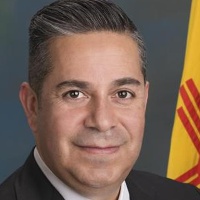
Ben Luján
Senator
NM
Ben Luján
Senator
NM
The FCC Legal Enforcement Act grants the Federal Communications Commission (FCC) the authority to take over the collection of unpaid fines, particularly those related to illegal telemarketing calls, if the Department of Justice fails to act within 120 days. This legislation also explicitly empowers the FCC to create new regulations to protect consumers from unwanted automated telephone equipment and robocalls. Furthermore, the FCC must prioritize enforcing the collection of the largest outstanding fines exceeding $25 million.
This bill establishes the Dairy Nutrition Incentive Program to encourage SNAP recipients to purchase more nutrient-rich dairy products through point-of-sale incentives administered by eligible entities.

Amy Klobuchar
Senator
MN
Amy Klobuchar
Senator
MN
The Dairy Nutrition Incentive Program Act of 2025 establishes a new program to encourage households receiving SNAP benefits to purchase more naturally nutrient-rich dairy products through point-of-sale incentives. The Secretary of Agriculture will award grants to eligible entities to run these projects, prioritizing those that maximize direct incentives for participants. The law mandates rigorous, independent evaluation of all projects to scientifically measure the impact on dairy purchases, with required reporting to Congress.
The AMERICA Act mandates structural separation, transparency, and fiduciary duties for major players in the digital advertising ecosystem to enhance competition and protect customers.
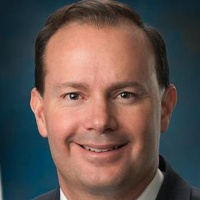
Mike Lee
Senator
UT
Mike Lee
Senator
UT
The AMERICA Act aims to increase transparency and competition in the digital advertising market by imposing strict ownership separation requirements on large industry players. It establishes new fiduciary duties for digital advertising brokers, requiring them to act in their customers' best interests and provide detailed execution data upon request. The bill also mandates public routing disclosures and grants the Attorney General enforcement power, including the ability to seek damages and oversee required divestitures.
The INFORM Act of 2025 mandates that the Postal Service provide detailed public notice in post office lobbies regarding any nationwide changes to postal services before and after implementation.
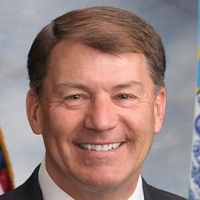
Mike Rounds
Senator
SD
Mike Rounds
Senator
SD
The INFORM Act of 2025 establishes new, clearer notification requirements for the Postal Service when implementing significant nationwide changes to postal services. This legislation mandates that the Postal Service must submit proposals to the Postal Regulatory Commission and simultaneously post detailed public notices in affected post office lobbies. These notices must remain visible for at least 30 days after the change takes effect, ensuring the public is fully informed about the service alterations, impact, and opportunities for feedback.
The Safe Schools Improvement Act mandates that states receiving federal funding establish clear anti-bullying policies, reporting systems, and evidence-based intervention methods to create safer learning environments for all students.
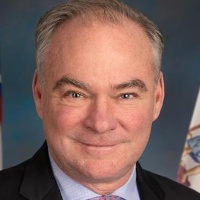
Timothy Kaine
Senator
VA
Timothy Kaine
Senator
VA
The Safe Schools Improvement Act aims to combat bullying and harassment in schools by requiring states that accept federal funding to establish clear anti-bullying policies, define prohibited conduct based on protected characteristics, and implement systems for reporting and tracking incidents. This legislation mandates that local districts inform all stakeholders about prohibited conduct and establish formal complaint processes. Furthermore, the bill requires regular state and federal evaluations to assess the effectiveness of these measures in reducing harmful behavior while respecting existing non-discrimination laws and free speech rights.
This Act establishes the Baltic Security Initiative to deepen U.S. military cooperation with Estonia, Latvia, and Lithuania to deter Russian aggression and enhance regional defense capabilities through 2028 with \$350 million authorized annually.

Richard Durbin
Senator
IL
Richard Durbin
Senator
IL
The Baltic Security Initiative Act establishes a new program to deepen U.S. military cooperation with Estonia, Latvia, and Lithuania to deter Russian aggression and implement NATO strategy. This initiative will focus on long-term projects like enhancing air defense, improving cyber resilience, and developing regional military capabilities. The Secretary of Defense must submit a strategy outlining these efforts and is authorized $350 million annually from FY2026 through FY2028 to support the program.
This Act cancels all existing school meal debt for households and grants the Secretary of Agriculture permanent authority to address future meal debt, while also expanding funding for certain nutrition programs using Commodity Credit Corporation funds.
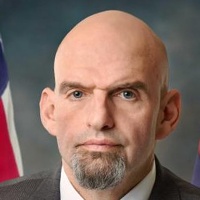
John Fetterman
Senator
PA
John Fetterman
Senator
PA
The School Lunch Debt Cancellation Act of 2025 mandates the Secretary of Agriculture to completely cancel all outstanding household debt for school lunches and breakfasts within 180 days of enactment. The bill ensures schools are reimbursed for the canceled debt using funds from the Commodity Credit Corporation. Furthermore, it grants the Secretary permanent authority to cancel future meal debt under similar repayment terms.
This Act establishes stricter penalties and new verification processes to combat fraudulent enrollment practices by agents and brokers in Affordable Care Act health plans.

Ron Wyden
Senator
OR
Ron Wyden
Senator
OR
The Insurance Fraud Accountability Act aims to significantly reduce fraudulent enrollment in health plans under the Affordable Care Act. This bill establishes much stiffer financial and criminal penalties for agents and brokers who knowingly provide false enrollment information. Furthermore, it mandates a new verification process on federal Exchanges to ensure consumer consent and proper data accuracy before commissions are paid. The legislation also tightens oversight on the entire enrollment chain involving agents, brokers, and marketing organizations.
The PLAN for Broadband Act establishes a national strategy and implementation plan to synchronize federal broadband programs, streamline permitting, and improve coordination among agencies to expand high-speed, affordable internet access.

Roger Wicker
Senator
MS
Roger Wicker
Senator
MS
The **PLAN for Broadband Act** mandates the creation of a National Strategy to synchronize and improve the efficiency of all federal broadband programs. This strategy will be followed by a detailed Implementation Plan to reduce duplication, streamline permitting processes on federal lands, and ensure responsible use of funding. The bill also requires federal agencies to track and report on the processing times for broadband infrastructure applications on government property.
This Act prohibits large-scale single-family rental property owners from deducting interest and depreciation expenses on their properties unless they sell to an individual owner-occupant or a qualified affordable housing nonprofit.
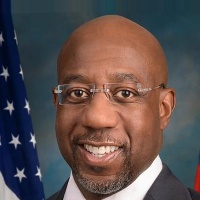
Raphael Warnock
Senator
GA
Raphael Warnock
Senator
GA
The Stop Predatory Investing Act targets large-scale single-family rental property owners who own 50 or more homes. This legislation disallows these "disqualified owners" from deducting interest paid on loans for these rental properties and bans them from claiming standard depreciation deductions. Exceptions allow for interest and depreciation deductions only if the property is sold to an individual owner-occupant or a qualified affordable housing nonprofit.
The Medicare Dental, Hearing, and Vision Expansion Act of 2025 adds comprehensive dental, hearing aid, and routine vision care coverage to Medicare starting in 2027, while phasing in the premium impact for beneficiaries.
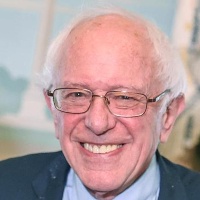
Bernard Sanders
Senator
VT
Bernard Sanders
Senator
VT
The Medicare Dental, Hearing, and Vision Expansion Act of 2025 significantly broadens Medicare coverage by adding comprehensive benefits for dental, hearing aids, and routine vision care starting in 2027. This legislation establishes new fee schedules, payment rules, and utilization limits for these services under Medicare Part B. Furthermore, the bill includes a five-year phase-in plan (2026–2030) to gradually incorporate the cost of the new dental coverage into the standard Part B premium calculation for enrollees aged 65 and older.
This bill reauthorizes and significantly reforms the HOME Investment Partnerships Program over five years, increasing funding, adjusting administrative rules, and strengthening enforcement for affordable housing initiatives.

Catherine Cortez Masto
Senator
NV
Catherine Cortez Masto
Senator
NV
The HOME Investment Partnerships Reauthorization and Improvement Act of 2025 reauthorizes the HOME program for five years with increased funding and reforms to administrative rules and eligibility. The bill strengthens accountability through stricter property inspections and penalties while offering greater flexibility for local jurisdictions and homeowners facing hardship. It also establishes a new federal loan guarantee program to finance affordable housing construction and preservation.
The Stop Comstock Act aims to modernize and streamline federal laws concerning obscene materials by removing outdated and redundant language from criminal and tariff codes.

Tina Smith
Senator
MN
Tina Smith
Senator
MN
The Stop Comstock Act aims to modernize and streamline federal laws concerning obscene materials. This legislation removes outdated and overly broad language, such as "indecent" and "immoral," from various sections of the U.S. Code and the Tariff Act. The bill focuses on technical clean-up to clarify existing statutes regarding the distribution and importation of materials.
The American Housing and Economic Mobility Act of 2025 is a sweeping bill designed to lower housing costs, increase affordability through massive federal investment and regulatory reform, address historical housing discrimination, and enact significant changes to federal estate and gift taxation.

Elizabeth Warren
Senator
MA
Elizabeth Warren
Senator
MA
The American Housing and Economic Mobility Act of 2025 is a comprehensive bill designed to aggressively tackle the national housing crisis through multiple avenues. It seeks to make housing more affordable by injecting massive funding into federal programs and incentivizing local regulatory reform to boost construction. Furthermore, the Act aims to reverse historical inequities by establishing new assistance for first-generation homebuyers and overhauling community reinvestment rules for banks. Finally, it strengthens anti-discrimination protections and enacts significant reforms to the federal estate and gift tax structure.
This bill prohibits the sale and export of specified defense articles to the United Arab Emirates until the President certifies the UAE has ceased material support for the Rapid Support Forces in Sudan.

Chris Van Hollen
Senator
MD
Chris Van Hollen
Senator
MD
This bill prohibits the sale and export licensing of specified U.S. defense articles to the United Arab Emirates (UAE). This restriction remains in effect until the President certifies to Congress that the UAE has ceased providing material support to the Rapid Support Forces operating in Sudan. The ban covers a broad range of major military equipment listed in the U.S. Munitions List.
This bill directs the U.S. International Trade Commission to investigate and report to Congress on the economic effects of proposed or announced U.S. tariffs on Mexico and Canada.

Angela Alsobrooks
Senator
MD
Angela Alsobrooks
Senator
MD
The Tariff Transparency Act of 2025 directs the U.S. International Trade Commission (USITC) to investigate and report on the economic effects of proposed or announced tariffs on trade with Mexico and Canada. This comprehensive report must detail the impact of potential duties on consumer prices, the fallout from retaliatory measures, and the costs associated with ongoing trade uncertainty. The USITC is required to submit its findings to Congress within one year of the Act's enactment.
This resolution seeks to block the sale of certain U.S. defense articles and services, including bombs and guidance kits, to the Israeli government.
Bernard Sanders
Senator
VT
Bernard Sanders
Senator
VT
This joint resolution seeks to block the proposed sale of specific defense articles and services to the Israeli government. The resolution specifically targets the sale of thousands of 1,000-pound bomb bodies, as well as Joint Direct Attack Munition (JDAM) guidance kits designed for use with these bombs. It also halts related support services from both the U.S. government and contractors. Effectively, the resolution disapproves of the U.S. proceeding with the Transmittal No. 2526 sale of these items to Israel.
This bill prohibits the shackling and mandates the release of pregnant and postpartum noncitizens in immigration custody, except in extraordinary circumstances, while ensuring humane treatment and comprehensive medical care.
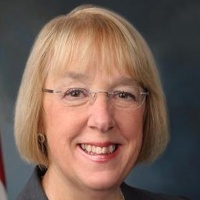
Patty Murray
Senator
WA
Patty Murray
Senator
WA
The Stop Shackling and Detaining Pregnant Women Act aims to significantly restrict the detention of pregnant and postpartum noncitizens in immigration custody. It mandates immediate testing for pregnancy upon intake and establishes a strong presumption against detention unless extraordinary, case-by-case public safety risks are proven. Furthermore, the bill strictly limits the use of physical restraints on pregnant detainees and requires comprehensive medical care, including reproductive health services, alongside detailed public reporting on detention statistics and restraint incidents.