Legislative Activity
Track Peter's sponsored bills, co-sponsored legislation, and voting record
This bill denies businesses tax deductions for expenses incurred while attempting to influence employees regarding union organizing activities.
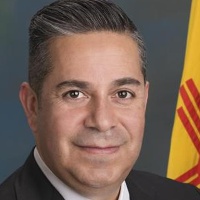
Ben Luján
Senator
NM
Ben Luján
Senator
NM
The No Tax Breaks for Union Busting (NTBUB) Act aims to disallow federal tax deductions for employer expenditures used to influence employees regarding union organizing activities. This legislation targets significant corporate spending on anti-union consultants and captive audience meetings, arguing that taxpayers should not subsidize efforts to interfere with workers' rights to organize. The bill also introduces strict new reporting requirements and penalties for companies that fail to disclose these influence expenditures.
This bill establishes the Interagency Patent Coordination and Improvement Act of 2025 to enhance coordination and efficiency across federal agencies regarding patents.

Richard Durbin
Senator
IL
Richard Durbin
Senator
IL
The Interagency Patent Coordination and Improvement Act of 2025 aims to enhance collaboration and streamline processes between federal agencies involved in the patent system. This legislation seeks to improve the efficiency and effectiveness of patent coordination across the government.
The Fair Day in Court for Kids Act of 2025 mandates government-funded legal representation for unaccompanied children in immigration proceedings, ensures timely access to case files, and guarantees counsel access to detained noncitizens.

Mazie Hirono
Senator
HI
Mazie Hirono
Senator
HI
The Fair Day in Court for Kids Act of 2025 aims to improve efficiency and fairness in immigration courts by significantly increasing access to legal representation for unaccompanied children. This bill mandates the government to provide counsel for these children at no cost through all stages of removal proceedings. Furthermore, it ensures noncitizens receive their case files promptly and establishes new standards for lawyer access to detention facilities and required annual reporting on legal representation outcomes.
This Act bans anticompetitive "pay-for-delay" settlements between brand-name and generic/biosimilar drug manufacturers to preserve consumer access to lower-cost medications.

Amy Klobuchar
Senator
MN
Amy Klobuchar
Senator
MN
The Preserve Access to Affordable Generics and Biosimilars Act aims to increase competition in the pharmaceutical market by banning anticompetitive "pay-for-delay" settlements between brand-name drug manufacturers and generic or biosimilar makers. This legislation empowers the Federal Trade Commission (FTC) to penalize companies that make deals to illegally delay cheaper drug entry. Furthermore, the bill enhances reporting requirements and clarifies the FTC's authority to enforce these new competition rules.
This Act mandates the Federal Trade Commission to study and report on the practices of pharmaceutical supply chain intermediaries, particularly Pharmacy Benefit Managers, to promote competition and transparency in drug pricing.
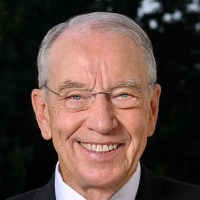
Charles Grassley
Senator
IA
Charles Grassley
Senator
IA
The Prescription Pricing for the People Act of 2025 directs the Federal Trade Commission (FTC) to conduct a comprehensive study of the pharmaceutical supply chain, focusing heavily on the practices of Pharmacy Benefit Managers (PBMs). This investigation will examine issues like pricing fairness, patient steering, data misuse, and formulary manipulation. The FTC must deliver a final report to Congress detailing its findings, planned enforcement actions, and legislative recommendations to increase transparency and competition in the drug market.
The Federal Firearm Licensee Act significantly overhauls regulations for firearm dealers by mandating stricter physical security, enhanced inventory tracking, electronic recordkeeping, increased fees, and new enforcement powers for the Attorney General.
Richard Durbin
Senator
IL
Richard Durbin
Senator
IL
The Federal Firearm Licensee Act significantly overhauls regulations for firearm dealers by mandating stricter physical security, requiring quarterly inventory checks, and increasing associated licensing fees. The bill also repeals outdated restrictions on ATF data sharing and establishes new compliance and recordkeeping standards, including mandatory video surveillance for sales. Furthermore, it introduces new licensing and operational requirements for online firearm transfer facilitators.
This Act establishes a 60-day congressional review period, requiring presidential notification and approval for any new or increased import duties.

Maria Cantwell
Senator
WA
Maria Cantwell
Senator
WA
The Trade Review Act of 2025 establishes a mandatory 60-day congressional review period for any new or increased import duties imposed by the President. The President must notify Congress within 48 hours of imposing such duties, detailing the justification and impact. Unless Congress passes a joint resolution of approval within 60 days, the new or increased duty automatically expires.
This Act dramatically increases federal funding for state child care entitlements and establishes a new $5 billion grant program to target improvements in the child care workforce, supply, and quality in areas of greatest need.

Ron Wyden
Senator
OR
Ron Wyden
Senator
OR
The Building Child Care for a Better Future Act dramatically increases federal funding for state child care block grants, appropriating \$20 billion for FY 2026 and adjusting for inflation thereafter. It also establishes a new \$5 billion annual grant program to target improvements in child care workforce, supply, and quality in identified high-need areas. Recipients of these funds must submit detailed plans outlining how they will boost services, support providers, and increase staff compensation in underserved communities. All funds must supplement existing spending and adhere to strict reporting and evaluation requirements to ensure improved access and quality.
This bill authorizes the minting and sale of special commemorative gold and silver coins to mark the 25th anniversary of the September 11th attacks, with all surcharges benefiting the National September 11 Memorial and Museum.

Kirsten Gillibrand
Senator
NY
Kirsten Gillibrand
Senator
NY
This Act authorizes the minting and issuance of special commemorative gold and silver coins to mark the 25th anniversary of the September 11, 2001, terrorist attacks. The coins will honor the victims, first responders, and the National September 11 Memorial and Museum. All surcharges collected from the sale of these coins must be paid directly to the National September 11 Memorial and Museum to support its operations.
The Stop STALLING Act empowers the FTC to penalize companies that file baseless petitions to unfairly delay the approval of legitimate generic drug applications.
Amy Klobuchar
Senator
MN
Amy Klobuchar
Senator
MN
The Stop STALLING Act empowers the Federal Trade Commission (FTC) to take action against companies that file baseless petitions solely to delay competitors' generic drug applications. This legislation defines such filings as unfair competition, allowing the FTC to seek significant civil penalties against violators. The bill ensures that if one part is struck down, the remainder of the law remains in effect.
This bill mandates specific, increasing federal funding levels for IDEA programs (excluding preschool) from fiscal year 2026 through 2035 and beyond, based on student counts and average per-pupil spending.

Chris Van Hollen
Senator
MD
Chris Van Hollen
Senator
MD
The IDEA Full Funding Act mandates specific federal funding levels for the Individuals with Disabilities Education Act (IDEA) programs, excluding preschool services, starting in fiscal year 2026 through 2035 and beyond. This legislation establishes a formula that requires the government to allocate the greater of a set dollar amount or a percentage of a calculated amount based on the number of students served and average per-pupil spending. The goal is to significantly increase and stabilize federal contributions to special education services over the next decade.
This Act restores the full deductibility of union dues above-the-line and brings back the itemized deduction for certain other employee business expenses through 2025.

Tina Smith
Senator
MN
Tina Smith
Senator
MN
The Tax Fairness for Workers Act aims to restore certain federal tax deductions for employees. This bill makes union dues fully deductible "above-the-line," meaning they can be claimed without itemizing. Additionally, it temporarily allows employees to itemize specific work-related business expenses through the end of 2025.
This Act establishes the Rural Development Hospital Technical Assistance Program to provide essential operational and financial planning support to eligible rural healthcare facilities to ensure their stability and continued service.
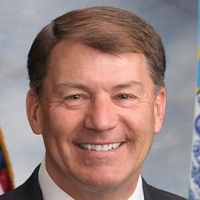
Mike Rounds
Senator
SD
Mike Rounds
Senator
SD
The Rural Development Hospital Technical Assistance Program Act of 2025 establishes a new program within the Department of Agriculture to provide crucial technical assistance to eligible rural healthcare facilities. This program aims to ensure the financial stability and operational efficiency of these hospitals, ultimately strengthening rural healthcare delivery and preventing facility closures. The Secretary of Agriculture is authorized to appropriate up to $2 million annually through fiscal year 2029 to fund these targeted services.
This joint resolution terminates the national emergency declared by the President on February 1, 2025, to impose duties on articles imported from Canada.
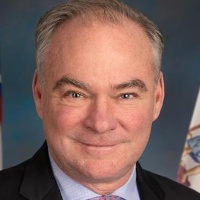
Timothy Kaine
Senator
VA
Timothy Kaine
Senator
VA
This joint resolution officially terminates the national emergency declared by the President on February 1, 2025, regarding duties on articles imported from Canada. By doing so, it ends the special powers and rules activated under that specific declaration. This action effectively cancels the emergency order.
The CONNECT for Health Act of 2025 permanently removes geographic barriers to Medicare telehealth, enhances program integrity through targeted oversight, and establishes new supports to improve quality and access for beneficiaries.
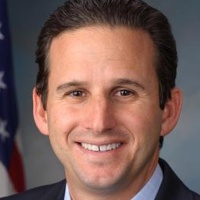
Brian Schatz
Senator
HI
Brian Schatz
Senator
HI
The CONNECT for Health Act of 2025 aims to significantly expand access to telehealth services under Medicare by permanently removing outdated geographic restrictions and broadening provider eligibility. The bill also enhances program integrity by dedicating new funding to oversight and establishing educational outreach for providers with unusual billing patterns. Finally, it mandates new resources, training, and public data reporting to ensure the quality and accessibility of virtual care for all beneficiaries.
This resolution designates March 27, 2025, as "National Women in Agriculture Day" to recognize and celebrate the vital contributions of women across the U.S. agricultural sector.

Joni Ernst
Senator
IA
Joni Ernst
Senator
IA
This resolution officially designates March 27, 2025, as "National Women in Agriculture Day." It recognizes the vital and substantial contributions of the over 1.2 million female agricultural producers to the U.S. economy and global food supply. The measure encourages citizens to acknowledge the leadership, mentorship, and economic impact women have across the entire agricultural sector.
This resolution designates April 2025 as "Preserving and Protecting Local News Month" to recognize the critical importance and alarming decline of local journalism across the United States.
Brian Schatz
Senator
HI
Brian Schatz
Senator
HI
This resolution officially designates April 2025 as "Preserving and Protecting Local News Month" to recognize the critical importance of local journalism. It highlights the severe decline of local news outlets across the country, which has created numerous "news deserts." The measure affirms that local news is vital for a healthy democracy and community engagement.
This Act establishes the "Savings Opportunity and Affordable Repayment plan," a new income-contingent student loan repayment option with lower payments based on poverty levels and accelerated forgiveness timelines for undergraduate loans.

Jeff Merkley
Senator
OR
Jeff Merkley
Senator
OR
The Savings Opportunity and Affordable Repayment Act establishes a new income-contingent student loan repayment plan designed to lower monthly payments based on family size and income relative to the poverty line. This plan offers loan forgiveness after 10 years for undergraduate-only debt or 15 years for debt including graduate loans. Furthermore, the bill eliminates interest accrual that exceeds the borrower's calculated monthly payment.
This Act repeals a recent Executive Order and prohibits the Department of Government Efficiency from using federal funds to access state voter registration or immigration data related to elections.

Alejandro Padilla
Senator
CA
Alejandro Padilla
Senator
CA
The Defending America’s Future Elections Act aims to nullify Executive Order 14248, which Congress finds unconstitutional and an overreach of presidential power regarding election administration. This bill explicitly repeals the executive order and prohibits the use of federal funds by the Department of Government Efficiency to access sensitive state voter registration and immigration data. Ultimately, the Act seeks to reaffirm that Congress and the states, not the President, control federal election procedures.
This Act mandates the Department of Labor to establish comprehensive, enforceable workplace violence prevention standards for healthcare and social service workers, including required written plans, risk assessments, and rigorous training.

Tammy Baldwin
Senator
WI
Tammy Baldwin
Senator
WI
This Act mandates the Department of Labor to establish comprehensive, enforceable standards for preventing workplace violence in healthcare and social service settings. It requires covered employers to develop and implement written prevention plans, conduct risk assessments, provide thorough training, and maintain detailed incident logs. The legislation also amends the Social Security Act to ensure facilities receiving Medicare funds comply with these new federal workplace safety requirements.