Legislative Activity
Track Peter's sponsored bills, co-sponsored legislation, and voting record
This act exempts small business concerns from specific import duties or requirements imposed by presidential declarations of a national emergency.
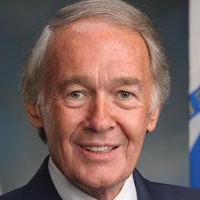
Edward Markey
Senator
MA
Edward Markey
Senator
MA
The Small Business Liberation Act exempts qualifying small business concerns from certain import duties or requirements imposed by the President under a national emergency declaration. This provision ensures that small businesses are shielded from specific trade restrictions enacted during national emergencies.
This Act prohibits the importation, sale, possession, and breeding of certain nonhuman primate species by adding them to the list of restricted animals under the Lacey Act.
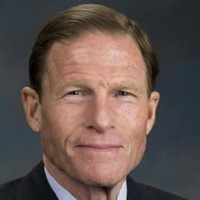
Richard Blumenthal
Senator
CT
Richard Blumenthal
Senator
CT
The Captive Primate Safety Act amends the Lacey Act to prohibit the importation, sale, breeding, and possession of certain nonhuman primate species across state lines. This new law makes most commercial and private activities involving these primates illegal, with limited exceptions for pre-existing, registered owners and authorized research facilities. The Secretary of the Interior is tasked with developing enforcement regulations within 180 days of enactment.
This bill establishes a system to cap the U.S. retail list price of prescription drugs and biological products based on the average price in six other wealthy nations, with penalties for overcharging.

Joshua Hawley
Senator
MO
Joshua Hawley
Senator
MO
The Fair Prescription Drug Prices for Americans Act establishes a system to cap the U.S. retail list price for prescription drugs and biological products. This cap is set at no more than the average retail list price of that item across six wealthy nations: Canada, France, Germany, Italy, Japan, and the United Kingdom. Manufacturers charging above this international ceiling will face steep financial penalties calculated as ten times the overcharge amount per unit sold. The Secretary of HHS is tasked with calculating the international average price annually and implementing the necessary regulations.
This Senate resolution urges the Secretary of Health and Human Services to withdraw any proposal that reduces public notice and comment opportunities for new regulations.

Ron Wyden
Senator
OR
Ron Wyden
Senator
OR
This Senate resolution urges the Secretary of Health and Human Services (HHS) to withdraw a proposed rule that would reduce opportunities for public notice and comment on new regulations. The Senate emphasizes that robust public input is essential for creating fair and effective policies that impact millions of Americans. It calls for HHS to maintain the established 54-year practice of allowing stakeholders to provide feedback before finalizing significant rule changes.
The Better CARE for Animals Act of 2025 strengthens the Animal Welfare Act by clarifying definitions, expanding enforcement powers for the Secretary of Agriculture and the Attorney General, imposing stricter penalties for violations, and ensuring seized animal care costs are covered.
Richard Blumenthal
Senator
CT
Richard Blumenthal
Senator
CT
The Better CARE for Animals Act of 2025 significantly strengthens the enforcement of the Animal Welfare Act by clarifying definitions and expanding inspection powers. It grants the Attorney General direct authority to sue violators, seek injunctions, and impose substantial daily civil penalties. Furthermore, the bill allows for the seizure of animals involved in violations and mandates that collected penalty funds be used to reimburse temporary animal care costs.
This act directs federal agencies to integrate Artificial Intelligence into weather, water, and space weather forecasting to improve accuracy, timeliness, and response to extreme weather and wildfires.
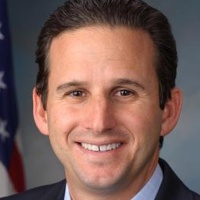
Brian Schatz
Senator
HI
Brian Schatz
Senator
HI
The TAME Extreme Weather and Wildfires Act aims to revolutionize weather, water, and space weather forecasting by integrating Artificial Intelligence (AI) into federal agencies. This legislation mandates the development of AI weather models, comprehensive training datasets, and improved risk communication to enhance forecast accuracy and timeliness. It also emphasizes maintaining traditional forecasting capabilities while fostering public-private partnerships to accelerate the adoption of these advanced tools for hazard mitigation.
This joint resolution terminates the national emergency declared on April 2, 2025, which was used to impose global tariffs.
Ron Wyden
Senator
OR
Ron Wyden
Senator
OR
This joint resolution terminates the national emergency declared on April 2, 2025, which was used to impose global tariffs. Upon enactment, this resolution immediately ends the emergency declaration and revokes any special powers or funding activated by that order.
This bill bans the manufacture, sale, and transfer of specified semiautomatic assault weapons and large-capacity ammunition feeding devices while grandfathering existing possession and requiring background checks for future transfers of those grandfathered items.
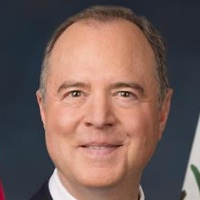
Adam Schiff
Senator
CA
Adam Schiff
Senator
CA
The Assault Weapons Ban of 2025 comprehensively defines and bans the manufacture, sale, and transfer of specific semiautomatic assault weapons and large-capacity ammunition feeding devices. It grandfathers existing possessions but requires background checks for all future private transfers of these previously owned weapons. The bill also permits the use of federal Byrne grant funds for state-run buy-back programs targeting these banned items.
This resolution expresses strong support for designating April 2025 as "Fair Chance Jobs Month" to promote employment and remove systemic barriers for formerly incarcerated individuals.
Edward Markey
Senator
MA
Edward Markey
Senator
MA
This resolution expresses strong support for designating April 2025 as "Fair Chance Jobs Month." It highlights the significant employment barriers faced by the millions of Americans with past conviction records. The bill champions efforts to remove structural roadblocks, expand job training, and connect formerly incarcerated individuals with stable employment opportunities.
This bill mandates that states must fully replace Electronic Benefit Transfer (EBT) benefits stolen from SNAP recipients due to skimming or hacking.

John Fetterman
Senator
PA
John Fetterman
Senator
PA
The Fairness for Victims of SNAP Skimming Act of 2025 ensures that states must fully replace Electronic Benefit Transfer (EBT) benefits stolen from SNAP recipients due to skimming or hacking. This legislation mandates that the replacement amount must exactly equal the total value of the stolen benefits. The goal is to guarantee that victims of EBT theft are made whole regarding their lost food assistance.
This bill increases the maximum railroad track maintenance tax credit, adjusts future limits for inflation, and extends the eligibility period for claimed expenditures.

Michael Crapo
Senator
ID
Michael Crapo
Senator
ID
This bill modifies the railroad track maintenance credit by significantly increasing the maximum credit amount per mile from $\$3,500$ to $\$6,100$. It also updates the eligibility period for qualifying expenditures and mandates that the new credit limit will be adjusted for inflation starting in 2026. These changes are designed to provide greater financial support for ongoing railroad infrastructure upkeep.
This act officially designates approximately 1.56 million acres of the Arctic National Wildlife Refuge as protected wilderness under the National Wilderness Preservation System.
Edward Markey
Senator
MA
Edward Markey
Senator
MA
The Arctic Refuge Protection Act of 2025 officially designates approximately 1.56 million acres of Alaska's Arctic National Wildlife Refuge as protected wilderness. This action places the specified area under the strict protections of the National Wilderness Preservation System. This designation overrides conflicting regulations within the National Wildlife Refuge System.
This comprehensive bill establishes a universal, single-payer "Medicare for All" national health insurance program, eliminating most private insurance duplication while expanding benefits, eliminating most cost-sharing, and restructuring provider payments under a national budget.
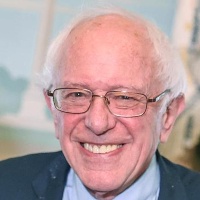
Bernard Sanders
Senator
VT
Bernard Sanders
Senator
VT
The Medicare for All Act establishes a comprehensive, universal national health insurance program to cover all U.S. residents, eliminating most private insurance duplication and nearly all out-of-pocket costs for covered services. The bill mandates extensive benefits, including long-term care, and institutes a strict National Health Budget to control overall spending through global payments for facilities and negotiated drug prices. It also includes a transition period that immediately enhances current Medicare by eliminating deductibles and adding dental, vision, and hearing benefits.
The Affordable Housing Credit Improvement Act of 2025 overhauls state allocation formulas, reforms tenant eligibility and credit determination rules, and enhances assistance for Native American and rural housing projects under the Low-Income Housing Tax Credit program.

Todd Young
Senator
IN
Todd Young
Senator
IN
The Affordable Housing Credit Improvement Act of 2025 comprehensively reforms the Low-Income Housing Tax Credit program by updating state allocation formulas based on population and inflation, and by modifying tenant eligibility rules to protect vulnerable residents. The bill also introduces significant changes for property owners regarding casualty loss, acquisition costs, and incentives for serving extremely low-income households. Finally, it directs efforts toward increasing program transparency and encouraging local governments to reform restrictive housing policies.
The Agriculture Resilience Act of 2025 mandates aggressive national emission reduction targets for agriculture, triples federal research funding, reforms conservation programs to prioritize soil health, and supports climate-smart farming and local food systems.
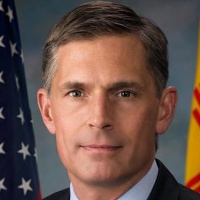
Martin Heinrich
Senator
NM
Martin Heinrich
Senator
NM
The Agriculture Resilience Act of 2025 establishes aggressive national goals for the agricultural sector to achieve net-zero greenhouse gas emissions by 2040 through mandated emission reductions, massive increases in climate and soil health research funding, and significant overhauls to conservation and crop insurance programs. The bill also focuses on bolstering farm viability by supporting local food systems, strengthening meat labeling integrity, and expanding on-farm renewable energy adoption. Overall, it directs substantial federal resources toward incentivizing climate-smart farming practices while placing new restrictions on land conversion and waste management.
The Equality Act comprehensively expands federal non-discrimination protections across public accommodations, employment, housing, credit, and jury service to explicitly include sexual orientation and gender identity.

Jeff Merkley
Senator
OR
Jeff Merkley
Senator
OR
The Equality Act comprehensively amends federal civil rights laws to explicitly prohibit discrimination based on sexual orientation and gender identity across key areas of American life. This legislation expands existing protections in public accommodations, employment, housing, credit access, and jury service. Its purpose is to ensure consistent and clear nationwide enforcement of non-discrimination principles for LGBTQ individuals and women.
This resolution supports designating Black Maternal Health Week to highlight the crisis of maternal mortality and morbidity among Black women and call for systemic investments to achieve health equity.
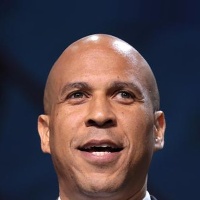
Cory Booker
Senator
NJ
Cory Booker
Senator
NJ
This resolution supports designating a week in April as Black Maternal Health Week to raise national awareness of the severe maternal health crisis facing Black women and birthing people in the U.S. It highlights that systemic racism and discrimination drive unacceptable disparities in maternal mortality and morbidity rates. The resolution calls for specific investments and policy changes, including expanded postpartum coverage and culturally competent care, guided by the voices of the affected community.
This bill expands eligibility for the Noninsured Crop Disaster Assistance Program (NAP) by removing exclusions for crops and grasses used for grazing.
Mike Rounds
Senator
SD
Mike Rounds
Senator
SD
The Noninsured Crop Disaster Assistance Program Enhancement Act of 2025 expands eligibility for disaster assistance under the NAP. This legislation removes the previous exception that excluded certain crops and grasses used for grazing from receiving aid. Consequently, grazing crops will now be treated equally with other crops when seeking disaster relief through the program.
This Act permanently bans new and existing oil and gas leasing for drilling in the Arctic areas of the outer Continental Shelf.
Jeff Merkley
Senator
OR
Jeff Merkley
Senator
OR
The Stop Arctic Ocean Drilling Act of 2025 permanently prohibits the Secretary of the Interior from issuing any new oil and gas leases or extending existing ones in the Arctic areas of the outer Continental Shelf. This legislation establishes an outright ban on the exploration, development, or production of minerals in these specific Arctic waters. The defined geographic scope of this prohibition aligns with the existing definition used in the Arctic Research and Policy Act of 1984.
This Act revises eligibility criteria for child care centers, streamlines serious deficiency reviews, adjusts meal reimbursement limits, changes funding benchmarks, and establishes an advisory committee to reduce administrative paperwork.
Richard Blumenthal
Senator
CT
Richard Blumenthal
Senator
CT
The Early Childhood Nutrition Improvement Act aims to strengthen federal meal programs for child care centers by clarifying eligibility rules and mandating annual reviews for certain providers. It directs the Secretary of Agriculture to review and update procedures for handling serious deficiencies, ensuring fairness and distinguishing between minor errors and systemic failures. Furthermore, the bill limits reimbursement caps for extra meals, changes the inflation metric used for funding adjustments, and establishes an advisory committee to significantly reduce administrative paperwork.