
Legislative Activity
Track Roger's sponsored bills, co-sponsored legislation, and voting record
The "Broadband Buildout Accountability Act" shields the Broadband Equity, Access, and Deployment Program from FOIA requests, excluding standard public information requirements.
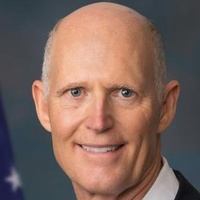
Rick Scott
Senator
FL
Rick Scott
Senator
FL
The "Broadband Buildout Accountability Act" shields the Broadband Equity, Access, and Deployment Program from the Freedom of Information Act (FOIA), with a specific exception for 5 U.S. Code § 552, to balance transparency and program efficiency.
This joint resolution seeks to overturn the Environmental Protection Agency’s final rule regarding National Emission Standards for Hazardous Air Pollutants for the rubber tire manufacturing industry.

Tim Scott
Senator
SC
Tim Scott
Senator
SC
This joint resolution exercises congressional authority to disapprove the Environmental Protection Agency’s rule regarding "National Emission Standards for Hazardous Air Pollutants: Rubber Tire Manufacturing." If passed, this measure would nullify the rule, rendering it without force or effect.
This resolution commemorates the third anniversary of Russia’s invasion of Ukraine while reaffirming the United States' unwavering support for Ukrainian sovereignty, territorial integrity, and democratic aspirations.
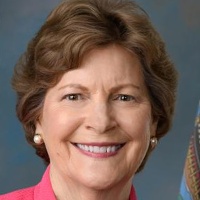
Jeanne Shaheen
Senator
NH
Jeanne Shaheen
Senator
NH
This resolution marks the third anniversary of Russia’s full-scale invasion of Ukraine by reaffirming the United States' unwavering support for Ukraine’s sovereignty and territorial integrity. It honors the resilience of the Ukrainian people, condemns ongoing Russian aggression, and pledges continued commitment to Ukraine’s defense and democratic future.
The Leveling the Playing Field 2.0 Act strengthens U.S. trade laws to combat unfair trade practices, prevent duty evasion, and protect domestic industries.

Todd Young
Senator
IN
Todd Young
Senator
IN
The Leveling the Playing Field 2.0 Act enhances U.S. trade laws to counteract unfair trade practices by foreign countries. It strengthens the ability of the International Trade Commission to address successive instances of unfair trade, expands countervailing duty authority, and prevents duty evasion. The Act also counters currency undervaluation and sets clear guidelines for implementation and applicability.
This resolution designates February 15–22, 2025, as "National FFA Week" to honor the organization's role in developing future leaders and celebrate its historic milestones.
Todd Young
Senator
IN
Todd Young
Senator
IN
This resolution designates February 15–22, 2025, as "National FFA Week" to celebrate the National FFA Organization’s vital role in developing the next generation of agricultural leaders. It commemorates the 90th anniversary of the New Farmers of America and the 75th anniversary of the FFA’s Federal charter. The bill encourages nationwide participation in honoring the organization's long-standing commitment to leadership, personal growth, and career success.
Prohibits U.S. funding to international environmental agreements until China is no longer considered a developing country under the Montreal Protocol and is included in Annex I of the UN Framework Convention on Climate Change.
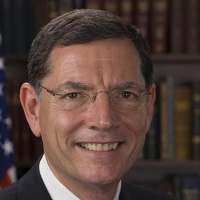
John Barrasso
Senator
WY
John Barrasso
Senator
WY
The "Ending China's Unfair Advantage Act of 2025" restricts U.S. funding to the Montreal Protocol and the UN Framework Convention on Climate Change until China is no longer considered a developing country under the Montreal Protocol and is included in Annex I of the UN Framework Convention. This bill aims to address what the Act describes as unfair advantages China receives in international environmental agreements.
The "Postal Processing Protection Act" broadens protections for postal facilities, including those involved in processing, shipping, and delivery, before they can be closed.
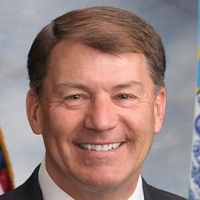
Mike Rounds
Senator
SD
Mike Rounds
Senator
SD
The Postal Processing Protection Act broadens existing protections for post offices to include any Postal Service facility involved in acceptance, processing, shipping, delivery, or distribution that supports one or more post offices. This bill amends section 404(d) of title 39, United States Code, to reflect this change.
This bill amends the tax code to exclude broadband grants from gross income, incentivizing broadband expansion by preventing taxation of grant funds used for deployment.

Jerry Moran
Senator
KS
Jerry Moran
Senator
KS
The "Broadband Grant Tax Treatment Act" amends the Internal Revenue Code of 1986 to exclude broadband grants from gross income. This exclusion applies to grants from programs like the Broadband Equity, Access, and Deployment Program and other federal and state broadband initiatives. It prevents grantees from receiving a double benefit by disallowing deductions or credits for expenditures covered by these grants and requires a reduction in the property's adjusted basis by the grant amount. This change is effective for taxable years ending after March 11, 2021.
This resolution commemorates the 80th anniversary of the Battle of Iwo Jima and honors the service members who fought in the historic 1945 amphibious assault.
Todd Young
Senator
IN
Todd Young
Senator
IN
This resolution commemorates the 80th anniversary of the Battle of Iwo Jima, honoring the service and sacrifice of the U.S. armed forces who fought in this pivotal World War II engagement. It recognizes the strategic importance of the battle, the iconic flag raising on Mount Suribachi, and the enduring legacy of those who served. Furthermore, the resolution reaffirms the strong bond of friendship and reconciliation between the United States and Japan today.
The bill prohibits the EPA from using risk assessments generated by the Integrated Risk Information System (IRIS) in rulemakings, enforcement, permitting, or other regulatory actions.
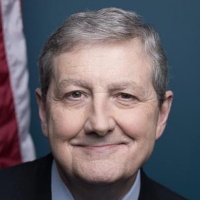
John Kennedy
Senator
LA
John Kennedy
Senator
LA
The No IRIS Act of 2025 prohibits the EPA from using risk assessments generated by the Integrated Risk Information System (IRIS) in rulemakings, regulatory actions, enforcement, or permitting. This includes preventing IRIS assessments from informing air toxics assessments or other mapping and screening tools used by the EPA.
The "Nationwide Consumer and Fuel Retailer Choice Act of 2025" modifies Clean Air Act regulations regarding ethanol waivers, Reid Vapor Pressure limits for fuel blends, and allows for the return of certain small refinery credits.
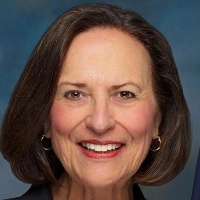
Deb Fischer
Senator
NE
Deb Fischer
Senator
NE
The "Nationwide Consumer and Fuel Retailer Choice Act of 2025" amends the Clean Air Act, modifying the process for ethanol waivers and Reid Vapor Pressure limitations, allowing for higher ethanol blends during high ozone season. It also permits small refineries to reclaim certain retired credits from 2016-2018 for future use, under specific conditions related to prior exemption petitions.
This resolution commends the personnel and organizations responsible for the successful planning and execution of the 2025 Presidential Inauguration.
Mike Rounds
Senator
SD
Mike Rounds
Senator
SD
This resolution formally expresses the Senate’s gratitude to the Joint Congressional Committee on Inaugural Ceremonies, law enforcement, and all personnel involved in the January 20, 2025, Presidential Inauguration. It commends these groups for their professionalism, resilience, and dedication in ensuring a safe and successful event despite unexpected logistical challenges.
The "One Flag for All Act" mandates that only the United States flag can be flown on the exterior and publicly accessible areas of federal buildings, with specific exceptions for certain flags like those of POW/MIAs, visiting diplomats, branches of the Armed Forces, and historical or commemorative significance.

Roger Marshall
Senator
KS
Roger Marshall
Senator
KS
The "One Flag for All Act" generally prohibits the display of flags other than the United States flag on the exterior and publicly accessible areas of federal buildings, military installations, and U.S. embassies. It includes exceptions for flags such as the POW/MIA flag, flags of visiting diplomats, state flags displayed by Members of Congress, flags representing branches of the Armed Forces, flags of historical significance, and flags representing religious organizations or churches during religious events at military installations. Additional exceptions are made for flags representing public safety, special national observances, a Federal agency, an Indian Tribe, and the State, territory, county, city, or local jurisdiction where the covered public building is located.
This bill mandates payment and performance security for water infrastructure projects receiving federal financial assistance, ensuring taxpayer protection and subcontractor payment.
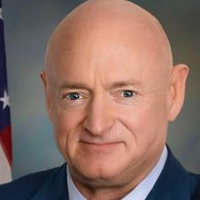
Mark Kelly
Senator
AZ
Mark Kelly
Senator
AZ
The Water Infrastructure Subcontractor and Taxpayer Protection Act of 2025 amends the Water Infrastructure Finance and Innovation Act of 2014 to protect taxpayers and subcontractors. It mandates payment and performance security for construction projects receiving federal financial assistance. The Act ensures that either state/local laws provide sufficient security or the Secretary/Administrator enforces federal bond requirements.
The "Death Tax Repeal Act of 2025" eliminates estate and generation-skipping transfer taxes, modifies gift tax calculations, and adjusts lifetime gift exemptions.
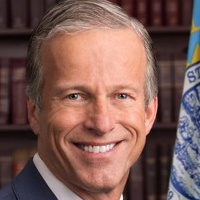
John Thune
Senator
SD
John Thune
Senator
SD
The "Death Tax Repeal Act of 2025" eliminates both estate and generation-skipping transfer taxes, while also modifying gift tax laws. It adjusts gift tax calculations, addresses transfers in trust, sets an initial $10,000,000 amount for calculating tentative tax, and adjusts for inflation. These changes apply to estates of decedents dying, generation-skipping transfers occurring, and gifts made on or after the enactment date of this Act.
The "National Right-to-Work Act" prohibits mandatory union membership as a condition of employment, protecting employees' rights to choose whether or not to join or support a labor union.

Rand Paul
Senator
KY
Rand Paul
Senator
KY
The "National Right-to-Work Act" aims to protect individual employees' rights to choose whether or not to join or support a labor union. It amends the National Labor Relations Act and the Railway Labor Act to eliminate mandatory union membership or fees as a condition of employment. This ensures that employees cannot be forced to join or contribute to a union against their will. The changes apply to agreements made or renewed after the Act's enactment.
This bill prevents the Department of Interior and Agriculture from banning lead ammunition and tackle on federal land unless the state approves the ban.
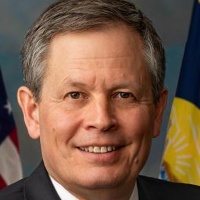
Steve Daines
Senator
MT
Steve Daines
Senator
MT
The "Protecting Access for Hunters and Anglers Act of 2025" prevents the Department of Interior and Department of Agriculture from banning or regulating lead ammunition and fishing tackle on federal lands and waters open to hunting and fishing. An exception is allowed in specific areas where lead is scientifically proven to be the primary cause of wildlife population decline, but any restrictions must align with state laws or have the approval of the state's fish and wildlife department. The reasoning for any such prohibition or regulation must be published in the Federal Register.
This bill repeals the requirement for financial institutions to collect and report data on small business loans under the Equal Credit Opportunity Act.
John Kennedy
Senator
LA
John Kennedy
Senator
LA
The "1071 Repeal to Protect Small Business Lending Act" repeals Section 704B of the Equal Credit Opportunity Act, which mandated data collection on small business loans. This repeal aims to reduce compliance costs for financial institutions, especially smaller ones, and improve small businesses' access to credit by removing regulatory barriers. The act also makes related amendments to the Equal Credit Opportunity Act and the Dodd-Frank Wall Street Reform and Consumer Protection Act.
The "Protect Medicaid Act" prohibits federal Medicaid funding for state administrative costs of providing health benefits to unauthorized immigrants and requires a report on state practices for funding healthcare for non-citizens.

Bill Cassidy
Senator
LA
Bill Cassidy
Senator
LA
The "Protect Medicaid Act" prohibits federal Medicaid funding for state administrative costs associated with providing health benefits to unauthorized immigrants. It requires the Inspector General of the Department of Health and Human Services to report to Congress, detailing how states differentiate and fund health benefits for non-citizens ineligible for Medicaid, ensuring compliance with federal funding rules. The report will also analyze the impact of providing covered outpatient drugs to these non-citizens on drug prices.
The "Credit Union Board Modernization Act" amends the Federal Credit Union Act to reduce the frequency of required board meetings for well-managed federal credit unions from monthly to at least six times per year after the first five years of operation.
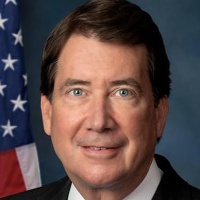
Bill Hagerty
Senator
TN
Bill Hagerty
Senator
TN
The "Credit Union Board Modernization Act" amends the Federal Credit Union Act to reduce the frequency of board of directors meetings for well-managed federal credit unions. New federal credit unions are required to meet monthly for the first five years, while those with strong ratings must meet at least six times annually after the initial period. Credit unions with lower ratings will still be required to meet monthly.