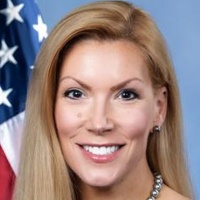
Legislative Activity
Track Beth's sponsored bills, co-sponsored legislation, and voting record
This Act establishes a strict 7-day deadline for ticket agents to issue flight refunds to consumers after receiving the funds from the airline for cancelled or significantly changed flights.

Maria Salazar
Representative
FL
Maria Salazar
Representative
FL
The Flight Refund Fairness Act establishes clear, strict deadlines for ticket agents to issue refunds to consumers after a flight cancellation or significant delay. Specifically, ticket agents must now return the refund money to the customer within seven days of receiving the funds from the airline. This legislation replaces vague "promptly" requirements with a concrete timeline to ensure passengers receive their money back faster.
This resolution honors the life and legacy of Charles "Charlie" James Kirk, condemns his assassination as political violence, and calls for a renewed commitment to civil discourse and American founding principles.

Mike Johnson
Representative
LA
Mike Johnson
Representative
LA
This resolution honors the life and legacy of Charles "Charlie" James Kirk, founder of Turning Point USA. It strongly condemns his assassination as an act of political violence. The bill calls for a renewed national commitment to civil discourse and the founding principles of the United States.
This Act prohibits U.S. courts and arbitrators from enforcing any foreign law, including Sharia law, if doing so would violate fundamental rights guaranteed by the U.S. or State Constitutions.
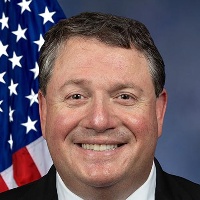
Randall Fine
Representative
FL
Randall Fine
Representative
FL
The No Shari’a Act ensures that U.S. courts rely exclusively on Federal and State laws when making decisions. This legislation prohibits courts and arbitrators from enforcing any foreign law, including Sharia law, if doing so would violate fundamental constitutional rights. The Act is designed to prevent foreign legal codes from undermining the established constitutional protections guaranteed to all Americans.
The SHINE for Autumn Act of 2025 establishes federal grants for states to improve stillbirth surveillance, data collection, and risk factor research while mandating the development of standardized educational guidelines on stillbirth.

Young Kim
Representative
CA
Young Kim
Representative
CA
The SHINE for Autumn Act of 2025 aims to significantly improve federal support for state-level stillbirth research and data collection. It authorizes grants for states to enhance surveillance, track risk factors, and build local capacity for analyzing stillbirth data, provided the information remains de-identified. Furthermore, the bill mandates the development of standardized guidelines and educational materials regarding stillbirth awareness and risk factors, developed in consultation with experts and bereaved families.
This bill establishes the "CHOICE arrangement" as a new type of employer-funded health reimbursement plan integrated with individual market coverage, provides tax incentives for offering it, and allows participants to use pre-tax cafeteria plan funds for their coverage.
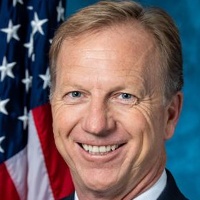
Kevin Hern
Representative
OK
Kevin Hern
Representative
OK
The Choice Arrangement Act of 2025 establishes new rules for employer-funded Health Reimbursement Arrangements (HRAs) integrated with individual health insurance, creating a "CHOICE arrangement." This legislation outlines specific nondiscrimination, substantiation, and notice requirements for employers offering these plans. Furthermore, the Act allows participants to use pre-tax cafeteria plan funds for their coverage and introduces a new, temporary tax credit for eligible small and medium-sized employers who offer these arrangements.
This bill amends the Social Security Act to provide Medicare coverage for FDA-approved multi-cancer early detection screening tests starting in 2028.
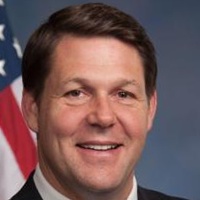
Jodey Arrington
Representative
TX
Jodey Arrington
Representative
TX
The Nancy Gardner Sewell Medicare Multi-Cancer Early Detection Screening Coverage Act amends the Social Security Act to provide Medicare Part B coverage for multi-cancer early detection screening tests starting January 1, 2028. This legislation establishes clear criteria for qualifying tests and outlines payment structures to ensure beneficiaries have access to these advanced diagnostic tools. Importantly, this coverage is designed to complement, rather than replace, existing Medicare-covered cancer screenings.
This bill extends the authorization for the Small Business Innovation Research (SBIR) and Small Business Technology Transfer (STTR) programs and related activities for one additional year, through fiscal year 2026.
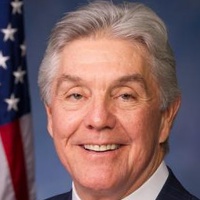
Roger Williams
Representative
TX
Roger Williams
Representative
TX
This bill primarily focuses on extending the authorization for the Small Business Innovation Research (SBIR) and Small Business Technology Transfer (STTR) programs by one year. It pushes the expiration dates for the core programs and several related pilot activities from fiscal year 2025 to fiscal year 2026. This ensures continued federal research and development funding opportunities for small businesses.
This bill mandates a GAO study on pediatric liver disease outcomes and establishes a public education program to raise awareness about early detection and living liver donation.

Jim Costa
Representative
CA
Jim Costa
Representative
CA
The Ian Kalvinskas Pediatric Liver Cancer Early Detection and Screening Act aims to improve outcomes for children with liver disease by initiating studies on current federal efforts and waitlist mortality. It mandates the development of a public education program to raise awareness about early liver disease signs and living liver donation. Furthermore, the bill directs an assessment of the cost-effectiveness of adding direct bilirubin testing to newborn screening panels to catch conditions like biliary atresia earlier.
This resolution strongly condemns the assassination of Charlie Kirk and calls for national change inspired by his life and tragic death.
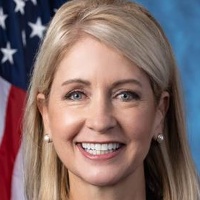
Mary Miller
Representative
IL
Mary Miller
Representative
IL
This resolution strongly condemns the assassination of conservative activist Charlie Kirk on September 10, 2025, during his national speaking tour. It honors his life, his founding of Turning Point USA, and his dedication to conservative principles. Ultimately, the document calls for national unity and reaffirms the commitment to protecting the right to peaceful assembly and free expression.
This bill modernizes the Organ Procurement and Transplantation Network by updating communication requirements, mandating a public transparency dashboard, and authorizing the collection and oversight of registration fees to fund its operations.
Jim Costa
Representative
CA
Jim Costa
Representative
CA
The Permanent OPTN Fee Authority Act modernizes the Organ Procurement and Transplantation Network (OPTN) by updating communication requirements and mandating a public transparency dashboard. Crucially, it authorizes the collection of registration fees from members based on transplant candidates to fund OPTN operations. The bill also requires quarterly public reporting on fee collection and usage, subject to a future GAO review.
The RESULTS Act reforms how Medicare determines payment rates for clinical diagnostic laboratory tests by mandating the use of comprehensive, real-world private payor claims data collected from an independent entity.
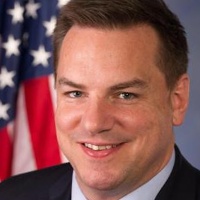
Richard Hudson
Representative
NC
Richard Hudson
Representative
NC
The Reforming and Enhancing Sustainable Updates to Laboratory Testing Services Act of 2025 (RESULTS Act) aims to improve Medicare payment rates for clinical lab tests by mandating the collection of more accurate, real-world payment data directly from large, independent private insurance claims databases. This legislation updates definitions, collection timelines, and calculation methods to ensure Medicare payments for widely available tests reflect current market rates. It also establishes default payment rules if sufficient private payor data cannot be secured.
This Act mandates that federal agencies assist the Department of Commerce in maximizing the collection of detailed citizenship, noncitizen, and undocumented immigrant data for the census and requires the addition of a citizenship question to the 2030 decennial census while terminating the Census Bureau's use of differential privacy.
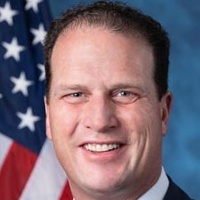
August Pfluger
Representative
TX
August Pfluger
Representative
TX
The Citizen Only Updated National Tally Act (COUNT Act) mandates that federal agencies must assist the Department of Commerce in gathering comprehensive administrative records to accurately determine the citizenship status of the U.S. population. This data collection effort aims to provide policymakers with precise facts regarding immigration's impact. Furthermore, the bill requires the addition of a citizenship question to the 2030 decennial census and terminates the Census Bureau's use of differential privacy for data protection six months after enactment.
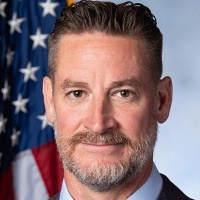
The GRACE Act prohibits federal education funding for schools or agencies with vaccination requirements unless they provide an unconditional religious exemption without requiring documentation.
W. Steube
Representative
FL
W. Steube
Representative
FL
The GRACE Act prohibits federal education funding for any school or agency that mandates vaccinations unless they provide a religious exemption based solely on an individual's stated sincerely held religious beliefs. This exemption cannot require any proof or documentation to support the religious objection. Consequently, institutions requiring documentation for religious vaccine exemptions risk losing federal education funds.
The CARE for Children Act officially recognizes and funds "cottage family homes" as a new option for foster care placements, ensuring they meet strict standards for child well-being and family connection.
W. Steube
Representative
FL
W. Steube
Representative
FL
The Create Accountable Respectful Environments (CARE) for Children Act officially recognizes and integrates "cottage family homes" into federal foster care regulations. This allows these specialized homes to receive federal maintenance payments if they meet strict standards focused on family connection, trauma-informed care, and prohibiting harmful restraints. The bill ensures states maintain flexibility in utilizing these placements while upholding high standards for child well-being.
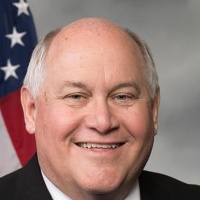
This bill updates Medicare payment rates for air ambulance services by requiring new cost data collection and mandating a GAO study on emergency air ambulance expenses.
Ron Estes
Representative
KS
Ron Estes
Representative
KS
The Protecting Air Ambulance Services for Americans Act of 2025 aims to improve the Medicare payment system for emergency air ambulance services. This bill directs the Secretary of Health and Human Services to update payment rates using newly collected cost data from providers. Furthermore, it mandates the timely finalization of data collection rules and requires the GAO to study the true operating costs of air ambulance services to inform future payment adjustments.
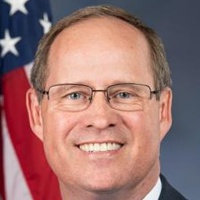
This Act increases penalties for health plans and insurers that violate surprise billing rules, imposes severe financial penalties for late payments after dispute resolution, and mandates more frequent and detailed transparency reporting on enforcement actions.
Gregory Murphy
Representative
NC
Gregory Murphy
Representative
NC
The No Surprises Act Enforcement Act significantly increases financial penalties for group health plans and insurance issuers that violate balance billing protections. It establishes steep fines, including up to $\$10,000$ per affected individual for serious non-compliance. Furthermore, the bill imposes severe penalties, including triple the disputed amount plus interest, for failing to make required payments promptly after an Independent Dispute Resolution (IDR) determination. Finally, it mandates more frequent and detailed transparency reporting on enforcement actions and violations.
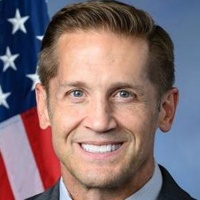
This bill mandates a comprehensive study to investigate potential links between military rotary-wing operations and increased cancer prevalence or mortality among pilots and support personnel.
Rich McCormick
Representative
GA
Rich McCormick
Representative
GA
The ROTOR Act mandates a comprehensive study to investigate cancer prevalence and mortality rates among military rotary-wing pilots and aviation support personnel. This research, conducted by the Defense Health Agency in partnership with the NIH and NCI, will first compare cancer rates in these service members against the general population. If elevated rates are found, a second phase will seek to identify potential toxic exposures or environmental factors linked to helicopter operations that may be causing the increased risk.
This bill officially renames the United States Postal Service facility at 505 East 9th Avenue in Amarillo, Texas, as the "Mayor Jerry H. Hodge Post Office Building."
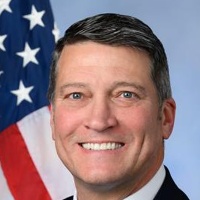
Ronny Jackson
Representative
TX
Ronny Jackson
Representative
TX
This bill officially renames the United States Postal Service facility located at 505 East 9th Avenue in Amarillo, Texas. The building will now be known as the "Mayor Jerry H. Hodge Post Office Building." This designation requires all official records and documents to use the new name for this specific location.
This bill amends the Family and Medical Leave Act to explicitly qualify time taken for an employee's own organ donation surgery as a serious health condition.
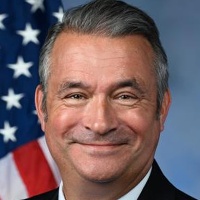
Don Bacon
Representative
NE
Don Bacon
Representative
NE
This bill amends the Family and Medical Leave Act (FMLA) to explicitly clarify that time taken off for an employee's own organ donation surgery qualifies as a serious health condition. This ensures both private and federal sector workers receive FMLA protection for recovery from organ donation. The legislation also specifies how federal employees must substitute existing paid leave when taking FMLA time for this purpose.
This Act prohibits insurance companies from discriminating against living organ donors when issuing life, disability, or long-term care policies and mandates the updating of educational materials regarding donation risks and insurance implications.
Don Bacon
Representative
NE
Don Bacon
Representative
NE
The Living Donor Protection Act of 2025 prohibits life, disability, and long-term care insurance companies from denying coverage or increasing premiums solely because an individual is a living organ donor. This legislation ensures that living donors are not financially penalized for their altruistic act. Additionally, the bill requires the Secretary of HHS to update educational materials to accurately reflect the insurance protections afforded to living donors.