Legislative Activity
Track Beth's sponsored bills, co-sponsored legislation, and voting record
This Act prohibits U.S. commerce and services for vessels associated with ports in Western Hemisphere trade partners that have illegally seized access-controlling land belonging to American entities since 2024.
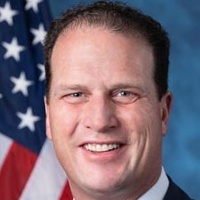
August Pfluger
Representative
TX
August Pfluger
Representative
TX
The Defending American Property Abroad Act of 2025 targets foreign governments in the Western Hemisphere that have seized or unfairly controlled port infrastructure essential to U.S. trade access since early 2024. The bill requires the executive branch to identify this "prohibited property" and subsequently ban any associated vessels from accessing U.S. ports or receiving services. Furthermore, the Act expands the definition of unfair trade practices to explicitly include the nationalization or discriminatory treatment of U.S. assets by foreign nations.
This Act prohibits the Federal Reserve from directly or indirectly issuing a Central Bank Digital Currency (CBDC) and bars the Fed from developing or using one for monetary policy without explicit Congressional authorization.
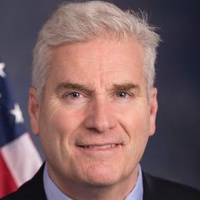
Tom Emmer
Representative
MN
Tom Emmer
Representative
MN
The Anti-CBDC Surveillance State Act strictly prohibits the Federal Reserve from directly or indirectly issuing a Central Bank Digital Currency (CBDC) to individuals. This legislation prevents the Fed from developing, testing, or implementing any digital currency that functions as a direct liability of the Federal Reserve. Furthermore, Congress asserts that any authority to create such a digital asset must explicitly come from Congress itself.
This bill requires states to reimburse the federal government for military deployment costs incurred due to local obstruction of federal immigration enforcement operations.
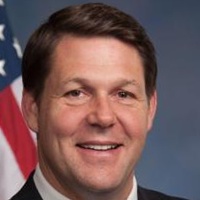
Jodey Arrington
Representative
TX
Jodey Arrington
Representative
TX
This bill requires states to reimburse the federal government for the costs of deploying military forces, such as the National Guard, when state or local obstruction of federal immigration enforcement leads to civil unrest. If a state fails to pay the resulting invoice from the Department of Defense within 180 days, the President is authorized to withhold federal discretionary grant funds to cover the debt. This legislation establishes financial accountability for local interference with federal immigration operations.
The SHIELD Act amends federal unemployment rules to prohibit benefits for individuals unemployed due to active participation in or direct stake in a labor dispute or strike.
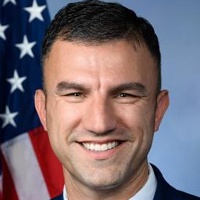
Rudy Yakym
Representative
IN
Rudy Yakym
Representative
IN
The Securing Help for Involuntary Employment Loss and Displacement Act (SHIELD Act) revises federal requirements for state unemployment programs regarding labor disputes. This bill mandates that states deny regular unemployment benefits to individuals unemployed due to a strike or labor dispute in which they actively participated or had a direct stake. The new federal conditions take effect in two years, though states may adopt them sooner.
The Equal Shot Act of 2025 prohibits the Small Business Administration from denying financial assistance to qualified applicants solely based on their involvement in the firearms industry.
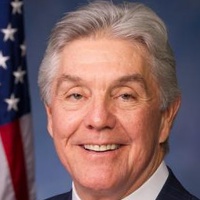
Roger Williams
Representative
TX
Roger Williams
Representative
TX
The Equal Shot Act of 2025 prohibits the Small Business Administration (SBA) from denying financial assistance to otherwise qualified applicants solely based on their involvement in the firearms industry. This legislation ensures that businesses defined as "firearm entities," their affiliates, or trade associations are not unfairly rejected for SBA loans or guarantees. The Act clearly defines these terms to prevent discrimination against businesses involved in manufacturing, selling, or servicing firearms and related accessories.
This resolution formally condemns the violent attack on the U.S. Border Patrol facility in McAllen, Texas, on July 7, 2025, while expressing support for law enforcement personnel.
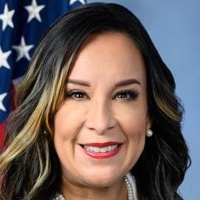
Mónica De La Cruz
Representative
TX
Mónica De La Cruz
Representative
TX
This resolution formally condemns the violent attack on the U.S. Border Patrol facility in McAllen, Texas, on July 7, 2025. It expresses support for the injured agents and reaffirms Congress's strong backing for the dedicated men and women of the Border Patrol. The bill emphasizes that such violence against law enforcement is unacceptable and undermines national security efforts.
This Act mandates that VA medical staff promptly certify the deaths of veterans who died from natural causes within 48 hours to expedite burial and survivor benefits.
Tom Emmer
Representative
MN
Tom Emmer
Representative
MN
The Veteran Burial Timeliness and Death Certificate Accountability Act addresses significant delays in obtaining death certificates for veterans who die from natural causes, often due to VA medical staff delays. This bill mandates that VA medical providers must certify a veteran's death within 48 hours or allow the local medical examiner to step in. Furthermore, the VA must annually report on its compliance with this new timely certification requirement.
This bill mandates that elementary, secondary, and higher education institutions must certify compliance with biological fairness requirements in women's sports to receive federal funding, with penalties for non-compliance.
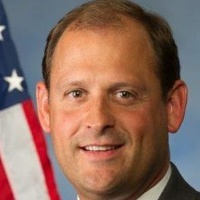
Garland Barr
Representative
KY
Garland Barr
Representative
KY
The Defend Girls Athletics Act mandates that elementary, secondary, and higher education institutions must certify compliance with Executive Order 14201 regarding biological fairness in women's sports to receive federal funding. This certification must be renewed annually for K-12 districts and by July 1st for colleges and universities. Failure to comply or report results in the immediate requirement to return unobligated federal funds and ineligibility for future federal financial assistance until compliance is restored.
This bill authorizes the creation and sale of commemorative coins for the 2028 Los Angeles and 2034 Salt Lake City Olympic and Paralympic Games to help fund the events, with all surcharges going to the respective organizing committees after covering production costs.
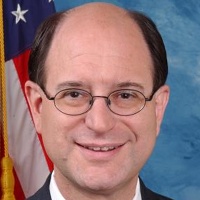
Brad Sherman
Representative
CA
Brad Sherman
Representative
CA
This Act authorizes the Secretary of the Treasury to mint and sell special commemorative coins for the 2028 Los Angeles Olympic and Paralympic Games and the 2034 Salt Lake City Winter Olympic and Paralympic Games. The coins will feature designs celebrating American athletes and the Games themselves. All surcharges collected from the sale of these coins will be directed to the respective organizing committees to help fund the events and related youth sports programs. The entire program must be conducted at no cost to the U.S. Government.
The SAMS Act of 2025 codifies several existing Executive Orders related to critical minerals into permanent federal law.
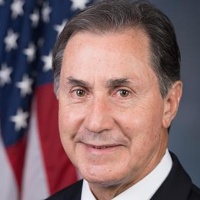
Gary Palmer
Representative
AL
Gary Palmer
Representative
AL
The SAMS Act of 2025 codifies several previous Executive Orders into permanent law, specifically focusing on policies related to critical minerals. This action elevates existing presidential directives concerning these vital resources to the full force and effect of statutory law. The bill ensures the long-term legal standing of established critical mineral supply chain strategies.
This bill mandates quarterly rebates from manufacturers of selected drugs based on the difference between standard Medicare payment rates and the negotiated Maximum Fair Price, while adjusting beneficiary coinsurance accordingly.
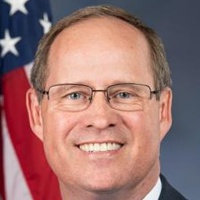
Gregory Murphy
Representative
NC
Gregory Murphy
Representative
NC
This bill, the Protecting Patient Access to Cancer and Complex Therapies Act, establishes a new mandatory rebate system for manufacturers of certain drugs selected for Maximum Fair Price (MFP) negotiation under Medicare. Manufacturers must pay quarterly rebates based on the difference between the standard Medicare payment and the lower negotiated MFP for units sold under Part B. These changes also adjust beneficiary coinsurance calculations to reflect the lower MFP, ensuring patient out-of-pocket costs are based on the negotiated price.
This bill nullifies the Department of Labor's recently published final rule updating the Davis-Bacon and Related Acts regulation.
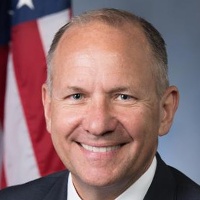
Lloyd Smucker
Representative
PA
Lloyd Smucker
Representative
PA
This bill seeks to immediately nullify the Department of Labor's recently published final rule updating the Davis-Bacon and Related Acts regulation. If enacted, the measure would ensure that the new wage rule, published on August 24, 2023, has no force or legal effect. Essentially, this legislation cancels the Department of Labor's latest changes to the prevailing wage requirements for federally funded construction projects.
This bill officially renames the Anahuac National Wildlife Refuge in Texas to the Jocelyn Nungaray National Wildlife Refuge.
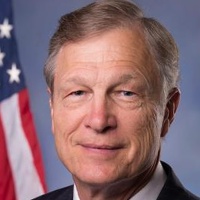
Brian Babin
Representative
TX
Brian Babin
Representative
TX
This bill officially renames the Anahuac National Wildlife Refuge in Texas to the **Jocelyn Nungaray National Wildlife Refuge**. The renaming honors the memory of 12-year-old Jocelyn Nungaray, who was tragically murdered near Houston. This legislation codifies the name change across all official government records and documents.
This bill mandates increased public transparency regarding detailed Medicare spending data by HHS, requires MedPAC to conduct annual, apples-to-apples comparisons of Medicare Advantage and traditional Medicare expenditures, and updates the Trustees' annual report with categorized spending information.
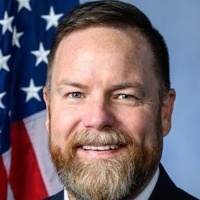
Aaron Bean
Representative
FL
Aaron Bean
Representative
FL
The Apples to Apples Comparison Act of 2025 mandates greater public transparency regarding Medicare spending by requiring the Secretary of HHS to publish detailed, machine-readable expenditure data broken down by county and beneficiary type. Furthermore, the bill requires the Medicare Payment Advisory Commission (MedPAC) to annually compare the average cost of Medicare Advantage enrollees versus traditional Medicare beneficiaries, accounting for plan differences and risk factors. Finally, the Medicare Trustees must also report detailed expenditure information categorized by specific beneficiary enrollment statuses.
This resolution expresses the House of Representatives' support for designating June 11, 2025, as "World Franchise Day" to recognize the economic impact and opportunities created by the franchising industry.
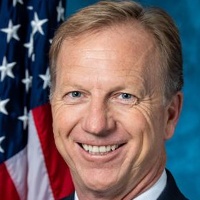
Kevin Hern
Representative
OK
Kevin Hern
Representative
OK
This resolution expresses the House of Representatives' support for designating June 11, 2025, as "World Franchise Day." It recognizes the significant role franchising plays in the U.S. economy by fostering entrepreneurship, creating millions of jobs, and providing pathways to ownership. The bill formally endorses the global recognition of this vital business model.
This bill mandates the deportation and permanent inadmissibility of non-citizens who commit acts of violence against law enforcement or public property during civil unrest, with enhanced enforcement during declared emergencies.
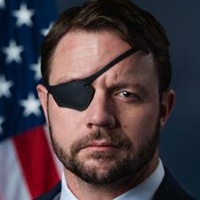
Dan Crenshaw
Representative
TX
Dan Crenshaw
Representative
TX
The Returning Illegals over Turmoil Act establishes new grounds for the deportation and permanent inadmissibility of non-citizens who incite or participate in violent acts against law enforcement or public property during civil unrest. This legislation mandates strict enforcement during declared emergencies and grants the Secretary of Homeland Security expedited removal authority under those conditions. Furthermore, individuals removed under these provisions are permanently barred from receiving any form of immigration relief or future DACA eligibility.
This Act mandates a comprehensive study and report on U.S. preparedness for the reintroduction of the devastating New World Screwworm pest.
Mónica De La Cruz
Representative
TX
Mónica De La Cruz
Representative
TX
The New World Screwworm Preparedness Act of 2025 mandates a comprehensive study on the United States' readiness to combat the reintroduction of the New World screwworm, a devastating parasite of warm-blooded animals. This study, led by the Secretary of Agriculture, must assess current threat levels, sterile fly production capacity, surveillance systems, and emergency response plans. The resulting report will provide Congress with critical recommendations to strengthen national preparedness against this costly agricultural and wildlife pest.
This bill significantly increases criminal and civil penalties for individuals who illegally enter the country or overstay their nonimmigrant visas.
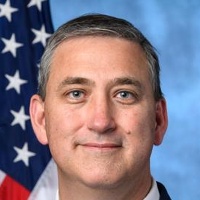
Nathaniel Moran
Representative
TX
Nathaniel Moran
Representative
TX
The Visa Overstays Penalties Act significantly increases penalties for individuals who enter the country illegally or overstay their authorized visas. This legislation establishes a new violation specifically targeting nonimmigrant visa holders who remain in the U.S. for more than 10 days past their authorized status. Consequences include increased criminal penalties, up to two years in jail for repeat offenses, and substantial civil fines ranging from $\$500$ to $\$1,000$ per violation.
This Act standardizes the gaming regulations for the Ysleta del Sur Pueblo and Alabama-Coushatta Tribes in Texas to align them fully with the federal Indian Gaming Regulatory Act.
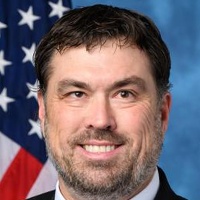
Morgan Luttrell
Representative
TX
Morgan Luttrell
Representative
TX
The Tribal Gaming Regulatory Compliance Act aims to standardize gaming regulations for the Ysleta del Sur Pueblo and the Alabama-Coushatta Indian Tribes in Texas. This bill ensures these two Tribes are regulated consistently under the federal Indian Gaming Regulatory Act, just like all other Tribes nationwide. It achieves this by removing confusing, outdated language specific to Texas and fully applying existing federal gaming laws to their operations.
Connor's Law mandates that commercial motor vehicle operators must demonstrate the ability to read and speak English sufficiently to perform essential driving and reporting tasks, or face immediate out-of-service orders.
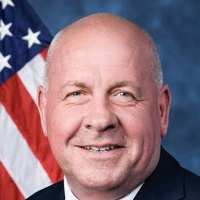
David Taylor
Representative
OH
David Taylor
Representative
OH
Connor's Law establishes a mandatory English language proficiency requirement for all commercial motor vehicle (CMV) operators seeking a Commercial Driver's License (CDL). This ensures drivers can effectively communicate, understand traffic signs, and complete necessary documentation in English. Failure to meet this standard will result in an immediate out-of-service order for the driver.