Legislative Activity
Track David's sponsored bills, co-sponsored legislation, and voting record
This bill ensures Medicare coverage for certain breakthrough medical devices during a four-year transitional period while accelerating the final coverage decision process.
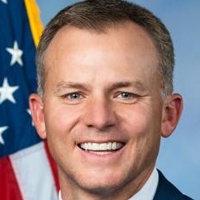
Blake Moore
Representative
UT
Blake Moore
Representative
UT
This Act, the Ensuring Patient Access to Critical Breakthrough Products Act, aims to speed up Medicare coverage for innovative, FDA-approved "breakthrough devices." It establishes a process for manufacturers to gain a four-year transitional coverage period for these devices, ensuring patients have timely access while long-term coverage decisions are finalized. The bill also allocates funding to CMS to manage these expedited reviews and allows for oversight of provider billing practices related to these new technologies.
This act amends the Fair Labor Standards Act to exclude direct sellers and qualified real estate agents from the definition of "employee."
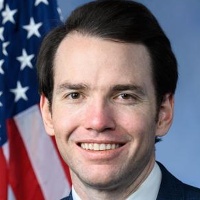
Kevin Kiley
Representative
CA
Kevin Kiley
Representative
CA
This act, the Direct Seller and Real Estate Agent Harmonization Act, amends the Fair Labor Standards Act to clarify employment status. Specifically, it excludes direct sellers and qualified real estate agents from the definition of "employee." This change aligns labor standards with existing IRS classifications for these professions.
This bill amends the Social Security Act to provide Medicare coverage for FDA-approved multi-cancer early detection screening tests starting in 2028.
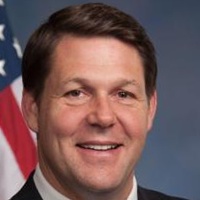
Jodey Arrington
Representative
TX
Jodey Arrington
Representative
TX
The Nancy Gardner Sewell Medicare Multi-Cancer Early Detection Screening Coverage Act amends the Social Security Act to provide Medicare Part B coverage for multi-cancer early detection screening tests starting January 1, 2028. This legislation establishes clear criteria for qualifying tests and outlines payment structures to ensure beneficiaries have access to these advanced diagnostic tools. Importantly, this coverage is designed to complement, rather than replace, existing Medicare-covered cancer screenings.
This bill allows authorized VA healthcare professionals to prescribe and dispense controlled medications to veterans via telemedicine under specific conditions.
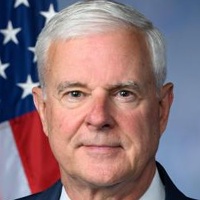
Steve Womack
Representative
AR
Steve Womack
Representative
AR
The Protecting Veteran Access to Telemedicine Services Act of 2025 allows authorized Department of Veterans Affairs (VA) healthcare professionals to prescribe and dispense controlled medications to eligible veterans via telemedicine. This provision removes the prior requirement for an initial in-person visit before prescribing these medications remotely. The VA is required to establish specific regulations detailing the process for this telemedicine delivery while ensuring compliance with existing federal drug control laws.
This bill posthumously awards a Congressional Gold Medal to honor the groundbreaking civil rights achievements of Constance Baker Motley and authorizes the production and sale of bronze duplicates.

Rosa DeLauro
Representative
CT
Rosa DeLauro
Representative
CT
This bill, the Congressional Tribute to Constance Baker Motley Act of 2025, posthumously awards the Congressional Gold Medal to the pioneering civil rights attorney and federal judge, Constance Baker Motley. The legislation recognizes her historic achievements, including her role in *Brown v. Board of Education* and her service as the first African-American woman appointed as a federal judge. The Secretary of the Treasury is authorized to strike the medal, and provisions are made for selling bronze duplicates to cover production costs.
This bill reauthorizes funding for programs supporting the mental health and treatment of officers in crisis for an additional five years, from 2025 through 2029.
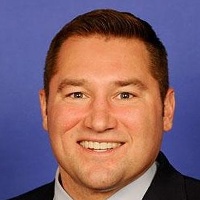
Guy Reschenthaler
Representative
PA
Guy Reschenthaler
Representative
PA
The Reauthorizing Support and Treatment for Officers in Crisis Act of 2025 extends crucial federal funding for programs supporting law enforcement officers in crisis. This bill specifically reauthorizes existing support and treatment initiatives for an additional five years, running from 2025 through 2029. It ensures continued resources are available for officers needing mental health and wellness assistance.
The RESULTS Act reforms how Medicare determines payment rates for clinical diagnostic laboratory tests by mandating the use of comprehensive, real-world private payor claims data collected from an independent entity.
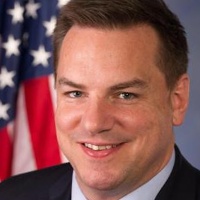
Richard Hudson
Representative
NC
Richard Hudson
Representative
NC
The Reforming and Enhancing Sustainable Updates to Laboratory Testing Services Act of 2025 (RESULTS Act) aims to improve Medicare payment rates for clinical lab tests by mandating the collection of more accurate, real-world payment data directly from large, independent private insurance claims databases. This legislation updates definitions, collection timelines, and calculation methods to ensure Medicare payments for widely available tests reflect current market rates. It also establishes default payment rules if sufficient private payor data cannot be secured.
The Mental Health in Aviation Act of 2025 mandates the FAA to update mental health regulations, improve medical clearance processes, fund more aviation medical examiners, and launch an anti-stigma campaign for aviation workers.
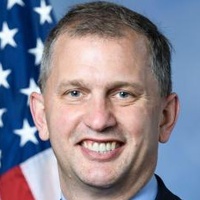
Sean Casten
Representative
IL
Sean Casten
Representative
IL
The Mental Health in Aviation Act of 2025 directs the FAA to update regulations to encourage aviation workers to seek mental health support without fear of stigma. The bill mandates annual reviews of the medical clearance process and allocates funding to hire more Aviation Medical Examiners. Furthermore, it requires the FAA to implement recommendations from a recent mental health task force and launch a public awareness campaign to reduce stigma.
This Act modernizes Medicare utilization requirements for rural facilities employing Physician Assistants and Nurse Practitioners by aligning their practice and oversight with state laws.
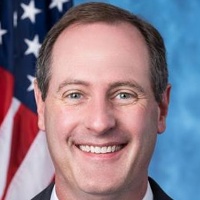
Tracey Mann
Representative
KS
Tracey Mann
Representative
KS
The Modernizing Rural Physician Assistant and Nurse Practitioner Utilization Act of 2025 updates Medicare payment requirements for facilities not directly directed by a physician. It mandates that these facilities must have formal arrangements with Physician Assistants (PAs) or Nurse Practitioners (NPs) whose practice adheres to state laws and regulations. These changes are set to take effect on January 1, 2027.
This act updates the population threshold defining an "urban area" to maintain eligibility for Rural Health Clinics under the Medicare program, effective January 1, 2027.
Tracey Mann
Representative
KS
Tracey Mann
Representative
KS
The Rural Health Clinic Location Modernization Act of 2025 updates the criteria for clinics to qualify as Rural Health Clinics (RHCs) under Medicare. This legislation revises the definition of an "urban area," setting a new population threshold of 50,000 people to determine eligibility. These changes to the location standards will take effect starting January 1, 2027.
This bill establishes a phased schedule through fiscal year 2031 to increase federal appropriations for Impact Aid programs supporting school districts impacted by federal property.
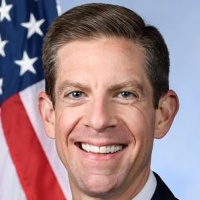
Mike Levin
Representative
CA
Mike Levin
Representative
CA
The Advancing Toward Impact Aid Full Funding Act establishes a new, increasing schedule of authorized appropriations for key Impact Aid programs through fiscal year 2031. This legislation specifically sets funding levels for federal property acquisition, basic payments to heavily impacted school districts, payments for children with disabilities, and construction activities. The goal is to gradually increase federal support for these essential educational services.
This bill removes the Medicare exclusion for services provided in facilities primarily focused on mental disease treatment, effective January 1, 2027.
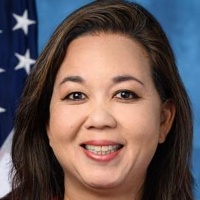
Jill Tokuda
Representative
HI
Jill Tokuda
Representative
HI
The Rural Behavioral Health Improvement Act of 2025 aims to enhance behavioral healthcare access in rural areas by modifying Medicare coverage rules. This bill specifically removes the existing exclusion that prevents Medicare payment for services provided in facilities primarily focused on treating mental diseases. This significant change is scheduled to take effect on January 1, 2027.
This act sets the Identified Student Percentage threshold for federal nutrition programs at 25 percent for school years beginning on or after July 1, 2025.
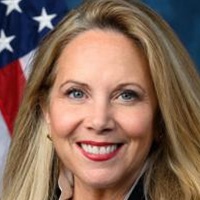
Laura Gillen
Representative
NY
Laura Gillen
Representative
NY
The Feed Hungry Kids Act establishes a fixed threshold of 25 percent for calculating a school's "Identified Student Percentage" starting in the school year beginning on or after July 1, 2025. This change directly impacts how schools qualify for certain federal nutrition programs. The bill standardizes this key metric for future program eligibility.
This bill extends enhanced financial assistance for purchasing health insurance through the Marketplace until the end of 2026.
Jennifer Kiggans
Representative
VA
Jennifer Kiggans
Representative
VA
The Bipartisan Premium Tax Credit Extension Act extends the enhanced financial assistance available for purchasing health insurance through the Marketplace. This legislation pushes the expiration date for these boosted premium tax credits, including those for higher earners, from the end of 2025 through the end of 2026. Essentially, it ensures continued, robust subsidies for Marketplace health coverage.
This act amends federal law to allow states to use Emergency Solutions Grant Program funds for operating and supporting designated safe parking areas that connect people living in vehicles with re-housing services.
Salud Carbajal
Representative
CA
Salud Carbajal
Representative
CA
The Naomi Schwartz and Susan Rose Safe Parking Act of 2025 amends federal law to officially designate "safe parking" as an eligible activity under the Emergency Solutions Grant (ESG) Program. This allows states to use ESG funds to operate secure overnight parking locations for individuals experiencing homelessness in vehicles. These designated sites must connect residents with re-housing services and supportive assistance to help them transition into stable housing.
This bill officially designates the United States Postal Service facility at 1444 Main Street in Ramona, California, as the "Archie Moore Post Office Building."
Darrell Issa
Representative
CA
Darrell Issa
Representative
CA
This bill officially designates the United States Postal Service facility located at 1444 Main Street in Ramona, California, as the "Archie Moore Post Office Building." The legislation ensures that all official records and documents will use this new name for the post office.
This Act establishes a multi-sector Task Force, led by the Treasury Secretary, to study, recommend strategies for, and report on preventing evolving electronic payment scams.
Zachary (Zach) Nunn
Representative
IA
Zachary (Zach) Nunn
Representative
IA
The Taskforce for Recognizing and Averting Payment Scams Act (TRAPS Act) establishes a new Task Force led by the Secretary of the Treasury. This diverse group, including federal agencies, industry experts, and consumer advocates, will study evolving payment scams. The Task Force is charged with developing cross-sector prevention strategies and submitting comprehensive recommendations for new laws and improved coordination to combat these fraudulent activities.
The Wildfire Emergency Preparedness Act of 2025 establishes national training programs, creates a new Under Secretary for Fire Coordination, enhances firefighter health research, and provides supplemental funding and support for wildland fire response.
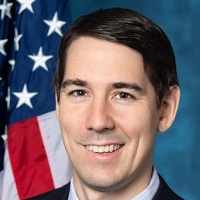
Josh Harder
Representative
CA
Josh Harder
Representative
CA
The Wildfire Emergency Preparedness Act of 2025 aims to significantly enhance national readiness for wildfires and wildland-urban interface fires. It establishes a national training plan and grant program for structural firefighters, creates a new high-level Under Secretary for Fire Coordination within the Department of Agriculture, and boosts firefighter health and safety research. Furthermore, the Act authorizes supplemental funding for local departments to purchase protective gear and receive specialized training.
This Act establishes the "Local Farmers Feeding Our Communities" program to strengthen local food security by funding agreements that support local producers and distribute fresh food to communities.
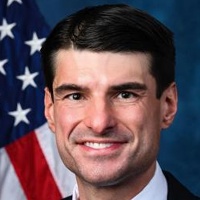
Robert Bresnahan
Representative
PA
Robert Bresnahan
Representative
PA
The Local Farmers Feeding our Communities Act establishes a new program to support local food producers and strengthen regional food security. This initiative requires the Secretary of Agriculture to fund agreements that ensure nutritious, locally sourced food is purchased and distributed widely, prioritizing small and beginning farmers. Funds must be used to buy minimally processed local products and provide technical assistance to producers. The program is backed by mandatory funding starting in Fiscal Year 2026.
The SAVES Act establishes a VA pilot program to award grants to nonprofits providing service dogs and veterinary insurance to eligible veterans managing specific service-connected conditions.
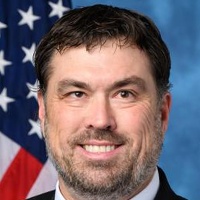
Morgan Luttrell
Representative
TX
Morgan Luttrell
Representative
TX
The SAVES Act establishes a Department of Veterans Affairs (VA) pilot program to award grants to nonprofit organizations that provide service dogs to eligible veterans. These grants, up to $\$2,000,000$ each, will fund the training and provision of service dogs for veterans with qualifying conditions like PTSD or TBI. The bill also extends the expiration date for certain limits on veterans' pension payments until February 2033.