Legislative Activity
Track David's sponsored bills, co-sponsored legislation, and voting record
This bill prohibits the use of federal taxpayer funds for gender transition procedures and bars federal health plans and ACA premium credits from covering such care.
Doug LaMalfa
Representative
CA
Doug LaMalfa
Representative
CA
The End Taxpayer Funding of Gender Experimentation Act of 2025 prohibits the use of any federal funds for gender transition procedures, including those provided through federal health plans or facilities. This ban also extends to the Affordable Care Act, preventing individuals from using federal premium tax credits or cost-sharing reductions to cover plans that include such procedures. The legislation broadly defines gender transition procedures while excluding care for certain disorders of sex development and life-threatening emergencies.
Supports the designation of March 18, 2025, as "National Agriculture Day" and recognizes the importance of agriculture in the United States.
Mark Alford
Representative
MO
Mark Alford
Representative
MO
This resolution expresses support for designating March 18, 2025, as "National Agriculture Day." It recognizes and celebrates the significant impact of agriculture as a leading industry in the United States.
The BITCOIN Act of 2025 establishes a Strategic Bitcoin Reserve, mandates the U.S. government to purchase and hold one million Bitcoins over five years, and protects private property rights related to digital assets.
Nicholas Begich
Representative
AK
Nicholas Begich
Representative
AK
The BITCOIN Act of 2025 establishes a Strategic Bitcoin Reserve to secure and manage government-held Bitcoin, viewing it as a national asset for financial stability. The Act mandates the Secretary of the Treasury to initiate a five-year program to purchase 1,000,000 Bitcoins for long-term holding. Furthermore, it institutes strict public proof-of-reserve requirements and explicitly protects the private property rights of individuals to own and control their own Bitcoin.
This bill significantly increases federal loan limits for farm ownership, operating, and microloans, updates inflation calculations for rural programs, and establishes conditions for refinancing distressed guaranteed loans into direct FSA loans.
Brad Finstad
Representative
MN
Brad Finstad
Representative
MN
The Producer and Agricultural Credit Enhancement Act of 2025 significantly increases the maximum loan amounts available through federal farm ownership and operating loan programs, effective in fiscal year 2025. The bill also updates the calculation method for inflation adjustments in rural development programs and raises the cap for agricultural microloans from $\$50,000$ to $\$100,000$. Finally, it establishes conditions under which distressed FSA guaranteed loans may be refinanced into direct loans, provided the operation has a reasonable chance of success.
The Rural Wellness Act prioritizes and extends support for behavioral and mental health treatment services in rural development programs through 2029.
Nicole (Nikki) Budzinski
Representative
IL
Nicole (Nikki) Budzinski
Representative
IL
The Rural Wellness Act extends provisions from the Agriculture Improvement Act of 2018 to 2029, adjusting specific allocation timelines. It prioritizes rural development program grants for projects that include behavioral and mental health treatment services. This prioritization includes facilities for prevention, treatment, or recovery and applicants focusing on behavioral and mental health education.
The "Delphi Retirees Pension Restoration Act" restores full pension benefits to eligible Delphi retirees and beneficiaries, compensating for past underpayments with interest, using existing funds and allowing for favorable tax treatment of lump-sum payments.
Victoria Spartz
Representative
IN
Victoria Spartz
Representative
IN
The Delphi Retirees Pension Restoration Act aims to restore the full pension benefits to eligible participants and beneficiaries under specific terminated pension plans, such as the Delphi Hourly-Rate Employees Pension Plan. It mandates the recalculation of benefits to match the full vested plan benefit, provides for lump-sum payments to cover past underpayments with interest, and funds these increased benefits through existing resources. The bill also includes provisions for the tax treatment of these payments, allowing recipients to spread the income over three years.
The FARMLAND Act of 2025 aims to protect U.S. agriculture by restricting foreign investment, increasing oversight, and enforcing regulations against foreign entities of concern.
Randy Feenstra
Representative
IA
Randy Feenstra
Representative
IA
The FARMLAND Act of 2025 aims to protect U.S. agriculture and national security by modernizing and enforcing laws against malign foreign investments in U.S. agricultural land and businesses, particularly from countries of concern. It increases penalties for non-compliance with reporting requirements, mandates detailed reports on foreign land ownership and potential threats, and enhances the Committee on Foreign Investment in the United States (CFIUS) authority to review real estate transactions involving foreign entities. The act also directs the creation of a comprehensive database of foreign-owned agricultural land and prohibits foreign individuals/entities from participating in Farm Service Agency programs. Finally, the act authorizes appropriations for secure workspace construction, database development, and other activities related to enforcing the act.
This resolution expresses formal condolences to the families and loved ones of the 67 victims of the January 2025 collision between American Eagle Flight 5342 and a U.S. Army flight, while honoring the victims and commending the first responders.
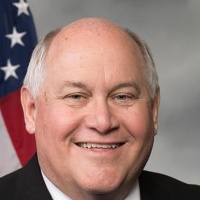
Ron Estes
Representative
KS
Ron Estes
Representative
KS
This resolution expresses the House of Representatives' deepest condolences to the families and loved ones of the 67 individuals who lost their lives in the January 29, 2025, collision of American Eagle Flight 5342 and a U.S. Army flight. It honors the victims, many of whom had strong ties to Wichita, Kansas, and commends the heroic efforts of the first responders and emergency personnel who managed the recovery.
This resolution disapproves and nullifies the Environmental Protection Agency’s rule regarding the withdrawal of a technical amendment to Ohio's air quality plan.
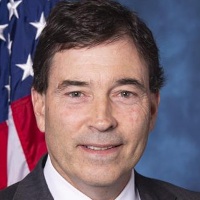
Troy Balderson
Representative
OH
Troy Balderson
Representative
OH
This resolution invokes the Congressional Review Act to formally disapprove and nullify a recent Environmental Protection Agency rule regarding air plan approvals in Ohio. By passing this measure, Congress ensures the specified EPA technical amendment will have no further force or effect.
The "Federal Firearms Licensee Protection Act of 2025" increases penalties for stealing firearms from licensed dealers, manufacturers, or importers, especially during burglaries or robberies, and clarifies related definitions.
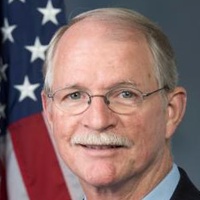
John Rutherford
Representative
FL
John Rutherford
Representative
FL
The "Federal Firearms Licensee Protection Act of 2025" increases penalties for stealing firearms from licensed dealers. It sets stricter punishments, including up to 20 years in prison, for violating laws related to firearm theft. The act also mandates minimum prison sentences of 3 years for burglaries and 5 years for robberies targeting licensed firearm businesses.
The SAFER Voter Act lowers the minimum age to purchase a handgun or handgun ammunition from a Federal firearms licensee to 18 years old.
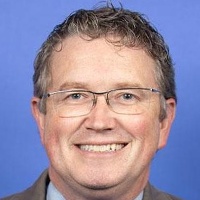
Thomas Massie
Representative
KY
Thomas Massie
Representative
KY
The SAFER Voter Act seeks to eliminate the age restriction that prevents individuals under 21 from purchasing handguns and handgun ammunition from licensed federal firearms dealers. This bill would amend title 18 of the United States Code, specifically sections 922(b)(1) and 922(c)(1), to allow adults 18 and over to purchase handguns.
The Truck Parking Safety Improvement Act establishes a grant program to expand commercial truck parking and improve safety on Federal-aid highways.
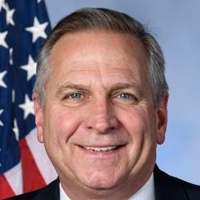
Mike Bost
Representative
IL
Mike Bost
Representative
IL
The Truck Parking Safety Improvement Act establishes a grant program to expand commercial truck parking and improve safety. The program provides funds to states, local governments, and tribal entities for projects that increase parking availability, improve existing facilities, and use technology to manage parking. The Act also requires a biennial report to Congress on the availability of truck parking and the effectiveness of funded projects. It authorizes $151 million per fiscal year from 2025 through 2029 for these initiatives.
The APLUS Act loosens restrictions on market agencies' financial ties to smaller meatpacking companies, provided they disclose these ties to livestock sellers, while maintaining the Secretary's authority to enforce fair practices.
Mark Alford
Representative
MO
Mark Alford
Representative
MO
The APLUS Act directs the Secretary of Agriculture to update regulations, permitting market agencies to have financial interests in smaller meatpacking companies, defined by specific slaughter capacities. These market agencies must disclose these financial ties to livestock sellers. The Act does not reduce the Secretary's authority to enforce rules protecting producers, competition, and market integrity under existing law.
This resolution establishes uniform standards and oversight for the authorized display of flags within House of Representatives facilities.
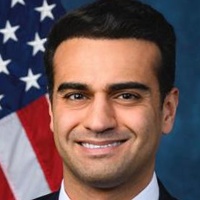
Abraham Hamadeh
Representative
AZ
Abraham Hamadeh
Representative
AZ
This resolution establishes uniform standards for the display of flags within House of Representatives facilities, excluding individual Members' personal offices. It explicitly defines the authorized flags permitted for display and designates the Committee on House Administration and the Sergeant at Arms to oversee compliance and manage temporary exceptions.
This resolution condemns the Iranian regime’s terrorism and human rights abuses while affirming support for the Iranian people’s right to establish a democratic, secular, and non-nuclear republic.
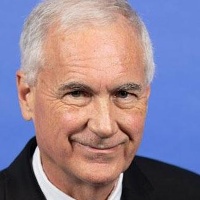
Tom McClintock
Representative
CA
Tom McClintock
Representative
CA
This resolution condemns the Iranian regime for its ongoing human rights abuses, state-sponsored terrorism, and regional instability. It expresses strong support for the Iranian people's struggle for a democratic, secular, and non-nuclear republic. Furthermore, the bill advocates for international accountability for the regime's crimes and calls for the protection of Iranian political refugees.
The SOLAR Act restricts USDA funding for ground-mounted solar projects that convert farmland, with exceptions for small projects, on-farm use, or those approved by local governments with a farmland conservation plan.
Mike Bost
Representative
IL
Mike Bost
Representative
IL
The Securing Our Lands and Resources Act (SOLAR Act) restricts USDA funding for ground-mounted solar energy systems that convert covered farmland, with exceptions for small projects, on-farm energy use, or projects approved by local governments. These approved projects must adhere to a farmland conservation plan that protects soil health, ensures restoration after the project ends, and provides sufficient decommissioning funds. Failure to comply with the conservation plan results in repayment of USDA financial assistance.
To award a Congressional Gold Medal to the 761st Tank Battalion, the first Black soldiers to serve in an American armored unit, for their valor and crucial contributions to the Allied victory in Europe.
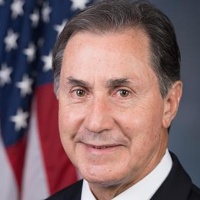
Gary Palmer
Representative
AL
Gary Palmer
Representative
AL
This bill authorizes the Speaker of the House and the President pro tempore of the Senate to award a Congressional Gold Medal to the 761st Tank Battalion, also known as the "Black Panthers," in recognition of their courageous service and crucial contributions during World War II. The medal will be given to the National Museum of African American History and Culture for display, honoring the 761st as the first Black soldiers to serve in an American armored unit and their significant role in the Allied victory in Europe. The bill also allows for the creation and sale of bronze duplicates of the medal to support the United States Mint Public Enterprise Fund.
The Leveling the Playing Field 2.0 Act strengthens U.S. trade laws to counteract unfair trade practices like foreign subsidies, currency manipulation, and duty evasion, ensuring fair competition for American businesses.
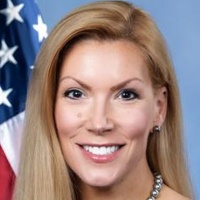
Beth Van Duyne
Representative
TX
Beth Van Duyne
Representative
TX
The Leveling the Playing Field 2.0 Act aims to strengthen U.S. trade laws by addressing unfair subsidies, currency undervaluation, duty evasion, and circumvention of trade remedies. It refines the process for handling successive trade investigations, ensuring that the International Trade Commission considers prior findings and assesses cumulative effects on domestic industries. The act also empowers authorities to counteract cost distortions in foreign countries and prevent importers from avoiding duties. Additionally, it includes provisions related to trade with Canada and Mexico and sets effective dates for new regulations.
This bill authorizes the creation of a Congressional Gold Medal to honor the volunteers and communities involved with the North Platte Canteen during World War II.
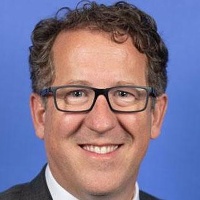
Adrian Smith
Representative
NE
Adrian Smith
Representative
NE
The North Platte Canteen Congressional Gold Medal Act recognizes and honors the volunteers and donors of the North Platte Canteen in Nebraska during World War II with a Congressional Gold Medal. This medal will be presented by the Speaker of the House and the President pro tempore of the Senate, and then displayed at the Lincoln County Historical Museum. The Act also authorizes the creation and sale of bronze duplicates of the gold medal to cover production costs, with proceeds deposited into the Mint's Public Enterprise Fund.
The "ENABLE Act" permanently extends provisions that increase contributions to ABLE accounts, include ABLE contributions in retirement savings calculations, and allow penalty-free rollovers from 529 education savings accounts to ABLE accounts.
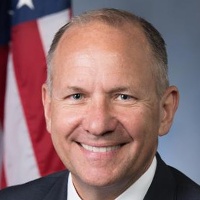
Lloyd Smucker
Representative
PA
Lloyd Smucker
Representative
PA
The ENABLE Act permanently extends provisions that allow for increased contributions to ABLE accounts, which are savings accounts for individuals with disabilities. It also allows penalty-free rollovers from 529 education savings accounts to ABLE accounts, providing greater flexibility in financial planning for families and individuals with disabilities. Additionally, the act includes contributions made to an ABLE account when calculating retirement savings contributions.