Legislative Activity
Track Shri's sponsored bills, co-sponsored legislation, and voting record
This bill impeaches Secretary of Homeland Security Kristi Lynn Arnold Noem for high crimes and misdemeanors, citing willful refusal to comply with oversight law, violating the Impoundment Control Act, directing unlawful ICE misconduct, and misusing federal funds for personal gain.
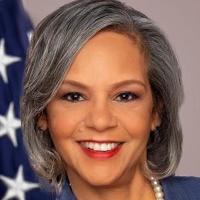
Robin Kelly
Representative
IL
Robin Kelly
Representative
IL
This resolution initiates impeachment proceedings against Secretary of Homeland Security Kristi Lynn Arnold Noem for high crimes and misdemeanors. The articles of impeachment charge her with willfully refusing to comply with Congressional oversight laws and violating the Impoundment Control Act by improperly withholding funds. Further articles allege she directed widespread misconduct by ICE agents that violated federal law and constitutional rights, and misused taxpayer funds for personal gain through improper contracting.
This act eliminates qualified immunity as a defense for law enforcement officers in civil lawsuits alleging constitutional rights violations and establishes a right to sue federal officers for such violations.
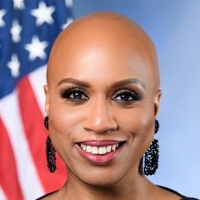
Ayanna Pressley
Representative
MA
Ayanna Pressley
Representative
MA
The Qualified Immunity Abolition Act of 2026 eliminates qualified immunity as a defense for law enforcement officers in civil lawsuits alleging constitutional rights violations. This means officers can no longer claim good faith or lack of clearly established law to avoid liability. The Act also establishes a new civil cause of action allowing citizens to sue federal law enforcement officers for constitutional violations.
This Act establishes federal minimum salary and wage floors for school paraprofessionals and support staff, providing federal funding to help states meet these new pay standards within four years.
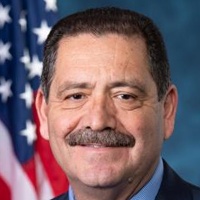
Jesús García
Representative
IL
Jesús García
Representative
IL
The Pay Paraprofessionals and Support Staff Act establishes minimum federal salary and wage floors for school support staff, requiring states to implement higher state-level standards. It authorizes significant federal funding through grants to help states and local districts meet these new pay requirements within four years. States must prioritize funding distribution to districts serving high numbers of low-income students to ensure compliance with the mandated pay increases.
This act prohibits naming federal property after a sitting President and mandates the reversion of any existing presidential namesake to its previous federal designation.
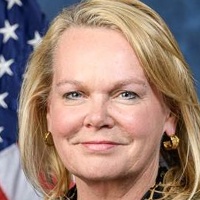
April McClain Delaney
Representative
MD
April McClain Delaney
Representative
MD
The SERVE Act of 2026 prohibits naming any federal property, land, or asset after a sitting President, preventing the use of federal funds for such purposes. Furthermore, any federal property currently named after the sitting President upon enactment will revert to its previously established federal name.
This bill modifies deposits into the Crime Victims Fund by excluding certain False Claims Act recoveries and mandates an Inspector General audit of the Fund's sustainability.
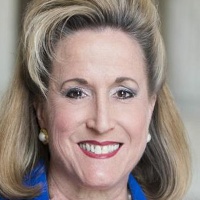
Ann Wagner
Representative
MO
Ann Wagner
Representative
MO
This bill amends the Victims of Crime Act of 1984 to temporarily exclude certain False Claims Act recoveries from being deposited into the Crime Victims Fund through fiscal year 2029. It also mandates a comprehensive audit by the Department of Justice Inspector General on the Fund's sustainability and the impact of recent legislative changes. The resulting report will provide recommendations for improving the Fund's effectiveness and oversight.
This bill designates Burma for Temporary Protected Status (TPS) for eligible nationals present in the U.S. since enactment.
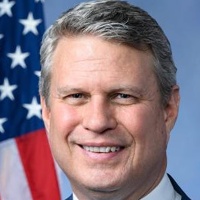
Bill Huizenga
Representative
MI
Bill Huizenga
Representative
MI
This bill designates Burma for Temporary Protected Status (TPS) for an initial period of 18 months, beginning November 25, 2025. It establishes eligibility requirements for Burmese nationals already present in the U.S. and outlines conditions for emergency travel authorization.
This act prohibits federal officials and employees from trading prediction market contracts while possessing material nonpublic government information.
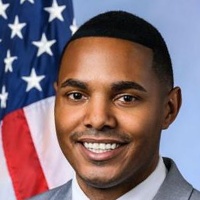
Ritchie Torres
Representative
NY
Ritchie Torres
Representative
NY
The Public Integrity in Financial Prediction Markets Act of 2026 prohibits federal officials and employees from trading in prediction market contracts while possessing material, nonpublic government information. This ban specifically targets transactions related to government policy, actions, or political outcomes. The goal is to prevent insider trading within these emerging financial markets by those with privileged access to government knowledge.
This bill explicitly prohibits discrimination based on sex, sexual orientation, and gender identity in all places of public accommodation.
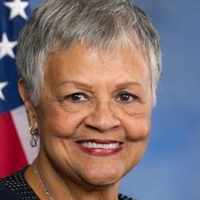
Bonnie Watson Coleman
Representative
NJ
Bonnie Watson Coleman
Representative
NJ
The Customer Non-Discrimination Act amends the Civil Rights Act of 1964 to explicitly prohibit discrimination in public accommodations based on sex, sexual orientation, and gender identity. This expansion covers a wide range of establishments, including retailers, service providers, and transportation services. The bill also provides clear definitions for these protected characteristics and clarifies that existing federal sex discrimination laws already cover these areas.
This act significantly increases both criminal and civil penalties for employers who violate child labor laws.
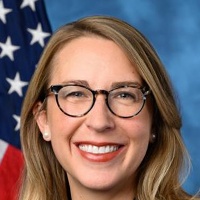
Hillary Scholten
Representative
MI
Hillary Scholten
Representative
MI
The Justice for Exploited Children Act significantly strengthens penalties for child labor violations under the Fair Labor Standards Act. This legislation introduces harsher criminal penalties, including substantial fines and imprisonment, for willful or repeated offenses. It also dramatically increases the civil monetary penalties for all child labor violations, especially those resulting in serious injury or death to a minor employee.
This resolution recognizes the 15th anniversary of the 2011 Tucson shooting, honoring the victims, survivors, and the ongoing advocacy of Gabby Giffords.
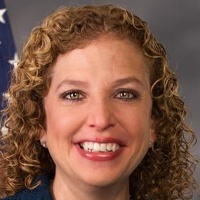
Debbie Wasserman Schultz
Representative
FL
Debbie Wasserman Schultz
Representative
FL
This resolution commemorates the 15th anniversary of the tragic January 8, 2011, Tucson shooting, honoring the six lives lost and the thirteen injured. It specifically commends the courage and ongoing advocacy of gun violence survivor and former Congresswoman Gabby Giffords. The resolution also recognizes the resilience of the community and reaffirms a commitment to ending political violence.
This act voids the recent renaming of the Kennedy Center and restricts the Board of Trustees from ever renaming the center again.
April McClain Delaney
Representative
MD
April McClain Delaney
Representative
MD
The Kennedy Center Protection Act voids the Board of Trustees' 2025 vote to rename the performing arts center. This legislation mandates the immediate removal of any signage reflecting the altered name and restores the official title to the "John F. Kennedy Center for the Performing Arts." Furthermore, it explicitly prohibits the Board from ever taking action to rename the center in the future.
This act prohibits naming or renaming any federal property after a currently serving President.
April McClain Delaney
Representative
MD
April McClain Delaney
Representative
MD
The Federal Property Integrity Act prohibits naming any federal building, land, or asset after a President currently serving in office. This new rule establishes a clear standard for naming federal property, ensuring such designations are not made while a President is actively serving.
This bill proposes a constitutional amendment requiring congressional review and a two-thirds supermajority vote in both houses to uphold presidential pardons and reprieves.
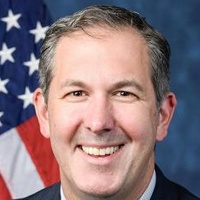
Johnny Olszewski
Representative
MD
Johnny Olszewski
Representative
MD
This proposed constitutional amendment seeks to limit the President's pardon power by establishing a congressional review process. Under this system, Congress would have the opportunity to nullify a presidential pardon or reprieve with a two-thirds vote in both chambers. Furthermore, a pardon would be void if the President fails to notify Congress within three days of granting it.
The HOTDOG Act mandates the FTC to study and report on concession pricing transparency and fairness at publicly subsidized sports and entertainment venues.

Dan Goldman
Representative
NY
Dan Goldman
Representative
NY
The Honest Oversight of Ticketed Dining and Onsite Grub (HOTDOG) Act mandates the Federal Trade Commission (FTC) to study concession pricing at publicly subsidized sports and entertainment venues. This study will compare in-venue food and drink prices against those in surrounding communities. The FTC must then report its findings and recommendations to Congress within one year to improve pricing transparency and affordability for consumers.
The American Affordability Act of 2025 is a comprehensive bill designed to lower costs for families through expanded housing assistance, clean energy tax credits, monthly child payments, education relief, and enhanced healthcare subsidies.
Mike Thompson
Representative
CA
Mike Thompson
Representative
CA
The American Affordability Act of 2025 is a comprehensive bill designed to lower costs across five key areas: housing, energy, family care, education, and healthcare. It achieves this by expanding tax credits for housing construction and homebuyers, extending incentives for clean energy manufacturing and consumer adoption, replacing the Child Tax Credit with larger monthly payments, making higher education expenses more affordable, and permanently expanding subsidies to lower health insurance premiums for millions. Overall, the legislation aims to provide direct financial relief and increase access to essential services for American families and workers.
This bill imposes comprehensive sanctions on Russia for its war against Ukraine while permanently extending the U.S. sanctions authority against Iran.
Brian Fitzpatrick
Representative
PA
Brian Fitzpatrick
Representative
PA
The Peace Through Strength Against Russia Act of 2025 imposes comprehensive sanctions on Russia's financial, military, and energy sectors in response to its war against Ukraine. This legislation cuts off major Russian banks from the U.S. financial system and bans new American investment in Russia. Additionally, the bill makes the existing sanctions authority against Iran permanent by removing its expiration date.
This bill temporarily funds the FAA using the Aviation Insurance Revolving Fund during a lapse in appropriations and extends non-premium war risk insurance provisions.
Sam Graves
Representative
MO
Sam Graves
Representative
MO
The Aviation Funding Solvency Act establishes a temporary mechanism to ensure the Federal Aviation Administration (FAA) can continue essential operations if Congress fails to pass regular appropriations. This allows the FAA Administrator to draw upon the Aviation Insurance Revolving Fund to maintain operations at the previous year's funding rate. The temporary funding ceases once a new appropriation or continuing resolution is enacted. The bill also makes a technical amendment regarding non-premium war risk insurance.
This bill mandates the removal of U.S. Armed Forces from hostilities within or against Venezuela unless explicitly authorized by Congress.
James McGovern
Representative
MA
James McGovern
Representative
MA
This bill mandates the President to immediately remove all United States Armed Forces from hostilities within or against Venezuela. This action is required unless Congress has specifically authorized the use of military force. The legislation aims to ensure that military engagement in Venezuela requires explicit Congressional approval.
Alyssa's Act of 2025 establishes grants for schools to create emergency response maps and master plans for school shooting prevention, while also expanding the Federal Clearinghouse on School Safety to enhance resources, technology development, and data collection.
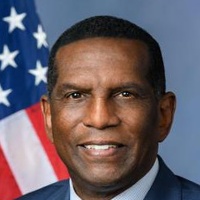
Clarence Owens
Representative
UT
Clarence Owens
Representative
UT
Alyssa's Act of 2025 establishes a grant program to help schools develop emergency response maps and comprehensive master plans for preventing and responding to school shootings. The bill also significantly expands the Federal Clearinghouse on School Safety Evidence-based Practices to enhance research, technical assistance, and the development of new safety technologies like panic alarms. Furthermore, it mandates the creation of a National School Safety Data Center to analyze nationwide school safety issues and trends. Finally, the Act sets technical standards for federally funded emergency response maps and requires ongoing reporting on national planning efforts.
The Schedules That Work Act establishes rights for employees to request flexible schedules, mandates advance notice and predictability pay for schedule changes in covered sectors, and grants employees rest time between shifts.
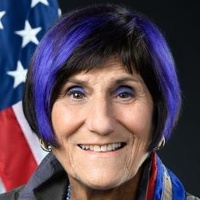
Rosa DeLauro
Representative
CT
Rosa DeLauro
Representative
CT
The Schedules That Work Act aims to provide workers with greater stability and predictability in their work hours. It grants employees the right to request flexible or stable schedules and requires employers to engage in a good-faith discussion about these requests. For covered sector employees (like retail and food service), the bill mandates 14 days' advance notice of schedules and establishes "predictability pay" for last-minute changes or split shifts. The Act also grants employees the right to 11 hours of rest between shifts, with premium pay required if this rest period is violated.