Legislative Activity
Track William's sponsored bills, co-sponsored legislation, and voting record
The BUDS Resolution allows legislation in the House of Representatives to have two primary sponsors, one from the majority and one from the minority party, to encourage bipartisan introduction of bills.
Emanuel Cleaver
Representative
MO
Emanuel Cleaver
Representative
MO
The Building Unity through Dual Sponsors (BUDS) Resolution amends House rules to allow public bills and resolutions to have two primary sponsors, provided one is from the majority party and the other from the minority party. This formalizes bipartisan introduction of legislation from the outset. The resolution also adjusts related rules concerning cosponsorship and required submission statements for these jointly sponsored measures.
The STOP CSAM Act of 2025 strengthens protections for child victims in federal court, mandates technology companies to report suspected child sexual exploitation, and expands civil remedies for victims against perpetrators and online platforms.
Barry Moore
Representative
AL
Barry Moore
Representative
AL
The STOP CSAM Act of 2025 significantly strengthens protections for child victims and witnesses in federal court by expanding definitions of harm and restricting the public disclosure of their identities. It mandates new, strict reporting duties for tech providers regarding child sexual exploitation material, backed by substantial criminal and civil penalties for non-compliance. Furthermore, the Act creates broad new civil remedies allowing victims to sue responsible online platforms and app stores for damages related to exploitation that occurred during their childhood. Finally, it improves restitution procedures, particularly for vulnerable victims, while ensuring existing state and tribal protections remain intact.
This bill prohibits non-citizens from voting in District of Columbia elections and repeals the Local Resident Voting Rights Amendment Act of 2022.
August Pfluger
Representative
TX
August Pfluger
Representative
TX
This bill prohibits non-U.S. citizens from voting in any election in the District of Columbia. It also repeals the Local Resident Voting Rights Amendment Act of 2022, effectively reverting D.C. voting eligibility rules to their pre-2022 status.
The SAFE Cities Act establishes a process for identifying and restricting federal funding to local jurisdictions that refuse to take reasonable steps to stop violence and property destruction.
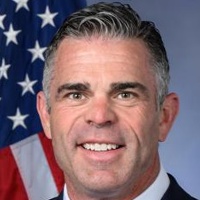
Tony Wied
Representative
WI
Tony Wied
Representative
WI
The SAFE Cities Act establishes a process for the Attorney General to officially designate certain state or local governments as "anarchist jurisdictions" based on their failure to take reasonable steps to stop violence and property destruction. Once designated, these jurisdictions will face restrictions or unfavorable treatment regarding the distribution of federal grants. The criteria focus on local policies that hinder law enforcement's ability to restore order or that involve significant cuts to police funding.
This Act penalizes jurisdictions that restrict cooperation between local law enforcement and federal immigration officials by making them ineligible for certain federal development funds.
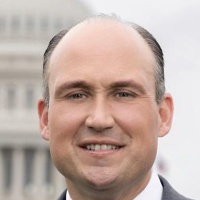
Nicholas Langworthy
Representative
NY
Nicholas Langworthy
Representative
NY
The Stop Dangerous Sanctuary Cities Act aims to penalize jurisdictions that limit cooperation with federal immigration enforcement. It defines "sanctuary jurisdictions" as those that refuse to honor detainer requests or share immigration information, with an exception for protecting crime victims and witnesses. Furthermore, the bill makes these designated sanctuary jurisdictions ineligible for specific federal development and community improvement funds, such as EDA grants and CDBG funds. Cooperating local officers are granted liability protection when honoring valid federal detainer requests.
This Act prohibits the State Department and its funded entities from censoring the free speech of United States citizens and mandates notification if such censorship occurs.
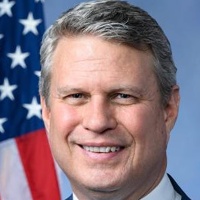
Bill Huizenga
Representative
MI
Bill Huizenga
Representative
MI
The Restoring American Freedom Act prohibits the State Department, its employees, and its funded entities from censoring the free speech of United States citizens. This legislation strictly forbids the use of federal funds to support or facilitate such censorship activities, including the creation or use of advertising blacklists. Furthermore, the Secretary of State must promptly notify Congress and the affected citizen if any censorship is discovered.
This act mandates that FHA loan disclosures include comparable VA loan information and requires lenders to ask about military service on standard loan applications.
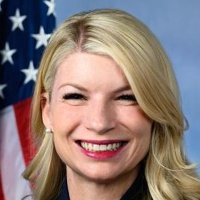
Brittany Pettersen
Representative
CO
Brittany Pettersen
Representative
CO
The VA Loan Informed Disclosure Act of 2025 (VALID Act) aims to increase awareness of VA loan options among homebuyers. It requires lenders to include comparative information about potential VA loan terms on standard FHA disclosure forms. Furthermore, the Act mandates that the Uniform Residential Loan Application include a prominent question regarding the applicant's military service.
The FAIR Exams Act establishes strict deadlines for regulatory examinations and responses, creates an independent review board for supervisory disputes, and grants financial institutions the right to an independent, *de novo* review of material supervisory determinations.
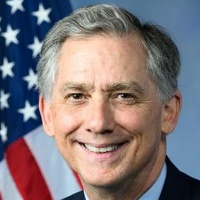
J. Hill
Representative
AR
J. Hill
Representative
AR
The Fair Audits and Inspections for Regulators’ Exams (FAIR Exams) Act establishes strict deadlines for federal regulators to complete financial examinations and issue reports. It also creates a new, independent Board to review complaints about examination practices and allows financial institutions to appeal "material supervisory determinations" *de novo*. Furthermore, the bill mandates faster regulatory responses to requests for permission or guidance and strengthens anti-retaliation protections for institutions using appeal rights.
The Financial Integrity and Regulation Management Act prohibits federal banking agencies from using "reputational risk" as a factor in supervising, examining, or taking enforcement actions against depository institutions.
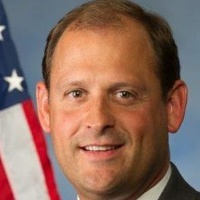
Garland Barr
Representative
KY
Garland Barr
Representative
KY
The Financial Integrity and Regulation Management (FIRM) Act prohibits federal banking agencies from using "reputational risk" as a factor in supervising, examining, or rating financial institutions. This legislation aims to ensure that bank oversight focuses strictly on financial safety and soundness, rather than public perception or political considerations. Agencies must remove all references to reputational risk from their guidance and report back to Congress on their compliance within 180 days.
The DEFIANCE Act of 2025 establishes a federal civil right of action against the creation, possession with intent to share, or sharing of nonconsensual sexually explicit digital forgeries, or "deepfakes."
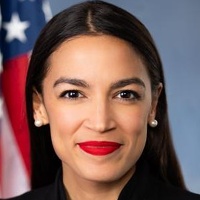
Alexandria Ocasio-Cortez
Representative
NY
Alexandria Ocasio-Cortez
Representative
NY
The DEFIANCE Act of 2025 establishes a federal civil cause of action against the creation, possession with intent to share, or sharing of nonconsensual intimate digital forgeries, often known as deepfakes. This legislation updates existing law to specifically address image-based sexual abuse created through AI or digital manipulation, regardless of whether the image is labeled as fake. Victims can sue for significant statutory damages, attorney's fees, and injunctive relief to stop the spread of the harmful content. The Act ensures that this new federal standard does not preempt or limit stronger existing State or Tribal laws.
This act, also known as the COUNTER Act, updates the Department of Defense's authority and procedures for neutralizing drone threats to U.S. assets while ensuring related security information remains confidential.
August Pfluger
Representative
TX
August Pfluger
Representative
TX
The COUNTER Act enhances the Department of Defense's authority to neutralize threats from unmanned aircraft systems targeting U.S. assets. This legislation delegates specific response powers and updates mitigation rules for drone threats. Crucially, it exempts sensitive information regarding these counter-drone technologies and procedures from public disclosure under the Freedom of Information Act. The bill also adjusts several deadlines and clarifies the applicability of certain federal laws when operating overseas to counter these threats.
This Act restricts federal subpoena power over insurance data, enhances confidentiality protections for data shared by the Federal Insurance Office, and limits the Office of Financial Research's ability to subpoena insurance companies while imposing new requirements on financial regulators when collecting data from them.
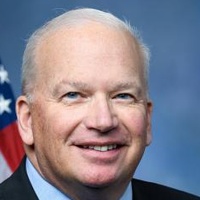
Scott Fitzgerald
Representative
WI
Scott Fitzgerald
Representative
WI
The Insurance Data Protection Act aims to adjust federal regulatory authority over insurance data by limiting the subpoena power of the Office of Financial Research against insurance companies. It also strengthens confidentiality protections for data shared with and held by the Federal Insurance Office and other financial regulators. Furthermore, the bill mandates that financial regulators must seek existing data from other sources before directly collecting information from insurance companies, ensuring data privacy is maintained.
This bill restructures the Consumer Financial Protection Bureau (CFPB) from a single-director agency into an independent commission-led agency with specific expertise and political balance requirements.
Bill Huizenga
Representative
MI
Bill Huizenga
Representative
MI
This bill, the Bureau of Consumer Financial Protection Commission Act, restructures the Consumer Financial Protection Bureau (CFPB) by replacing its single Director leadership with an independent, five-member commission appointed by the President and confirmed by the Senate. The legislation updates numerous federal laws to replace references to the "Director" with the "Commission" or "Bureau" to reflect this new governance structure. The commission will oversee the agency's core rulemaking and enforcement authority, with a Chair selected from among its members to manage day-to-day operations.
This Act establishes a bipartisan Fiscal Commission tasked with developing and reporting legislative recommendations to reduce the national debt, followed by an expedited congressional process for considering those recommendations.
Bill Huizenga
Representative
MI
Bill Huizenga
Representative
MI
The Fiscal Commission Act establishes a bipartisan commission tasked with developing legislative recommendations to improve the nation's long-term fiscal health, aiming to reduce the national debt ratio to 100% of GDP by 2039. This Commission, composed of appointed members from both chambers of Congress and outside experts, must submit its final report and proposed legislation within a specific timeframe. The Act also creates an expedited, amendment-free process for Congress to consider and vote on any resulting "implementing bills."
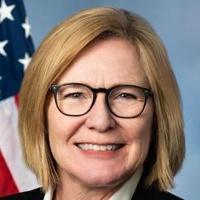
The MOMS Act establishes a federal resource hub for expecting mothers, improves access to prenatal and postnatal care through grants, and allows for the enforcement of child support obligations for unborn children.
Michelle Fischbach
Representative
MN
Michelle Fischbach
Representative
MN
The MOMS Act aims to support expecting and new mothers through three main initiatives. It establishes a centralized federal resource website, Pregnancy.gov, to connect mothers with local support services and adoption agencies. The bill also creates grant programs to fund organizations offering positive alternatives to abortion and expanding access to at-home prenatal and postnatal telehealth care in underserved areas. Finally, it allows states to establish and enforce child support obligations against biological fathers for unborn children upon the mother's request.
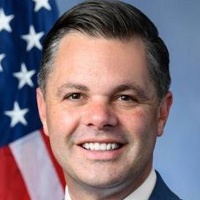
This bill establishes a permanent advisory committee to study and report on the financial market fallout from potential Chinese military aggression toward Taiwan, requiring regular reports and recommendations to bolster U.S. market resilience.
Zachary (Zach) Nunn
Representative
IA
Zachary (Zach) Nunn
Representative
IA
This bill establishes a permanent advisory committee focused on studying and reporting on the severe financial market fallout that could result from Chinese military aggression toward Taiwan. The committee, composed of market experts and regulators, will advise the Financial Stability Oversight Council on potential economic vulnerabilities. The Council must then issue an annual public report detailing market risks, potential losses, and specific recommendations for regulators to fortify U.S. financial systems against such geopolitical shocks.
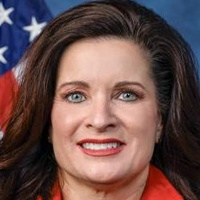
This Act repeals the federal ban on mailing concealable firearms and prohibits the U.S. Postal Service from creating rules that restrict the mailing of firearms or require the disclosure of customer records as a condition of mailing.
Sheri Biggs
Representative
SC
Sheri Biggs
Representative
SC
The Protecting the Mailing of Firearms Act repeals the federal ban on mailing certain concealable firearms. This legislation also prohibits the U.S. Postal Service from enacting rules that would block or unduly restrict the mailing of firearms, ammunition, or their components. Furthermore, the USPS cannot require sellers to disclose customer records or firearm serial numbers as a condition for mailing these items.
The NFA SBS Act redefines short-barreled shotguns, removes specific federal restrictions on them, preempts certain state taxes and registration requirements, and mandates the destruction of related government records.
Sheri Biggs
Representative
SC
Sheri Biggs
Representative
SC
The NFA SBS Act redefines short-barreled shotguns under federal tax law, removing specific restrictions and ensuring they are not treated as destructive devices. This legislation eliminates disparate federal restrictions on these shotguns and preempts state or local laws that attempt to impose special taxes or registration requirements referencing the National Firearms Act. Furthermore, the Act mandates the destruction of specific government records related to the registration and transfer of these shotguns.
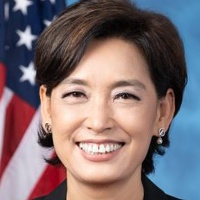
This act officially recognizes accounting education as part of a well-rounded curriculum to improve access to accounting programs, especially for underrepresented students.
Young Kim
Representative
CA
Young Kim
Representative
CA
The Accounting STEM Pursuit Act of 2025 officially recognizes accounting education as a vital component of a well-rounded K-12 curriculum. This legislation amends federal education law to ensure accounting is counted within core curriculum planning frameworks. The Act specifically directs states and districts to improve access to quality accounting programs, with a focus on increasing opportunities for underrepresented students.
The Safeguard American Voter Eligibility (SAVE) Act mandates that individuals registering to vote in federal elections must present documentary proof of U.S. citizenship.
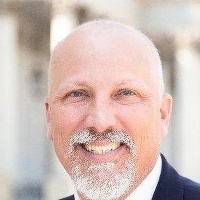
Chip Roy
Representative
TX
Chip Roy
Representative
TX
The Safeguard American Voter Eligibility Act (SAVE Act) significantly amends federal law to require individuals registering to vote in federal elections to present documentary proof of U.S. citizenship. This legislation mandates that states actively clean their voter rolls and cooperate with federal agencies to verify citizenship status. It establishes new criminal penalties for officials who fail to enforce these documentation requirements.