
Legislative Activity
Track Claudia's sponsored bills, co-sponsored legislation, and voting record
The Major Richard Star Act ensures that military retirees with combat-related disabilities can concurrently receive their full military retirement pay and VA disability compensation without reduction.

Gus Bilirakis
Representative
FL
Gus Bilirakis
Representative
FL
The Major Richard Star Act ensures that military retirees with combat-related disabilities can receive both their military retirement pay and VA disability compensation concurrently without reduction. This law removes previous restrictions that caused military retirement pay to be offset by VA disability payments for these specific cases. The changes take effect on the first day of the month following the Act's enactment.
The HELPER Act of 2025 establishes a new FHA mortgage insurance program offering 100% financing with an upfront premium and no monthly premiums for eligible first responders, educators, and law enforcement officers.
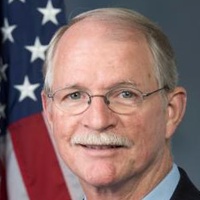
John Rutherford
Representative
FL
John Rutherford
Representative
FL
The HELPER Act of 2025 establishes a new FHA mortgage insurance program to assist first responders, educators, and law enforcement officers in purchasing homes. This program offers eligible first-time homebuyers 100% financing with no down payment required. Instead of monthly premiums, borrowers pay an upfront FHA insurance premium at closing.
This bill establishes a new federal tax credit to incentivize investments in maintaining and improving existing hydroelectric facilities and restoring rivers through approved environmental and safety upgrades.

Adrian Smith
Representative
NE
Adrian Smith
Representative
NE
The Maintaining and Enhancing Hydroelectricity and River Restoration Act establishes a new federal tax credit to incentivize investments in improving existing hydroelectric facilities. This credit covers 30% of the cost for property that enhances fish passage, water quality, dam safety, or facilitates the removal of obsolete river obstructions. Furthermore, the bill allows taxpayers to elect direct payment or transferability for this new credit.
The Deliver for Democracy Act ties the Postal Service's ability to raise periodical rates to meeting specific on-time delivery performance targets and mandates annual reporting and a GAO study on USPS pricing strategies.
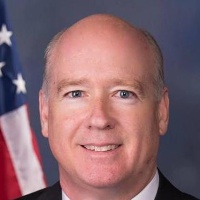
Robert Aderholt
Representative
AL
Robert Aderholt
Representative
AL
The Deliver for Democracy Act ties the Postal Service's ability to raise rates for periodicals to meeting specific on-time delivery performance targets. It mandates annual public reporting on newspaper delivery performance, requiring the Postmaster General to detail service metrics. Furthermore, the bill directs the GAO to study and report on strategies the USPS could use to improve the financial standing of underperforming mail products.
This bill exempts qualifying premium cigars, defined by strict manufacturing and ingredient standards, from certain regulations under the Federal Food, Drug, and Cosmetic Act.

Byron Donalds
Representative
FL
Byron Donalds
Representative
FL
This bill seeks to amend the Federal Food, Drug, and Cosmetic Act to exempt "premium cigars" from certain FDA regulations. It defines a premium cigar based on strict criteria, including being hand-rolled and made entirely of natural tobacco leaf. The exemption is supported by findings that premium cigar use is rare, especially among youth, and poses lower health risks than other tobacco products.
Extends the statute of limitations to 10 years for prosecuting fraud related to specific pandemic unemployment programs and rescinds $5,000,000 from unspent COVID-19 relief funds.

Jason Smith
Representative
MO
Jason Smith
Representative
MO
The "Pandemic Unemployment Fraud Enforcement Act" extends the statute of limitations to 10 years for prosecuting fraud related to specific pandemic unemployment programs. It applies to violations or conspiracies under Title 18 and Title 31 of the U.S. Code and rescinds $5,000,000 from previously allocated funds to offset the budget. The changes made by this law will begin on the date of enactment.
This bill allows investors to defer taxes on capital gain dividends from mutual funds when those dividends are automatically reinvested until the shares are sold or the investor passes away.

Beth Van Duyne
Representative
TX
Beth Van Duyne
Representative
TX
This bill, the Generating Retirement Ownership through Long-Term Holding Act, allows individual investors to defer paying taxes on capital gain dividends from mutual funds if those dividends are automatically reinvested into more fund shares. Taxes on these deferred gains are only due when the investor sells the shares or upon death. This provision aims to encourage long-term investment in mutual funds by providing immediate tax relief on reinvested earnings.
This act expands the Work Opportunity Tax Credit to include employers who hire qualified military spouses.
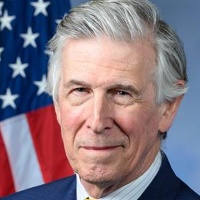
Donald Beyer
Representative
VA
Donald Beyer
Representative
VA
The Military Spouse Hiring Act amends the Internal Revenue Code to expand eligibility for the Work Opportunity Tax Credit (WOTC). This change allows employers to claim the tax credit for hiring qualified military spouses. A qualified military spouse is defined as someone certified as being married to a member of the U.S. Armed Forces.
This act redefines "State of Residence" for federal firearms law, particularly for military personnel, and updates background check requirements to include the buyer's home address.

Dusty Johnson
Representative
SD
Dusty Johnson
Representative
SD
The Travelers Gun Rights Act updates the federal definition of "State of Residence" for firearm laws, particularly for active-duty military personnel. This change also modifies background check requirements to ensure a buyer's home address is documented on the necessary paperwork. The bill clarifies residency rules for individuals who may reside in multiple states or lack a traditional physical home.
This Act prevents the President and the Secretary of HHS from using emergency declarations to impose gun control measures and prohibits federal disaster rules from restricting the possession or transfer of firearms, ammunition, and related accessories.
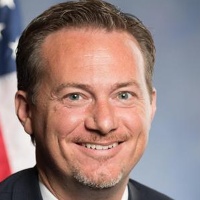
Michael Cloud
Representative
TX
Michael Cloud
Representative
TX
The Protecting the Right to Keep and Bear Arms Act of 2025 restricts the President and the Secretary of Health and Human Services from using emergency declarations to enact gun control measures. This bill specifically prevents the use of the National Emergencies Act and the Public Health Service Act for imposing new firearm restrictions. Furthermore, it amends disaster relief law to prohibit federal disaster declarations from banning the possession, sale, or transfer of firearms, ammunition, or related accessories.
The Credit for Caring Act of 2025 establishes a new, partially refundable federal income tax credit for working family caregivers covering qualified expenses exceeding \$2,000, up to a \$5,000 annual limit.

Mike Carey
Representative
OH
Mike Carey
Representative
OH
The Credit for Caring Act of 2025 establishes a new, non-refundable federal income tax credit for working family caregivers who incur significant expenses caring for a relative with long-term care needs. Eligible caregivers can claim a credit equal to 30% of qualified expenses exceeding \$2,000, up to a maximum annual credit of \$5,000. The bill specifies detailed requirements for the care recipient's needs, the types of allowable expenses, and includes income phase-out limits for claiming the benefit.
This bill establishes the Space National Guard as a new, federally recognized state-level space force component for the U.S. Space Force, initially limited to seven states.
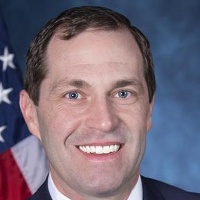
Jason Crow
Representative
CO
Jason Crow
Representative
CO
The Space National Guard Establishment Act of 2025 formally creates the Space National Guard as a new state-level component of the organized militia, serving as the reserve component for the U.S. Space Force. This initial structure transfers existing Air National Guard space personnel and units in seven specified states into the new branch. The Act mandates that the Space National Guard utilize existing Air National Guard facilities and requires annual briefings to Congress on its implementation and operations for five years.
The MATCH IT Act of 2025 mandates the creation of national standards and data requirements to improve the accuracy of patient record matching across healthcare systems, aiming to reduce safety risks and administrative costs.

Mike Kelly
Representative
PA
Mike Kelly
Representative
PA
The MATCH IT Act of 2025 aims to significantly improve patient safety and reduce healthcare costs by establishing national standards for accurate patient identification across health systems. This bill mandates the creation of clear definitions and minimum data sets necessary to achieve a near-perfect patient match rate. Furthermore, it introduces voluntary incentives through Medicare to encourage providers to adopt these new, higher standards for linking patient records.
This act amends the tax code to give businesses the option to immediately deduct or amortize (spread out over at least five years) their research and experimental expenditures.
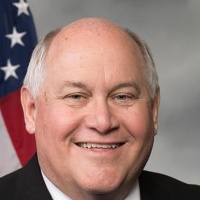
Ron Estes
Representative
KS
Ron Estes
Representative
KS
The American Innovation and R&D Competitiveness Act of 2025 revises how businesses treat research and experimental (R&E) expenditures for tax purposes. Taxpayers can now choose between immediately deducting R&E costs or amortizing them over a period of at least 60 months. This legislation also makes technical adjustments to ensure consistency between immediate deductions and claiming the research tax credit.
The Arctic Watchers Act establishes a State Department program to monitor and counter foreign influence, particularly from China and Russia, across security, economic, and political fronts in the strategically important Arctic region.

William Keating
Representative
MA
William Keating
Representative
MA
The Arctic Watchers Act establishes a new "Arctic Watcher Program" managed by the Secretary of State to closely monitor security, economic, and political activities in the Arctic. This program is specifically tasked with tracking and countering influence operations from China and Russia that threaten U.S. interests. To achieve this, designated "Arctic Watchers" will be stationed in key allied countries to report annually on their efforts to protect U.S. strategic goals in the region.
This Act mandates a Congressional review period before the President can reduce or alter certain sanctions imposed on Iran.
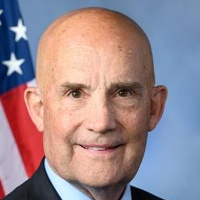
Keith Self
Representative
TX
Keith Self
Representative
TX
The Iran Sanctions Relief Review Act of 2025 establishes a mandatory Congressional review process for any Presidential action that significantly alters or terminates sanctions against Iran. Before implementing such changes, the President must submit a detailed report to Congress, which then has 30 to 60 days to review the proposed action. During this review period, the President is prohibited from taking the action unless Congress passes a joint resolution of approval. If Congress passes a joint resolution of disapproval, the President is permanently barred from taking that specific action.
This act extends the current Medicare transition payment rates for durable medical equipment in non-competitive bidding areas until the end of 2025.
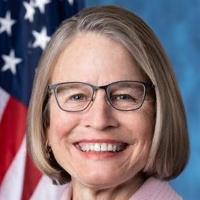
Mariannette Miller-Meeks
Representative
IA
Mariannette Miller-Meeks
Representative
IA
The DMEPOS Relief Act of 2025 extends the current Medicare transition payment rates for durable medical equipment in non-competitive bidding areas through the end of 2025. This action delays the implementation of new payment regulations until January 1, 2026. The Secretary of Health and Human Services is directed to maintain existing payment structures in these specific areas for the remainder of the year.
This bill supports the stepped-up basis, which helps family farms and small businesses pass on their operations to the next generation without facing higher taxes.
Tracey Mann
Representative
KS
Tracey Mann
Representative
KS
This bill expresses the House of Representatives' support for maintaining the stepped-up basis under section 1014 of the Internal Revenue Code, which allows inherited assets to be adjusted to their current market value, protecting family-owned farms and small businesses from increased taxes. It opposes any changes to the tax code that would negatively impact the ability of these businesses to pass their operations on to the next generation. The bill recognizes the importance of generational transfers for the continuation of family farms, ranches, agribusinesses, and small businesses.
This bill censures Representative Al Green for disrupting the President's address to Congress and requires him to receive a formal reprimand before the House.

Dan Newhouse
Representative
WA
Dan Newhouse
Representative
WA
This bill censures Representative Al Green of Texas for disrupting the President's address to Congress on March 4, 2025. It condemns his actions and orders him to appear before the House of Representatives to receive a formal reprimand. During this time the Speaker of the House will publicly read the resolution of censure.
This bill ensures that long-term care hospitals receive appropriate Medicare payments for treating seniors with critical conditions by exempting certain high-acuity cases from site-neutral payment rules.
Kevin Hern
Representative
OK
Kevin Hern
Representative
OK
The "Securing Access to Care for Seniors in Critical Condition Act of 2025" amends the Social Security Act to change Medicare payment rules for long-term care hospitals. Beginning October 1, 2026, hospitals will not be subject to site-neutral payment rules for patients discharged under specific high-severity diagnosis groups. This adjustment aims to ensure adequate financial support for hospitals treating the most critical patients.