Legislative Activity
Track Tommy's sponsored bills, co-sponsored legislation, and voting record
This bill establishes a program to add 2,000 new Medicare-funded residency positions annually through 2033, prioritizing rural, high-need, and newly established medical school-affiliated hospitals, while also mandating a study on strategies to increase workforce diversity.

John Boozman
Senator
AR
John Boozman
Senator
AR
The Resident Physician Shortage Reduction Act of 2025 aims to address physician shortages by adding 2,000 new Medicare-funded residency positions annually from 2027 through 2033. These new slots are distributed through an application process, prioritizing hospitals serving rural areas, Health Professional Shortage Areas (HPSAs), and those supporting new medical schools. Additionally, the bill mandates a study and report on effective strategies for increasing diversity within the healthcare workforce.
This bill reforms the Department of Veterans Affairs by consolidating its construction, facilities management, acquisition, and logistics functions under centralized leadership and improving entry-level hiring for acquisition roles.

Jim Banks
Senator
IN
Jim Banks
Senator
IN
The Department of Veterans Affairs Acquisition Reform Act of 2025 aims to streamline and improve the VA's management of construction, facilities, and procurement. This bill centralizes construction, leasing, acquisition, and logistics functions under single leadership within the VA. It also mandates reforms to prioritize hiring entry-level acquisition staff through expanded internship programs.
This bill amends federal law to include rioting as a form of racketeering activity under the RICO Act.

Ted Cruz
Senator
TX
Ted Cruz
Senator
TX
This bill proposes amending federal law to explicitly include the crime of arson and bombing threats within the definition of "racketeering activity" under the RICO Act. By adding this offense to Title 18, U.S. Code, the legislation makes it easier to prosecute individuals involved in such acts under federal racketeering statutes.
This bill prohibits U.S. ports from servicing vessels that have docked at foreign ports where the U.S. government has determined property essential to accessing that port was unjustly seized from an American entity.
Bill Hagerty
Senator
TN
Bill Hagerty
Senator
TN
The Defending American Property Abroad Act of 2025 establishes penalties against foreign governments that nationalize or expropriate U.S.-owned port infrastructure in trade partner nations. It mandates the identification of such "prohibited property" seized by foreign governments after January 1, 2024. Once identified, vessels that use these prohibited ports will face strict bans on docking, unloading, or receiving services in the United States. Furthermore, the Act expands the definition of unfair trade practices to include the arbitrary seizure or discriminatory treatment of U.S. assets abroad.
This Act designates the Muslim Brotherhood and its affiliates as terrorist organizations, imposes strict visa and entry bans on its members, and mandates annual reporting and sanctions against its branches.
Ted Cruz
Senator
TX
Ted Cruz
Senator
TX
The Muslim Brotherhood Terrorist Designation Act of 2025 officially designates the Muslim Brotherhood and its affiliates, including Hamas, as terrorist organizations under U.S. law. This act imposes strict prohibitions on their operations within the United States and mandates visa and entry bans for their members. Furthermore, the legislation requires the Secretary of State to annually report on all Muslim Brotherhood branches globally, compelling the President to impose sanctions on those identified.
This Act clarifies that automatic citizenship at birth does not apply to children born in the U.S. to parents who are unlawfully present, present for diplomatic purposes, or engaged in hostile operations.

Tom Cotton
Senator
AR
Tom Cotton
Senator
AR
The Constitutional Citizenship Clarification Act of 2025 seeks to amend federal law regarding birthright citizenship under the 14th Amendment. It codifies existing exceptions, stating that automatic citizenship does not apply to children born in the U.S. to parents who are unlawfully present, present solely for diplomatic purposes, or engaged in hostile operations. This legislation aims to clarify that U.S. citizenship at birth is contingent upon allegiance, not solely physical location.
This Act establishes a standardized chemical testing method to identify the origin of red snapper and tuna, and authorizes the Department of Defense to provide technical assistance to foreign naval forces to combat illegal fishing.
Ted Cruz
Senator
TX
Ted Cruz
Senator
TX
The Illegal Red Snapper and Tuna Enforcement Act mandates the creation of a standardized chemical testing method to accurately determine the country of origin for seafood, specifically targeting red snapper and tuna. This new methodology must be practical for field use and applicable to prepared dishes to combat illegal fishing operations. Furthermore, the bill authorizes the Secretary of Defense to provide maritime technical assistance to foreign naval forces to enhance their enforcement capabilities against illegal, unreported, and unregulated (IUU) fishing.
This bill authorizes the creation and sale of commemorative coins for the 2028 Los Angeles Olympic and Paralympic Games and the 2034 Salt Lake City Winter Olympic and Paralympic Games to help fund their hosting and legacy programs.
Alejandro Padilla
Senator
CA
Alejandro Padilla
Senator
CA
This Act authorizes the creation and sale of commemorative coins to celebrate the upcoming 2028 Summer Olympic and Paralympic Games in Los Angeles and the 2034 Winter Olympic and Paralympic Games in Salt Lake City. The Secretary of the Treasury is empowered to mint various denominations of gold, silver, and clad coins for each event, with designs reflecting American participation. A mandatory surcharge on each coin sold will directly fund the respective organizing committees for the Games and their legacy programs, provided the government recovers all minting costs first.
This act prohibits the teaching or promotion of concepts related to "gender ideology" in elementary and secondary education.

James Risch
Senator
ID
James Risch
Senator
ID
The Say No to Indoctrination Act prohibits the teaching or promotion of concepts related to "gender ideology" in elementary and secondary schools. This amendment directly restricts curriculum content under existing federal education law. The goal is to prevent instruction on specific concepts defined elsewhere as "gender ideology."
This Act prevents the government from classifying independent workers as employees solely based on the provision of portable or standard benefits.

Bill Cassidy
Senator
LA
Bill Cassidy
Senator
LA
The Unlocking Benefits for Independent Workers Act ensures that offering portable or standard employee benefits will not, by itself, cause a worker to be classified as an employee under federal law. This change allows companies to offer valuable benefits to independent workers without automatically triggering employee status for tax or labor purposes. The legislation aims to encourage the provision of portable benefits to the independent workforce.
This Act mandates the collection and public release of citizenship data in the decennial census, and requires that only U.S. citizens be counted for the purpose of apportioning congressional representatives and electoral votes starting with the 2030 count.
Bill Hagerty
Senator
TN
Bill Hagerty
Senator
TN
The Equal Representation Act mandates the inclusion of a citizenship question on the decennial census starting in 2030. It requires the public release of state-by-state citizenship data following the count. Crucially, this act stipulates that non-citizens will be excluded from the population totals used to determine congressional apportionment and electoral votes.
This resolution expresses the Senate's view that the Senate Parliamentarian should be limited to a single six-year term.

Roger Marshall
Senator
KS
Roger Marshall
Senator
KS
This Senate resolution expresses the sense of the Senate that the Parliamentarian should serve a maximum term of six years. The proposal aims to limit the tenure of the official who advises on Senate rules and procedures to ensure accountability and fresh perspectives. This action acknowledges the current appointment structure while advocating for a fixed term limit.
This resolution supports designating a week in June 2025 as "National Women's Sports Week" to celebrate the anniversary of Title IX and advocate for the protection of female-only athletic opportunities.

Joni Ernst
Senator
IA
Joni Ernst
Senator
IA
This resolution supports designating the week of June 23–29, 2025, as "National Women's Sports Week." The observance aims to celebrate the anniversary of Title IX and the significant growth of women's sports participation since its enactment. Furthermore, the resolution emphasizes the importance of protecting fair and safe athletic opportunities exclusively for female athletes. This week will honor the achievements of women in sports and promote equal access for all sexes.
The SUPPORT for Patients and Communities Reauthorization Act of 2025 strengthens public health initiatives, expands substance use disorder treatment and recovery support through 2030, and updates regulations for controlled substance prescribing and monitoring.
Bill Cassidy
Senator
LA
Bill Cassidy
Senator
LA
The **SUPPORT for Patients and Communities Reauthorization Act of 2025** is a comprehensive bill designed to strengthen national efforts against substance use disorders and improve public health infrastructure. It significantly increases and extends funding for prevention, treatment, and recovery support programs through 2030, while also updating regulations for provider training and controlled substance distribution. Key provisions focus on enhancing maternal health support, improving overdose monitoring, bolstering the mental health workforce, and ensuring accountability in state-level mental health spending.
This Act establishes a new federal crime for intentionally blocking public roads or highways in a manner that interferes with commerce, while also updating the title of the existing law on interference with commerce.
Thom Tillis
Senator
NC
Thom Tillis
Senator
NC
The Safe and Open Streets Act establishes a new federal crime for intentionally blocking public roads or highways in a manner that interferes with commerce. This legislation amends existing federal law to include this specific offense, punishable by fines or up to five years in prison. The Act also updates the title of the relevant statute to broadly cover "Interference with commerce."
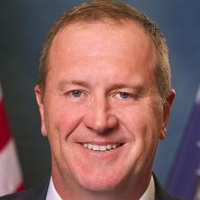
This Act rescinds billions of dollars in previously appropriated budget authority from various State Department, foreign aid, and international programs, as well as future funding for the Corporation for Public Broadcasting.
Eric Schmitt
Senator
MO
Eric Schmitt
Senator
MO
The Rescissions Act of 2025 immediately cancels previously allocated budget authority across various government accounts, primarily targeting State Department and foreign aid programs. This legislation rescinds billions of dollars designated for international organizations, global health initiatives, development assistance, and peacekeeping operations. Additionally, it cancels future funding set aside for the Corporation for Public Broadcasting in fiscal years 2026 and 2027.
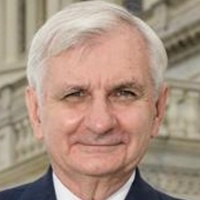
This Act restricts consumer reporting agencies from sharing mortgage loan applicant reports with third parties unless the request is tied to a firm offer of credit or the recipient is directly involved in the applicant's existing mortgage or has explicit authorization.
John Reed
Senator
RI
John Reed
Senator
RI
The Homebuyers Privacy Protection Act restricts how consumer reporting agencies can share your credit report when you are seeking a residential mortgage loan. Specifically, it limits the sharing of these reports unless they are connected to a firm offer of credit or are being sent to parties directly involved in your current mortgage, such as the originator or servicer. This ensures that your sensitive financial information is only accessed by relevant parties during the home loan process.
This bill mandates detailed reporting and public transparency for federal payments while expanding data access across agencies to verify recipients and prevent improper government spending.
Joni Ernst
Senator
IA
Joni Ernst
Senator
IA
The Delivering On Government Efficiency in Spending Act mandates increased transparency by requiring federal agencies to report detailed information on all Treasury payments for public posting. It also enhances government integrity by granting the Treasury access to sensitive data, like new hire and tax records, to verify recipients and prevent improper payments. Furthermore, the bill requires agencies to verify bank account information before disbursing funds to ensure accuracy. These measures aim to improve oversight, reduce fraud, and increase accountability in federal spending.
This Act mandates that any final World Health Organization pandemic preparedness treaty or agreement must receive the advice and consent of the U.S. Senate by a two-thirds majority vote to be binding on the United States.

Ron Johnson
Senator
WI
Ron Johnson
Senator
WI
This Act mandates that any final convention or agreement on pandemic preparedness resulting from the World Health Organization's (WHO) International Negotiating Body must be treated as a formal treaty. Consequently, the United States cannot adopt or implement such an agreement without receiving the "advice and consent" of the Senate. This ensures that the Senate has a final, two-thirds majority vote on any binding international health instrument negotiated by the WHO.
The ABC-ED Act of 2025 expands public health data grants to track real-time hospital capacity, mandates CMMI pilot programs for improving emergency care for older adults and psychiatric crises, and directs a study on best practices for hospital capacity data systems.

Christopher Coons
Senator
DE
Christopher Coons
Senator
DE
The ABC-ED Act of 2025 aims to improve emergency department efficiency by allowing public health grants to fund real-time hospital bed capacity tracking systems. It also mandates the Center for Medicare and Medicaid Innovation to pilot programs focused on enhancing emergency care for older adults and those in acute psychiatric crises. Finally, the bill directs a study on best practices for these capacity tracking systems and their impact on emergency wait times.