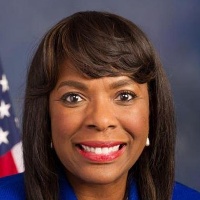
Legislative Activity
Track Terri's sponsored bills, co-sponsored legislation, and voting record
This Act retroactively applies the Indian Reorganization Act of 1934 to the Poarch Band of Creek Indians and confirms existing trust lands.
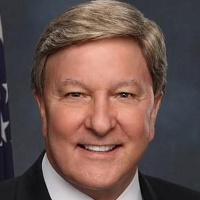
Mike Rogers
Representative
AL
Mike Rogers
Representative
AL
The Poarch Band of Creek Indians Parity Act officially confirms the tribe's status under the Indian Reorganization Act of 1934, treating them as if they were under federal jurisdiction since that date. This legislation also validates and confirms all land previously taken into trust by the Secretary of the Interior for the benefit of the tribe. Essentially, the bill ensures parity and legal certainty regarding the tribe's historical relationship with the federal government concerning land and recognition.
This Act increases the federal matching rate for Medicaid expenditures made by states on expanded maternal health services provided by qualified providers.
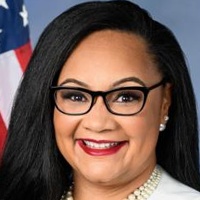
Nikema Williams
Representative
GA
Nikema Williams
Representative
GA
The Advancing Maternal Health Equity Under Medicaid Act aims to increase federal funding for states that expand Medicaid coverage for maternal health services. This bill provides a higher Federal Medical Assistance Percentage (FMAP) to cover 90% of a state's increased expenditures on qualifying prenatal, postpartum, and related support services. To qualify, states must use these funds to supplement existing spending and improve the quality and capacity of care delivered by designated maternity providers and perinatal health workers.
This resolution encourages members of Congress to conduct unannounced oversight visits to ICE detention facilities within their states to assess conditions following perceived lapses in DHS oversight.
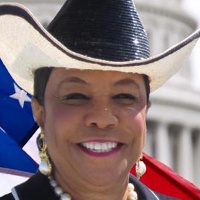
Frederica Wilson
Representative
FL
Frederica Wilson
Representative
FL
This resolution encourages Members of Congress to conduct unannounced visits to Immigration and Customs Enforcement (ICE) detention facilities within their states. Congress feels this direct oversight is necessary due to perceived failures in internal Department of Homeland Security (DHS) monitoring. The goal is for members to gain firsthand knowledge of detention conditions to inform necessary reforms.
This Act prohibits states from interfering with or penalizing individuals who provide, receive, or facilitate abortion services that are legal in the state where the service occurs, including interstate travel for such care.

Lizzie Fletcher
Representative
TX
Lizzie Fletcher
Representative
TX
The Ensuring Women’s Right to Reproductive Freedom Act prohibits states from interfering with or retaliating against individuals who provide or receive abortion services that are legal in the state where the service occurs. This protection extends to interstate travel for legal abortion care and the movement of FDA-approved abortion-related drugs across state lines. Individuals harmed by violations can sue in federal court for damages and legal fees.
The Break the Cycle of Violence Act establishes federal frameworks within HHS and the Department of Labor to fund community-based violence intervention programs and provide job training for opportunity youth in high-violence areas.
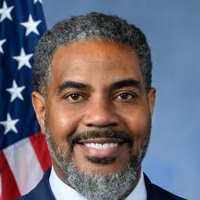
Steven Horsford
Representative
NV
Steven Horsford
Representative
NV
The Break the Cycle of Violence Act establishes federal frameworks within HHS and the Department of Labor to address community violence through prevention and economic opportunity. Title I creates grants for community-based violence intervention programs focused on evidence-based, trauma-responsive care, while Title II funds job training for opportunity youth in high-violence areas. Overall, the bill aims to reduce violence by investing in local services and creating pathways to employment rather than relying solely on incarceration.
The Women’s Health Protection Act of 2025 establishes a federal right to access abortion services before fetal viability and protects the right to travel for care, overriding state restrictions that place burdens on abortion access not imposed on comparable medical procedures.
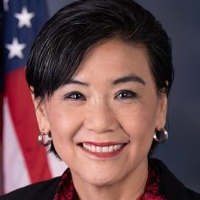
Judy Chu
Representative
CA
Judy Chu
Representative
CA
The Women’s Health Protection Act of 2025 establishes a federal statutory right to access abortion services, prohibiting medically unnecessary restrictions that impede care before fetal viability. This Act protects the right of patients to travel across state lines to receive reproductive healthcare and allows providers to offer services free from state interference that conflicts with established medical standards. It preempts conflicting state and local laws and provides robust enforcement mechanisms for individuals and the Attorney General to challenge violations.
This Act expands healthcare access by ensuring lawfully present immigrants are eligible for federal health programs, treating federally authorized presence as lawful presence for coverage, and giving states the option to cover undocumented individuals under Medicaid and CHIP.

Pramila Jayapal
Representative
WA
Pramila Jayapal
Representative
WA
The Health Equity and Access under the Law for Immigrant Families Act of 2025 aims to significantly expand healthcare access for immigrants legally residing in the U.S. by ensuring eligibility for federal health programs like Medicaid and CHIP, removing state restrictions for permanent residents, and treating federally authorized presence as lawful presence for coverage purposes. The bill also provides states the option to extend Medicaid and CHIP coverage to individuals without lawful status. Furthermore, it removes citizenship barriers preventing certain non-citizens from accessing ACA marketplace subsidies and updates Medicare eligibility rules.
This Act mandates that pharmacies must promptly provide or facilitate access to FDA-approved contraception and related medications, prohibiting discrimination and interference in dispensing these products.
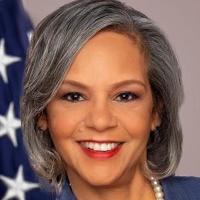
Robin Kelly
Representative
IL
Robin Kelly
Representative
IL
The Access to Birth Control Act establishes federal requirements for pharmacies to ensure timely and non-discriminatory access to FDA-approved contraception and related medications. Pharmacies must immediately dispense in-stock items or promptly refer customers or order out-of-stock products. This law prohibits employee interference, misinformation, or harassment, while also setting penalties for non-compliance.
This Act posthumously awards a Congressional Gold Medal to pioneering, barrier-breaking cyclist Marshall "Major" Taylor and authorizes the sale of duplicate bronze medals.
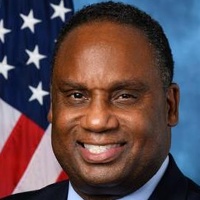
Jonathan Jackson
Representative
IL
Jonathan Jackson
Representative
IL
This bill posthumously awards a Congressional Gold Medal to Marshall "Major" Taylor, recognizing the pioneering Black cyclist for his historic achievements and his fight against racial prejudice. The medal will be struck by the Secretary of the Treasury and presented to Taylor's great-granddaughter. The Act also authorizes the sale of bronze duplicates to cover production costs.
This resolution expresses support for World Sickle Cell Awareness Day to increase public awareness and advocate for enhanced research, early detection, accessible treatments, and preventative care for sickle cell disease.
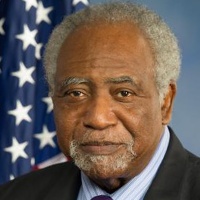
Danny Davis
Representative
IL
Danny Davis
Representative
IL
This resolution expresses strong support for designating June 19, 2025, as "World Sickle Cell Awareness Day" to elevate public understanding of Sickle Cell Disease (SCD). It calls for increased empirical research, early detection screenings, and equitable access to novel treatments and potential cures for those affected globally. Furthermore, the bill urges federal agencies to coordinate efforts to address systemic barriers and biases in SCD care.
This Act establishes a National Science Foundation grant program to create non-traditional STEM apprenticeship programs and mandates an interagency task force to review existing federal STEM career development efforts.
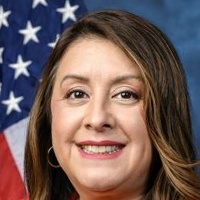
Luz Rivas
Representative
CA
Luz Rivas
Representative
CA
The STEM Pathways for the Future Act establishes a new competitive grant program through the National Science Foundation (NSF) to create and improve STEM apprenticeship programs outside of traditional four-year colleges. This legislation prioritizes funding for community colleges and minority-serving institutions to develop these pathways. Additionally, it mandates the creation of a temporary interagency task force to review and report on existing federal STEM career development programs.
This Act ensures certain Bureau of Prisons employees currently receiving the "Rest of US" locality pay rate are instead paid based on the nearest established locality pay rate, potentially increasing their compensation.
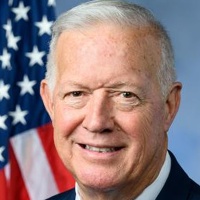
Randy Weber
Representative
TX
Randy Weber
Representative
TX
The Pay Our Correctional Officers Fairly Act aims to increase the pay for certain Bureau of Prisons (BOP) employees currently receiving the "Rest of US" locality pay rate. This bill mandates that their pay locality be adjusted to the nearest established locality offering a higher rate, provided it is within 200 miles of their worksite. This change is designed to ensure fairer compensation for these federal correctional staff.
This bill establishes a comprehensive "Domestic Workers Bill of Rights" to extend federal labor protections, including overtime, paid sick leave, and anti-discrimination coverage, to domestic employees while creating a standards board to advise on future working conditions.
Pramila Jayapal
Representative
WA
Pramila Jayapal
Representative
WA
The Domestic Workers Bill of Rights Act seeks to significantly expand labor protections for domestic employees by bringing them under standard federal laws, including eligibility for overtime pay and mandated paid sick leave. The bill establishes written employment agreements, sets clear privacy boundaries for workers in private homes, and creates a Standards Board to recommend ongoing improvements to wages and benefits. Furthermore, it establishes enforcement mechanisms and temporarily increases federal Medicaid funding for in-home care services to help offset compliance costs.
The PHARA Act of 2025 mandates the immediate release of existing NIH grant funding, requires termination clauses in future agreements, and prohibits the NIH from ending funding solely due to shifting agency priorities.
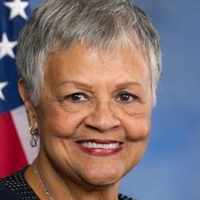
Bonnie Watson Coleman
Representative
NJ
Bonnie Watson Coleman
Representative
NJ
The PHARA Act of 2025 mandates the immediate release of all existing National Institutes of Health (NIH) grant funding and prohibits the cancellation of active research agreements. Moving forward, all new NIH grant agreements must include specific termination clauses requiring a 90-day notice and good-faith negotiation before ending the funding. Furthermore, this Act explicitly prevents the NIH from terminating agreements solely because the research no longer aligns with current agency goals or priorities.
This resolution expresses Congressional support for designating June 2025 as "Black Music Month" to recognize the profound cultural impact and historical significance of music created by Black Americans.
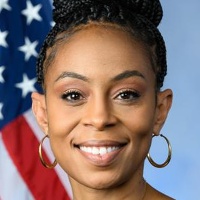
Shontel Brown
Representative
OH
Shontel Brown
Representative
OH
This resolution formally expresses Congressional support for designating June 2025 as "Black Music Month." It recognizes the profound and foundational cultural impact of Black artists across all American music genres, from spirituals to hip-hop. The bill encourages the nation to actively celebrate this rich heritage through educational programs and public acknowledgment. Ultimately, it honors the creators whose work reflects the American experience and promotes diversity through music.
This Act establishes an interagency task force and mandates annual studies by the USCCR to address systemic disparities and recommend policy improvements for Black women and girls across education, economics, healthcare, justice, and housing.
Robin Kelly
Representative
IL
Robin Kelly
Representative
IL
The Protect Black Women and Girls Act establishes a new federal Interagency Task Force, led by the Attorney General, to examine and recommend policy improvements across education, economic development, healthcare, justice, and housing for Black women and girls. Additionally, the bill mandates the U.S. Commission on Civil Rights to conduct annual studies on critical issues impacting this demographic, including violence, incarceration rates, and health disparities. The legislation aims to coordinate federal efforts and gather data to address systemic challenges and improve outcomes for Black women and girls nationwide.
This bill prohibits the Secretary of the Navy from changing the names of naval vessels currently honoring Cesar Chavez, Medgar Evers, Ruth Bader Ginsburg, Dolores Huerta, Thurgood Marshall, Harvey Milk, Lucy Stone, or Harriet Tubman.
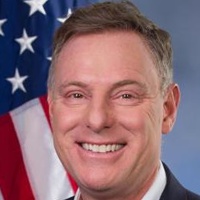
Scott Peters
Representative
CA
Scott Peters
Representative
CA
The Preserving Great Americans’ Legacies Act of 2025 prohibits the Secretary of the Navy from changing the names of naval vessels currently honoring eight specific individuals. This legislation ensures that ships named after figures like Cesar Chavez, Ruth Bader Ginsburg, and Harriet Tubman retain their designations. The act immediately prevents any renaming of these protected vessels.
This Act permanently protects inventoried roadless areas within the National Forest System from new road construction and logging, upholding existing federal "Roadless Rule" prohibitions.
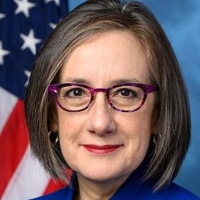
Andrea Salinas
Representative
OR
Andrea Salinas
Representative
OR
The Roadless Area Conservation Act of 2025 aims to provide lasting protection for inventoried roadless areas within the National Forest System. This legislation codifies existing federal regulations, known as the "Roadless Rule," which generally prohibits the construction of new roads or the cutting of timber in these sensitive zones. The purpose is to safeguard critical ecological benefits, clean water sources, and wildlife habitats while maintaining the Forest Service's multiple-use management mission.
The My Body, My Data Act of 2025 establishes strict limits on the collection, use, and sharing of personal reproductive and sexual health information, while granting individuals robust rights to access, correct, and delete their sensitive data.
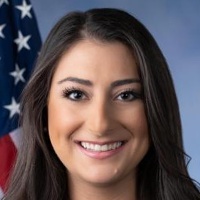
Sara Jacobs
Representative
CA
Sara Jacobs
Representative
CA
The My Body, My Data Act of 2025 establishes strict federal protections for personal reproductive and sexual health information held by regulated entities. This law limits data collection and sharing to only what is strictly necessary for providing requested services. It grants individuals the rights to access, correct, and delete this sensitive data, and requires clear public privacy policies detailing data handling practices. Finally, the Act prohibits retaliation against individuals who exercise these new privacy rights and grants enforcement authority to the FTC while allowing individuals to sue violators.
This act increases funding for the Defense Health Agency's research, development, testing, and evaluation, specifically ensuring support for Congressionally Directed Medical Research Programs as outlined in prior appropriations acts.

André Carson
Representative
IN
André Carson
Representative
IN
The Medical Research for Our Troops Act increases the budget for the Defense Health Agency's research, development, testing, and evaluation (RDT&E). This legislation specifically restores and increases funding for these critical defense health programs. The restored funds must be used to support all previously directed medical research programs and initiatives as outlined in prior appropriations acts.