
Legislative Activity
Track Adrian's sponsored bills, co-sponsored legislation, and voting record
The Data BRIDGE Act mandates the FCC to update the national broadband map to specifically include the locations of agricultural areas after consulting with relevant agencies.
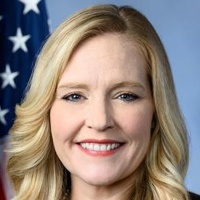
Erin Houchin
Representative
IN
Erin Houchin
Representative
IN
The Data BRIDGE Act mandates that the FCC update its national broadband map to specifically include the locations of agricultural areas. This update must be completed within 180 days of the bill's enactment. To ensure accuracy, the FCC is required to consult with the Secretary of Agriculture and other relevant stakeholders during this process. This action aims to better identify broadband coverage gaps affecting farms.
This Act establishes a multi-sector Task Force, led by the Treasury Secretary, to study, recommend strategies for, and report on preventing evolving electronic payment scams.
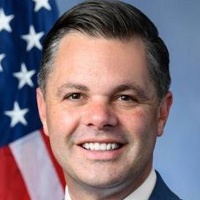
Zachary (Zach) Nunn
Representative
IA
Zachary (Zach) Nunn
Representative
IA
The Taskforce for Recognizing and Averting Payment Scams Act (TRAPS Act) establishes a new Task Force led by the Secretary of the Treasury. This diverse group, including federal agencies, industry experts, and consumer advocates, will study evolving payment scams. The Task Force is charged with developing cross-sector prevention strategies and submitting comprehensive recommendations for new laws and improved coordination to combat these fraudulent activities.
The ENFORCE Act strengthens laws against child exploitation by clarifying the crime of producing child pornography involving interstate commerce and enhancing enforcement, including removing the statute of limitations, mandating sex offender registration, and strengthening pretrial detention for offenses involving obscene visual representations of child sexual abuse.
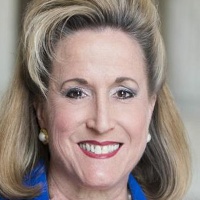
Ann Wagner
Representative
MO
Ann Wagner
Representative
MO
The ENFORCE Act strengthens federal laws against child exploitation by clarifying the crime of producing child pornography intended for interstate commerce. It also significantly enhances enforcement for crimes involving obscene visual representations of child sexual abuse. These enhancements include removing the statute of limitations for prosecution, mandating sex offender registration, and establishing a presumption of pretrial detention for those charged.
This resolution formally recognizes the 20th anniversary of the Renewable Fuel Standard and affirms its foundational role in boosting U.S. energy security, supporting rural economies, and improving environmental performance.

Max Miller
Representative
OH
Max Miller
Representative
OH
This resolution formally recognizes the 20th anniversary of the Renewable Fuel Standard (RFS) and celebrates its foundational role in strengthening U.S. energy security and supporting rural economies. It highlights the RFS's success in driving domestic fuel innovation, creating jobs, and improving environmental performance. The measure affirms the ongoing importance of the RFS in achieving national energy, economic, and environmental goals.
This bill establishes a federal right for producers to sell covered livestock and their derived products across state lines, preempting state and local regulations on the raising of animals outside their jurisdiction.
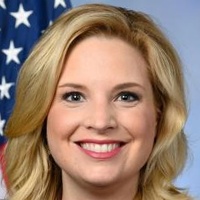
Ashley Hinson
Representative
IA
Ashley Hinson
Representative
IA
The Save Our Bacon Act establishes a federal right for producers to move and sell products derived from covered livestock across state lines, ensuring a single national market. This legislation prevents individual states from imposing unique production standards on livestock or products raised outside their borders. Essentially, it standardizes regulations to ensure free interstate commerce for meat and dairy products, excluding those primarily derived from egg-laying animals.
This Act modernizes seasonal agricultural CDLs by allowing online renewal for eligible employees and clarifying that implements of husbandry are not considered commercial motor vehicles.
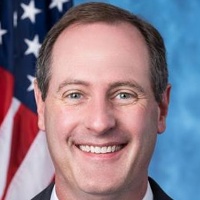
Tracey Mann
Representative
KS
Tracey Mann
Representative
KS
The Seasonal Agriculture CDL Modernization Act streamlines the process for farm workers by allowing states to establish online systems for renewing seasonal, restricted Commercial Driver's Licenses (CDLs). This legislation also clarifies that implements of husbandry (farm equipment) are not classified as commercial motor vehicles for licensing purposes. Overall, the bill aims to modernize and simplify CDL requirements for those in the farm-related service industries.
This bill authorizes the presentation of a Congressional Gold Medal to the 320th Barrage Balloon Battalion for their crucial and heroic service during the D-Day invasion.
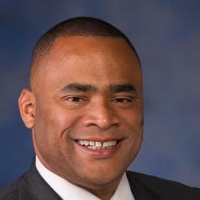
Marc Veasey
Representative
TX
Marc Veasey
Representative
TX
This bill authorizes the presentation of a Congressional Gold Medal to the 320th Barrage Balloon Battalion to recognize their crucial and heroic service as the only all-Black unit defending the D-Day invasion in Normandy. The medal will be struck by the Treasury and ultimately deposited with the Smithsonian Institution for public display. The Act also permits the sale of bronze duplicates to cover production costs, with proceeds returning to the U.S. Mint fund.
This bill establishes a State judicial threat intelligence and resource center to monitor threats, coordinate security, and report on incidents targeting state and local judges and court staff.
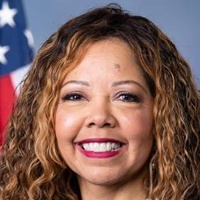
Lucy McBath
Representative
GA
Lucy McBath
Representative
GA
This bill establishes a new State judicial threat intelligence and resource center to enhance the security of state and local judges and court staff. The center will provide training, monitor threats, standardize reporting, and create a national database for incidents against the judiciary. It also requires annual reporting to Congress on the number and severity of threats received.
This Act prohibits the Federal Reserve from directly or indirectly issuing a Central Bank Digital Currency (CBDC) and bars the Fed from developing or using one for monetary policy without explicit Congressional authorization.
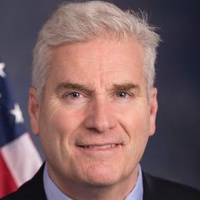
Tom Emmer
Representative
MN
Tom Emmer
Representative
MN
The Anti-CBDC Surveillance State Act strictly prohibits the Federal Reserve from directly or indirectly issuing a Central Bank Digital Currency (CBDC) to individuals. This legislation prevents the Fed from developing, testing, or implementing any digital currency that functions as a direct liability of the Federal Reserve. Furthermore, Congress asserts that any authority to create such a digital asset must explicitly come from Congress itself.
This Act mandates that VA medical staff promptly certify the deaths of veterans who died from natural causes within 48 hours to expedite burial and survivor benefits.
Tom Emmer
Representative
MN
Tom Emmer
Representative
MN
The Veteran Burial Timeliness and Death Certificate Accountability Act addresses significant delays in obtaining death certificates for veterans who die from natural causes, often due to VA medical staff delays. This bill mandates that VA medical providers must certify a veteran's death within 48 hours or allow the local medical examiner to step in. Furthermore, the VA must annually report on its compliance with this new timely certification requirement.
This bill authorizes the creation and sale of commemorative coins for the 2028 Los Angeles and 2034 Salt Lake City Olympic and Paralympic Games to help fund the events, with all surcharges going to the respective organizing committees after covering production costs.
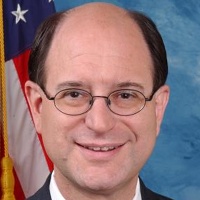
Brad Sherman
Representative
CA
Brad Sherman
Representative
CA
This Act authorizes the Secretary of the Treasury to mint and sell special commemorative coins for the 2028 Los Angeles Olympic and Paralympic Games and the 2034 Salt Lake City Winter Olympic and Paralympic Games. The coins will feature designs celebrating American athletes and the Games themselves. All surcharges collected from the sale of these coins will be directed to the respective organizing committees to help fund the events and related youth sports programs. The entire program must be conducted at no cost to the U.S. Government.
This bill mandates detailed reporting and public transparency for federal spending, enhances data sharing across agencies to prevent improper payments, and strengthens verification processes for government disbursements.
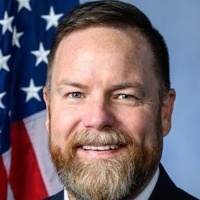
Aaron Bean
Representative
FL
Aaron Bean
Representative
FL
This bill mandates increased transparency and verification for all federal government spending by requiring agencies to report detailed payment information to the Treasury. It enhances program integrity by granting the Treasury access to new hire and tax data to prevent and recover improper payments. Agencies must also verify recipient bank accounts before disbursement, with exceptions allowed only for sensitive national security or law enforcement operations.
This resolution condemns Russia's forced deportation and Russification of Ukrainian children and demands their return before any final peace agreement is reached.
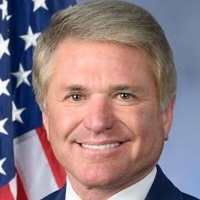
Michael McCaul
Representative
TX
Michael McCaul
Representative
TX
This resolution strongly condemns Russia for the abduction and forced "Russification" of Ukrainian children, highlighting these actions as grave violations of international law. It emphasizes that these children must be safely returned to Ukraine before any final peace agreement to end the war is considered. The document also underscores the heightened risks of trafficking, violence, and trauma faced by Ukrainian children due to the ongoing invasion.
This bill allows associations of employers to sponsor group health plans, treating them as a single employer under ERISA, with specific requirements for plan structure and premium rating.
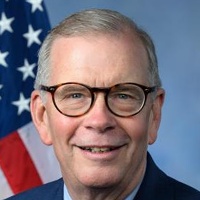
Tim Walberg
Representative
MI
Tim Walberg
Representative
MI
The Association Health Plans Act amends federal law to allow certain groups or associations of employers to sponsor a single group health plan, treating them as a single employer for coverage purposes. This aims to expand access to health coverage by enabling broader risk pooling across different industries. The bill establishes specific criteria these associations must meet to qualify, including minimum size and operational standards. Finally, it outlines rules for setting premium rates and prohibits discrimination based on health status for plans established under this Act.
This bill mandates increased public transparency regarding detailed Medicare spending data by HHS, requires MedPAC to conduct annual, apples-to-apples comparisons of Medicare Advantage and traditional Medicare expenditures, and updates the Trustees' annual report with categorized spending information.
Aaron Bean
Representative
FL
Aaron Bean
Representative
FL
The Apples to Apples Comparison Act of 2025 mandates greater public transparency regarding Medicare spending by requiring the Secretary of HHS to publish detailed, machine-readable expenditure data broken down by county and beneficiary type. Furthermore, the bill requires the Medicare Payment Advisory Commission (MedPAC) to annually compare the average cost of Medicare Advantage enrollees versus traditional Medicare beneficiaries, accounting for plan differences and risk factors. Finally, the Medicare Trustees must also report detailed expenditure information categorized by specific beneficiary enrollment statuses.
This resolution expresses support for designating June 2025 as "National Dairy Month" to recognize the dairy industry's vital contributions to American health, family farming, and the national economy.

Claudia Tenney
Representative
NY
Claudia Tenney
Representative
NY
This resolution expresses support for designating June 2025 as "National Dairy Month" to recognize the vital role of the dairy industry. It highlights the industry's significant contributions to American health, noting that dairy is a key source of essential nutrients like calcium and Vitamin D. Furthermore, the resolution commends the nation's family-owned dairy farms for their economic impact and agricultural heritage. It also strongly opposes unfair regulations that hinder dairy farmers.
This Act mandates that major internet content and service providers (edge providers) must help fund the Universal Service Fund alongside broadband providers to lower consumer costs and support service in high-cost areas.
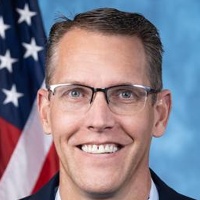
Randy Feenstra
Representative
IA
Randy Feenstra
Representative
IA
The Lowering Broadband Costs for Consumers Act of 2025 reforms the Universal Service Fund (USF) contribution system by requiring large internet content and service providers ("Edge Providers") to contribute alongside traditional broadband providers. This aims to shift the financial burden away from solely relying on phone companies to ensure continued support for universal service. The bill also directs the FCC to establish new, predictable funding mechanisms to support broadband providers serving high-cost areas.
This act ensures that time spent receiving outpatient observation services in a hospital counts toward the required 3-day inpatient stay for Medicare coverage of skilled nursing facility services.
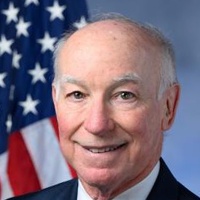
Joe Courtney
Representative
CT
Joe Courtney
Representative
CT
The Improving Access to Medicare Coverage Act of 2025 ensures that time spent receiving outpatient observation services in a hospital counts toward the required 3-day inpatient stay needed to qualify for Medicare coverage of skilled nursing facility (SNF) services. This change effectively removes a significant barrier to accessing post-hospital care for many Medicare beneficiaries. The Secretary of HHS is authorized to implement this rule immediately.
This bill repeals the Freedom of Access to Clinic Entrances (FACE) Act, effectively removing federal criminal penalties for obstructing access to reproductive health clinics.

Chip Roy
Representative
TX
Chip Roy
Representative
TX
The FACE Act Repeal Act of 2025 seeks to eliminate federal protections that currently prohibit the obstruction of reproductive health clinic entrances, the use of force or threats against patients and providers, and the intentional damage of clinic property. If enacted, this legislation would immediately repeal these federal criminal prohibitions and apply to all pending or future prosecutions.
This act exempts legally authorized pesticide applications from needing separate Clean Water Act permits for discharges into navigable waters, with specific exceptions for violations and certain industrial or stormwater discharges.
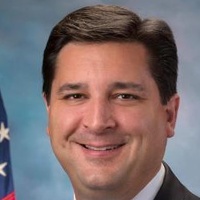
David Rouzer
Representative
NC
David Rouzer
Representative
NC
The Reducing Regulatory Burdens Act of 2025 aims to streamline pesticide regulation by generally exempting legally authorized pesticide applications from needing separate Clean Water Act discharge permits. This change applies when authorized pesticides or their residues enter navigable waters from a specific discharge point. However, the exemption does not apply if the discharge violates FIFRA rules, involves certain stormwater runoff, or originates from industrial processes or vessels.