
Legislative Activity
Track Adrian's sponsored bills, co-sponsored legislation, and voting record
This Act prevents the President and the Secretary of HHS from using emergency declarations to impose gun control measures and prohibits federal disaster rules from restricting the possession or transfer of firearms, ammunition, and related accessories.
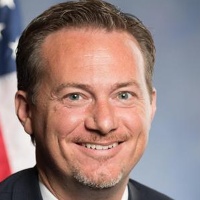
Michael Cloud
Representative
TX
Michael Cloud
Representative
TX
The Protecting the Right to Keep and Bear Arms Act of 2025 restricts the President and the Secretary of Health and Human Services from using emergency declarations to enact gun control measures. This bill specifically prevents the use of the National Emergencies Act and the Public Health Service Act for imposing new firearm restrictions. Furthermore, it amends disaster relief law to prohibit federal disaster declarations from banning the possession, sale, or transfer of firearms, ammunition, or related accessories.
This bill supports the stepped-up basis, which helps family farms and small businesses pass on their operations to the next generation without facing higher taxes.
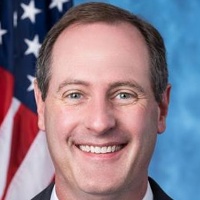
Tracey Mann
Representative
KS
Tracey Mann
Representative
KS
This bill expresses the House of Representatives' support for maintaining the stepped-up basis under section 1014 of the Internal Revenue Code, which allows inherited assets to be adjusted to their current market value, protecting family-owned farms and small businesses from increased taxes. It opposes any changes to the tax code that would negatively impact the ability of these businesses to pass their operations on to the next generation. The bill recognizes the importance of generational transfers for the continuation of family farms, ranches, agribusinesses, and small businesses.
This act amends the tax code to give businesses the option to immediately deduct or amortize (spread out over at least five years) their research and experimental expenditures.
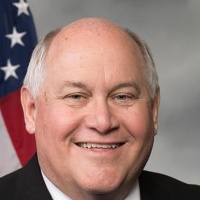
Ron Estes
Representative
KS
Ron Estes
Representative
KS
The American Innovation and R&D Competitiveness Act of 2025 revises how businesses treat research and experimental (R&E) expenditures for tax purposes. Taxpayers can now choose between immediately deducting R&E costs or amortizing them over a period of at least 60 months. This legislation also makes technical adjustments to ensure consistency between immediate deductions and claiming the research tax credit.
The "Protecting American Students Act" modifies the calculation and reporting requirements for the excise tax on net investment income for private colleges and universities, specifically excluding certain students from the calculation and requiring detailed reporting of student counts.
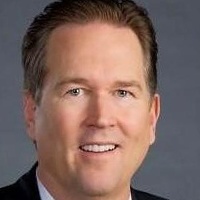
Vern Buchanan
Representative
FL
Vern Buchanan
Representative
FL
The "Protecting American Students Act" amends the Internal Revenue Code to change how certain students are counted when determining if private colleges and universities are subject to an excise tax on net investment income. It stipulates that only students meeting specific eligibility requirements under the Higher Education Act of 1965 are to be included in this calculation. The Act also mandates that these institutions report the number of students used before and after adjustments when calculating the tax. These provisions are set to take effect for taxable years beginning after December 31, 2025.
This bill repeals the excise tax on indoor tanning services, effective after the date of enactment.
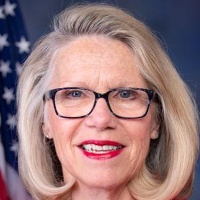
Carol Miller
Representative
WV
Carol Miller
Representative
WV
The "Tanning Tax Repeal Act of 2025" eliminates the federal excise tax on indoor tanning services. This bill removes Chapter 49 from the Internal Revenue Code, effectively repealing the tax. The repeal is applicable for services provided after the bill's enactment.
The FARMLAND Act of 2025 aims to protect U.S. agriculture by restricting foreign investment, increasing oversight, and enforcing regulations against foreign entities of concern.
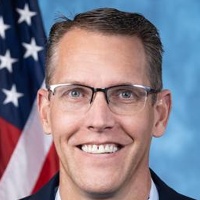
Randy Feenstra
Representative
IA
Randy Feenstra
Representative
IA
The FARMLAND Act of 2025 aims to protect U.S. agriculture and national security by modernizing and enforcing laws against malign foreign investments in U.S. agricultural land and businesses, particularly from countries of concern. It increases penalties for non-compliance with reporting requirements, mandates detailed reports on foreign land ownership and potential threats, and enhances the Committee on Foreign Investment in the United States (CFIUS) authority to review real estate transactions involving foreign entities. The act also directs the creation of a comprehensive database of foreign-owned agricultural land and prohibits foreign individuals/entities from participating in Farm Service Agency programs. Finally, the act authorizes appropriations for secure workspace construction, database development, and other activities related to enforcing the act.
This Act updates the definition of fossil fuel under the Clean Air Act to specifically include fuel used by ocean-going vessels, paving the way for new renewable fuel standards for the shipping industry.
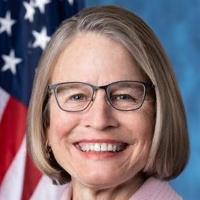
Mariannette Miller-Meeks
Representative
IA
Mariannette Miller-Meeks
Representative
IA
This Act updates the definition of "fossil fuel" under the Clean Air Act to specifically include fuel used by ocean-going vessels. This change allows the EPA to incorporate maritime fuel into renewable fuel standards moving forward. The EPA is required to finalize the necessary regulations within one year of the bill's enactment.
This bill reinstates the pre-American Rescue Plan Act threshold for third-party payment networks to report gig economy earnings to the IRS, requiring both over $20,000 in payments and over 200 transactions.
Carol Miller
Representative
WV
Carol Miller
Representative
WV
The Saving Gig Economy Taxpayers Act seeks to reinstate the previous, higher reporting thresholds for third-party payment processors issuing Form 1099-K. This means payment networks will only be required to report earnings to the IRS if a user exceeds both a \$20,000 total payment amount and 200 separate transactions in a calendar year. Furthermore, the bill applies this "de minimis" standard to backup withholding rules for these network payments starting in 2025.
This resolution expresses formal condolences to the families and loved ones of the 67 victims of the January 2025 collision between American Eagle Flight 5342 and a U.S. Army flight, while honoring the victims and commending the first responders.
Ron Estes
Representative
KS
Ron Estes
Representative
KS
This resolution expresses the House of Representatives' deepest condolences to the families and loved ones of the 67 individuals who lost their lives in the January 29, 2025, collision of American Eagle Flight 5342 and a U.S. Army flight. It honors the victims, many of whom had strong ties to Wichita, Kansas, and commends the heroic efforts of the first responders and emergency personnel who managed the recovery.
The "Second Chances for Rural Hospitals Act" expands Medicare eligibility for rural emergency hospitals to include certain facilities that closed between 2014 and 2020, with modified payment rules for those near existing hospitals.
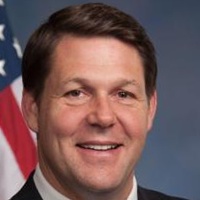
Jodey Arrington
Representative
TX
Jodey Arrington
Representative
TX
The "Second Chances for Rural Hospitals Act" broadens the definition of "rural emergency hospital" under Medicare, enabling certain previously closed rural hospitals to re-qualify. Effective January 1, 2027, it allows facilities that ceased operations between 2014 and 2020 to become rural emergency hospitals. It also modifies payment rules, specifying that increased payments will not apply to facilities located less than 35 miles from the nearest hospital.
The "Federal Firearms Licensee Protection Act of 2025" increases penalties for stealing firearms from licensed dealers, manufacturers, or importers, especially during burglaries or robberies, and clarifies related definitions.
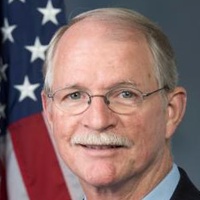
John Rutherford
Representative
FL
John Rutherford
Representative
FL
The "Federal Firearms Licensee Protection Act of 2025" increases penalties for stealing firearms from licensed dealers. It sets stricter punishments, including up to 20 years in prison, for violating laws related to firearm theft. The act also mandates minimum prison sentences of 3 years for burglaries and 5 years for robberies targeting licensed firearm businesses.
This bill designates English as the official language of the United States, standardizing its use in government functions and naturalization processes, while allowing exceptions for certain circumstances.
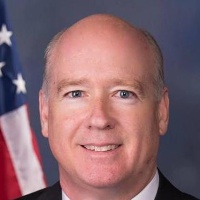
Robert Aderholt
Representative
AL
Robert Aderholt
Representative
AL
The "Designation of English as the Official Language of the United States Act of 2025" establishes English as the official language of the U.S., requiring the government to conduct official business in English and encouraging English language learning. It mandates a uniform English language standard for naturalization, ensuring new citizens can understand core American documents, while also providing exceptions for certain situations like language teaching, national security, and protection of rights. The bill also sets rules for interpreting U.S. laws, favoring interpretations that protect individual rights and state powers, and directs the Secretary of Homeland Security to develop uniform English language testing for citizenship applicants.
The American Innovation Act of 2025 incentivizes entrepreneurship by increasing tax deductions for start-up costs, allowing unused losses and credits to be preserved after an ownership change under certain conditions.
Vern Buchanan
Representative
FL
Vern Buchanan
Representative
FL
The American Innovation Act of 2025 modifies the tax code to simplify and expand deductions for start-up and organizational expenditures for new businesses, allowing businesses to deduct up to $20,000 in start-up costs in the first year. The Act also preserves start-up net operating losses and tax credits after an ownership change, with specific conditions to ensure the continuation of the business. These changes aim to support new businesses by providing more immediate tax relief and ensuring that their losses and credits are not entirely forfeited after an ownership change. The provisions of this act generally apply to businesses starting after December 31, 2025.
This resolution disapproves and nullifies the Internal Revenue Service’s rule regarding supervisory approval of penalties.
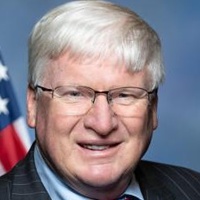
Glenn Grothman
Representative
WI
Glenn Grothman
Representative
WI
This joint resolution invokes the Congressional Review Act to formally disapprove and nullify the Internal Revenue Service’s rule regarding supervisory approval of penalties. By passing this measure, Congress declares the rule void and prevents it from having any legal force or effect.
The "Rebuild America’s Health Care Schools Act of 2025" expands Medicare coverage to include all direct and indirect costs hospitals incur for nursing and allied health education programs, ensuring better funding and preventing recoupment of previously covered costs.
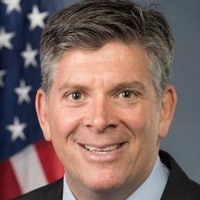
Darin LaHood
Representative
IL
Darin LaHood
Representative
IL
The "Rebuild America’s Health Care Schools Act of 2025" updates how Medicare reimburses hospitals for the costs of running nursing and allied health education programs. It broadens the definition of "reasonable costs" to include both direct and indirect expenses, regardless of whether they are incurred directly by the hospital or through related entities. The Act also requires the Secretary of Health and Human Services to issue rules implementing these changes and to refund hospitals for past cost reductions that would now be allowable. This aims to provide greater financial support for these crucial healthcare education programs.
The APLUS Act loosens restrictions on market agencies' financial ties to smaller meatpacking companies, provided they disclose these ties to livestock sellers, while maintaining the Secretary's authority to enforce fair practices.
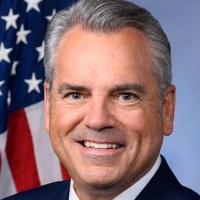
Mark Alford
Representative
MO
Mark Alford
Representative
MO
The APLUS Act directs the Secretary of Agriculture to update regulations, permitting market agencies to have financial interests in smaller meatpacking companies, defined by specific slaughter capacities. These market agencies must disclose these financial ties to livestock sellers. The Act does not reduce the Secretary's authority to enforce rules protecting producers, competition, and market integrity under existing law.
This bill modifies the definition of "qualifying single source drug" under the Social Security Act to include certain advanced drugs using genetically targeted technology for a limited time.
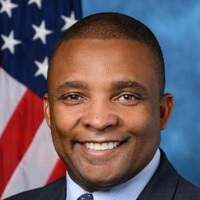
Donald Davis
Representative
NC
Donald Davis
Representative
NC
The "Maintaining Investments in New Innovation Act" amends the Social Security Act's definition of "qualifying single source drug" to include advanced drugs using genetically targeted technology. This update applies to drugs that can modify gene function, potentially impacting drug pricing and access regulations under the Act.
Permanently allows individuals with health savings accounts (HSAs) to utilize telehealth services without needing to meet their deductible.
Jodey Arrington
Representative
TX
Jodey Arrington
Representative
TX
The "Telehealth Expansion Act of 2025" permanently allows individuals with Health Savings Accounts (HSAs) to access telehealth services without needing to meet their deductible first, starting after December 31, 2024. This removes a barrier to accessing telehealth services for HSA holders.
This bill would allow nurse practitioners and physician assistants to complete Medicare paperwork for covering certain shoes for people with diabetes.
Darin LaHood
Representative
IL
Darin LaHood
Representative
IL
The "Promoting Access to Diabetic Shoes Act" allows nurse practitioners and physician assistants to complete Medicare paperwork for covering therapeutic shoes for people with diabetes, increasing access to this benefit.
This bill expands the types of healthcare providers eligible to offer telehealth services under Medicare.
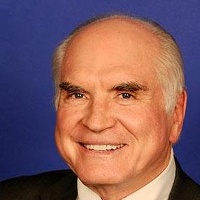
Mike Kelly
Representative
PA
Mike Kelly
Representative
PA
This bill amends Title XVIII of the Social Security Act to broaden access to telehealth services under Medicare. It expands the types of healthcare practitioners eligible to provide these services. This change aims to increase convenience and access to healthcare for Medicare beneficiaries.