
Legislative Activity
Track Emily's sponsored bills, co-sponsored legislation, and voting record
The Pell Grant Sustainability Act indexes Federal Pell Grants to inflation to help keep up with the rising costs of college for lower-income students.
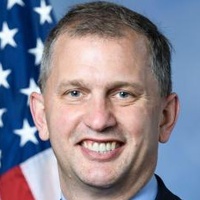
Sean Casten
Representative
IL
Sean Casten
Representative
IL
The Pell Grant Sustainability Act aims to increase the buying power of Pell Grants for lower-income students. It indexes the maximum Pell Grant award to inflation, starting with a \$1,060 increase for the 2024-2025 award year, and adjusts it annually based on the Consumer Price Index. This adjustment is added to the maximum Pell Grant specified in the latest appropriation act, ensuring Pell Grants keep pace with rising education costs. The bill also extends provisions of the Higher Education Act related to Pell Grants indefinitely.
This act reinstates criminal penalties for individuals who charge unauthorized fees to veterans for assisting with claims for VA benefits.

Chris Pappas
Representative
NH
Chris Pappas
Representative
NH
The GUARD VA Benefits Act establishes criminal penalties for individuals who charge veterans unauthorized fees for assisting with claims for benefits administered by the Department of Veterans Affairs. This legislation amends existing law to prohibit soliciting, contracting for, or receiving compensation for preparing or prosecuting VA benefit claims, except where explicitly authorized by other statutes.
The "Protect Veteran Jobs Act" allows wrongly terminated veteran civil service employees to be reinstated and requires executive agencies to report to Congress on veteran employee terminations.
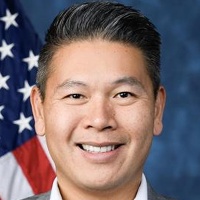
Derek Tran
Representative
CA
Derek Tran
Representative
CA
The Protect Veteran Jobs Act allows wrongly fired or dismissed veterans in civil service jobs between January 20, 2025, and the Act's enactment date to be reinstated to their previous position or a similar one. It mandates executive branch agencies to report to Congress every three months on all veteran employees who were fired or dismissed and the reasons for their termination, effective until January 20, 2029. The Act relies on existing U.S. Code definitions for key terms like "veteran" and "civil service."
The American Dream and Promise Act of 2025 provides a pathway to permanent residency for eligible individuals who came to the U.S. as children, or who have Temporary Protected Status (TPS) or Deferred Enforced Departure (DED) status.
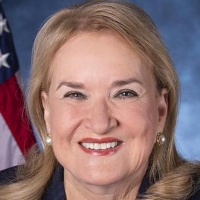
Sylvia Garcia
Representative
TX
Sylvia Garcia
Representative
TX
The American Dream and Promise Act of 2025 provides a pathway to permanent residency for eligible individuals who entered the United States as children and those with Temporary Protected Status (TPS) or Deferred Enforced Departure (DED). Title I, the Dream Act of 2025, establishes conditional permanent residency for eligible individuals who entered the U.S. as children. Title II, the American Promise Act of 2025, allows the Secretary of Homeland Security or the Attorney General to grant permanent resident status to eligible individuals from TPS or DED countries. Title III outlines general provisions, such as background checks, application processes, and fee exemptions, applicable to all seeking to adjust their status under this Act.
The "Taxpayer Funds Oversight and Accountability Act" enhances financial management and oversight in federal agencies by updating CFO responsibilities, mandating 4-year government-wide financial management plans, and requiring rigorous audits of internal controls.

Gerald Connolly
Representative
VA
Gerald Connolly
Representative
VA
The Taxpayer Funds Oversight and Accountability Act enhances financial management and transparency in federal agencies by updating the duties of Chief Financial Officers (CFOs) to include stronger oversight of financial reporting and internal controls. It replaces the government-wide 5-year financial management plan with a 4-year plan, requiring detailed strategies for improving financial management systems and workforce development. The Act also mandates annual financial management status reports to Congress and the Comptroller General, along with rigorous audits of internal controls to ensure effective financial management across the government.
Ethan's Law establishes federal penalties for improperly storing firearms where minors or prohibited persons can access them and creates grant programs to incentivize states to adopt matching safe storage laws.

Rosa DeLauro
Representative
CT
Rosa DeLauro
Representative
CT
Ethan's Law establishes federal requirements for the secure storage of firearms to prevent unauthorized access by minors and prohibited persons, making improper storage a civil violation with escalating penalties if injury or death results. The bill also creates a federal grant program to incentivize states and Tribes to adopt matching safe storage laws. Furthermore, Congress declares that failing to comply with these storage requirements constitutes negligence and may be considered the direct cause of resulting firearm injuries.
This resolution reaffirms the United States' unwavering commitment to Ukraine’s sovereignty and territorial integrity while condemning Russia’s ongoing war crimes and demanding the immediate withdrawal of its forces.

Gregory Meeks
Representative
NY
Gregory Meeks
Representative
NY
This resolution reaffirms the United States' unwavering commitment to Ukraine’s sovereignty, independence, and territorial integrity as the war enters its third year. It condemns Russia’s ongoing war crimes and human rights abuses, including the forced deportation of Ukrainian children, while demanding the immediate withdrawal of Russian forces. Furthermore, the bill insists that any path to peace must be determined by Ukraine and its allies, ensuring accountability for those responsible for atrocities.
Ensures Coast Guard members receive pay and benefits during funding lapses, comparable to other armed forces, by providing continued funding for salaries, benefits, and essential services.
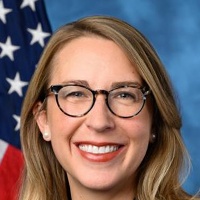
Hillary Scholten
Representative
MI
Hillary Scholten
Representative
MI
The "Pay Our Coast Guard Parity Act of 2025" ensures that Coast Guard members receive equitable pay and benefits compared to other branches of the Armed Forces. During a Coast Guard-specific funding lapse, the bill guarantees continued pay for Coast Guard military members, qualified civilian and contract employees, death gratuities, funeral travel, and basic housing allowance for dependents of Coast Guard members who die on active duty. This funding continues as long as Department of Defense funding is available, up to two weeks after a Coast Guard-specific funding lapse begins. The bill affirms the Coast Guard as a military service and aims to provide financial security to its members during funding uncertainties.
The Federal Retirement Fairness Act allows temporary employees' service after 1988 to count toward retirement benefits under the Federal Employees Retirement System.
Gerald Connolly
Representative
VA
Gerald Connolly
Representative
VA
The Federal Retirement Fairness Act amends title 5 of the United States Code, allowing civilian service in a temporary position after December 31, 1988, to be creditable under the Federal Employees Retirement System. This change applies to current employees and Members of the United States Postal Service, and requires the Office of Personnel Management to notify eligible individuals and issue implementing regulations.
The "DOC Access Act of 2025" aims to improve dental and vision care coverage by ensuring fair payment practices, protecting providers' choices, and upholding state regulatory authority.
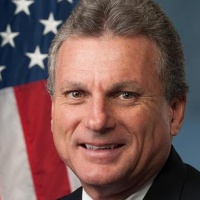
Earl Carter
Representative
GA
Earl Carter
Representative
GA
The "DOC Access Act of 2025" aims to enhance health care coverage under vision and dental plans by ensuring fair payment practices, protecting doctors' choices in labs and suppliers, and respecting state laws. It allows optometrists and dentists to charge their standard rate for non-covered services if the plan's payment is unreasonable, while ensuring they can only charge the contracted rate for dental cleanings. The bill also gives doctors more control over agreement extensions with limited benefit plans and allows them to opt out of certain provisions. Ultimately, this act seeks to balance federal guidelines with state oversight in regulating health insurance issuers and dental or vision benefit plans.
The "Due Process Continuity of Care Act" enables states to provide Medicaid coverage for individuals awaiting charges in medical institutions and supports states in planning and expanding healthcare access for this population.

Sylvester Turner
Representative
TX
Sylvester Turner
Representative
TX
The "Due Process Continuity of Care Act" aims to provide Medicaid coverage for individuals in custody awaiting charges in a medical institution, removing the existing inmate limitation on benefits. It authorizes the Secretary to award planning grants to states to support providing Medicaid assistance to eligible individuals and to prepare an application that meets specific requirements. The Act requires states to develop plans for assessing health treatment needs, increasing healthcare provider participation, and ensuring quality of care for patients in custody. It allocates $50,000,000 for these planning grants.
This bill amends the Civilian Health and Medical Program of the Department of Veterans Affairs (CHAMPVA) to extend eligibility for medical care to children until their 26th birthday, regardless of marital status.
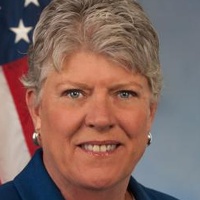
Julia Brownley
Representative
CA
Julia Brownley
Representative
CA
The CHAMPVA Children's Care Protection Act of 2025 amends the eligibility requirements for the Civilian Health and Medical Program of the Department of Veterans Affairs (CHAMPVA). This act increases the maximum age for eligible children to receive medical care under the program to 26 years old, regardless of their marital status. This change does not affect benefits for children incapable of self-support and takes effect for medical care provided on or after the enactment of this act.
The bill modifies and extends funding for the World Trade Center Health Program, expands the types of healthcare providers who can certify mental health conditions, and requires a report to Congress on the program's budget.
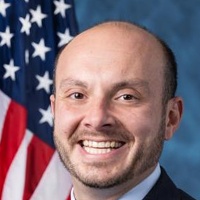
Andrew Garbarino
Representative
NY
Andrew Garbarino
Representative
NY
The 9/11 Responder and Survivor Health Funding Correction Act of 2025 amends the Public Health Service Act to improve the World Trade Center (WTC) Health Program by expanding the types of healthcare providers who can conduct mental health evaluations, modifying provider credentialing, clarifying enrollment calculations, and extending the time frame for adding health conditions for WTC responders. The act adjusts the funding formula for fiscal years 2026 through 2090 and requires the Secretary of Health and Human Services to report to Congress on the program's budget, including projected needs through 2090 and recommendations for changes to the funding formula. It also stipulates that remaining funds in the Supplemental Fund, Special Fund, and Pentagon-Shanksville Fund will revert to the Treasury.
The Secure Rural Schools Reauthorization Act of 2025 extends federal funding and program authorities for states and counties containing national forest land through 2026.

Doug LaMalfa
Representative
CA
Doug LaMalfa
Representative
CA
The Secure Rural Schools Reauthorization Act of 2025 extends critical federal funding for states and counties containing national forest land through 2026. This legislation ensures the continuation of essential community services and maintains the authority for resource advisory committees and local special projects.
The I CAN Act removes practice and billing barriers for Nurse Practitioners, CRNAs, and CNMs across Medicare and Medicaid while increasing transparency in federal health program coverage decisions.
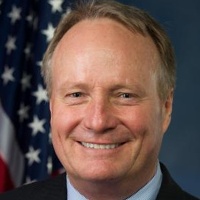
David Joyce
Representative
OH
David Joyce
Representative
OH
The "I CAN Act" is comprehensive legislation designed to remove existing practice and billing barriers for various Advanced Practice Registered Nurses (APRNs)—including Nurse Practitioners, CRNAs, and CNMs—within Medicare and Medicaid. It aims to expand patient access to care by allowing these qualified professionals to supervise, order, and bill for services to the full extent of their state-defined scope of practice. Furthermore, the bill enhances transparency and accountability for Medicare's local coverage decisions affecting APRN services. Overall, this act seeks to integrate APRNs more fully into federal healthcare programs, improving efficiency and service delivery.
This act authorizes the creation of the Smithsonian National Museum of the American Latino on the National Mall, ensuring diverse representation in its exhibits and programs.
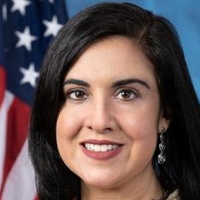
Nicole Malliotakis
Representative
NY
Nicole Malliotakis
Representative
NY
The Smithsonian National Museum of the American Latino Act authorizes the creation of the Smithsonian National Museum of the American Latino on the National Mall. It ensures the museum's exhibits and programs accurately represent the diverse cultures, histories, events, and values of Hispanic and Latino communities, seeking guidance from diverse sources. The Act also mandates regular reports to Congress on the museum's efforts to meet these diversity requirements.
The "Alternatives to PAIN Act" aims to improve Medicare Part D coverage for non-opioid pain management drugs by reducing cost-sharing and removing barriers like step therapy and prior authorization, starting in 2026.
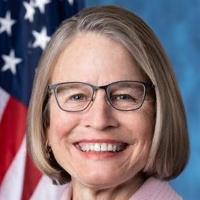
Mariannette Miller-Meeks
Representative
IA
Mariannette Miller-Meeks
Representative
IA
The "Alternatives to PAIN Act" amends Medicare Part D to improve access to non-opioid pain management drugs by waiving deductibles and ensuring they are placed on the lowest cost-sharing tier starting in 2026. The Act also prohibits the use of step therapy and prior authorization requirements for these drugs, further easing access for patients. These changes aim to provide more accessible alternatives for pain management, reducing reliance on opioids.
The "All Access Act of 2025" grants Members of Congress access to any public building during regular hours with their official ID and requires advance notice for access outside of those hours.
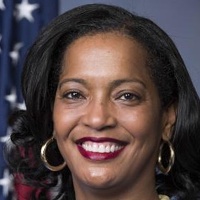
Jahana Hayes
Representative
CT
Jahana Hayes
Representative
CT
The "All Access Act of 2025" ensures Members of Congress can access any public building during regular hours by showing their official ID. Access outside of normal business hours requires a 12-hour advance notice to the building head. This act defines "Member of Congress" as a Representative or Senator.
The Rural Obstetrics Readiness Act aims to improve maternal health care in rural areas by establishing training programs, providing grant funding for equipment and supplies, creating a teleconsultation pilot program, and studying obstetric units in rural areas.
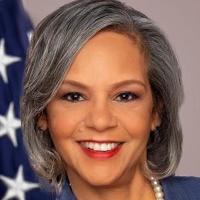
Robin Kelly
Representative
IL
Robin Kelly
Representative
IL
The Rural Obstetrics Readiness Act aims to improve maternal health outcomes in rural areas by establishing programs to train healthcare providers in obstetric emergency care, provide funding for necessary equipment and workforce development, implement teleconsultation programs, and study the challenges facing rural obstetric units. The Act authorizes grants for training, equipment, and telehealth programs, and requires a study on rural maternity ward closures and patient transport patterns.
The Honoring Our Fallen Heroes Act of 2025 expands public safety officer benefits to include disability and death coverage for certain cancers presumed to be caused by on-duty exposure to carcinogens, and clarifies "line of duty" definitions for first responder benefits.
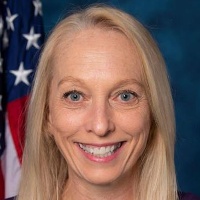
Mary Scanlon
Representative
PA
Mary Scanlon
Representative
PA
The Honoring Our Fallen Heroes Act of 2025 expands public safety officer benefits to include deaths and disabilities caused by exposure-related cancers, presuming that certain cancers diagnosed within 15 years of service are line-of-duty injuries if the officer served for at least 5 years. It defines "exposure-related cancer" and allows for updates to the list based on medical evidence, while also permitting individuals to petition for additions. The Act also clarifies "line of duty action" and applies retroactively to claims dating back to January 1, 2020, with a three-year window for filing claims based on these amendments.