Legislative Activity
Track Jimmy's sponsored bills, co-sponsored legislation, and voting record
The RESILIENCE Act of 2025 modifies tax rules to allow public utility companies to reduce their adjusted financial statement income by deductions taken for property repair and maintenance costs.
Carol Miller
Representative
WV
Carol Miller
Representative
WV
The Repair Expenditures Support Infrastructure, Labor Investment, Energy Needs, and Creates Equity Act of 2025, or the RESILIENCE Act of 2025, modifies tax rules for public utility companies. This legislation allows utility companies to reduce their adjusted financial statement income by deductions taken for repairing and maintaining their property. The goal is to align these specific repair deductions with existing depreciation rules for tax purposes, effective for tax years beginning after 2024.
This bill terminates specific prior presidential tariff orders and requires Congressional approval for the President to impose new trade barriers or withdraw existing trade agreement concessions.

Linda Sánchez
Representative
CA
Linda Sánchez
Representative
CA
This Act immediately terminates specific existing presidential executive orders imposing tariffs. It requires Congressional approval via a fast-tracked joint resolution before the President can impose new trade barriers or withdraw existing trade agreement concessions. This ensures major new trade restrictions require legislative authorization, except in cases involving existing anti-dumping enforcement or specific trade dispute rulings.
The ENLIST Act mandates that secondary schools receiving federal funds must prominently display and make accessible to students information regarding military recruiting.
Jennifer Kiggans
Representative
VA
Jennifer Kiggans
Representative
VA
The ENLIST Act mandates that secondary schools receiving federal funding must prominently display and ensure student access to military recruiting information during school hours. This ensures that information about military service and training opportunities is readily available to students.
The Resilient Coasts and Estuaries Act of 2025 updates federal coastal programs to prioritize land protection, restoration, and climate change adaptation, while significantly expanding and enhancing the National Estuarine Research Reserve System.
Mike Levin
Representative
CA
Mike Levin
Representative
CA
The Resilient Coasts and Estuaries Act of 2025 overhauls federal coastal protection by establishing a new Coastal and Estuarine Resilience and Restoration Program focused on protecting high-value lands and restoring damaged areas, with priority given to vulnerable low-income communities. The bill also significantly expands the National Estuarine Research Reserve System, mandating the designation of at least five new sites and bolstering research efforts focused on climate change adaptation. Furthermore, it establishes new requirements for non-governmental partners and updates funding authorizations through fiscal year 2029.
This bill establishes the American Family Act, which revamps the Child Tax Credit into a system of refundable monthly advance payments for qualifying children and a separate credit for other dependents.

Rosa DeLauro
Representative
CT
Rosa DeLauro
Representative
CT
The American Family Act fundamentally overhauls the Child Tax Credit by replacing the annual lump sum with a system of advance, refundable monthly payments delivered directly to families. These monthly allowances vary based on the child's age, with higher amounts provided for younger children. The bill also establishes a separate, smaller credit for other dependents and outlines procedures for annual renewal and reconciliation of advance payments when filing taxes.
This resolution demands the President and HHS Secretary provide Congress with documents regarding the "Department of Government Efficiency's" access to sensitive taxpayer and child privacy data from federal hiring and locator services.
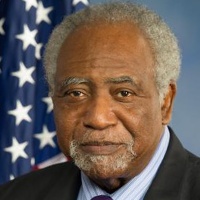
Danny Davis
Representative
IL
Danny Davis
Representative
IL
This resolution is an official request demanding the President and the Secretary of Health and Human Services immediately provide Congress with documents concerning the seizure of legally-protected taxpayer and child privacy data by the "Department of Government Efficiency" (DOGE). Specifically, it seeks records detailing DOGE's access to sensitive worker and financial data stored in the National Directory of New Hires and the Federal Parent Locator Service. The inquiry focuses on the legality, security protocols, and scope of these large-scale data requests, particularly those exceeding 40 million records.
This act permanently raises the income limits for the mortgage insurance premium tax deduction for middle-class homeowners.

Vern Buchanan
Representative
FL
Vern Buchanan
Representative
FL
The Middle Class Mortgage Insurance Premium Act of 2025 permanently extends the deduction for mortgage insurance premiums and significantly raises the income limits for eligibility. This change allows more middle-class taxpayers to deduct these costs on their federal income taxes. These provisions will apply to tax years beginning after December 31, 2025.
This bill officially terminates the national emergency declared by the President on April 2, 2025, under Executive Order 14257.
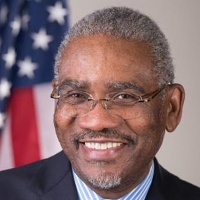
Gregory Meeks
Representative
NY
Gregory Meeks
Representative
NY
This bill officially terminates the national emergency that the President declared on April 2, 2025, under Executive Order 14257. It utilizes the authority of the National Emergencies Act to immediately end the emergency declaration. Consequently, all special powers and authorities activated by that declaration are rescinded.
The Affordable Housing Credit Improvement Act of 2025 updates state allocation formulas, reforms tenant eligibility and credit determination rules, and enhances assistance for Native American and rural housing projects.
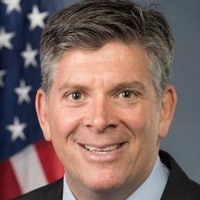
Darin LaHood
Representative
IL
Darin LaHood
Representative
IL
The Affordable Housing Credit Improvement Act of 2025 updates federal housing tax credit allocations to reflect current economic realities and boosts minimum state allotments. It reforms tenant eligibility rules to stabilize tenancy and enhance protections for vulnerable residents, including victims of abuse. The bill also provides disaster relief for property owners, increases incentives for housing the extremely low-income, and directs greater resources toward Native American and rural housing needs. Finally, it streamlines administrative processes and signals a future focus on data transparency and discouraging restrictive local zoning.
This resolution demands the President and key Secretaries provide documents detailing the local economic impact of federal job reductions and newly imposed tariffs.
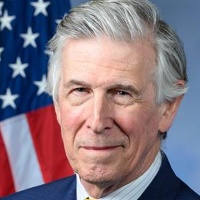
Donald Beyer
Representative
VA
Donald Beyer
Representative
VA
This resolution of inquiry formally requests the President and the Secretaries of the Treasury and Labor to provide the House of Representatives with specific documents. These documents must detail the economic impact of recent federal workforce reductions, particularly those stemming from the Department of Government Efficiency (DOGE), on local economies and unemployment rates. Additionally, Congress seeks information regarding the effect of newly imposed tariffs on the cost of imported goods.
This Act prevents the executive branch from deferring or transferring congressionally appropriated VA funds and establishes specific protections for VA personnel against hiring freezes and certain removals.
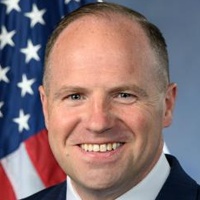
Timothy Kennedy
Representative
NY
Timothy Kennedy
Representative
NY
The VA Funding and Workforce Protection Act ensures that congressionally appropriated funds for the Department of Veterans Affairs cannot be unilaterally withheld or transferred without explicit new authorization from Congress. This legislation also provides significant protections for VA personnel by exempting the agency from presidential hiring freezes for a four-year period and establishing strict notification requirements before layoffs or removals of probationary employees can occur. Finally, the Secretary of the VA must regularly certify compliance with these new funding and personnel mandates to relevant Congressional committees.
This Act establishes federal minimum standards for public employee collective bargaining rights, allowing states to maintain their own laws if they meet or exceed these standards, otherwise the Federal Labor Relations Authority will enforce federal rules.
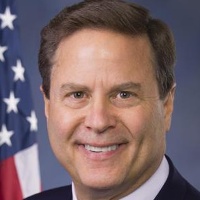
Donald Norcross
Representative
NJ
Donald Norcross
Representative
NJ
The Public Service Freedom to Negotiate Act of 2025 establishes federal minimum standards for collective bargaining rights for public employees across the nation. It requires the Federal Labor Relations Authority (FLRA) to review state laws to ensure they substantially provide these minimum rights, including the right to organize and bargain collectively. If a state fails to meet these standards, the FLRA will administer federal labor relations rules for the uncovered employees. The Act also prohibits strikes or lockouts that would measurably disrupt emergency or public safety services.
The Raise the Wage Act of 2025 gradually increases the federal minimum wage to \$17.00, phases out subminimum wages for tipped employees and workers with disabilities, and eliminates the subminimum wage for young workers.
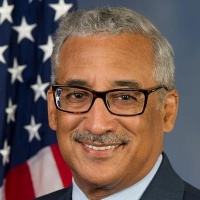
Robert Scott
Representative
VA
Robert Scott
Representative
VA
The Raise the Wage Act of 2025 establishes a phased increase of the federal minimum wage, culminating in a \$17.00 per hour rate five years after enactment, followed by automatic annual adjustments tied to median wage growth. This bill also phases out the lower minimum wage for tipped employees and workers under 20, ensuring they eventually earn the standard federal minimum wage. Furthermore, it sets a schedule to eliminate subminimum wages for individuals with disabilities and prohibits the issuance of new special certificates allowing for lower pay.
The Invest to Protect Act of 2025 establishes a Department of Justice grant program to fund training, mental health resources, and recruitment/retention bonuses for small local law enforcement agencies.
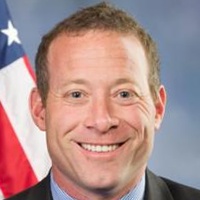
Josh Gottheimer
Representative
NJ
Josh Gottheimer
Representative
NJ
The Invest to Protect Act of 2025 establishes a new, streamlined grant program within the Department of Justice to support small local and Tribal law enforcement agencies (under 175 officers). These funds are specifically designated for officer training, mental health resources, and recruitment/retention bonuses. The law mandates a rapid application process and includes strict accountability measures, such as audits and public reporting of bonuses. Congress is authorized to appropriate up to $50 million annually for this program through fiscal year 2031.
This Act allows employees to fully deduct union dues above the line and restores the itemized deduction for certain other job-related business expenses.
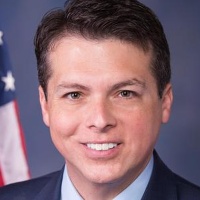
Brendan Boyle
Representative
PA
Brendan Boyle
Representative
PA
The Tax Fairness for Workers Act restores key federal tax deductions for employees, effective after 2024. This legislation makes union dues fully deductible "above the line," meaning they reduce Adjusted Gross Income without itemizing. Additionally, it allows itemizers to deduct certain other job-related business expenses that were previously limited.
This bill allows individuals to transfer funds from their Flexible Spending Arrangements (FSAs) or Health Reimbursement Arrangements (HRAs) into a Health Savings Account (HSA) under specific conditions following a break in High Deductible Health Plan (HDHP) coverage.
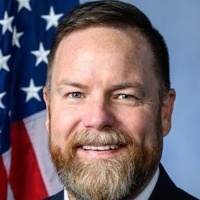
Aaron Bean
Representative
FL
Aaron Bean
Representative
FL
The Flexible Savings Arrangements for a Healthy Robust America Act allows individuals to make qualified distributions from their Flexible Spending Arrangements (FSAs) or Health Reimbursement Arrangements (HRAs) directly into a Health Savings Account (HSA) under specific conditions. This transfer is subject to annual dollar limits based on cafeteria plan contribution limits. The bill also adjusts annual HSA contribution limits based on any amount distributed and requires specific reporting on the W-2 form for these transactions, effective for distributions after December 31, 2025.
The Religious Workforce Protection Act extends nonimmigrant status and provides job flexibility for religious workers caught in long green card backlogs, while also waiving the one-year foreign residence requirement for those who left due to the R-1 visa time limit.

Mike Carey
Representative
OH
Mike Carey
Representative
OH
The Religious Workforce Protection Act aims to support religious workers facing long green card backlogs by allowing extensions of their nonimmigrant status beyond the usual five-year limit until their permanent residency application is processed. It also modifies job flexibility rules for certain delayed applicants and exempts religious workers who left the U.S. due to the five-year R-1 visa limit from the mandatory one-year foreign residence requirement before reapplying.
The No Tax Breaks for Union Busting Act denies businesses tax deductions for expenses incurred while influencing employees regarding union organization and activities.
Donald Norcross
Representative
NJ
Donald Norcross
Representative
NJ
The No Tax Breaks for Union Busting (NTBUB) Act aims to disallow businesses from deducting federal income taxes for expenses incurred while attempting to influence employees regarding union organization or activities. This change is intended to stop companies from subsidizing anti-union campaigns through tax write-offs. The bill also establishes new, significant reporting requirements and penalties for businesses and third-party consultants who engage in these influence expenditures.
This bill allows Members of Congress to use Department of Veterans Affairs facilities to meet with constituents under specific, regulated conditions.
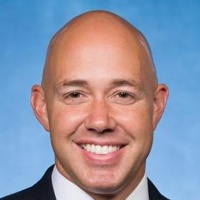
Brian Mast
Representative
FL
Brian Mast
Representative
FL
The Improving Veterans Access to Congressional Services Act of 2025 allows Members of Congress to use designated Department of Veterans Affairs (VA) facilities to meet with their constituents. The VA Secretary must establish regulations within 90 days outlining fair access, reasonable costs, and strict ethical limitations on political activity within these spaces. These rules specifically prohibit campaigning and recording patients while ensuring the Member's use does not interfere with VA operations.
This bill mandates a U.S. strategy to counter Iranian influence in Iraq, designates Iranian-backed militias as terrorist organizations, halts security assistance to the Iraqi government until conditions are met, and imposes sanctions on facilitators of Iranian destabilization.
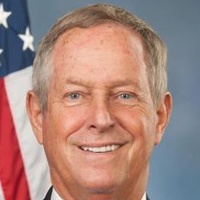
Joe Wilson
Representative
SC
Joe Wilson
Representative
SC
The Free Iraq from Iran Act mandates the executive branch to develop a comprehensive strategy to counter Iranian influence and dismantle Iran-backed militias operating within Iraq. This legislation requires the designation of specific Iraqi militias as Foreign Terrorist Organizations and prohibits U.S. security assistance to the Iraqi Federal Government unless strict conditions regarding militia removal are met. Furthermore, the Act directs the Treasury Department to sanction key Iraqi political figures and entities identified as agents or facilitators of Iranian destabilization efforts.