
Legislative Activity
Track Scott's sponsored bills, co-sponsored legislation, and voting record
This resolution supports designating May 10, 2025, as "National Asian American, Native Hawaiian, and Pacific Islander Mental Health Day" to raise awareness and encourage action to address the mental health crisis in these communities.
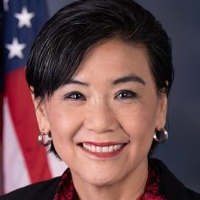
Judy Chu
Representative
CA
Judy Chu
Representative
CA
This resolution supports designating May 10, 2025, as "National Asian American, Native Hawaiian, and Pacific Islander Mental Health Day." It highlights the severe mental health disparities and lack of access to care within AANHPI communities. The bill encourages federal agencies to improve culturally and linguistically appropriate services to better address the unique needs of these diverse populations.
This Act establishes a bipartisan Fiscal Commission tasked with developing and reporting legislative recommendations to reduce the national debt, followed by an expedited congressional process for considering those recommendations.
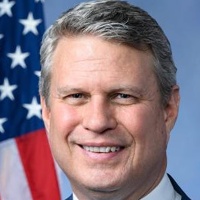
Bill Huizenga
Representative
MI
Bill Huizenga
Representative
MI
The Fiscal Commission Act establishes a bipartisan commission tasked with developing legislative recommendations to improve the nation's long-term fiscal health, aiming to reduce the national debt ratio to 100% of GDP by 2039. This Commission, composed of appointed members from both chambers of Congress and outside experts, must submit its final report and proposed legislation within a specific timeframe. The Act also creates an expedited, amendment-free process for Congress to consider and vote on any resulting "implementing bills."
This Act mandates that health plans cover medically necessary treatment for congenital anomalies or birth defects affecting the eyes, ears, teeth, mouth, or jaw to restore normal function and appearance.
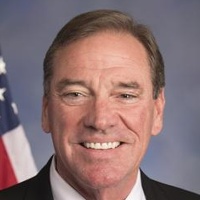
Neal Dunn
Representative
FL
Neal Dunn
Representative
FL
The Ensuring Lasting Smiles Act mandates that group health plans and insurance policies provide comprehensive coverage for medically necessary treatment related to congenital anomalies or birth defects affecting the eyes, ears, teeth, mouth, or jaw. This coverage must include services needed to restore normal function and appearance, including necessary dental and orthodontic support. Plans must apply cost-sharing rules no more restrictive than those for other medical benefits, excluding purely cosmetic procedures.
The VA Employee Fairness Act of 2025 streamlines collective bargaining rules for Veterans Health Administration employees by modifying existing statutes while preserving the Secretary's authority regarding incentive pay and expedited hiring.
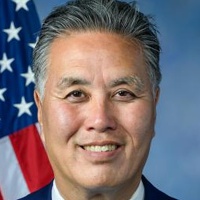
Mark Takano
Representative
CA
Mark Takano
Representative
CA
The VA Employee Fairness Act of 2025 modifies the collective bargaining rules for employees of the Veterans Health Administration (VHA) by streamlining existing statutes. This act removes outdated subsections related to bargaining and renumbers the remaining relevant section. Importantly, these changes do not affect the Secretary of Veterans Affairs' existing authority regarding incentive pay or expedited hiring processes.
This Act prohibits the advertising and provision of paid conversion therapy intended to change an individual's sexual orientation or gender identity, empowering the FTC and State Attorneys General to enforce these prohibitions.
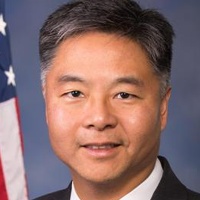
Ted Lieu
Representative
CA
Ted Lieu
Representative
CA
The Therapeutic Fraud Prevention Act of 2025 declares that practices attempting to change an individual's sexual orientation or gender identity for payment constitute an unfair and deceptive business practice. Citing professional consensus on the ineffectiveness and harm of such "conversion therapy," the bill prohibits its provision and advertising. Enforcement authority is granted to the Federal Trade Commission (FTC), and the law allows both the U.S. Attorney General and State Attorneys General to file civil actions against violators.
This bill expands the definition of "law enforcement officer" for federal retirement purposes under FERS and CSRS to include specific IRS, Postal Inspection, and VA police employees, and establishes rules for how current employees can count prior service under the new designation.
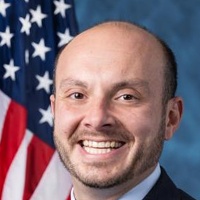
Andrew Garbarino
Representative
NY
Andrew Garbarino
Representative
NY
The Law Enforcement Officers Equity Act expands the definition of "law enforcement officer" for federal retirement purposes under both the Federal Employees Retirement System (FERS) and the Civil Service Retirement System (CSRS). This change adds specific IRS, Postal Inspection Service, and VA police roles to those eligible for enhanced retirement benefits. The bill also establishes procedures for current officers to elect to have their prior service counted under these new definitions, which may require a payment from the employee and their employing agency.
This joint resolution officially recognizes the critical importance of the U.S. Special Operations Forces community and expresses support for designating an annual SOF Week to honor their service.
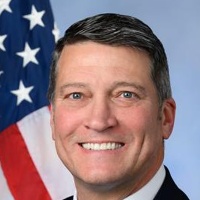
Ronny Jackson
Representative
TX
Ronny Jackson
Representative
TX
This joint resolution formally recognizes the critical importance and exceptional service of the United States Special Operations Forces (SOF) community. It expresses gratitude for the dedication, bravery, and sacrifices made by SOF personnel and their families in executing the nation's most demanding missions. Furthermore, the resolution supports the designation of an annual "SOF Week" to honor their vital contributions to national security.
This Act establishes federal penalties for assaulting hospital personnel and creates a grant program to help medical facilities improve workforce safety.

Madeleine Dean
Representative
PA
Madeleine Dean
Representative
PA
The Save Healthcare Workers Act aims to protect hospital personnel by making assault against them a federal crime with severe penalties. It also establishes a new federal grant program to help hospitals implement crucial safety measures, such as violence prevention training and physical security upgrades. This legislation seeks to reduce workplace violence in healthcare settings across the nation.
This resolution expresses support for Wildfire Preparedness Week to educate the public on fire safety, promote preventative measures, and raise awareness about the dangers and scale of wildfires.

Norma Torres
Representative
CA
Norma Torres
Representative
CA
This resolution expresses strong support for designating May 4 through May 10, 2025, as Wildfire Preparedness Week. The measure aims to raise public awareness about the dangers of wildfires and promote essential fire safety and community preparedness education. It highlights the need for proactive measures, such as evacuation planning and better land management, to mitigate the growing threat posed by these destructive events.
This Act expands the Occupational Safety and Health Act (OSHA) to explicitly cover all public employees of the United States, states, and local governments.
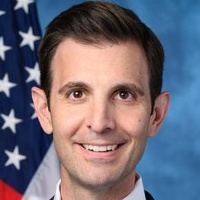
Chris Deluzio
Representative
PA
Chris Deluzio
Representative
PA
The Public Service Worker Protection Act expands the Occupational Safety and Health Act (OSHA) to explicitly cover all public employees, including those working for federal, state, and local governments. This change brings public sector workers under the general protections afforded by OSHA. While the expansion takes effect generally within 90 days, states without an existing OSHA plan are given a three-year transition period before federal oversight applies to their employees.
The Patent Eligibility Restoration Act of 2025 eliminates judicial exceptions to patent eligibility, broadly allowing patents for useful processes, machines, manufactures, or compositions of matter, while still excluding pure mental processes, unmodified natural materials, and abstract mathematical formulas.
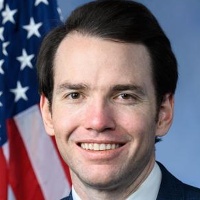
Kevin Kiley
Representative
CA
Kevin Kiley
Representative
CA
The Patent Eligibility Restoration Act of 2025 aims to restore clarity and consistency to patent eligibility by eliminating judicial exceptions to the current law. It establishes that any useful process, machine, manufacture, or composition of matter is eligible for patent protection unless specifically excluded. While the Act broadens eligibility, it maintains exclusions for purely abstract ideas, unmodified natural materials, and mental processes, while clarifying the role of computers in patentable inventions.
The Shipbuilding and Harbor Infrastructure for Prosperity and Security for America Act of 2025 establishes a centralized maritime authority, creates a dedicated funding trust, strengthens sealift capability, mandates increased use of U.S.-flagged vessels, invests heavily in domestic shipbuilding, and enhances workforce development and tax incentives for the maritime industry.
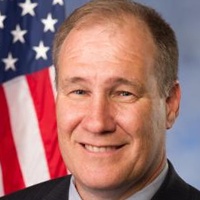
Trent Kelly
Representative
MS
Trent Kelly
Representative
MS
The **Shipbuilding and Harbor Infrastructure for Prosperity and Security for America Act of 2025** is a comprehensive bill designed to revitalize the U.S. maritime industry and secure critical supply chains. It establishes new centralized oversight for maritime policy, creates a dedicated Maritime Security Trust Fund financed by new vessel taxes, and mandates significant federal investment in domestic shipbuilding and workforce development. The legislation also imposes stricter cargo preference rules and tax incentives to ensure U.S.-flagged vessels dominate international commerce and defense sealift operations.
This bill bans the manufacture, sale, and transfer of specific semiautomatic assault weapons and large-capacity ammunition feeding devices while grandfathering existing possessions and establishing new transfer requirements.
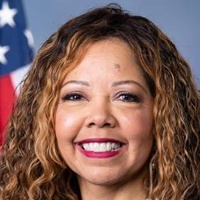
Lucy McBath
Representative
GA
Lucy McBath
Representative
GA
The Assault Weapons Ban of 2025 comprehensively defines and bans the manufacture, sale, and transfer of specific semiautomatic assault weapons and large capacity ammunition feeding devices. The bill grandfathers existing weapons but imposes new requirements for their secure storage and mandates dealer involvement for future private transfers. It also allows federal grant money to be used by states for buy-back programs targeting these banned items.
The Better CARE for Animals Act of 2025 strengthens the enforcement of the Animal Welfare Act by expanding investigative authority, establishing new civil penalties up to \$10,000 per day, and explicitly granting the Attorney General power to file civil actions, including seeking seizure and forfeiture of animals.
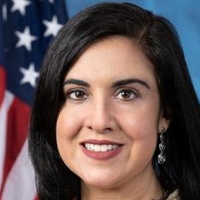
Nicole Malliotakis
Representative
NY
Nicole Malliotakis
Representative
NY
The Better CARE for Animals Act of 2025 significantly strengthens enforcement of the Animal Welfare Act by clarifying definitions and expanding the scope of investigations. It grants the Attorney General explicit authority to file civil actions seeking penalties up to $10,000 per day, and mandates that collected fines help cover temporary animal care costs. The bill also requires the Secretary of Agriculture and the Attorney General to establish a formal agreement for coordinated enforcement.
This resolution recognizes the 50th anniversary of the Fall of Saigon, honoring the history, service, and contributions of Vietnamese Americans while reaffirming U.S. commitment to democracy and human rights.
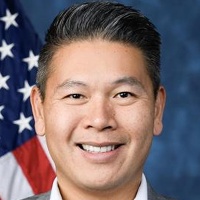
Derek Tran
Representative
CA
Derek Tran
Representative
CA
This resolution commemorates the 50th anniversary of the Fall of Saigon and recognizes the profound contributions of Vietnamese Americans to the United States. It honors those who fled the communist regime after April 30, 1975, and reaffirms American commitment to democracy and human rights. The bill encourages all citizens to observe this anniversary and remember the sacrifices made in the pursuit of freedom.
The Equality Act comprehensively prohibits discrimination based on sex, sexual orientation, and gender identity across key areas including public accommodations, employment, housing, credit, and jury service.
Mark Takano
Representative
CA
Mark Takano
Representative
CA
The Equality Act comprehensively expands federal civil rights protections against discrimination based on sex, sexual orientation, and gender identity across key areas of American life. It amends existing laws to prohibit discrimination in public accommodations, housing, credit, employment, and federal funding. The purpose of the bill is to provide consistent, explicit, and comprehensive remedies for individuals facing bias in these essential sectors.
This Act authorizes the President to impose sanctions, including asset freezes and visa bans, on foreign individuals involved in violence, property destruction, or displacement in the West Bank.
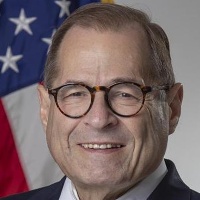
Jerrold Nadler
Representative
NY
Jerrold Nadler
Representative
NY
The West Bank Violence Prevention Act of 2025 declares extreme settler violence and displacement in the West Bank a threat to U.S. national security interests. This Act mandates the President to impose sanctions, including asset freezes and visa bans, on foreign individuals responsible for undermining peace and stability in the region. The Treasury Department must report to Congress on the implementation of these sanctions every 90 days.
This Act mandates that group health plans and insurers must cover diagnostic and supplemental breast examinations without any out-of-pocket cost-sharing requirements for plan years beginning on or after January 1, 2026.

Debbie Dingell
Representative
MI
Debbie Dingell
Representative
MI
The Access to Breast Cancer Diagnosis Act of 2025 ensures that group health plans and insurers must cover diagnostic and supplemental breast examinations with no out-of-pocket costs for patients. This means no deductibles, copayments, or coinsurance will apply to these necessary exams. These provisions take effect for plan years beginning on or after January 1, 2026.
This bill limits the Social Security Administration's recovery of benefit overpayments to a maximum of 10 percent of a monthly benefit unless the recipient agrees to a higher withholding rate.
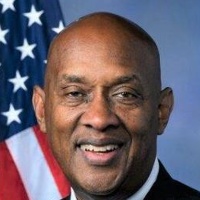
Dwight Evans
Representative
PA
Dwight Evans
Representative
PA
This bill amends the Social Security Act to limit the amount the Social Security Administration can withhold from a person's monthly benefit to recover an overpayment. Unless the individual agrees to a higher rate, the SSA can withhold no more than 10 percent of a monthly benefit payment to recoup accidental overpayments. This new limit applies to existing and future unrecovered overpayments under Title II benefits.
This resolution expresses support for honoring Earth Day, recognizes past environmental achievements, warns against undermining current climate laws, and urges the President to issue a proclamation encouraging environmental action.

Doris Matsui
Representative
CA
Doris Matsui
Representative
CA
This resolution expresses strong support for honoring Earth Day and recognizes its historical importance in launching the modern environmental movement. It highlights ongoing challenges like climate change while celebrating recent landmark investments in clean energy and infrastructure. Ultimately, the bill urges the President to issue a proclamation recognizing Earth Day and encourages all Americans to take sustained action to protect the environment for future generations.