Legislative Activity
Track Burgess's sponsored bills, co-sponsored legislation, and voting record
This Act mandates the transfer of the cleaned-up Moab UMTRA project site to Grand County, Utah, while reserving necessary water rights and restricting future private transfer of the land.
Mike Kennedy
Representative
UT
Mike Kennedy
Representative
UT
The Moab UMTRA Project Transition Act of 2025 directs the Secretary of Energy to transfer ownership of the completed Uranium Mill Tailings Remedial Action (UMTRA) site in Moab, Utah, to Grand County, Utah, upon substantial cleanup completion. This transfer must respect necessary safety restrictions and ensure the U.S. government retains essential water rights for ongoing remediation activities. Furthermore, the agreement prohibits Grand County from selling or transferring the land to private entities in the future.
The End Kidney Deaths Act establishes a \$50,000 federal tax credit over five years for individuals who make non-directed living kidney donations between 2027 and 2036.
Nicole Malliotakis
Representative
NY
Nicole Malliotakis
Representative
NY
The End Kidney Deaths Act establishes a new federal tax credit for individuals who make non-directed living kidney donations. Eligible donors will receive an annual \$10,000 tax credit for five consecutive years, totaling a potential \$50,000 benefit. This provision is designed to incentivize altruistic donation while ensuring the credit is not considered payment for the organ.
This Act mandates that public colleges receiving federal aid must inform new students about their First Amendment rights and commitment to free expression during orientation and on their websites.
Kevin Kiley
Representative
CA
Kevin Kiley
Representative
CA
The Free Speech On Campus Act requires public colleges and universities to enhance protections for free expression as a condition of receiving federal student aid. This legislation mandates that institutions provide new students with a written statement outlining their First Amendment rights and commitment to free speech during orientation. Furthermore, schools must offer educational programming on free speech policies and respectfully engage with diverse viewpoints.
This act establishes new, stringent requirements, including high voter turnout and a majority vote, for a union to become the exclusive representative for a group of workers.
Robert Onder
Representative
MO
Robert Onder
Representative
MO
The Worker Enfranchisement Act establishes stricter requirements for a union to become the exclusive representative for a group of employees. Under the new rules, a union must win a secret ballot election where more than half of the votes cast favor the union, and at least two-thirds of all eligible employees must participate in the vote. These new turnout and majority standards will apply to elections held six months after the Act's enactment.
This bill drastically tightens and expands U.S. sanctions against Iran across its leadership, military, and economy while severely restricting the President's authority to lift these restrictions.
Zachary (Zach) Nunn
Representative
IA
Zachary (Zach) Nunn
Representative
IA
The Maximum Pressure Act dramatically tightens and expands U.S. sanctions against Iran across its military, missile, and economic sectors, codifying existing restrictions and severely limiting the President's authority to grant sanctions relief. It mandates immediate sanctions on top Iranian officials and increases penalties for international parties aiding Iran's weapons programs. Furthermore, the bill enhances oversight by requiring numerous detailed reports to Congress regarding Iran's terrorism financing, nuclear timeline, and economic influence, while also redirecting certain frozen Iranian funds to victims of state-sponsored terrorism.
This bill prohibits states from offering in-state tuition rates to undocumented immigrants or risk losing federal student aid funding the following fiscal year.

Tim Burchett
Representative
TN
Tim Burchett
Representative
TN
This bill, the "No In-State Tuition for Illegal Immigrants Act," penalizes states that offer in-state tuition rates to undocumented students. If a state provides these lower rates, it risks losing all federal student financial assistance, such as Pell Grants, in the following fiscal year. The legislation ties state tuition policies directly to the receipt of federal education funding.
The DETERRENT Act mandates increased transparency for colleges regarding foreign gifts and contracts, prohibits most dealings with "countries of concern," and imposes strict investment reporting requirements for large private universities, backed by significant enforcement penalties.
Michael Baumgartner
Representative
WA
Michael Baumgartner
Representative
WA
The DETERRENT Act significantly increases transparency requirements for colleges and universities regarding foreign gifts, contracts, and investments, especially those involving "countries or entities of concern." It mandates detailed public disclosure reports, establishes strict prohibitions and waiver processes for contracts with risky foreign entities, and imposes severe financial penalties for non-compliance. Furthermore, the bill requires specified large private institutions to report their holdings in concerning foreign assets annually.
The Keep Our Girls Safe Act of 2025 prohibits individuals of one sex from accessing school or federally funded program locker rooms while individuals of the opposite sex are actively using them.
Mary Miller
Representative
IL
Mary Miller
Representative
IL
The Keep Our Girls Safe Act of 2025 amends Title IX to prohibit individuals of one sex from entering locker rooms while individuals of the opposite sex are actively using them during school or educational activities. This legislation establishes clear boundaries for sex-segregated facilities in federally funded educational settings. The provisions of the Act will take effect 30 days after becoming law.
This act prohibits colleges and universities receiving federal funding from allowing or supporting any campus event that promotes antisemitism, adopting the IHRA working definition.
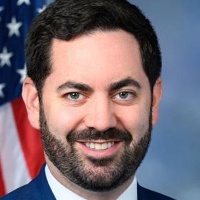
Michael Lawler
Representative
NY
Michael Lawler
Representative
NY
The Stop Antisemitism on College Campuses Act prohibits colleges and universities receiving federal funding from allowing, supporting, or paying for any event on campus that promotes antisemitism. This legislation mandates the adoption of the International Holocaust Remembrance Alliance (IHRA) working definition of antisemitism for enforcement. The goal is to ensure federally funded institutions do not host or endorse antisemitic activities.
The SHORT Act redefines "firearm" to exclude certain collector's items, eliminates disparate federal treatment of short-barreled rifles and shotguns, preempts state and local registration/tax burdens on these items, and mandates the destruction of certain existing NFA records.
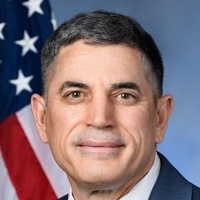
Andrew Clyde
Representative
GA
Andrew Clyde
Representative
GA
The SHORT Act aims to reform federal firearms regulations by redefining what constitutes a "firearm" for tax purposes, largely excluding antique or collector's items. It eliminates disparate federal treatment for short-barreled rifles and shotguns used lawfully and preempts state and local governments from imposing special taxes or registration requirements on these specific weapons. Furthermore, the bill mandates the destruction of certain existing federal registration and transfer records related to defined firearms.
This Act limits the FCC's authority to prohibit state and federal correctional facilities from using authorized cellphone jamming systems within their premises under specific operational and funding conditions.
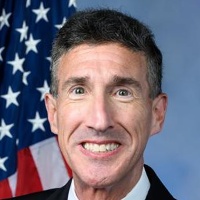
David Kustoff
Representative
TN
David Kustoff
Representative
TN
The Cellphone Jamming Reform Act of 2025 limits the FCC's authority to prohibit the use of cell phone jamming systems within jails and prisons. This legislation specifically permits state and federal correctional facilities to deploy jamming technology to block communications involving inmates or contraband devices. Any facility using these systems must adhere to strict operational limits, ensure state funding for state-run systems, and coordinate with local public safety officials beforehand.
This bill expands Medicare coverage under Part B to pay qualified home infusion suppliers for augmentation therapy kits and nursing services for Medicare beneficiaries with Alpha-1 Antitrypsin Deficiency Disorder who require emphysema treatment in their homes.
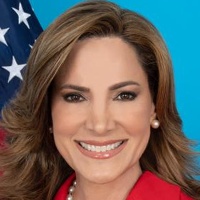
Maria Salazar
Representative
FL
Maria Salazar
Representative
FL
The John W. Walsh Alpha-1 Home Infusion Act of 2025 amends Medicare to specifically cover augmentation therapy for individuals with severe Alpha-1 Antitrypsin Deficiency Disorder when administered in the home. This legislation establishes new payment rules under Medicare Part B for the necessary intravenous kits and associated nursing services. The goal is to ensure qualified home infusion suppliers are reimbursed directly for providing this essential, ongoing maintenance treatment.
This bill establishes national reciprocity for concealed carry permits, allowing individuals legally permitted to carry in their home state to carry a handgun in any other state that allows concealed carry.
Richard Hudson
Representative
NC
Richard Hudson
Representative
NC
The Constitutional Concealed Carry Reciprocity Act of 2025 establishes a national standard for carrying concealed handguns across state lines. This act allows individuals legally permitted to carry in their home state to carry concealed in any other state that allows its residents to carry concealed firearms. The law does not override private property restrictions or prohibitions on government property, but it provides protections and legal recourse for those traveling in compliance with the new federal standard.
The FAIR Act of 2025 mandates that Medicare-funded residency programs report data on the application and acceptance rates of osteopathic and allopathic medical school graduates to ensure equitable treatment, with non-compliance resulting in Medicare payment penalties.
Diana Harshbarger
Representative
TN
Diana Harshbarger
Representative
TN
The Fair Access In Residency (FAIR) Act of 2025 aims to ensure equitable treatment of osteopathic (D.O.) and allopathic (M.D.) medical school graduates in residency applications. It requires hospitals receiving Medicare funds to report detailed data on D.O. and M.D. applicants and acceptances for each residency program. Hospitals failing to submit this required data will face a 2% reduction in their Medicare payments. This collected data will also be made publicly available to promote transparency in the residency recruitment process.
This bill establishes the voluntary Congressional Fitness Challenge, outlining required physical tests, administration guidelines, performance benchmarks, data collection, and recognition levels for eligible participants aged 6 to 17.
Abraham Hamadeh
Representative
AZ
Abraham Hamadeh
Representative
AZ
This bill establishes the voluntary Congressional Fitness Challenge, a national program designed to promote physical fitness among eligible participants aged 6 to 17. The Challenge requires participants to complete five specific fitness tests, with performance benchmarks set based on age and gender. Successful participants who meet performance goals will receive official recognition certificates signed by Congressional leadership. The legislation also outlines administrative rules for testing, data collection, and allows lawmakers to use office funds for related activities.
This Act updates Medicare coverage and payment rules for home infusion therapy starting in 2026 to ensure continued patient access, clarify covered services, and adjust supplier reimbursement.
Vern Buchanan
Representative
FL
Vern Buchanan
Representative
FL
The Preserving Patient Access to Home Infusion Act updates Medicare coverage and payment rules for home infusion therapy starting in 2026 to ensure continued patient access. The bill explicitly adds pharmacy services to covered home infusion care and clarifies payment calculations for suppliers, including transitional rules based on infusion hours. Furthermore, it expands who can establish and review patient care plans to include nurse practitioners and physician assistants. Finally, the Act modifies definitions and payment rules for certain non-pump infusion drugs and stops separate Medicare payment for specific disposable supplies when infusion therapy is already being reimbursed.
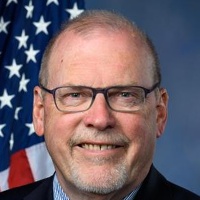
This bill revises physician self-referral rules to create a special exemption for certain rural, physician-owned hospitals and removes expansion restrictions for existing physician-owned hospitals.
H. Griffith
Representative
VA
H. Griffith
Representative
VA
The Physician Led and Rural Access to Quality Care Act revises physician self-referral rules to improve healthcare access in underserved areas. Specifically, it creates a new exception allowing physician self-referrals to hospitals located in designated rural areas that meet specific distance requirements. Furthermore, the bill removes existing restrictions that previously limited the expansion of services at physician-owned hospitals.
The Major Richard Star Act ensures that military retirees with combat-related disabilities can concurrently receive their full military retirement pay and VA disability compensation without reduction.

Gus Bilirakis
Representative
FL
Gus Bilirakis
Representative
FL
The Major Richard Star Act ensures that military retirees with combat-related disabilities can receive both their military retirement pay and VA disability compensation concurrently without reduction. This law removes previous restrictions that caused military retirement pay to be offset by VA disability payments for these specific cases. The changes take effect on the first day of the month following the Act's enactment.
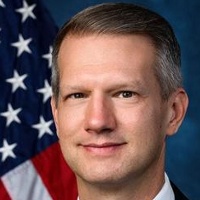
This bill prohibits nationals of the People's Republic of China from obtaining nonimmigrant student visas (F, J, or M) if their purpose is to conduct research or study in the United States.
Riley Moore
Representative
WV
Riley Moore
Representative
WV
The Stop CCP VISAs Act of 2025 prohibits the issuance of F, J, and M nonimmigrant visas to nationals of the People's Republic of China if their primary purpose for entering the U.S. is to conduct research or study. This legislation aims to safeguard American intellectual property by restricting academic and student exchange visas for Chinese nationals.
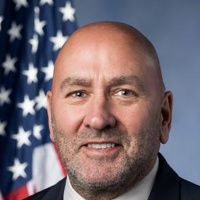
The Fair and Open Competition Act of 2025 prohibits the federal government from requiring or penalizing bidders or contractors on federally funded construction projects based on their agreement or non-agreement with labor unions.
Clay Higgins
Representative
LA
Clay Higgins
Representative
LA
The Fair and Open Competition Act of 2025 ensures fair competition on federally funded construction projects by prohibiting the government from requiring or penalizing bidders based on union agreements. This legislation aims to keep federal agencies neutral in labor relations while promoting cost savings and opening opportunities for all businesses. Exceptions to this neutrality rule are strictly limited to specific public health, safety, or national security emergencies.