
Legislative Activity
Track Eleanor's sponsored bills, co-sponsored legislation, and voting record
This Act expands and modernizes paid family and medical leave for federal employees, congressional staff, and certain D.C. employees, adding coverage for victims of violence, fertility challenges, and surrogacy.
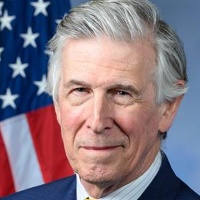
Donald Beyer
Representative
VA
Donald Beyer
Representative
VA
The Comprehensive Paid Leave for Federal Employees Act significantly expands and modernizes paid family and medical leave for federal workers across various agencies, including the Postal Service and Congressional staff. This legislation introduces new qualifying reasons for leave, such as recovery from domestic violence, sexual assault, or fertility challenges. It also adjusts service requirements, leave duration rules, and establishes repayment/work obligation agreements for certain paid leave.
This resolution commemorates the 10th anniversary of the Pulse nightclub shooting, honoring the victims, recognizing first responders, and reaffirming support for gun safety and mental health efforts.
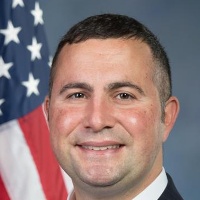
Darren Soto
Representative
FL
Darren Soto
Representative
FL
This resolution commemorates the 10th anniversary of the tragic Pulse nightclub shooting in Orlando, honoring the 49 lives lost and expressing support for all affected. It recognizes the bravery of first responders and reaffirms the nation's unity against hate and terrorism. The bill also highlights ongoing efforts toward gun safety and mental health legislation.
This bill expresses support for designating July 3–10, 2026, as "National Extreme Heat Awareness Week" to educate the public on the dangers and risks associated with extreme heat.
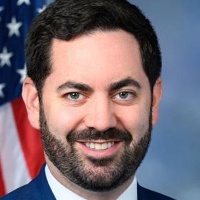
Michael Lawler
Representative
NY
Michael Lawler
Representative
NY
This bill expresses support for designating July 3 through July 10, 2026, as "National Extreme Heat Awareness Week." The week aims to educate the public on the significant dangers of extreme heat, which is the leading weather-related cause of death in the U.S. It encourages nationwide educational initiatives and community programming to promote preparedness and safety against heat-related risks.
This act repeals the federal tax credit for contributions to scholarship organizations and eliminates the income exclusion for certain scholarship amounts received from those organizations.
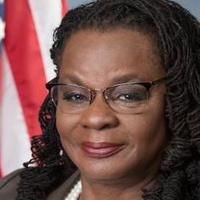
Gwen Moore
Representative
WI
Gwen Moore
Representative
WI
The Keep Public Funds in Public Schools Act of 2026 aims to redirect funding by eliminating federal tax incentives for private school scholarships. Specifically, it repeals the tax credit for contributions to scholarship-granting organizations and removes the income exclusion for certain scholarship amounts received. These changes are set to take effect starting in 2027.
This bill gradually phases out Social Security taxes on high earners while increasing benefit calculations, mandating the use of a new Consumer Price Index for the Elderly, and improving survivor benefits for two-income households.
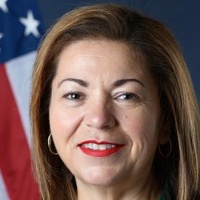
Linda Sánchez
Representative
CA
Linda Sánchez
Representative
CA
The Strengthening Social Security Act of 2026 gradually phases out Social Security taxes on earnings above the contribution base starting in 2028. It also adjusts benefit calculations by increasing the first bend point rate and incorporating a portion of previously untaxed surplus earnings into the primary insurance amount formula starting in 2033. Furthermore, the bill mandates the creation of a new Consumer Price Index for Elderly Consumers (CPI-E) to be used for calculating future cost-of-living adjustments. Finally, it improves survivor benefits for widows and widowers in two-income households and protects current SSI recipients from benefit reductions.
The Postsecondary Student Success Act of 2026 authorizes competitive grants to fund evidence-based activities designed to boost participation, retention, and completion rates for high-need students in postsecondary education.
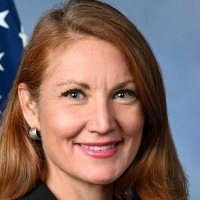
Melanie Stansbury
Representative
NM
Melanie Stansbury
Representative
NM
The Postsecondary Student Success Act of 2026 aims to boost participation, retention, and completion rates for high-need students in higher education. It authorizes competitive grants for eligible institutions to implement proven, evidence-based student success activities. The Act reserves funding specifically for Tribal Colleges and prioritizes grants for programs using the most rigorously evaluated reforms.
The PRIDE Act of 2026 expands federal diversity and inclusion requirements within financial agencies to explicitly include LGBTQI individuals and LGBTQI-owned businesses by renaming and updating the Office of Minority and Women Inclusion.
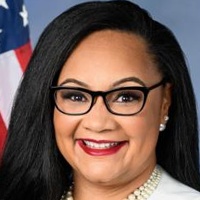
Nikema Williams
Representative
GA
Nikema Williams
Representative
GA
The PRIDE Act of 2026 officially renames the Offices of Minority and Women Inclusion at certain federal financial agencies to the Office of Minority, Women, and LGBTQI Inclusion. This expansion explicitly incorporates LGBTQI individuals and LGBTQI-owned businesses into existing diversity, inclusion, and contracting requirements. The bill adds specific definitions for "LGBTQI" and "LGBTQI-owned business" across relevant statutes.
This bill mandates that states operating the school lunch program must also participate in the Summer EBT program starting in 2027.
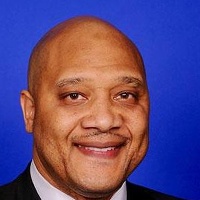
André Carson
Representative
IN
André Carson
Representative
IN
This bill amends the Richard B. Russell National School Lunch Act to mandate state participation in the Summer Electronic Benefits Transfer (EBT) program starting in the summer of 2027. While participation is voluntary through 2026, all states operating the school lunch program must implement Summer EBT thereafter. The legislation also updates administrative deadlines for program management and coverage for Indian Tribal organizations.
This act establishes a pathway for parents to transfer eligible federal student loans to their child, provided the child meets specific ability-to-repay criteria.
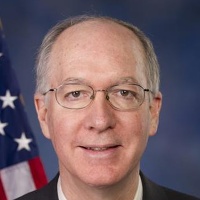
Bill Foster
Representative
IL
Bill Foster
Representative
IL
The Parent PLUS Loan Fairness and Responsibility Act of 2026 establishes a pathway for parents to transfer eligible federal student loans directly to their dependent child. This transfer is contingent upon the child meeting specific criteria, including demonstrating the ability to repay the debt. Once transferred, the child assumes full responsibility for the loan, while the parent is released from all obligations.
This Act guarantees government-funded legal counsel for unaccompanied children in immigration proceedings and expands document access for all noncitizens facing removal.
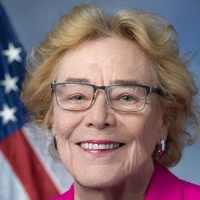
Zoe Lofgren
Representative
CA
Zoe Lofgren
Representative
CA
The Fair Day in Court for Kids Act of 2026 aims to improve fairness and efficiency in immigration proceedings by expanding access to legal information and counsel. The bill specifically guarantees government-funded legal representation for all unaccompanied children throughout their immigration proceedings. It also mandates timely access to case files for all noncitizens and requires the establishment of pro bono representation systems for children.
This Act establishes the Children's Commission to advise on and advocate for the well-being of children and marginalized youth across federal policy and action.
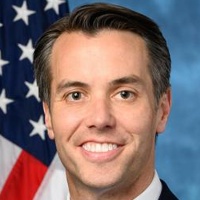
Morgan McGarvey
Representative
KY
Morgan McGarvey
Representative
KY
The Child Safety and Well-Being Act of 2026 establishes a permanent, expert-led Children’s Commission to advise Congress and federal agencies on policies affecting children and marginalized youth. This Commission will promote child well-being, review agency actions, and ensure the voices of children are incorporated into federal decision-making. It will be led by a Children's Commissioner and is authorized to receive funding through fiscal year 2034.
This bill recognizes Avoidant/Restrictive Food Intake Disorder (ARFID) as a serious eating disorder and calls for urgent action to advance awareness, early identification, research, and equitable access to care.
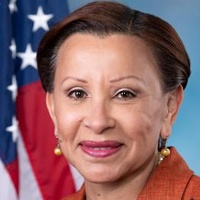
Nydia Velázquez
Representative
NY
Nydia Velázquez
Representative
NY
This resolution recognizes Avoidant/Restrictive Food Intake Disorder (ARFID) as a serious eating disorder with significant health consequences. It calls for urgent national action to advance awareness, improve early identification, and ensure equitable access to multidisciplinary care and research for those affected.
The DASH Act is a comprehensive legislative package designed to combat homelessness and increase housing affordability through expanded rental vouchers, increased construction funding, zoning reform, and broad tax incentives for renters, developers, and first-time homebuyers.
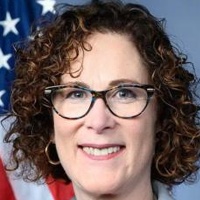
Valerie Hoyle
Representative
OR
Valerie Hoyle
Representative
OR
The DASH Act is a comprehensive legislative effort to combat homelessness and expand housing affordability through increased federal funding, tax incentives, and zoning reform. The bill establishes new rental voucher programs, funds the construction of affordable units, and provides tax credits for both renters and first-time homebuyers. Additionally, it incentivizes local governments to remove restrictive zoning barriers to increase housing supply and density.
This resolution formally acknowledges and apologizes for decades of federal discrimination against LGBT individuals who served in the U.S. military, Foreign Service, and civil service, while reaffirming the commitment to their equal rights and respect.
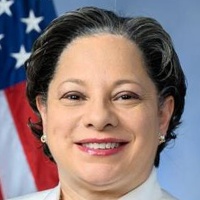
Jennifer McClellan
Representative
VA
Jennifer McClellan
Representative
VA
This resolution formally acknowledges and apologizes for the decades of federal discrimination and mistreatment against lesbian, gay, bisexual, and transgender individuals who served in the U.S. military, Foreign Service, and civil service. It condemns past anti-LGBT policies that led to wrongful terminations and exclusions based on sexual orientation or gender identity. The bill commits the government to pursuing equal rights, protections, and respect for all current and former LGBT federal employees and service members. It explicitly states that this apology does not authorize or settle any legal claims against the United States.
This proposed constitutional amendment establishes a federal right to vote for all eligible citizens and mandates that states adhere to federal election standards, including same-day registration and voting.
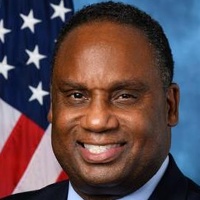
Jonathan Jackson
Representative
IL
Jonathan Jackson
Representative
IL
This proposed constitutional amendment establishes a fundamental federal right to vote for all eligible U.S. citizens. It prohibits denying or restricting this right and mandates that states administer elections according to federal standards, including requiring same-day registration and voting. Congress is authorized to pass legislation to enforce these provisions.
This Act expands the duties of agency Chief Financial Officers, establishes a 4-year governmentwide financial management plan, and strengthens internal controls to improve oversight of taxpayer funds.
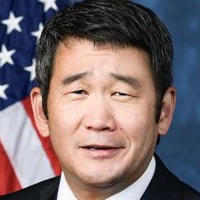
Dave Min
Representative
CA
Dave Min
Representative
CA
This Act strengthens financial accountability across federal agencies by expanding the duties of Chief Financial Officers (CFOs) to oversee critical areas like risk management and internal controls. It mandates the creation of agency-specific financial management plans tied to a new governmentwide four-year strategy. Furthermore, the bill requires more robust annual reporting from agencies and the OMB Director to ensure transparency regarding financial performance and progress.
This bill expresses congressional disapproval of the Department of Health and Human Services' rule aimed at restoring flexibility within the Child Care and Development Fund (CCDF).
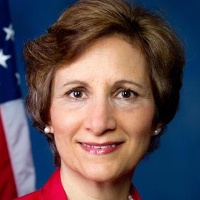
Suzanne Bonamici
Representative
OR
Suzanne Bonamici
Representative
OR
This bill expresses the disapproval of Congress, under the Congressional Review Act, of a Department of Health and Human Services rule concerning the Child Care and Development Fund (CCDF). Specifically, it rejects the rule that aimed to restore flexibility within the CCDF program. As a result, the rule published on May 12, 2026, will not take effect.
The Local Communities & Bird Habitat Stewardship Act of 2026 establishes a voluntary program and grant initiative to support community-led efforts in conserving, restoring, and protecting bird habitats within urban areas.
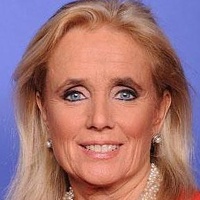
Debbie Dingell
Representative
MI
Debbie Dingell
Representative
MI
The Local Communities Bird Habitat Stewardship Act of 2026 establishes a voluntary Urban Bird Treaty Program to protect and restore bird habitats within urban areas. Through partnerships and a competitive grant program, the initiative supports local organizations in reducing urban hazards, conducting scientific monitoring, and engaging communities in conservation efforts.
This bill establishes a mandatory timeline and binding arbitration process to expedite the negotiation of first-time collective bargaining agreements between employers and newly certified unions.
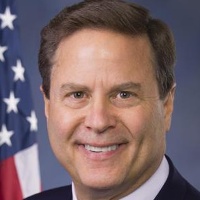
Donald Norcross
Representative
NJ
Donald Norcross
Representative
NJ
The Faster Labor Contracts Act aims to speed up the process of securing a first collective bargaining agreement after a union is certified. It establishes a mandatory timeline, including mediation and binding arbitration, if an agreement is not reached within 90 days of bargaining. This process is designed to prevent lengthy delays that currently weaken the union's position. The bill also requires a GAO report on current time-to-contract averages.
This bill, the "No Toxic Chemicals in Food Packaging Act of 2026," bans specific harmful chemicals from being used in food contact substances and requires extra safety reviews for alternatives impacting vulnerable populations.

Janice Schakowsky
Representative
IL
Janice Schakowsky
Representative
IL
The "No Toxic Chemicals in Food Packaging Act of 2026" amends federal law to deem specific toxic chemicals, including certain phthalates, PFAS, and Bisphenols, unsafe for use in food contact materials. This legislation mandates that the FDA consider the impact on vulnerable populations when reviewing alternatives to these banned substances. Furthermore, the Act preserves the authority of states and local governments to enact stricter regulations regarding food additives and contact substances.