
Legislative Activity
Track Eleanor's sponsored bills, co-sponsored legislation, and voting record
The ABLE Employment Flexibility Act modifies retirement plan rules to allow eligible individuals with disabilities to direct employer contributions into their ABLE accounts without jeopardizing their federal benefits.
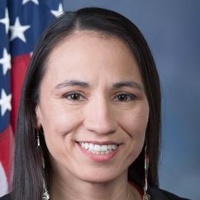
Sharice Davids
Representative
KS
Sharice Davids
Representative
KS
The ABLE Employment Flexibility Act modifies retirement plan rules to allow eligible individuals with disabilities to direct employer contributions into their ABLE accounts instead of traditional retirement plans. This change aims to help working individuals save money without jeopardizing their eligibility for means-tested federal benefits. The bill also clarifies that employer contributions made directly to an ABLE account are treated as reasonable business expenses.
This Act severely restricts the use of solitary confinement in federal facilities, mandates a minimum of 14 hours of daily social interaction for all incarcerated individuals, and establishes strict oversight and state incentives to end the practice nationwide.
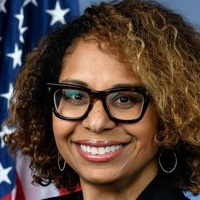
Sydney Kamlager-Dove
Representative
CA
Sydney Kamlager-Dove
Representative
CA
The End Solitary Confinement Act aims to drastically limit the use of solitary confinement in federal facilities by mandating a minimum of 14 hours of daily social interaction for all incarcerated individuals. The bill establishes strict emergency exceptions for isolation, prohibits its use against vulnerable populations, and creates an independent community monitoring body to ensure compliance. Furthermore, it incentivizes states to adopt similar standards by tying federal funding to adherence to these new minimum treatment requirements.
The Corporate Crime Database Act of 2025 establishes a public, searchable national database managed by the Bureau of Justice Statistics to track and report on federal enforcement actions related to corporate offenses.
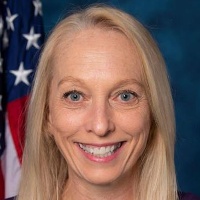
Mary Scanlon
Representative
PA
Mary Scanlon
Representative
PA
The Corporate Crime Database Act of 2025 establishes a new, public, and searchable national database managed by the Bureau of Justice Statistics to track federal enforcement actions against corporate offenses. This database will require federal agencies to report detailed information on violations, enforcement outcomes, and involved entities. The Act mandates annual public reporting and analysis of the data to Congress, including estimates of victim harm and recommendations for future crime prevention.
The Appalachian Communities Health Equity (ACHE) Act of 2025 immediately halts new mountaintop removal coal mining permits pending a federal health study while mandating increased pollution monitoring at existing sites.
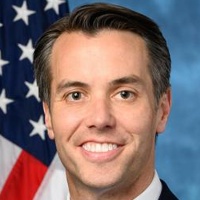
Morgan McGarvey
Representative
KY
Morgan McGarvey
Representative
KY
The Appalachian Communities Health Equity (ACHE) Act of 2025 addresses health concerns linked to mountaintop removal coal mining by immediately halting new federal permits for these operations. The bill mandates a comprehensive health study led by the NIEHS to investigate potential risks to nearby communities. Furthermore, it requires enhanced, publicly accessible pollution monitoring at active sites until the Secretary of Health and Human Services determines the practice poses no health risk.
The ICBM Act halts funding for the troubled Sentinel missile program, redirects those funds to education, and mandates a comprehensive study on extending the life of existing Minuteman III missiles.
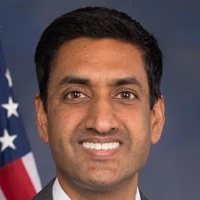
Ro Khanna
Representative
CA
Ro Khanna
Representative
CA
The Investing in Children Before Missiles (ICBM) Act pauses the troubled Sentinel missile replacement program due to significant cost overruns and delays. The bill mandates redirecting unspent research and development funds from the Sentinel and W87-1 warhead programs directly to the Department of Education for elementary and secondary school funding. Furthermore, it requires an independent study to analyze extending the life of the existing Minuteman III missiles until at least 2050 as an alternative to the new ICBM system.
The Fighting Fibers Act of 2025 mandates that new washing machines sold in the U.S. starting in 2030 must include microfiber filtration systems and requires a national study on the sources, pathways, and impacts of microfibers.
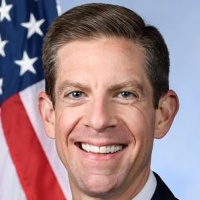
Mike Levin
Representative
CA
Mike Levin
Representative
CA
The Fighting Fibers Act of 2025 mandates that all new washing machines sold in the U.S. starting in 2030 must include a microfiber filtration system effective at capturing particles no larger than 100 micrometers. The bill also requires clear consumer labeling regarding the filter's maintenance. Furthermore, the EPA Administrator is directed to conduct a comprehensive nationwide study on the sources, pathways, and health impacts of microfibers, reporting findings to Congress within one year of enactment.
The BIKE Act of 2025 allows states to use federal highway safety funds for on-bicycle education in schools and mandates updated national guidelines emphasizing safe cycling skills and helmet use for students.
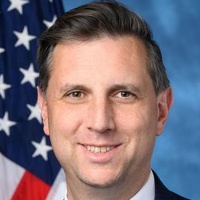
Seth Magaziner
Representative
RI
Seth Magaziner
Representative
RI
The BIKE Act of 2025 aims to enhance bicycle safety education for students across the country. It allows states to use federal highway safety funds to provide on-bicycle safety training in elementary and secondary schools. Furthermore, the bill mandates the Secretary to update federal safety guidelines to emphasize comprehensive on-bicycle training, traffic rules, and helmet use for young riders. The Secretary must also consult with educators and report back to Congress on the implementation of these new safety standards.
This bill updates the eligibility requirements for creating records of lawful admission for long-term residents by changing the qualifying entry date to a minimum of seven years of U.S. residency prior to application.
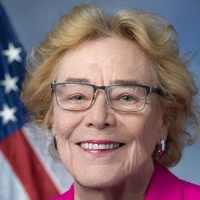
Zoe Lofgren
Representative
CA
Zoe Lofgren
Representative
CA
This bill, the Renewing Immigration Provisions of the Immigration Act of 1929, updates the eligibility requirements for creating records of lawful admission for long-term residents. It replaces a fixed entry date with a new standard requiring applicants to have resided in the U.S. for at least seven years prior to applying. These revised provisions will take effect 60 days after the Act is enacted.
This bill establishes a new system for distributing up to 2,000 additional Medicare-funded residency positions annually from 2026 through 2032, prioritizing hospitals serving underserved areas, and mandates a study on strategies to increase workforce diversity.
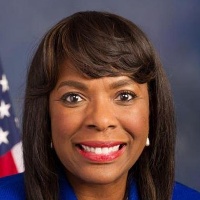
Terri Sewell
Representative
AL
Terri Sewell
Representative
AL
The Resident Physician Shortage Reduction Act of 2025 establishes a structured process for distributing up to 2,000 additional, federally funded residency positions annually between fiscal years 2026 and 2032. This distribution prioritizes hospitals serving in underserved areas, those already training above their limit, and those committed to primary care and general surgery training. The bill also mandates a study and report by the Comptroller General on effective strategies to increase diversity within the health professional workforce.
The COOL OFF Act establishes a mandatory 3-day waiting period for handgun transfers, with specific exceptions for law enforcement, family loans, emergencies, and certain target practice or hunting scenarios.
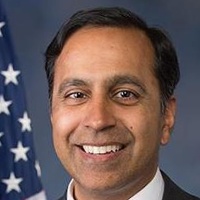
Raja Krishnamoorthi
Representative
IL
Raja Krishnamoorthi
Representative
IL
The Choosing Our Own Lives Over Fast Firearms Act, or COOL OFF Act, establishes a mandatory 3-business-day waiting period before an individual can receive a handgun, whether through a private sale or from a licensed dealer. This waiting period is waived for specific exceptions, such as transfers involving law enforcement, temporary family loans, or emergency situations to prevent serious harm. The law includes penalties for violations and will take effect 90 days after enactment.
The PAAW Act prohibits the National Institutes of Health from conducting or supporting research that causes significant pain or distress to dogs and cats, effective 90 days after enactment.
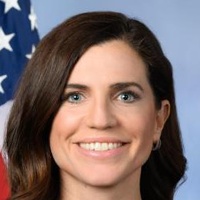
Nancy Mace
Representative
SC
Nancy Mace
Representative
SC
The PAAW Act, or Preventing Animal Abuse and Waste Act, prohibits the National Institutes of Health (NIH) from conducting or supporting research that causes significant pain or distress to dogs and cats. This ban specifically targets studies categorized as causing pain levels D or E according to established animal welfare standards. The prohibition takes effect 90 days after the Act is officially enacted into law.
This Act prohibits the shackling and detention of pregnant and postpartum noncitizens except in extraordinary, narrowly defined circumstances, while mandating comprehensive healthcare access and staff training.
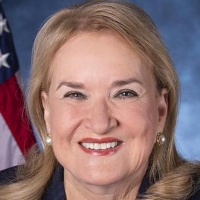
Sylvia Garcia
Representative
TX
Sylvia Garcia
Representative
TX
The Stop Shackling and Detaining Pregnant Women Act aims to significantly reform the detention of pregnant and postpartum noncitizens by establishing a presumption against their detention. This bill strictly limits the use of physical restraints on pregnant detainees and mandates comprehensive reproductive healthcare access. Furthermore, it requires detailed quarterly and annual reporting on the treatment and outcomes of pregnant individuals in custody.
The SAVES Act establishes a VA pilot program to award grants to nonprofits providing service dogs and veterinary insurance to eligible veterans managing specific service-connected conditions.
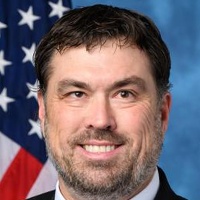
Morgan Luttrell
Representative
TX
Morgan Luttrell
Representative
TX
The SAVES Act establishes a Department of Veterans Affairs (VA) pilot program to award grants to nonprofit organizations that provide service dogs to eligible veterans. These grants, up to $\$2,000,000$ each, will fund the training and provision of service dogs for veterans with qualifying conditions like PTSD or TBI. The bill also extends the expiration date for certain limits on veterans' pension payments until February 2033.
The 340B PATIENTS Act of 2025 clarifies that drug manufacturers must provide 340B discounts without imposing restrictions on covered entities' ability to purchase or use those drugs, regardless of dispensing location, and establishes penalties for non-compliance.

Doris Matsui
Representative
CA
Doris Matsui
Representative
CA
The 340B PATIENTS Act of 2025 clarifies and strengthens the existing 340B drug discount program for covered entities like hospitals and clinics. It explicitly prohibits drug manufacturers from placing restrictions on how or where these entities purchase or dispense discounted outpatient drugs, including through contract pharmacies. The bill also establishes significant civil monetary penalties for manufacturers who intentionally violate these non-restriction rules. Ultimately, this legislation aims to ensure that covered entities can fully utilize 340B savings to expand patient care.
This Act prohibits insurance companies from discriminating against living organ donors when issuing life, disability, or long-term care policies and mandates the updating of educational materials regarding donation risks and insurance implications.
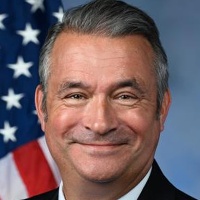
Don Bacon
Representative
NE
Don Bacon
Representative
NE
The Living Donor Protection Act of 2025 prohibits life, disability, and long-term care insurance companies from denying coverage or increasing premiums solely because an individual is a living organ donor. This legislation ensures that living donors are not financially penalized for their altruistic act. Additionally, the bill requires the Secretary of HHS to update educational materials to accurately reflect the insurance protections afforded to living donors.
The Frederick Douglass Trafficking Victims Prevention and Protection Reauthorization Act of 2025 enhances efforts to combat human trafficking both domestically and internationally through prevention, survivor support, and strategic use of foreign assistance.
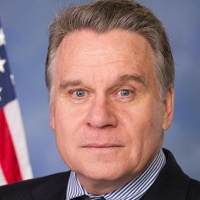
Christopher Smith
Representative
NJ
Christopher Smith
Representative
NJ
The Frederick Douglass Trafficking Victims Prevention and Protection Reauthorization Act of 2025 enhances efforts to combat human trafficking both within the United States and internationally. The act focuses on prevention education, survivor support, and international cooperation, while increasing funding authorizations for key anti-trafficking programs. It prioritizes resources for areas with high trafficking rates, improves data collection, and ensures that foreign assistance aligns with counter-trafficking goals. This legislation aims to protect vulnerable populations, empower survivors, and hold perpetrators accountable.
Ally's Act mandates that certain private health insurance plans must cover auditory implant devices, related services, and upgrades for qualifying individuals without imposing stricter cost-sharing or treatment limitations than other medical benefits.
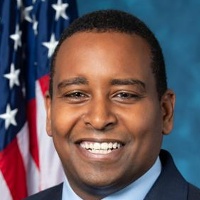
Joe Neguse
Representative
CO
Joe Neguse
Representative
CO
The Ally's Act mandates that certain private health insurance plans must cover auditory implant devices, related supplies, and necessary services for qualifying individuals. This coverage must be comparable to other medical and surgical benefits regarding cost-sharing and treatment limitations. Furthermore, plans cannot deny coverage if a physician or qualified audiologist determines the required hearing items or services are medically necessary. These new requirements take effect for plan years beginning on or after January 1, 2026.
The Supporting Apprenticeship Colleges Act of 2025 establishes grant programs to boost outreach for construction and manufacturing apprenticeships and to fund academic advising and student support services for apprentices in those fields.
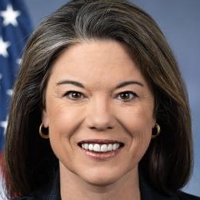
Angie Craig
Representative
MN
Angie Craig
Representative
MN
The Supporting Apprenticeship Colleges Act of 2025 establishes two grant programs totaling \$10 million annually to boost construction and manufacturing apprenticeships. The first program funds community outreach to recruit students and connect programs with local employers, particularly in rural areas. The second program provides funds for expanded academic advising and student support services to improve program retention and completion rates. The Act also formally defines specialized apprenticeship colleges and sets reporting requirements for grant recipients.
This bill amends the Family and Medical Leave Act to explicitly qualify time taken for an employee's own organ donation surgery as a serious health condition.
Don Bacon
Representative
NE
Don Bacon
Representative
NE
This bill amends the Family and Medical Leave Act (FMLA) to explicitly clarify that time taken off for an employee's own organ donation surgery qualifies as a serious health condition. This ensures both private and federal sector workers receive FMLA protection for recovery from organ donation. The legislation also specifies how federal employees must substitute existing paid leave when taking FMLA time for this purpose.
This constitutional amendment prohibits immunity from criminal prosecution for federal officials based on their official duties and bars the President from self-pardoning.
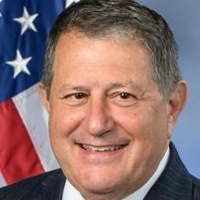
Joseph Morelle
Representative
NY
Joseph Morelle
Representative
NY
This proposed constitutional amendment would eliminate immunity from criminal prosecution for federal officials, including the President, based on their official duties. It also explicitly prohibits the President from issuing a self-pardon for any federal crimes. If ratified, these changes would take effect immediately.