Legislative Activity
Track Dave's sponsored bills, co-sponsored legislation, and voting record
The Quiet Communities Act of 2025 reestablishes the EPA's Office of Noise Abatement and Control to combat noise pollution through research, technical assistance, and funding for state and local programs.
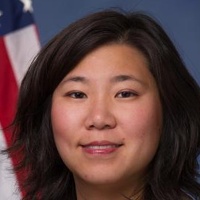
Grace Meng
Representative
NY
Grace Meng
Representative
NY
The Quiet Communities Act of 2025 addresses the growing public health crisis caused by noise pollution by reestablishing the Environmental Protection Agency's (EPA) Office of Noise Abatement and Control. This office will be tasked with researching noise impacts, supporting state and local noise control efforts through technical assistance and grants, and conducting a specific study on aircraft noise. The Act authorizes \$25 million annually through Fiscal Year 2030 to fund these critical national noise reduction initiatives.
This Act bans Members of Congress and their immediate families from trading or owning specific investments while in office, requiring divestment within 90 to 180 days or facing significant financial penalties.
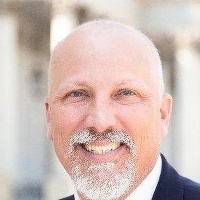
Chip Roy
Representative
TX
Chip Roy
Representative
TX
The Restore Trust in Congress Act establishes strict new rules prohibiting Members of Congress and their immediate families from owning or trading specific financial assets, referred to as "covered investments," while in office. Covered individuals must divest existing prohibited holdings within a set timeframe or face significant financial penalties, including fines and forfeiture of profits. The legislation aims to eliminate conflicts of interest arising from personal financial trading while serving in federal office.
This act prohibits discrimination in federal jury service based on disability or age, ensuring individuals are not excluded if they can perform the essential functions of jury duty with reasonable accommodation.
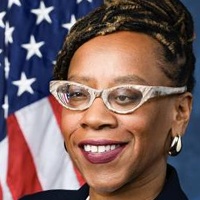
Lateefah Simon
Representative
CA
Lateefah Simon
Representative
CA
This Act prohibits discrimination against individuals based on disability or age in federal jury service. It amends federal law to ensure that a disability cannot be used as a basis for exclusion from a jury unless the individual cannot perform the essential functions of service even with a reasonable accommodation. The legislation updates existing jury qualification standards to reflect this nondiscrimination principle.
This Act transfers command authority of the District of Columbia National Guard from the President of the United States to the Mayor of the District of Columbia and makes corresponding technical amendments across federal military codes.

Eleanor Norton
Representative
DC
Eleanor Norton
Representative
DC
This bill, the District of Columbia National Guard Home Rule Act, transfers full command authority of the D.C. National Guard from the President of the United States to the Mayor of the District of Columbia. It updates numerous federal statutes to reflect this shift in leadership for appointments, discipline, and calling the Guard into service. The Act also makes conforming amendments across U.S. Code titles to ensure the Mayor is recognized as the definitive authority over the D.C. National Guard.
The INFORM Act of 2025 mandates that Homeland Security must notify the immediate family of a transferred immigration detainee within 24 hours, providing details about the relocation and the new facility's contact information.
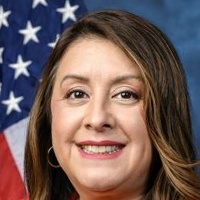
Luz Rivas
Representative
CA
Luz Rivas
Representative
CA
The INFORM Act of 2025 mandates that Homeland Security must notify the immediate family of any individual transferred between immigration detention facilities within 24 hours. This notification must include the reason for the transfer and contact information for the new location. The Act broadly defines "immediate family" to cover a wide range of relatives, including step- and foster-family members.
The SUN Act mandates timely and detailed congressional reporting and oversight for the domestic deployment of National Guard and reserve forces by the President, excluding deployments solely for natural disaster relief.
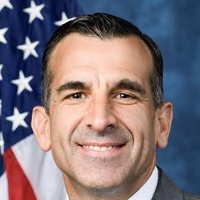
Sam Liccardo
Representative
CA
Sam Liccardo
Representative
CA
The Safeguarding the Use of the National Guard Act (SUN Act) enhances Congressional oversight of the President's domestic deployment of National Guard and reserve forces. It requires the President to submit a detailed report to Congress within 15 days outlining the legal justification, goals, costs, and impact of any domestic deployment. This reporting requirement is waived only when reserve forces are deployed specifically following a Presidential declaration under the Robert T. Stafford Act for a natural disaster.
This bill mandates a study to review and recommend improvements for protecting children in schools and childcare settings from wildfire smoke exposure.
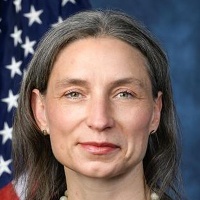
Maxine Dexter
Representative
OR
Maxine Dexter
Representative
OR
The Shielding Students from Wildfire Smoke Act directs the EPA to commission a comprehensive study on how K-12 schools and childcare facilities currently manage wildfire smoke exposure for children. This review will assess existing policies, identify gaps in protection, and recommend actionable strategies to Congress for improving safeguards, especially for resource-limited settings.
This bill extends the federal regulations governing High Occupancy Vehicle (HOV) facilities from September 30, 2025, to September 30, 2031.
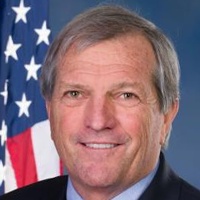
Mark DeSaulnier
Representative
CA
Mark DeSaulnier
Representative
CA
The High Occupancy Vehicle Lane Exemption Reauthorization Act extends the federal regulations governing High Occupancy Vehicle (HOV) facilities. Specifically, this bill pushes back the expiration date for these existing HOV facility rules from September 30, 2025, to September 30, 2031. This ensures the current federal guidelines remain in effect for an additional six years.
This Act establishes a new federal program to provide dedicated, long-term funding to states for improving election administration, security, and accessibility, managed by a new federal office.
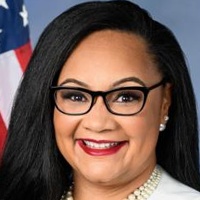
Nikema Williams
Representative
GA
Nikema Williams
Representative
GA
The Sustaining Our Democracy Act establishes a new federal program to provide annual grants to states for improving election administration, security, and accessibility, managed by a newly created Office of Democracy Advancement and Innovation. This funding is supported by a dedicated ten-year Trust Fund to ensure stable resources for election infrastructure upgrades. The bill imposes strict rules on how states can use the money, including prohibitions against purchasing insecure voting machines or restricting basic voter support. If states fail to comply, the federal Director can bypass state government to fund local election subdivisions directly.
The Election Mail Act mandates same-day processing for incoming absentee ballots, requires intelligent mail barcodes on federal election mail, establishes delivery standards and free postage for completed ballots, and sets a national seven-day grace period for accepting postmarked federal mail-in ballots after Election Day.
Nikema Williams
Representative
GA
Nikema Williams
Representative
GA
The Election Mail Act aims to ensure the timely and secure delivery of federal election mail through the U.S. Postal Service. It mandates same-day processing of received absentee ballots and requires the use of intelligent mail barcodes for tracking mailed ballots starting in 2026. Furthermore, the bill establishes protections against operational changes that would slow election mail delivery and sets a national standard to count mail-in ballots postmarked by Election Day if received within seven days after the election.
This Act establishes and funds federal research programs and specialized Centers of Excellence to investigate the health effects of plastic exposure on humans.
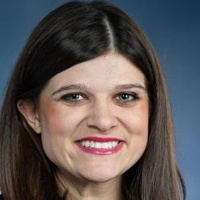
Haley Stevens
Representative
MI
Haley Stevens
Representative
MI
The Plastic Health Research Act aims to significantly increase federal research into the health effects of plastic exposure, including microplastics and nanoplastics. It mandates the expansion of existing research programs and the establishment of specialized Centers of Excellence to develop standardized testing methods and assess health risks. The bill requires annual reporting to Congress on research progress and authorizes dedicated funding through fiscal year 2030 for these initiatives.
This bill updates voting rights requirements by expanding language assistance definitions, creating incentive grants for voluntary translation services, and mandating a study on lowering language assistance thresholds.
Nikema Williams
Representative
GA
Nikema Williams
Representative
GA
The Expanding the VOTE Act updates language assistance requirements under the Voting Rights Act by modernizing the definition of "voting materials" to include digital information. It also establishes new state responsibilities for providing language assistance and creates a grant program to incentivize voluntary language support beyond current mandates. Furthermore, the bill includes special provisions for unwritten American Indian and Alaska Native languages and mandates a study on lowering thresholds for language assistance coverage.
This act mandates that the Department of Veterans Affairs must provide abortion care, counseling, and related services and medication to eligible veterans and certain other individuals.
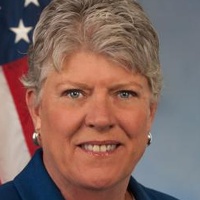
Julia Brownley
Representative
CA
Julia Brownley
Representative
CA
The Reproductive Freedom for Veterans Act mandates that the Department of Veterans Affairs (VA) must now provide abortion care, counseling, and related medication as part of the medical services offered to eligible veterans and certain other beneficiaries. This legislation formally amends existing VA health care provisions to include these reproductive health services.
This act mandates that employers provide employees with at least two hours of paid leave to vote in federal elections, with the employer determining the specific time the leave is taken.
Nikema Williams
Representative
GA
Nikema Williams
Representative
GA
The Time Off to Vote Act mandates that employers provide employees with at least two consecutive hours of paid leave to vote in federal elections. Employers retain control over when this paid leave is taken, which can include early voting periods if permitted by state law. This Act prohibits employers from penalizing employees for utilizing this required voting leave.
This act establishes a strategic defense innovation partnership between the U.S. and Taiwan to boost defense technology collaboration, counter Chinese influence, and accelerate joint research and development in key areas.
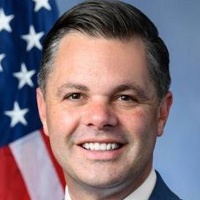
Zachary (Zach) Nunn
Representative
IA
Zachary (Zach) Nunn
Representative
IA
The U.S.-Taiwan Defense Innovation Partnership Act establishes a strategic partnership between the U.S. Department of Defense and Taiwan's defense agencies. This initiative aims to boost defense industry collaboration, accelerate joint research and development, and strengthen Taiwan's defense manufacturing capabilities. The partnership will focus on emerging technologies like AI, microchips, and drones to enhance security cooperation.
This act codifies the FTC's "click-to-cancel" rule into federal law, requiring businesses to provide simple online cancellation methods for subscriptions.
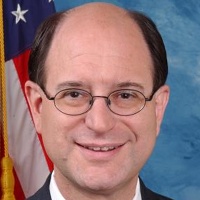
Brad Sherman
Representative
CA
Brad Sherman
Representative
CA
The Click to Cancel Act of 2025 officially codifies the Federal Trade Commission's "click-to-cancel" rule into federal law. This mandates that businesses provide consumers with a simple, online method to cancel subscriptions. Violations of this new law will be enforced by the FTC using its existing authority under the Federal Trade Commission Act.
This act repeals the prohibition on Medicaid payments to certain healthcare entities and mandates retroactive payment for services already rendered under the repealed ban.
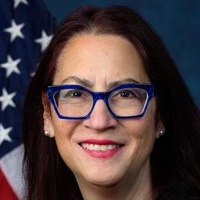
Laura Friedman
Representative
CA
Laura Friedman
Representative
CA
The Restoring Essential Healthcare Act repeals an outdated ban that prevented Medicaid from making payments to certain healthcare providers. This legislation ensures that these previously prohibited entities will now be reimbursed for medical services rendered between the enactment of the original ban and the passage of this Act. In short, it restores payment eligibility and retroactively covers past services.
This Act mandates the National Fire Academy Administrator to submit an annual report to Congress detailing course attendance, firefighter demographics, program statistics, and funding allocations.
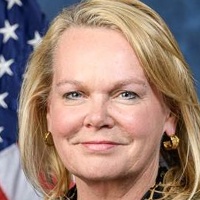
April McClain Delaney
Representative
MD
April McClain Delaney
Representative
MD
This bill, the National Fire Academy Reporting Act, mandates that the Administrator of the National Academy for Fire Prevention and Control submit an annual report to Congress. This report must detail the courses and programs offered, including attendance breakdowns by department type and firefighter status. It also requires specific reporting on course cancellations and the allocation of financial assistance and student aid.
This Act establishes a new reciprocal temporary work visa category for South Korean nationals in specialty occupations, subject to an annual cap of 15,000 principal applicants.
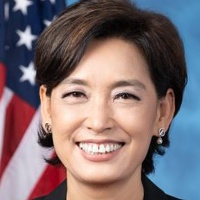
Young Kim
Representative
CA
Young Kim
Representative
CA
The Partner with Korea Act establishes a new reciprocal temporary work visa category specifically for South Korean nationals seeking employment in specialty occupations within the United States. This program is subject to an annual cap of 15,000 principal applicants. The legislation updates immigration procedures to incorporate this dedicated visa stream, contingent upon employer attestations approved by the Secretary of Labor.
This Act prohibits insurance companies from discriminating against living organ donors when issuing life, disability, or long-term care policies and mandates the updating of educational materials regarding donation risks and insurance implications.
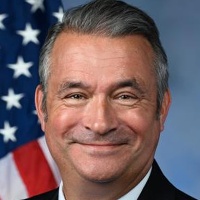
Don Bacon
Representative
NE
Don Bacon
Representative
NE
The Living Donor Protection Act of 2025 prohibits life, disability, and long-term care insurance companies from denying coverage or increasing premiums solely because an individual is a living organ donor. This legislation ensures that living donors are not financially penalized for their altruistic act. Additionally, the bill requires the Secretary of HHS to update educational materials to accurately reflect the insurance protections afforded to living donors.