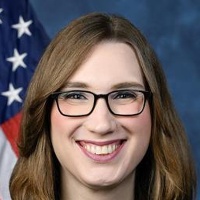
Legislative Activity
Track Sarah's sponsored bills, co-sponsored legislation, and voting record
The "Accelerating Kids’ Access to Care Act of 2025" streamlines Medicaid and CHIP enrollment for out-of-state providers, increasing healthcare access for children.
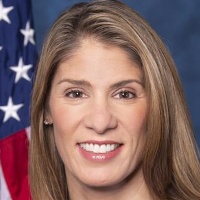
Lori Trahan
Representative
MA
Lori Trahan
Representative
MA
The "Accelerating Kids Access to Care Act of 2025" streamlines the enrollment process for out-of-state healthcare providers in Medicaid and CHIP, ensuring children under 21 have access to care from eligible providers across state lines. By reducing administrative burdens and unnecessary screening requirements, the Act aims to improve healthcare access for children while maintaining necessary safeguards against fraud and abuse. Participating providers will be enrolled for a 5-year period, and the changes will take effect three years after the Act's enactment.
The Public Safety Employer-Employee Cooperation Act establishes collective bargaining rights for public safety officers nationwide, ensuring fair labor practices and cooperation between employers and employees.
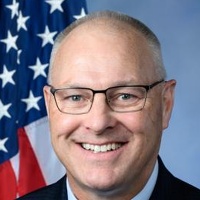
Pete Stauber
Representative
MN
Pete Stauber
Representative
MN
The Public Safety Employer-Employee Cooperation Act establishes a framework for collective bargaining rights for public safety officers (law enforcement, firefighters, and emergency medical services personnel) at the state level. It directs the Federal Labor Relations Authority to determine if states substantially protect these rights, and if not, the Authority will establish collective bargaining procedures. The Act aims to promote cooperation between public safety employers and employees while respecting existing state laws and prohibiting strikes and lockouts. This law does not override state laws that provide similar or stronger protections for public safety officers.
This House resolution clarifies that UN Resolution 2758 only addressed UN representation and does not validate the PRC's "One China Principle" regarding Taiwan's status, while supporting Taiwan's international participation.
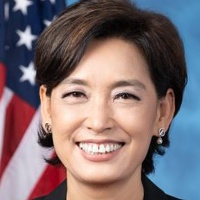
Young Kim
Representative
CA
Young Kim
Representative
CA
This resolution clarifies that United Nations General Assembly Resolution 2758 only addressed seating arrangements and does not validate the People's Republic of China's "One China Principle" regarding Taiwan's status. It asserts that the U.S. "One China Policy" is distinct from Beijing's claims and does not endorse PRC sovereignty over Taiwan. The bill strongly opposes PRC efforts to use the resolution to exclude Taiwan from international organizations and supports Taiwan's meaningful participation globally.
Allows individuals to enroll in standalone dental plans through the Health Insurance Exchange, regardless of health plan enrollment status.
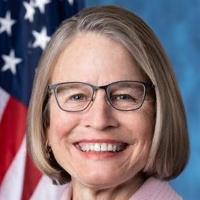
Mariannette Miller-Meeks
Representative
IA
Mariannette Miller-Meeks
Representative
IA
The "Increasing Access to Dental Insurance Act" aims to broaden access to dental coverage by enabling individuals to enroll in standalone dental plans via the Health Insurance Exchange, irrespective of their enrollment status in a qualified health plan. This expands options for individuals seeking dental insurance.
The "ENABLE Act" permanently extends provisions that increase contributions to ABLE accounts, include ABLE contributions in retirement savings calculations, and allow penalty-free rollovers from 529 education savings accounts to ABLE accounts.
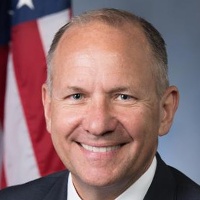
Lloyd Smucker
Representative
PA
Lloyd Smucker
Representative
PA
The ENABLE Act permanently extends provisions that allow for increased contributions to ABLE accounts, which are savings accounts for individuals with disabilities. It also allows penalty-free rollovers from 529 education savings accounts to ABLE accounts, providing greater flexibility in financial planning for families and individuals with disabilities. Additionally, the act includes contributions made to an ABLE account when calculating retirement savings contributions.
The Poverty Line Act of 2025 updates the calculation of the federal poverty line to more accurately reflect the cost of basic needs and regional variations in cost of living, expanding eligibility for federal assistance programs.
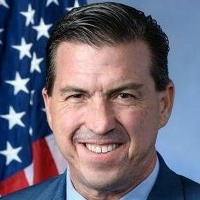
Kevin Mullin
Representative
CA
Kevin Mullin
Representative
CA
The Poverty Line Act of 2025 updates the calculation of the federal poverty line to more accurately reflect the true costs of basic needs such as housing, childcare, and healthcare, while also accounting for geographic variations and household spending norms. This updated calculation aims to expand eligibility for federal assistance programs. The Act requires regular evaluations and adjustments to the poverty line, ensuring it keeps pace with economic changes and accurately reflects the needs of households striving for economic mobility. It also mandates a report to Congress on necessary updates to federal laws and regulations that rely on the poverty line for program eligibility.
This bill amends the Animal Health Protection Act to compensate poultry farmers for income lost when their flocks are prohibited from growing or laying due to disease control areas.
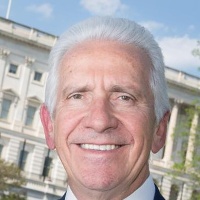
Jim Costa
Representative
CA
Jim Costa
Representative
CA
The "Healthy Poultry Assistance and Indemnification Act of 2025" amends the Animal Health Protection Act to provide compensation to poultry growers and layers who are prohibited from raising flocks due to being located in a control area designated by the Animal and Plant Health Inspection Service. Compensation will be based on the facility's average income from its five most recent flocks, and must be paid within 60 days of a request. The Secretary of Agriculture's decision on compensation is final and not subject to judicial review. This compensation aims to offset losses incurred during the control period, ensuring financial stability for affected poultry farmers.
The Secure Rural Schools Reauthorization Act of 2025 extends federal funding and program authorities for states and counties containing national forest land through 2026.
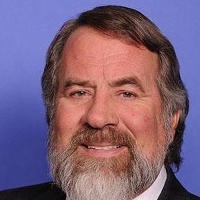
Doug LaMalfa
Representative
CA
Doug LaMalfa
Representative
CA
The Secure Rural Schools Reauthorization Act of 2025 extends critical federal funding for states and counties containing national forest land through 2026. This legislation ensures the continuation of essential community services and maintains the authority for resource advisory committees and local special projects.
This act authorizes the creation of the Smithsonian National Museum of the American Latino on the National Mall, ensuring diverse representation in its exhibits and programs.
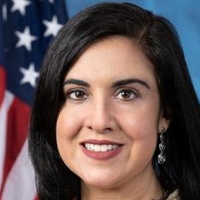
Nicole Malliotakis
Representative
NY
Nicole Malliotakis
Representative
NY
The Smithsonian National Museum of the American Latino Act authorizes the creation of the Smithsonian National Museum of the American Latino on the National Mall. It ensures the museum's exhibits and programs accurately represent the diverse cultures, histories, events, and values of Hispanic and Latino communities, seeking guidance from diverse sources. The Act also mandates regular reports to Congress on the museum's efforts to meet these diversity requirements.
The I CAN Act removes practice and billing barriers for Nurse Practitioners, CRNAs, and CNMs across Medicare and Medicaid while increasing transparency in federal health program coverage decisions.
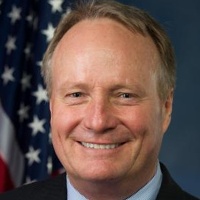
David Joyce
Representative
OH
David Joyce
Representative
OH
The "I CAN Act" is comprehensive legislation designed to remove existing practice and billing barriers for various Advanced Practice Registered Nurses (APRNs)—including Nurse Practitioners, CRNAs, and CNMs—within Medicare and Medicaid. It aims to expand patient access to care by allowing these qualified professionals to supervise, order, and bill for services to the full extent of their state-defined scope of practice. Furthermore, the bill enhances transparency and accountability for Medicare's local coverage decisions affecting APRN services. Overall, this act seeks to integrate APRNs more fully into federal healthcare programs, improving efficiency and service delivery.
Reauthorizes the Delaware River Basin Restoration Program through 2032, expanding its scope to include Maryland and prioritizing projects benefiting underserved communities.
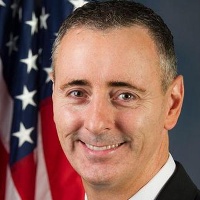
Brian Fitzpatrick
Representative
PA
Brian Fitzpatrick
Representative
PA
The "Delaware River Basin Restoration Program Reauthorization Act of 2025" reauthorizes and modifies the Delaware River Basin Conservation Program. It broadens the definition of the Basin to include Maryland, allows prioritization of funding for projects benefiting small, rural, or disadvantaged communities, and extends the program's operation until 2032.
This resolution expresses Congressional opposition to imposing new performance fees or royalties on local radio stations and businesses for broadcasting or playing music.
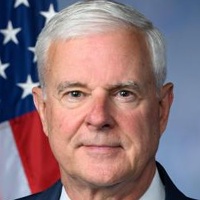
Steve Womack
Representative
AR
Steve Womack
Representative
AR
The Local Radio Freedom Act expresses Congressional opposition to imposing new performance fees, taxes, or royalties on local radio stations and businesses for playing music. It argues that the current system of free airplay provides essential promotional value to artists and that new fees would threaten the financial viability of local broadcasters and the vital community services they provide.
This bill amends the Immigration and Nationality Act to include Irish nationals in the E-3 visa program under specific conditions and numerical limitations, requiring employer participation in E-Verify.
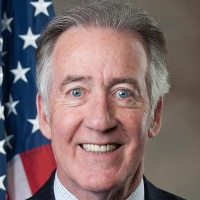
Richard Neal
Representative
MA
Richard Neal
Representative
MA
This bill amends the Immigration and Nationality Act to include Irish nationals in the E-3 visa program if reciprocity is determined by the Secretary of State. Employers hiring Irish nationals under this program must participate in E-Verify. The number of E-3 visas available to Irish nationals annually is capped at the difference between 10,500 and the number of visas issued to Australian nationals in the previous fiscal year.
The "More Homes on the Market Act" increases the tax exclusion for profit from the sale of a primary residence, incentivizing homeowners to sell and increasing housing supply.
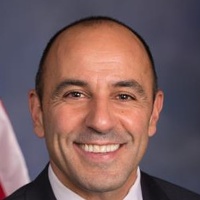
Jimmy Panetta
Representative
CA
Jimmy Panetta
Representative
CA
The "More Homes on the Market Act" increases the tax exclusion for profit from the sale of a primary residence, raising it to $500,000 for single filers and $1,000,000 for married couples filing jointly. These amounts will be adjusted for inflation starting in 2025. This change encourages homeowners to sell their properties, thereby increasing the availability of homes on the market.
This bill establishes an Office of Gun Violence Prevention within the Department of Justice to coordinate gun violence prevention efforts, evaluate related programs and policies, recommend evidence-based strategies, and assist communities affected by gun violence.
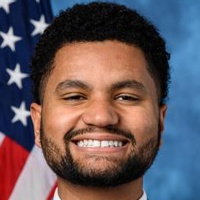
Maxwell Frost
Representative
FL
Maxwell Frost
Representative
FL
The "Office of Gun Violence Prevention Act of 2025" establishes an Office of Gun Violence Prevention within the Department of Justice, led by a Director appointed by the Attorney General, to coordinate gun violence prevention efforts, evaluate related laws and programs, and recommend evidence-based policies to Congress and the President. The Director will also convene an advisory council comprising various officials and at least 12 additional individuals representing gun violence survivors, community violence intervention service providers, and other relevant groups. The Office will also assist communities affected by gun violence with crisis response activities, such as providing access to mental health services and suicide prevention resources. Finally, the act authorizes the appropriation of necessary funds to carry out the provisions of the bill.
The "Alternatives to PAIN Act" aims to improve Medicare Part D coverage for non-opioid pain management drugs by reducing cost-sharing and removing barriers like step therapy and prior authorization, starting in 2026.
Mariannette Miller-Meeks
Representative
IA
Mariannette Miller-Meeks
Representative
IA
The "Alternatives to PAIN Act" amends Medicare Part D to improve access to non-opioid pain management drugs by waiving deductibles and ensuring they are placed on the lowest cost-sharing tier starting in 2026. The Act also prohibits the use of step therapy and prior authorization requirements for these drugs, further easing access for patients. These changes aim to provide more accessible alternatives for pain management, reducing reliance on opioids.
The Rural Obstetrics Readiness Act aims to improve maternal health care in rural areas by establishing training programs, providing grant funding for equipment and supplies, creating a teleconsultation pilot program, and studying obstetric units in rural areas.
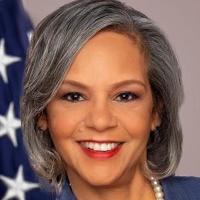
Robin Kelly
Representative
IL
Robin Kelly
Representative
IL
The Rural Obstetrics Readiness Act aims to improve maternal health outcomes in rural areas by establishing programs to train healthcare providers in obstetric emergency care, provide funding for necessary equipment and workforce development, implement teleconsultation programs, and study the challenges facing rural obstetric units. The Act authorizes grants for training, equipment, and telehealth programs, and requires a study on rural maternity ward closures and patient transport patterns.
The United States-Israel Defense Partnership Act of 2025 bolsters defense cooperation between the U.S. and Israel through joint programs, funding increases, and extended authorities related to countering unmanned systems, anti-tunnel technology, emerging technologies, and war reserve stockpiles, while also exploring Israel's inclusion in the national technology and industrial base and assessing integrated air and missile defense in the CENTCOM region.
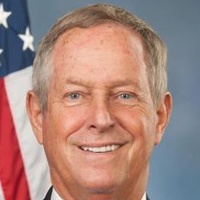
Joe Wilson
Representative
SC
Joe Wilson
Representative
SC
The United States-Israel Defense Partnership Act of 2025 seeks to bolster the defense relationship between the United States and Israel through joint initiatives and increased cooperation. It establishes programs to counter unmanned systems, extend anti-tunnel and counter-UAS cooperation, and promote collaboration in emerging technologies like AI and cybersecurity. The act also mandates the establishment of a Defense Innovation Unit office in Israel and assesses integrated air and missile defense in the U.S. Central Command region. Finally, it explores Israel's potential inclusion in the national technology and industrial base.
This proposed constitutional amendment establishes that constitutional rights apply only to natural persons and grants governments the authority to regulate political spending to ensure fair democratic participation.
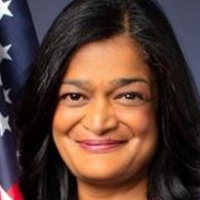
Pramila Jayapal
Representative
WA
Pramila Jayapal
Representative
WA
This proposed constitutional amendment establishes that constitutional rights belong exclusively to natural persons, not artificial entities like corporations. It further empowers governments to regulate campaign contributions and expenditures to ensure fair political participation, explicitly stating that spending money to influence elections is not protected as free speech. Finally, the amendment includes a specific provision to ensure these changes do not restrict the freedom of the press.
The Honoring Our Fallen Heroes Act of 2025 expands public safety officer benefits to include disability and death coverage for certain cancers presumed to be caused by on-duty exposure to carcinogens, and clarifies "line of duty" definitions for first responder benefits.
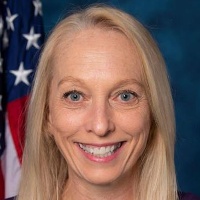
Mary Scanlon
Representative
PA
Mary Scanlon
Representative
PA
The Honoring Our Fallen Heroes Act of 2025 expands public safety officer benefits to include deaths and disabilities caused by exposure-related cancers, presuming that certain cancers diagnosed within 15 years of service are line-of-duty injuries if the officer served for at least 5 years. It defines "exposure-related cancer" and allows for updates to the list based on medical evidence, while also permitting individuals to petition for additions. The Act also clarifies "line of duty action" and applies retroactively to claims dating back to January 1, 2020, with a three-year window for filing claims based on these amendments.