Legislative Activity
Track Mark's sponsored bills, co-sponsored legislation, and voting record
This Act allows schools participating in the National School Lunch Program to offer organic or non-organic whole milk alongside other options, while clarifying saturated fat accounting and restricting milk sourcing from China state-owned enterprises.
Glenn Thompson
Representative
PA
Glenn Thompson
Representative
PA
The Whole Milk for Healthy Kids Act of 2025 expands milk options available to students in the National School Lunch Program by allowing schools to offer organic or non-organic whole milk. This legislation provides greater flexibility for schools in providing fluid milk choices while maintaining accommodations for students with special dietary needs. Importantly, the saturated fat content of these offered milk options will not count toward the meal's overall saturated fat limits.
The United States-Israel Defense Partnership Act of 2025 bolsters defense cooperation between the U.S. and Israel through joint programs, funding increases, and extended authorities related to countering unmanned systems, anti-tunnel technology, emerging technologies, and war reserve stockpiles, while also exploring Israel's inclusion in the national technology and industrial base and assessing integrated air and missile defense in the CENTCOM region.
Joe Wilson
Representative
SC
Joe Wilson
Representative
SC
The United States-Israel Defense Partnership Act of 2025 seeks to bolster the defense relationship between the United States and Israel through joint initiatives and increased cooperation. It establishes programs to counter unmanned systems, extend anti-tunnel and counter-UAS cooperation, and promote collaboration in emerging technologies like AI and cybersecurity. The act also mandates the establishment of a Defense Innovation Unit office in Israel and assesses integrated air and missile defense in the U.S. Central Command region. Finally, it explores Israel's potential inclusion in the national technology and industrial base.
Authorizes the President to commission private individuals or groups to seize cartel members and their assets outside the U.S. through letters of marque and reprisal.
Tim Burchett
Representative
TN
Tim Burchett
Representative
TN
The "Cartel Marque and Reprisal Authorization Act of 2025" grants the President authority to commission private individuals or groups to seize cartel members and their assets outside the U.S. through letters of marque and reprisal. This aims to combat cartels that pose a threat to U.S. national security and foreign policy. A security bond is required to ensure operations adhere to the terms of the letter. The term "cartel" refers to organizations designated in a specific executive order or defined as transnational criminal organizations.
The "Protect Medicaid Act" prohibits federal Medicaid funding for state administrative costs related to providing health benefits to unauthorized immigrants and requires a report on state practices and funding mechanisms for healthcare provided to non-lawfully admitted noncitizens.
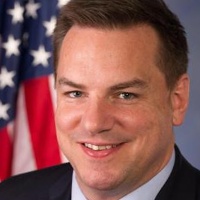
Richard Hudson
Representative
NC
Richard Hudson
Representative
NC
The "Protect Medicaid Act" prohibits federal Medicaid funding for state administrative costs associated with providing healthcare benefits to unauthorized immigrants. It requires a report from the Inspector General of the Department of Health and Human Services on how states that offer health benefits to non-lawfully admitted noncitizens handle Medicaid program administration costs separately. The report will also cover how these states fund programs for non-lawfully admitted noncitizens and analyze the impact of these non-lawfully admitted noncitizens receiving outpatient drugs purchased under the Medicaid Drug Rebate Program or the 340B drug discount program.
This bill transfers the functions, assets, and responsibilities of the Food for Peace Act from the U.S. Agency for International Development to the Department of Agriculture.
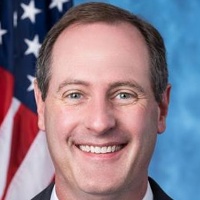
Tracey Mann
Representative
KS
Tracey Mann
Representative
KS
This bill transfers the functions, assets, and responsibilities for implementing the Food for Peace Act from the U.S. Agency for International Development (USAID) to the Department of Agriculture (USDA). The Secretary of Agriculture will now administer the program, though the Famine Early Warning Systems Network will remain under USDA control. This change allows the USDA to quickly update necessary rules to ensure a smooth transition of the program.
This bill directs the Treasury Secretary to leverage U.S. influence at the International Monetary Fund to compel greater transparency and accountability regarding China’s exchange rate policies and currency market interventions.
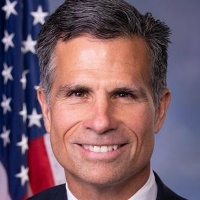
Daniel Meuser
Representative
PA
Daniel Meuser
Representative
PA
The China Exchange Rate Transparency Act of 2025 directs the U.S. Treasury to leverage its influence within the International Monetary Fund (IMF) to demand greater transparency regarding China’s exchange rate policies and market interventions. The bill aims to hold China accountable for its lack of disclosure, which currently complicates international assessments of potential currency manipulation. These requirements remain in effect until China achieves substantial compliance or a period of seven years has elapsed.
Exempts family farms and small businesses from asset considerations in need analysis for federal student aid.
Tracey Mann
Representative
KS
Tracey Mann
Representative
KS
The "Family Farm and Small Business Exemption Act" amends the Higher Education Act of 1965 to exclude the net value of a family farm (on which the family resides) or a small business (with no more than 100 employees and owned/controlled by the family) from consideration as an asset when determining financial need for federal student aid. This change aims to make higher education more accessible for students from family farm and small business backgrounds.
The "Freedom to Invest in Tomorrow's Workforce Act" expands the use of 529 savings accounts to cover expenses related to postsecondary credentialing programs, including tuition, fees, books, supplies, equipment, and testing fees.

Robert Wittman
Representative
VA
Robert Wittman
Representative
VA
The "Freedom to Invest in Tomorrow's Workforce Act" amends Section 529 savings accounts to include expenses related to postsecondary credentialing programs. This allows 529 funds to cover costs like tuition, fees, books, supplies, and testing fees for recognized programs and credentials, as defined by the bill. These changes would apply to distributions made after the bill is enacted.
This joint resolution seeks to disapprove and nullify the Environmental Protection Agency’s rule regarding the phasedown and management of hydrofluorocarbons.
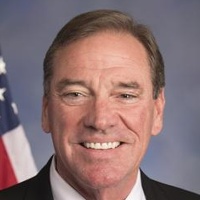
Neal Dunn
Representative
FL
Neal Dunn
Representative
FL
This joint resolution seeks to invoke the Congressional Review Act to disapprove and nullify the Environmental Protection Agency’s recent rule regarding the phasedown and management of hydrofluorocarbons. If enacted, the rule would have no force or effect, effectively blocking the EPA's regulatory framework for these substances.
The HALT Fentanyl Act permanently classifies fentanyl-related substances as Schedule I controlled substances while streamlining registration procedures for legitimate scientific research.
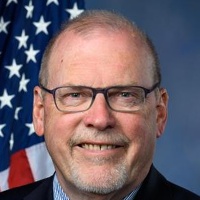
H. Griffith
Representative
VA
H. Griffith
Representative
VA
The Halt All Lethal Trafficking of Fentanyl (HALT Fentanyl) Act permanently classifies fentanyl-related substances as Schedule I controlled substances to strengthen enforcement and penalties against their trafficking. Additionally, the bill streamlines registration processes for researchers to facilitate legitimate scientific study of these substances. It also includes technical corrections and mandates updated federal rulemaking to ensure effective implementation.
The Marc Fischer Memorial Act mandates the implementation of a comprehensive digital mail scanning strategy across all federal prisons to detect and interdict synthetic drugs like fentanyl.
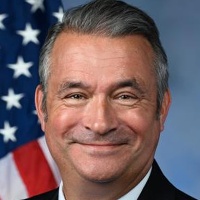
Don Bacon
Representative
NE
Don Bacon
Representative
NE
The Marc Fischer Memorial Act mandates that the Bureau of Prisons implement a comprehensive strategy to achieve 100% digital scanning of all inmate mail to interdict fentanyl and other synthetic drugs. By transitioning to digital mail processing, the Act aims to protect staff and inmates from lethal exposure, improve institutional security, and alleviate the administrative burden on correctional personnel.
This bill directs the Department of Education to consider the International Holocaust Remembrance Alliance's definition of antisemitism when evaluating discrimination complaints under Title VI of the Civil Rights Act of 1964, while also protecting First Amendment rights.
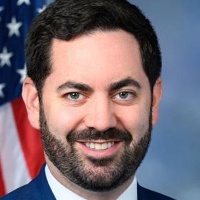
Michael Lawler
Representative
NY
Michael Lawler
Representative
NY
The Antisemitism Awareness Act of 2025 requires the Department of Education to consider the International Holocaust Remembrance Alliance's definition of antisemitism when evaluating discrimination complaints under Title VI of the Civil Rights Act of 1964, concerning race, color, and national origin. This aims to address rising antisemitism in educational settings. The Act clarifies that it does not expand the Department of Education's authority, change existing discrimination standards, reduce existing rights, or infringe upon First Amendment rights.
The Dismantle DEI Act of 2025 immediately rescinds federal diversity, equity, and inclusion (DEI) mandates across executive offices, contracting, grants, and education, while banning related training and imposing penalties for non-compliance.
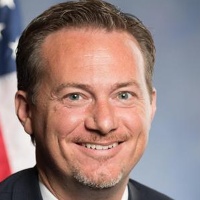
Michael Cloud
Representative
TX
Michael Cloud
Representative
TX
The Dismantle DEI Act of 2025 aims to immediately rescind diversity, equity, and inclusion (DEI) mandates across the federal government, including shutting down related offices and banning specific ideological training for federal personnel and contractors. The bill prohibits the use of federal funds for DEI activities by grant recipients and mandates that federal advisory committees cease all such practices or face termination. Furthermore, it establishes strong enforcement mechanisms, allowing individuals to sue violators and seek financial penalties for non-compliance.
The Educational Choice for Children Act of 2025 establishes federal tax credits for contributions to scholarship-granting organizations, providing lower- and middle-income families with financial support for K–12 educational expenses.

Adrian Smith
Representative
NE
Adrian Smith
Representative
NE
The Educational Choice for Children Act of 2025 establishes federal tax credits for individuals and corporations that contribute to scholarship-granting organizations. These organizations provide K–12 education scholarships to students from lower- and middle-income households to cover tuition, tutoring, and other qualified educational expenses. The bill also protects the autonomy of participating schools and scholarship organizations from government interference while ensuring that scholarship funds remain tax-free for recipient families.
This bill provides a 6.62 percent Medicare payment increase for physicians and practitioners from April through December 2025 to help stabilize medical practices.
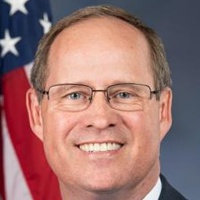
Gregory Murphy
Representative
NC
Gregory Murphy
Representative
NC
The Medicare Patient Access and Practice Stabilization Act of 2025 aims to support healthcare providers by extending Medicare payment adjustments through the end of 2025. Specifically, the bill provides a 6.62 percent payment increase for services rendered between April 1, 2025, and December 31, 2025, to help practitioners adjust to evolving Medicare payment policies.
The IGO Anti-Boycott Act expands existing anti-boycott regulations to include international governmental organizations and mandates an annual public report on all such boycott activities.
Michael Lawler
Representative
NY
Michael Lawler
Representative
NY
The IGO Anti-Boycott Act expands existing federal law to prohibit participation in boycotts fostered or imposed by international governmental organizations, not just those by foreign countries. Additionally, the bill mandates that the President submit and publish an annual report detailing all international boycotts covered by these restrictions.
The Build the Wall Act of 2025 mandates the construction and maintenance of physical barriers along the U.S. southern border by repurposing unobligated COVID-19 relief funds.
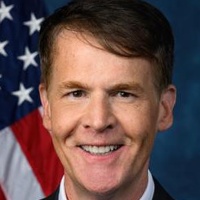
Jefferson Shreve
Representative
IN
Jefferson Shreve
Representative
IN
The Build the Wall Act of 2025 establishes a dedicated Treasury fund to finance the construction and maintenance of physical barriers along the U.S. southern border. The legislation mandates that this initiative be funded by reallocating all unobligated Coronavirus State and local fiscal recovery funds.
The Stop Illegal Reentry Act increases criminal penalties and establishes mandatory minimum prison sentences for aliens who reenter the United States after being previously removed or denied admission.
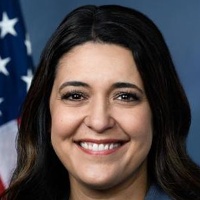
Stephanie Bice
Representative
OK
Stephanie Bice
Representative
OK
The Stop Illegal Reentry Act amends the Immigration and Nationality Act to increase criminal penalties for individuals who reenter the United States after being previously denied admission, excluded, or removed. The bill establishes tiered sentencing guidelines, including mandatory minimums for repeat offenders and those with prior aggravated felony convictions. These measures aim to strengthen enforcement against illegal reentry through more severe fines and extended prison terms.
The Life at Conception Act declares that the constitutional right to life begins at the moment of fertilization and applies to every member of the species *homo sapiens* at all stages of development.
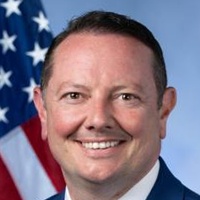
Eric Burlison
Representative
MO
Eric Burlison
Representative
MO
The Life at Conception Act declares that the constitutional right to life begins at the moment of fertilization, defining all human beings as persons from that point forward. The bill establishes legal personhood for every member of the species *homo sapiens* at all stages of development. Additionally, it explicitly prohibits the prosecution of any woman for the death of her unborn child.
This bill disapproves and nullifies the Environmental Protection Agency's rule on phasing down hydrofluorocarbons, as outlined in the American Innovation and Manufacturing Act of 2020.
Neal Dunn
Representative
FL
Neal Dunn
Representative
FL
This bill disapproves and nullifies the Environmental Protection Agency's rule concerning the phasedown of hydrofluorocarbons, specifically addressing the management of certain hydrofluorocarbons and their substitutes as outlined in the American Innovation and Manufacturing Act of 2020.