Legislative Activity
Track April's sponsored bills, co-sponsored legislation, and voting record
The GREATER Act establishes a partnership between the SBA, ARC, and DRA to expand rural entrepreneurship and support small businesses in the Appalachian and Delta regions.

Julia Letlow
Representative
LA
Julia Letlow
Representative
LA
The GREATER Act establishes a formal partnership between the Small Business Administration (SBA), the Appalachian Regional Commission (ARC), and the Delta Regional Authority (DRA). This agreement mandates these agencies to coordinate efforts to expand rural entrepreneurship and support small businesses specifically within the Appalachian and Delta regions. The partnership requires regular reporting to Congress on assistance provided and future collaboration plans.
The Affordable Housing Credit Improvement Act of 2025 updates state allocation formulas, reforms tenant eligibility and credit determination rules, and enhances assistance for Native American and rural housing projects.
Darin LaHood
Representative
IL
Darin LaHood
Representative
IL
The Affordable Housing Credit Improvement Act of 2025 updates federal housing tax credit allocations to reflect current economic realities and boosts minimum state allotments. It reforms tenant eligibility rules to stabilize tenancy and enhance protections for vulnerable residents, including victims of abuse. The bill also provides disaster relief for property owners, increases incentives for housing the extremely low-income, and directs greater resources toward Native American and rural housing needs. Finally, it streamlines administrative processes and signals a future focus on data transparency and discouraging restrictive local zoning.
This Act establishes federal minimum standards for public employee collective bargaining rights, allowing states to maintain their own laws if they meet or exceed these standards, otherwise the Federal Labor Relations Authority will enforce federal rules.
Donald Norcross
Representative
NJ
Donald Norcross
Representative
NJ
The Public Service Freedom to Negotiate Act of 2025 establishes federal minimum standards for collective bargaining rights for public employees across the nation. It requires the Federal Labor Relations Authority (FLRA) to review state laws to ensure they substantially provide these minimum rights, including the right to organize and bargain collectively. If a state fails to meet these standards, the FLRA will administer federal labor relations rules for the uncovered employees. The Act also prohibits strikes or lockouts that would measurably disrupt emergency or public safety services.
The Raise the Wage Act of 2025 gradually increases the federal minimum wage to \$17.00, phases out subminimum wages for tipped employees and workers with disabilities, and eliminates the subminimum wage for young workers.
Robert Scott
Representative
VA
Robert Scott
Representative
VA
The Raise the Wage Act of 2025 establishes a phased increase of the federal minimum wage, culminating in a \$17.00 per hour rate five years after enactment, followed by automatic annual adjustments tied to median wage growth. This bill also phases out the lower minimum wage for tipped employees and workers under 20, ensuring they eventually earn the standard federal minimum wage. Furthermore, it sets a schedule to eliminate subminimum wages for individuals with disabilities and prohibits the issuance of new special certificates allowing for lower pay.
This Act allows employees to fully deduct union dues above the line and restores the itemized deduction for certain other job-related business expenses.
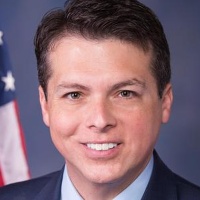
Brendan Boyle
Representative
PA
Brendan Boyle
Representative
PA
The Tax Fairness for Workers Act restores key federal tax deductions for employees, effective after 2024. This legislation makes union dues fully deductible "above the line," meaning they reduce Adjusted Gross Income without itemizing. Additionally, it allows itemizers to deduct certain other job-related business expenses that were previously limited.
The No Tax Breaks for Union Busting Act denies businesses tax deductions for expenses incurred while influencing employees regarding union organization and activities.
Donald Norcross
Representative
NJ
Donald Norcross
Representative
NJ
The No Tax Breaks for Union Busting (NTBUB) Act aims to disallow businesses from deducting federal income taxes for expenses incurred while attempting to influence employees regarding union organization or activities. This change is intended to stop companies from subsidizing anti-union campaigns through tax write-offs. The bill also establishes new, significant reporting requirements and penalties for businesses and third-party consultants who engage in these influence expenditures.
The American Innovation Act authorizes significant, inflation-adjusted funding increases through 2036 for key federal science and innovation agencies, exempting these appropriations from sequestration.
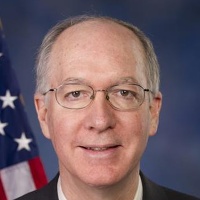
Bill Foster
Representative
IL
Bill Foster
Representative
IL
The American Innovation Act establishes significant, multi-year funding authorizations through fiscal year 2036 for key federal science and innovation agencies, including the NSF, DOE Office of Science, DoD, NIST, and NASA. These appropriations are protected from future budget sequestration and are set to automatically adjust for inflation starting in fiscal year 2036. The bill ensures these dedicated innovation funds remain available until expended.
The IDEA Full Funding Act establishes mandatory, increasing funding levels for the Individuals with Disabilities Education Act (IDEA) from 2026 through 2035, contingent upon offsetting budget cuts.
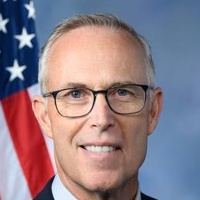
Jared Huffman
Representative
CA
Jared Huffman
Representative
CA
The IDEA Full Funding Act establishes mandatory, increasing funding levels for the Individuals with Disabilities Education Act (IDEA) programs through fiscal year 2035. This legislation sets specific appropriation targets based on student counts and national average spending to ensure greater financial support for special education services. Furthermore, the bill requires that these new IDEA appropriations adhere to "cut-as-you-go" budget offset rules.
This resolution expresses Congress's view that the Trump administration's tariffs on Mexico and Canada violate the terms of the United States-Mexico-Canada Agreement (USMCA).
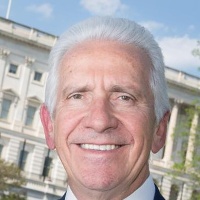
Jim Costa
Representative
CA
Jim Costa
Representative
CA
This resolution expresses the sense of Congress that the Trump administration's planned tariffs on Canada and Mexico violate the spirit and terms of the United States-Mexico-Canada Agreement (USMCA). Congress is urging the President to cease imposing these tariffs, which threaten to undermine the vital trade relationship established by the USMCA. The measure affirms strong support for the existing trade agreement and its framework for fair commerce.
This Act mandates the Department of Labor to establish and enforce comprehensive workplace violence prevention standards for healthcare and social service workers, while also tying compliance to Medicare funding for certain facilities.
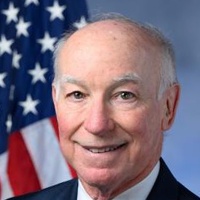
Joe Courtney
Representative
CT
Joe Courtney
Representative
CT
This Act mandates the Secretary of Labor to establish an interim and then a final standard requiring comprehensive workplace violence prevention plans for employers in the healthcare and social service sectors. These plans must be developed with employee input and detail risk assessments, hazard controls, reporting procedures, and annual training. Furthermore, the bill amends the Social Security Act to require Medicare-funded hospitals and skilled nursing facilities not covered by OSHA to comply with these new federal workplace violence prevention standards. The legislation also establishes clear definitions for workplace violence and includes strong anti-retaliation protections for employees who exercise their rights under the Act.
The Taiwan Allies Fund Act establishes a fund to provide financial assistance to nations facing pressure from the PRC for maintaining ties with Taiwan, while also encouraging deeper U.S. support for Taiwan's international presence.
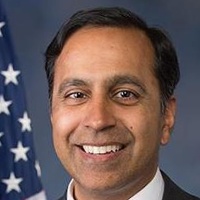
Raja Krishnamoorthi
Representative
IL
Raja Krishnamoorthi
Representative
IL
The Taiwan Allies Fund Act establishes a dedicated fund to support countries that maintain relationships with Taiwan despite pressure from the People's Republic of China (PRC). This fund authorizes up to $40 million annually for fiscal years 2026 through 2028 to help eligible nations counter PRC coercion. Aid will focus on strengthening democratic partnerships, supporting Taiwan's international participation, and offering alternatives to PRC economic influence. The Secretary of State will manage the fund, coordinating with Taiwan, and must report annually to Congress on the fund's activities and Taiwan's matching contributions.
This bill prohibits the use of federal funds for the removal of 3 percent or more of the Department of Health and Human Services (HHS) employees or any of its sub-agencies within any 60-day period.
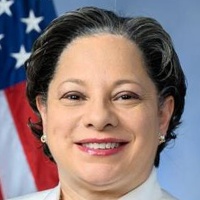
Jennifer McClellan
Representative
VA
Jennifer McClellan
Representative
VA
This bill restricts the use of federal funds to carry out large-scale removals of employees within the Department of Health and Human Services (HHS). Specifically, it prohibits using federal money for terminations if 3% or more of the total HHS workforce, or 3% or more of any individual sub-agency's staff, are removed within a 60-day period. This measure aims to prevent sudden, mass layoffs across the department and its major divisions.
The CARE Act of 2025 mandates Medicare to test a new payment model covering emergency response services provided by ground ambulance companies even when patient transport does not occur.
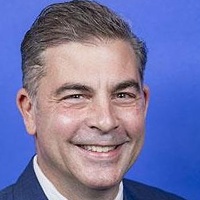
Mike Carey
Representative
OH
Mike Carey
Representative
OH
The CARE Act of 2025 mandates that the Center for Medicare and Medicaid Innovation (CMMI) test a new payment model for emergency services. This model will allow Medicare to pay ground ambulance providers for emergency responses, even when a patient does not ultimately require transport under Medicare Part B. The five-year demonstration aims to evaluate the impact of covering these non-transport emergency responses on patient access and resource utilization.
The Hunger-Free Future Act of 2025 mandates that any adjustment to the Thrifty Food Plan used for SNAP benefits cannot result in an increase in household food insecurity.

Shontel Brown
Representative
OH
Shontel Brown
Representative
OH
The Hunger-Free Future Act of 2025 mandates that any adjustment to the Thrifty Food Plan used for calculating SNAP benefits must not result in an increase in food insecurity. This ensures that updates to the cost of the food plan do not negatively impact households' ability to afford adequate nutrition.
The Abortion Care Awareness Act of 2025 mandates a national public health campaign by HHS to educate the public on accessing abortion care, understanding related rights, and identifying misinformation.

Jasmine Crockett
Representative
TX
Jasmine Crockett
Representative
TX
The Abortion Care Awareness Act of 2025 mandates the creation of a national public health campaign by the Secretary of HHS to educate the public on accessing abortion and related health services legally and safely. This campaign must provide medically accurate information on care options, including telehealth and medication abortion, while also teaching people how to recognize disinformation and protect their health data. The effort must be culturally competent and accessible to underserved communities, explicitly prohibiting the promotion of misinformation or abstinence-only programs.
This bill mandates that Medicare provide equitable reimbursement for the transportation and setup of portable ultrasound equipment, mirroring current payments for portable X-ray services.
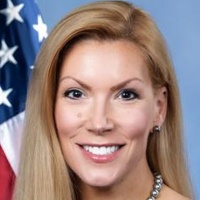
Beth Van Duyne
Representative
TX
Beth Van Duyne
Representative
TX
The Portable Ultrasound Reimbursement Equity Act of 2025 updates Medicare coverage to include diagnostic ultrasound tests. This legislation mandates that Medicare establish separate payments for the transportation and setup of portable ultrasound equipment, mirroring existing payments for portable X-ray services. These changes are set to take effect starting January 1, 2027.
This Act mandates the Department of Agriculture to honor existing farmer contracts, release frozen funds, pay outstanding debts, and provide advance notice to Congress before closing local offices.
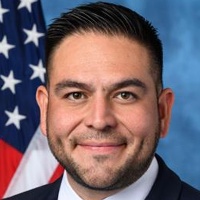
Gabriel (Gabe) Vasquez
Representative
NM
Gabriel (Gabe) Vasquez
Representative
NM
The Honor Farmer Contracts Act mandates that the Department of Agriculture immediately honor all existing written agreements and pay any outstanding debts owed under those contracts. This legislation strictly prohibits the cancellation of signed farmer contracts unless the farmer has breached the terms. Furthermore, the Act requires a 60-day advance written notice to Congress before closing any local Farm Service Agency, NRCS, or Rural Development offices.
This resolution designates March 27, 2025, as "National Women in Agriculture Day" to recognize the vital contributions of women to U.S. agriculture and encourage public support for their roles.
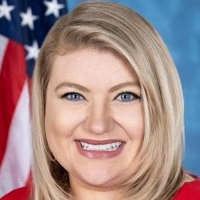
Katherine Cammack
Representative
FL
Katherine Cammack
Representative
FL
This resolution officially designates March 27, 2025, as "National Women in Agriculture Day" to honor the significant contributions of women across all sectors of U.S. agriculture. It recognizes women as vital producers, leaders, and mentors who drive economic success and support the next generation in farming. The bill encourages the public to celebrate and support the essential role women play in ensuring the nation's food supply and global trade.
This Act mandates comprehensive software inventory assessments and strategic modernization plans for federal agencies to improve management, reduce unnecessary spending, and enhance interoperability of software assets.

Gerald Connolly
Representative
VA
Gerald Connolly
Representative
VA
The Strengthening Agency Management and Oversight of Software Assets Act mandates that federal agencies conduct comprehensive software inventories and develop detailed modernization plans to consolidate licenses and reduce unnecessary spending. This legislation requires agencies to identify all software entitlements, usage restrictions, and redundant assets to improve interoperability and cost efficiency. The resulting reports and plans must be submitted to key oversight bodies, with the GAO later reviewing government-wide software asset management trends. No new funding is authorized for the implementation of this Act.
This bill excludes certain veterinary student loan repayments and forgiveness amounts from taxable income to encourage veterinarians to practice in rural areas.

Adrian Smith
Representative
NE
Adrian Smith
Representative
NE
The Rural Veterinary Workforce Act aims to encourage more veterinarians to serve in underserved rural areas by making participation in certain loan repayment or forgiveness programs more financially appealing. This bill amends the tax code to exclude amounts received through qualifying state or federal veterinary student loan repayment programs from being counted as taxable income. This tax benefit applies to amounts received for taxable years beginning after December 31, 2025.