
Legislative Activity
Track Carol's sponsored bills, co-sponsored legislation, and voting record
This Act establishes the authority to create trusted trade agreements to diversify and strengthen the U.S. medical supply chain against future crises.

Nicole Malliotakis
Representative
NY
Nicole Malliotakis
Representative
NY
The Medical Supply Chain Resiliency Act aims to secure the U.S. supply of critical medical goods by diversifying trade relationships and reducing reliance on high-risk sources. It authorizes the President to enter into special "trusted trade partner agreements" that lower trade barriers with reliable allies. These agreements focus on regulatory cooperation, intellectual property protection, and ensuring supply chain stability during public health emergencies. The bill also establishes strict reporting and oversight mechanisms for Congress before any such agreement can take effect.
This act permanently establishes a 7-year recovery period for the depreciation of motorsports entertainment complexes for tax purposes.

Claudia Tenney
Representative
NY
Claudia Tenney
Representative
NY
The Motorsports Fairness and Permanency Act of 2025 makes permanent a significant tax benefit for motorsports entertainment complexes. This legislation ensures these large venues can continue to use an accelerated 7-year recovery period for depreciating their building costs. By removing the previous expiration date, the Act provides long-term financial certainty for the industry.
This act establishes a mandatory, science-based testing and certification program for commercial honey packers to prevent economically motivated adulteration and sets an official standard of identity for honey.
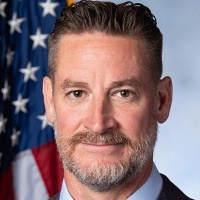
W. Steube
Representative
FL
W. Steube
Representative
FL
The Honey Integrity Act establishes a clear standard of identity for honey based on existing quality benchmarks. It mandates that commercial honey packers implement rigorous, scientifically advanced testing protocols to detect fraud and adulteration. Furthermore, the bill requires the Secretary to report on enforcement actions against mislabeled honey and establishes a new program funded by packer fees to ensure honey sold in the U.S. is authentic.
The Major Richard Star Act ensures that military retirees with combat-related disabilities can concurrently receive their full military retirement pay and VA disability compensation without reduction.

Gus Bilirakis
Representative
FL
Gus Bilirakis
Representative
FL
The Major Richard Star Act ensures that military retirees with combat-related disabilities can receive both their military retirement pay and VA disability compensation concurrently without reduction. This law removes previous restrictions that caused military retirement pay to be offset by VA disability payments for these specific cases. The changes take effect on the first day of the month following the Act's enactment.
This bill mandates a study and report on the effectiveness of home cardiorespiratory monitors for preventing sudden unexpected infant death (SUID) and provides recommendations for insurance coverage.

Rudy Yakym
Representative
IN
Rudy Yakym
Representative
IN
The Baby Observation Act mandates that the Secretary of Health and Human Services conduct a comprehensive study on the effectiveness of home cardiorespiratory monitors in preventing sudden unexpected infant death (SUID). The resulting report must detail the monitors' performance, suggest new infant care practices, and provide recommendations on criteria for insurance coverage. This aims to determine if these vital sign monitors warrant broader health insurance reimbursement.
This bill establishes a new federal tax credit to incentivize investments in maintaining and improving existing hydroelectric facilities and restoring rivers through approved environmental and safety upgrades.

Adrian Smith
Representative
NE
Adrian Smith
Representative
NE
The Maintaining and Enhancing Hydroelectricity and River Restoration Act establishes a new federal tax credit to incentivize investments in improving existing hydroelectric facilities. This credit covers 30% of the cost for property that enhances fish passage, water quality, dam safety, or facilitates the removal of obsolete river obstructions. Furthermore, the bill allows taxpayers to elect direct payment or transferability for this new credit.
This act establishes a mandatory, value-based case rate payment system for Medicare radiation oncology services to incentivize quality care and cost efficiency while protecting patient access and offering transportation assistance.

Brian Fitzpatrick
Representative
PA
Brian Fitzpatrick
Representative
PA
The Radiation Oncology Case Rate Value Based Program Act of 2025 establishes a new Medicare payment system that pays providers a single, set rate for an entire episode of radiation therapy care, rather than paying for individual services. This program aims to incentivize high-quality, efficient care while achieving cost savings for Medicare. It also includes specific provisions to support patient access, such as a health equity bonus for addressing transportation insecurity. Finally, the bill exempts the savings generated by this new payment structure from standard Medicare budget neutrality adjustments.
Extends the statute of limitations to 10 years for prosecuting fraud related to specific pandemic unemployment programs and rescinds $5,000,000 from unspent COVID-19 relief funds.

Jason Smith
Representative
MO
Jason Smith
Representative
MO
The "Pandemic Unemployment Fraud Enforcement Act" extends the statute of limitations to 10 years for prosecuting fraud related to specific pandemic unemployment programs. It applies to violations or conspiracies under Title 18 and Title 31 of the U.S. Code and rescinds $5,000,000 from previously allocated funds to offset the budget. The changes made by this law will begin on the date of enactment.
The Credit for Caring Act of 2025 establishes a new, partially refundable federal income tax credit for working family caregivers covering qualified expenses exceeding \$2,000, up to a \$5,000 annual limit.

Mike Carey
Representative
OH
Mike Carey
Representative
OH
The Credit for Caring Act of 2025 establishes a new, non-refundable federal income tax credit for working family caregivers who incur significant expenses caring for a relative with long-term care needs. Eligible caregivers can claim a credit equal to 30% of qualified expenses exceeding \$2,000, up to a maximum annual credit of \$5,000. The bill specifies detailed requirements for the care recipient's needs, the types of allowable expenses, and includes income phase-out limits for claiming the benefit.
This bill allows investors to defer taxes on capital gain dividends from mutual funds when those dividends are automatically reinvested until the shares are sold or the investor passes away.

Beth Van Duyne
Representative
TX
Beth Van Duyne
Representative
TX
This bill, the Generating Retirement Ownership through Long-Term Holding Act, allows individual investors to defer paying taxes on capital gain dividends from mutual funds if those dividends are automatically reinvested into more fund shares. Taxes on these deferred gains are only due when the investor sells the shares or upon death. This provision aims to encourage long-term investment in mutual funds by providing immediate tax relief on reinvested earnings.
This Act eliminates the waiting periods for Social Security disability benefits and Medicare coverage for individuals diagnosed with metastatic breast cancer.
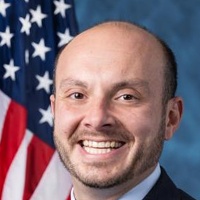
Andrew Garbarino
Representative
NY
Andrew Garbarino
Representative
NY
The Metastatic Breast Cancer Access to Care Act aims to improve support for individuals diagnosed with metastatic breast cancer. This bill eliminates the standard waiting period for receiving Social Security disability insurance benefits and waives the 24-month waiting period for Medicare coverage. These changes ensure immediate access to crucial financial and healthcare support upon diagnosis.
The REDI Act allows medical and dental interns and residents to defer both principal and interest payments on their student loans while in training.

Brian Babin
Representative
TX
Brian Babin
Representative
TX
The Resident Education Deferred Interest (REDI) Act amends federal student loan regulations to provide a specific deferment for medical and dental residents. This allows borrowers currently serving in an internship or residency program to pause principal payments and prevent interest accrual on their student loans during that training period.
This act expands the Work Opportunity Tax Credit to include employers who hire qualified military spouses.

Donald Beyer
Representative
VA
Donald Beyer
Representative
VA
The Military Spouse Hiring Act amends the Internal Revenue Code to expand eligibility for the Work Opportunity Tax Credit (WOTC). This change allows employers to claim the tax credit for hiring qualified military spouses. A qualified military spouse is defined as someone certified as being married to a member of the U.S. Armed Forces.
The MATCH IT Act of 2025 mandates the creation of national standards and data requirements to improve the accuracy of patient record matching across healthcare systems, aiming to reduce safety risks and administrative costs.

Mike Kelly
Representative
PA
Mike Kelly
Representative
PA
The MATCH IT Act of 2025 aims to significantly improve patient safety and reduce healthcare costs by establishing national standards for accurate patient identification across health systems. This bill mandates the creation of clear definitions and minimum data sets necessary to achieve a near-perfect patient match rate. Furthermore, it introduces voluntary incentives through Medicare to encourage providers to adopt these new, higher standards for linking patient records.
This Act expands Medicare eligibility for home health services by explicitly including the need for occupational therapy as a qualifying factor.
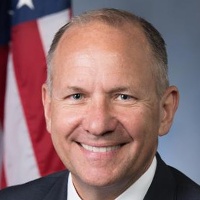
Lloyd Smucker
Representative
PA
Lloyd Smucker
Representative
PA
The Medicare Home Health Accessibility Act updates Medicare rules to explicitly include the need for occupational therapy as a valid basis for qualifying for home health services under both Part A and Part B. This change ensures that occupational therapy is treated equally alongside physical and speech therapy when determining eligibility for in-home care. These new provisions will take effect for services provided on or after January 1, 2026.
This act extends the current Medicare transition payment rates for durable medical equipment in non-competitive bidding areas until the end of 2025.
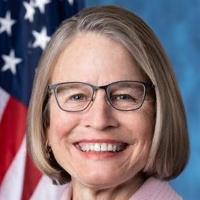
Mariannette Miller-Meeks
Representative
IA
Mariannette Miller-Meeks
Representative
IA
The DMEPOS Relief Act of 2025 extends the current Medicare transition payment rates for durable medical equipment in non-competitive bidding areas through the end of 2025. This action delays the implementation of new payment regulations until January 1, 2026. The Secretary of Health and Human Services is directed to maintain existing payment structures in these specific areas for the remainder of the year.
This act amends the tax code to give businesses the option to immediately deduct or amortize (spread out over at least five years) their research and experimental expenditures.

Ron Estes
Representative
KS
Ron Estes
Representative
KS
The American Innovation and R&D Competitiveness Act of 2025 revises how businesses treat research and experimental (R&E) expenditures for tax purposes. Taxpayers can now choose between immediately deducting R&E costs or amortizing them over a period of at least 60 months. This legislation also makes technical adjustments to ensure consistency between immediate deductions and claiming the research tax credit.
This bill ensures that long-term care hospitals receive appropriate Medicare payments for treating seniors with critical conditions by exempting certain high-acuity cases from site-neutral payment rules.

Kevin Hern
Representative
OK
Kevin Hern
Representative
OK
The "Securing Access to Care for Seniors in Critical Condition Act of 2025" amends the Social Security Act to change Medicare payment rules for long-term care hospitals. Beginning October 1, 2026, hospitals will not be subject to site-neutral payment rules for patients discharged under specific high-severity diagnosis groups. This adjustment aims to ensure adequate financial support for hospitals treating the most critical patients.
The "Protecting American Students Act" modifies the calculation and reporting requirements for the excise tax on net investment income for private colleges and universities, specifically excluding certain students from the calculation and requiring detailed reporting of student counts.

Vern Buchanan
Representative
FL
Vern Buchanan
Representative
FL
The "Protecting American Students Act" amends the Internal Revenue Code to change how certain students are counted when determining if private colleges and universities are subject to an excise tax on net investment income. It stipulates that only students meeting specific eligibility requirements under the Higher Education Act of 1965 are to be included in this calculation. The Act also mandates that these institutions report the number of students used before and after adjustments when calculating the tax. These provisions are set to take effect for taxable years beginning after December 31, 2025.
This resolution expresses formal condolences to the families and loved ones of the 67 victims of the January 2025 collision between American Eagle Flight 5342 and a U.S. Army flight, while honoring the victims and commending the first responders.
Ron Estes
Representative
KS
Ron Estes
Representative
KS
This resolution expresses the House of Representatives' deepest condolences to the families and loved ones of the 67 individuals who lost their lives in the January 29, 2025, collision of American Eagle Flight 5342 and a U.S. Army flight. It honors the victims, many of whom had strong ties to Wichita, Kansas, and commends the heroic efforts of the first responders and emergency personnel who managed the recovery.