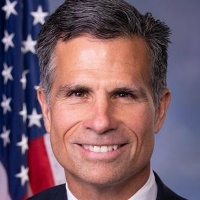
Legislative Activity
Track Daniel's sponsored bills, co-sponsored legislation, and voting record
The CONTAINER Act authorizes border states to place temporary, movable structures on federal land for border security purposes without requiring special use authorizations.
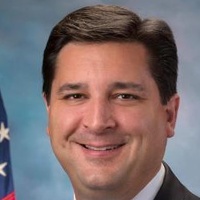
David Rouzer
Representative
NC
David Rouzer
Representative
NC
The CONTAINER Act allows border states to place temporary, movable structures on federal land for border security purposes without needing a special use authorization. States must provide 45 days' notice to the relevant federal agency, with placements initially permitted for up to one year. Extensions may be granted in 90-day increments if U.S. Customs and Border Protection determines that operational control of the border has not yet been achieved.
The HSA Modernization Act expands eligibility, increases contribution limits, and provides greater flexibility for individuals to utilize Health Savings Accounts for their medical and long-term care expenses.
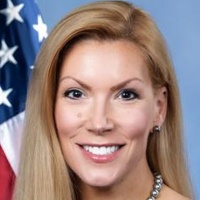
Beth Van Duyne
Representative
TX
Beth Van Duyne
Representative
TX
The HSA Modernization Act expands access to and increases the flexibility of Health Savings Accounts (HSAs) for millions of Americans. The bill broadens eligibility for veterans, seniors on Medicare, and those utilizing Indian Health Service assistance, while also allowing more insurance plans to qualify as high-deductible health plans. Additionally, it increases annual contribution limits, simplifies catch-up contributions for married couples, and provides new tax-advantaged options for mental health services and long-term care.
The Offshore Lands Authorities Act of 2025 nullifies previous presidential withdrawals of unleased offshore lands and establishes strict new limitations and congressional oversight procedures for future executive leasing restrictions.
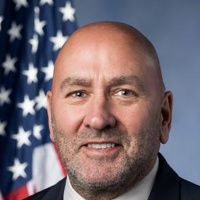
Clay Higgins
Representative
LA
Clay Higgins
Representative
LA
The Offshore Lands Authorities Act of 2025 nullifies several previous Presidential withdrawals of offshore lands, effectively reopening those areas to potential mineral leasing. The bill also establishes strict new limitations on the President’s authority to withdraw unleased offshore lands, including size and duration caps, mandatory resource assessments, and a streamlined congressional disapproval process.
The Chiropractic Medicare Coverage Modernization Act of 2025 expands Medicare coverage to include all services provided by doctors of chiropractic that are within the scope of their state licensure.
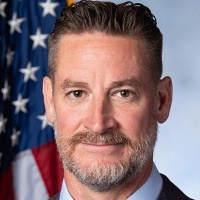
W. Steube
Representative
FL
W. Steube
Representative
FL
The Chiropractic Medicare Coverage Modernization Act of 2025 expands Medicare coverage to include all services legally authorized under a chiropractor’s state license, moving beyond the current restriction limited to manual spinal manipulation. This legislation aligns Medicare benefits with private insurance and other federal health programs to better reflect modern chiropractic practice. To provide these expanded services, chiropractors will be required to complete a one-time training program verified by the Secretary of Health and Human Services.
This bill increases the railroad track maintenance tax credit, introduces annual inflation adjustments, and extends the eligibility period for qualifying expenditures.
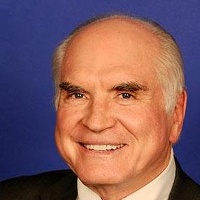
Mike Kelly
Representative
PA
Mike Kelly
Representative
PA
This bill amends the Internal Revenue Code to expand the railroad track maintenance credit by increasing the per-mile tax credit to $6,100 and implementing annual inflation adjustments starting in 2026. It also extends the eligibility window for qualifying maintenance expenditures to include costs incurred through 2023. These updates aim to provide greater financial support for ongoing railroad infrastructure improvements.
The FAIR PREP Act of 2025 prohibits the Treasury Secretary from developing or operating government-run electronic tax preparation services, excluding existing programs like IRS Free File.

Adrian Smith
Representative
NE
Adrian Smith
Representative
NE
The FAIR PREP Act of 2025 prohibits the IRS from developing or operating its own electronic tax preparation and filing services. The bill restricts the Treasury Secretary from preparing tax returns or refund claims, while explicitly protecting existing programs like IRS Free File and volunteer tax assistance services. Additionally, it prevents the use of federal funds for the development of new government-run tax preparation systems without explicit congressional authorization.
The PROTECT Jewish Student and Faculty Act mandates that higher education institutions formally define and explicitly prohibit antisemitic conduct in their campus policies to ensure the safety of Jewish students and faculty.
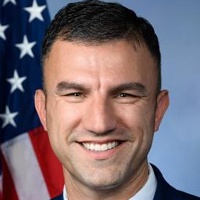
Rudy Yakym
Representative
IN
Rudy Yakym
Representative
IN
The PROTECT Jewish Student and Faculty Act requires higher education institutions to formally define antisemitism and explicitly prohibit antisemitic conduct in their official campus policies. Under this legislation, colleges and universities must clearly state that such conduct may result in disciplinary action, including student expulsion or employee termination.
This bill amends Title IX to prohibit schools receiving federal funds from allowing males to participate in female athletic programs, defining "sex" as determined at birth, while allowing males to train with female teams if it doesn't deprive females of opportunities or benefits. It also requires a study on the impact of male participation in female sports.
W. Steube
Representative
FL
W. Steube
Representative
FL
The "Protection of Women and Girls in Sports Act of 2025" amends Title IX to prohibit schools receiving federal funds from allowing males to participate in female athletic programs. Sex is defined as based on reproductive biology and genetics at birth. The bill allows males to train with female teams if it doesn't deprive females of opportunities. It also requires a study on the benefits lost to women when males participate in female sports.
The Thin Blue Line Act amends federal law to include the killing or attempted killing of law enforcement officers, firefighters, and other first responders as an aggravating factor in capital sentencing cases.
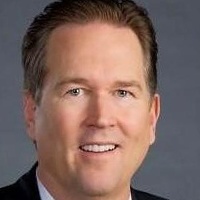
Vern Buchanan
Representative
FL
Vern Buchanan
Representative
FL
The Thin Blue Line Act amends federal law to designate the killing or attempted killing of a law enforcement officer, firefighter, or first responder as an aggravating factor in capital sentencing. This legislation ensures that when a jury considers the death penalty, they must take into account whether the victim was targeted due to their status as a public servant or while performing their official duties.
The States’ Education Reclamation Act of 2025 proposes the abolition of the federal Department of Education, transferring its remaining responsibilities to other agencies while providing direct, state-controlled block grants for education funding.
David Rouzer
Representative
NC
David Rouzer
Representative
NC
The States’ Education Reclamation Act of 2025 proposes the abolition of the federal Department of Education to return primary authority over schooling to states and local communities. The bill replaces current federal education programs with direct block grants to states, ensuring funding remains available for elementary, secondary, and postsecondary education while mandating strict fiscal accountability. Certain essential programs would be transferred to other federal agencies, and the legislation requires a formal plan for the Department’s closure.
Goldie’s Act strengthens the Animal Welfare Act by mandating more frequent USDA inspections, requiring the prompt confiscation of suffering animals, and increasing financial penalties for violators.

Nicole Malliotakis
Representative
NY
Nicole Malliotakis
Representative
NY
Goldie’s Act strengthens the Animal Welfare Act by mandating more rigorous USDA inspections and requiring the prompt confiscation of animals suffering from neglect. The bill increases financial penalties for violators, ensures the immediate sharing of violation records with local law enforcement, and establishes stricter oversight to prevent future animal abuse.
This bill mandates a GAO study to determine the total cost of unused construction materials purchased for the U.S.-Mexico border wall between 2021 and 2025.
Beth Van Duyne
Representative
TX
Beth Van Duyne
Representative
TX
The Border Wall Waste Accountability Act requires the Government Accountability Office (GAO) to conduct a study on the financial impact of unused construction materials intended for the U.S.-Mexico border wall. This legislation mandates a report to Congress detailing the total costs associated with these materials purchased between January 2021 and January 2025.
This bill mandates that dairy processors report production costs and product yields to the Secretary of Agriculture to increase transparency in the dairy industry.
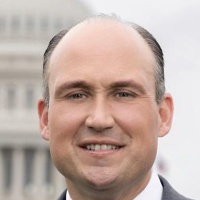
Nicholas Langworthy
Representative
NY
Nicholas Langworthy
Representative
NY
The Fair Milk Pricing for Farmers Act increases transparency in the dairy industry by requiring manufacturers to report detailed production costs and product yield data to the Secretary of Agriculture. This legislation mandates that these metrics be disclosed for all products processed within a facility, ensuring a more comprehensive view of dairy operations. The Secretary will publish these findings biennially to provide greater market insight for farmers and stakeholders.
The COAL Act of 2025 mandates the prompt approval of pending federal coal lease applications and nullifies the 2016 moratorium on new coal leasing on federal lands.
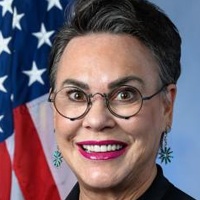
Harriet Hageman
Representative
WY
Harriet Hageman
Representative
WY
The COAL Act of 2025 mandates the expedited processing and approval of pending federal coal lease applications and necessary mining permits. Additionally, the bill formally nullifies the 2016 moratorium on new coal leasing on federal lands, ensuring the program remains open for future development.
The Federal Employee Return to Work Act prohibits federal teleworkers from receiving annual pay adjustments and mandates that their basic pay be set to the "Rest of U.S." locality rate.

Dan Newhouse
Representative
WA
Dan Newhouse
Representative
WA
The Federal Employee Return to Work Act mandates that federal employees who telework at least one day per week are ineligible for annual pay adjustments. Additionally, the bill requires that these employees be compensated based on the "Rest of U.S." locality pay scale, regardless of their actual work location. Certain groups, including employees with disabilities and law enforcement officers, are exempt from these provisions.
This bill proposes a constitutional amendment to limit members of the House of Representatives to three terms and Senators to two terms, with specific provisions for partial terms. Terms served before the amendment's ratification would not be counted towards these limits, and the amendment must be ratified within seven years to be valid.
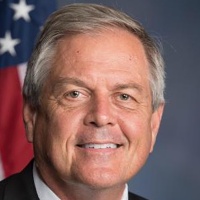
Ralph Norman
Representative
SC
Ralph Norman
Representative
SC
This bill proposes a constitutional amendment to limit the number of terms a member of Congress can serve. Representatives would be limited to 3 terms and Senators to 2 terms, with specific rules for partial terms. Terms served before the amendment's ratification would not be counted. The amendment must be ratified by three-fourths of the states within seven years to be valid.
The Regulations from the Executive in Need of Scrutiny (REINS) Act of 2025 increases congressional accountability by requiring federal agencies to obtain legislative approval for all "major" rules before they can take effect.
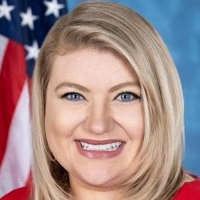
Katherine Cammack
Representative
FL
Katherine Cammack
Representative
FL
The Regulations from the Executive in Need of Scrutiny (REINS) Act of 2025 aims to increase federal regulatory accountability by requiring Congress to approve any "major" rule before it can take effect. Under this legislation, rules with a significant economic impact require a joint resolution of approval from both chambers of Congress to become law. By shifting this authority back to the legislative branch, the Act seeks to ensure greater transparency and oversight of the federal rulemaking process.
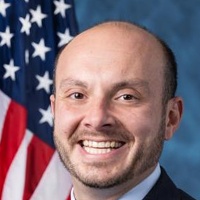
The POLICE Act of 2025 would make any immigrant deportable if they assault a law enforcement officer and requires the Secretary of Homeland Security to submit an annual report to Congress detailing the number of aliens deported for assaulting a law enforcement officer.
Andrew Garbarino
Representative
NY
Andrew Garbarino
Representative
NY
The POLICE Act of 2025 mandates the deportation of any immigrant convicted of, admitting to, or admitting to actions constituting the assault of a law enforcement officer. It broadly defines "assault" and "law enforcement officer" and requires the Department of Homeland Security to publish an annual report on the number of deportations carried out under this provision.
The Finish the Wall Act mandates the immediate resumption and completion of U.S.-Mexico border wall construction by September 2026 while ensuring full compliance with federal DNA collection requirements for detained individuals.
Clay Higgins
Representative
LA
Clay Higgins
Representative
LA
The "Finish the Wall Act" mandates the immediate resumption of border wall construction along the U.S.-Mexico border, requiring completion by September 30, 2026, using previously appropriated funds. The bill directs the Department of Homeland Security to execute comprehensive infrastructure and technology plans while honoring existing construction contracts. Additionally, it requires the agency to certify full compliance with federal DNA collection requirements for individuals in Customs and Border Protection custody.
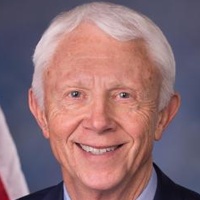
The FIND Act prohibits federal agencies from contracting with entities that discriminate against the firearm and ammunition industry, ensuring fair access to government contracts for these businesses. Contractors must certify they do not discriminate against firearm entities, with violations leading to contract termination.
Jack Bergman
Representative
MI
Jack Bergman
Representative
MI
The FIND Act prohibits federal agencies from contracting with entities that discriminate against the firearm and ammunition industry. It requires federal contractors to certify they do not discriminate against firearm entities and prohibits them from awarding subcontracts to entities that do not provide a similar certification. Violations of these clauses will result in contract termination. The act defines "discriminate" as making judgments or refusing/limiting services based on biased criteria, rather than case-by-case evaluations, empirical data, financial risk, or legal non-compliance.