
Legislative Activity
Track Jeff's sponsored bills, co-sponsored legislation, and voting record
This bill mandates a federal review to improve lung cancer research, prevention, and screening specifically addressing the needs of women.

Tina Smith
Senator
MN
Tina Smith
Senator
MN
The Women and Lung Cancer Research and Preventive Services Act of 2025 mandates a comprehensive federal review to improve lung cancer prevention, screening, and treatment specifically for women. This review will identify knowledge gaps in research, particularly concerning environmental and genomic factors, and assess strategies to increase screening rates. The Secretary of Health and Human Services must report findings and recommendations for program improvements to Congress within two years.
This act prohibits any person or government from interfering with or punishing individuals who travel across state lines to receive or provide reproductive health care that is legal in the destination state.

Catherine Cortez Masto
Senator
NV
Catherine Cortez Masto
Senator
NV
The Freedom to Travel for Health Care Act of 2026 affirms the fundamental right of individuals to travel across state lines to receive reproductive health care that is legal in the destination state. This bill prohibits any government or person from restricting, sanctioning, or discriminating against individuals who travel for such care or those who assist them. It preempts conflicting state laws and establishes robust federal enforcement mechanisms, including civil actions for individuals and the Attorney General, while removing common immunity defenses for violators.
This resolution honors the life and legislative legacy of former Michigan Senator Donald W. Riegle, Jr., recognizing his decades of public service and key accomplishments.
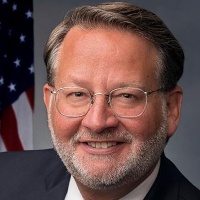
Gary Peters
Senator
MI
Gary Peters
Senator
MI
This resolution honors the life and extensive public service of the late Honorable Donald W. Riegle, Jr., former Senator for Michigan. It recognizes his decades in Congress, highlighting key legislative achievements such as co-sponsoring the Equal Credit Opportunity Act and leading significant banking reforms. The Senate expresses its profound sorrow and adjourns in his memory.
This Senate resolution expresses the commitment to eliminating all traffic fatalities by 2050 through a data-driven, safe systems approach and the adoption of proven vehicle safety technologies.
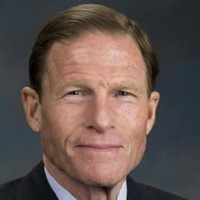
Richard Blumenthal
Senator
CT
Richard Blumenthal
Senator
CT
This Senate resolution expresses the commitment to achieving zero traffic fatalities on U.S. roadways by the year 2050. It emphasizes using a data-driven, safe systems approach and advanced vehicle technologies to eliminate preventable deaths. The resolution also calls for strengthening data collection and addressing existing disparities in transportation safety.
This bill increases the excise tax on stock buybacks from 1% to 25% for large oil and gas companies until the national average retail gasoline price drops below \$2.937 per gallon for five consecutive weeks.

Ron Wyden
Senator
OR
Ron Wyden
Senator
OR
This Act significantly increases the excise tax on stock buybacks for large oil and gas companies from 1% to 25%. This higher tax applies specifically to corporations meeting a $1 billion average annual gross receipts threshold and primarily engaged in the oil or gas business. The 25% rate remains in effect until the national average weekly retail price of regular gasoline drops below a specified trigger point for five consecutive weeks.
This bill reauthorizes and extends the demonstration program providing cost-based Medicare payments to financially vulnerable rural community hospitals through fiscal year 2030.
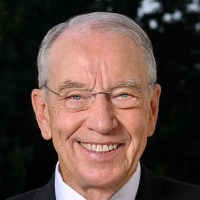
Charles Grassley
Senator
IA
Charles Grassley
Senator
IA
This bill reauthorizes and extends the Rural Community Hospital Demonstration Program through fiscal year 2030. The program allows eligible small, rural hospitals to receive Medicare payments based on reasonable costs for inpatient services to promote financial stability. It maintains participation limits and requires a report evaluating the program's impact on rural access to care and costs.
The All Students Count Act of 2026 mandates that states disaggregate student performance data for Asian American and Native Hawaiian/Pacific Islander subgroups to better address their distinct educational needs.

Mazie Hirono
Senator
HI
Mazie Hirono
Senator
HI
The All Students Count Act of 2026 mandates that states disaggregate student performance data for Asian American and Native Hawaiian/Pacific Islander subgroups. This change amends the Elementary and Secondary Education Act to reflect the diverse educational needs within these populations. The goal is to provide detailed, actionable data to better identify and support specific student groups often misrepresented as homogeneous.
This Act prohibits the federal government from imposing or carrying out the death penalty and mandates resentencing for all individuals currently under a federal death sentence.

Richard Durbin
Senator
IL
Richard Durbin
Senator
IL
The Federal Death Penalty Prohibition Act bans the imposition and carrying out of the death penalty for any federal crime after the date of enactment. This legislation mandates that all individuals currently under a federal death sentence must be resentenced.
This act establishes a new, more generous federal loan forgiveness program for educators serving in high-need schools and early childhood education settings, offering 100% debt cancellation after five years and monthly payment assistance during service.
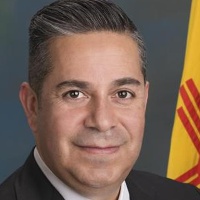
Ben Luján
Senator
NM
Ben Luján
Senator
NM
The Loan Forgiveness for Educators Act of 2026 overhauls federal student loan programs to eliminate debt for educators serving in high-need schools and early childhood education settings. After five years of qualifying service, educators can receive 100% forgiveness on remaining federal student loans. The bill also provides monthly loan assistance while educators are actively serving, treating these payments as qualifying service toward Public Service Loan Forgiveness. This legislation aims to stabilize the educator workforce by significantly reducing the financial burden of student debt.
This joint resolution nullifies the CMS rule implementing prior authorization for select services under the WISeR Model.
Ron Wyden
Senator
OR
Ron Wyden
Senator
OR
This joint resolution expresses Congressional disapproval of a new rule from the Centers for Medicare & Medicaid Services (CMS) that would have required prior authorization for specific services under the WISeR Model. By disapproving the rule, Congress ensures that this CMS requirement will not take effect.
This resolution honors the life, legacy, and public service of former California Senator John Seymour.
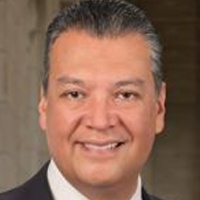
Alejandro Padilla
Senator
CA
Alejandro Padilla
Senator
CA
This resolution honors the life and legacy of the late former United States Senator John Seymour of California. It recognizes his extensive public service, highlighting his career in business, local government, and his tenure in the U.S. Senate. The Senate expresses its deep sorrow and directs that official copies of this resolution be delivered to his family.
This bill invalidates mandatory arbitration agreements and class action waivers for Amtrak passengers bringing consumer or civil rights claims against the railroad.
Richard Blumenthal
Senator
CT
Richard Blumenthal
Senator
CT
This bill, the Ending Passenger Rail Forced Arbitration Act, invalidates mandatory arbitration agreements and class action waivers for Amtrak passengers involved in consumer or civil rights disputes. It ensures that passengers alleging personal injury, discrimination, or other civil rights violations can pursue their claims in court. These new rules do not apply to disputes covered under the Railway Labor Act.
This bill gradually raises the minimum salary threshold for executive, administrative, and professional employees to qualify for overtime pay exemptions and tightens the duties test for those exemptions.
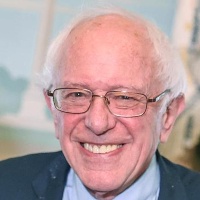
Bernard Sanders
Senator
VT
Bernard Sanders
Senator
VT
The Restoring Overtime Pay Act of 2026 significantly updates federal overtime exemptions for executive, administrative, and professional employees. It establishes a phased-in increase to the minimum salary threshold required for these "white-collar" roles to be exempt from overtime pay, eventually tying the threshold to national earnings data. Furthermore, the bill tightens the duties test by lowering the allowed percentage of time spent on non-exempt work from 40% to 20%.
The Moms Matter Act establishes grant programs to improve maternal mental health equity and expand the specialized maternal mental and behavioral health care workforce.

Kirsten Gillibrand
Senator
NY
Kirsten Gillibrand
Senator
NY
The Moms Matter Act establishes grant programs to improve maternal mental health equity and expand the specialized maternal mental and behavioral health care workforce. The first program funds community-based initiatives to provide integrated mental health services for pregnant and postpartum individuals, prioritizing high-need areas. The second program supports training and diversifying providers specializing in maternal mental health, with a focus on recruiting from and serving underserved populations.
This Act establishes grant programs and resources to improve healthcare provider training, expand the reproductive health workforce, provide education, and offer technical assistance to ensure equitable sexual and reproductive health care access for people with disabilities.
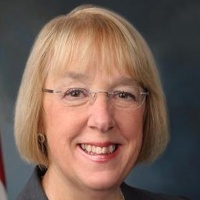
Patty Murray
Senator
WA
Patty Murray
Senator
WA
The Reproductive Health Care Accessibility Act aims to eliminate barriers to sexual and reproductive health care for individuals with disabilities. It establishes grant programs to train the healthcare workforce, expand the number of providers with disabilities, and fund accessible health education. The bill also creates a National Technical Assistance Center and mandates a study to identify effective care models and coordination gaps.
The Extinction Prevention Act of 2026 establishes dedicated, competitive grant funds across four titles to support the conservation of North American butterflies, Pacific Island plants, freshwater mussels, and Southwestern desert fish.
Richard Blumenthal
Senator
CT
Richard Blumenthal
Senator
CT
The Extinction Prevention Act of 2026 establishes dedicated federal funds and competitive grant programs across four titles to support the conservation of imperiled species. These titles focus on protecting North American butterflies, Pacific Island plants, freshwater mussels, and Southwestern desert fish. Each program authorizes up to $5 million annually for six years, prioritizing projects that aid species listed under the Endangered Species Act.
This resolution affirms that access to mifepristone for medication abortion should be based on over 25 years of scientific evidence and should be equitable and transparent.

Elizabeth Warren
Senator
MA
Elizabeth Warren
Senator
MA
This Senate resolution expresses the sense that access to mifepristone should be based on over 25 years of proven safety and effectiveness supported by peer-reviewed science. It calls for equitable and transparent laws and policies governing access to this time-sensitive medication abortion care. The resolution affirms the FDA's authority to regulate the drug based on the best available evidence, free from political interference.
This Act establishes federal requirements for scientific integrity policies, officers, and training within agencies that fund, conduct, or oversee scientific research to ensure policy decisions are based on unbiased science.
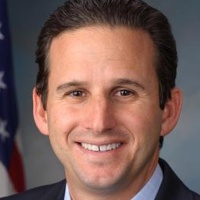
Brian Schatz
Senator
HI
Brian Schatz
Senator
HI
The Scientific Integrity Act aims to safeguard the role of science in federal policymaking by requiring agencies that fund or conduct research to adopt and enforce strict scientific integrity policies. These policies must prohibit political interference, data suppression, and retaliation against scientists. The legislation establishes Scientific Integrity Officers within agencies and mandates regular training and public reporting on policy implementation to ensure public trust in government science.
This resolution urges the President to prioritize securing the release of specific individuals wrongfully detained by the People's Republic of China during future engagements with President Xi Jinping.
Richard Durbin
Senator
IL
Richard Durbin
Senator
IL
This Senate resolution urges the President to prioritize securing the release of several specific individuals wrongfully detained by the People's Republic of China during future engagements with President Xi Jinping. The resolution condemns these politically motivated detentions and calls for immediate humanitarian access and release for those named. It reaffirms the U.S. commitment to defending political and religious freedoms globally.
The Universal School Meals Program Act of 2026 establishes free breakfast and lunch for all students in participating schools, eliminates school meal debt, and updates federal poverty metrics used for various education and nutrition programs.
Bernard Sanders
Senator
VT
Bernard Sanders
Senator
VT
The Universal School Meals Program Act of 2026 establishes free breakfast and lunch for all students in participating schools, eliminating income-based eligibility and school meal debt. It also updates federal funding metrics by replacing free/reduced lunch data with new measures of economically disadvantaged students across various education and nutrition programs. This comprehensive bill aims to ensure universal access to nutrition while streamlining administrative requirements related to poverty tracking.