
Legislative Activity
Track Lisa's sponsored bills, co-sponsored legislation, and voting record
This resolution celebrates the 35th anniversary of Ukraine’s independence while reaffirming the United States' commitment to Ukraine's sovereignty, democratic development, and security against Russian aggression.
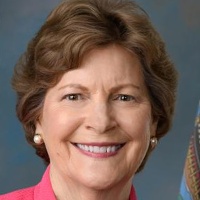
Jeanne Shaheen
Senator
NH
Jeanne Shaheen
Senator
NH
This resolution commemorates the 35th anniversary of Ukraine’s independence, honoring the nation's democratic journey and its resilience against Russian aggression. It reaffirms the United States' commitment to Ukraine’s sovereignty and territorial integrity while advocating for continued diplomatic support and security cooperation. Additionally, the resolution encourages ongoing democratic reforms in Ukraine and the integration of lessons learned from the conflict to strengthen trans-Atlantic security.
This resolution designates August 16, 2026, as "National Airborne Day" to honor the historic contributions and sacrifices of United States airborne forces.
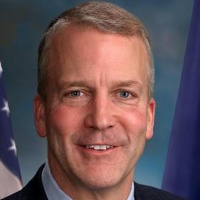
Dan Sullivan
Senator
AK
Dan Sullivan
Senator
AK
This resolution designates August 16, 2026, as "National Airborne Day" to honor the historic contributions and sacrifices of United States airborne forces. It recognizes the anniversary of the first official Army parachute jump and pays tribute to the bravery of airborne units serving from World War II to the present day.
The Afghanistan TPS Act of 2026 designates Afghanistan for Temporary Protected Status (TPS) through July 1, 2029, establishing expedited application processing and fee waivers for eligible Afghan nationals.

Christopher Coons
Senator
DE
Christopher Coons
Senator
DE
The Afghanistan TPS Act of 2026 designates Afghanistan for Temporary Protected Status (TPS) through July 1, 2029, allowing eligible Afghan nationals currently in the United States to live and work legally. The bill mandates expedited processing for TPS applications and provides for fee waivers for qualified applicants. Additionally, it establishes clear requirements for background checks and emergency travel authorization for those granted status.
This bill establishes a new occupational category for Direct Support Professionals and provides federal grants to states for establishing or expanding paid family and medical leave programs.
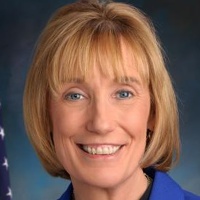
Margaret Hassan
Senator
NH
Margaret Hassan
Senator
NH
This bill establishes the Recognizing the Role of Direct Support Professionals Act, aiming to formally recognize Direct Support Professionals (DSPs) by requiring the Office of Management and Budget to consider creating a distinct occupational category for them in the federal classification system. The legislation also authorizes significant federal grants to states to establish or expand paid family and medical leave programs. If a separate DSP classification is not created, a report explaining the decision must be submitted to Congress.
This bill authorizes the Commandant of the Coast Guard to enter into intergovernmental support agreements to improve operational efficiency and community collaboration.

Christopher Murphy
Senator
CT
Christopher Murphy
Senator
CT
The Strengthening Coast Guard Communities Act of 2026 authorizes the Commandant of the Coast Guard to enter into intergovernmental support agreements to improve operational efficiency. This legislation streamlines administrative processes while ensuring congressional oversight by requiring notification to relevant committees whenever this authority is exercised.
This bill establishes a federal duty of care and safety requirements for online platforms regarding minors, mandates algorithmic transparency and user choice regarding content personalization, and sets enforcement mechanisms.

Marsha Blackburn
Senator
TN
Marsha Blackburn
Senator
TN
The Kids Online Safety Act establishes a comprehensive "duty of care" requiring online platforms to design features that mitigate specific harms to minors, such as those related to mental health and exploitation. It mandates that platforms provide minors with default, restrictive safety settings and robust parental controls over data sharing and recommendations. Furthermore, the legislation demands significant transparency regarding algorithmic ranking systems and grants the FTC enforcement authority.
This bill mandates a comprehensive study and a joint federal action plan to assess and improve the safety, marketing, and ethical standards of AI-enabled toys for children.

Tammy Duckworth
Senator
IL
Tammy Duckworth
Senator
IL
The Children's Artificial Intelligence Toy Safety Act of 2026 mandates a comprehensive study by the National Academies to evaluate the risks, educational impacts, and ethical concerns surrounding AI-enabled toys for children. Additionally, the bill requires the FTC and the Consumer Product Safety Commission to develop a joint action plan to establish safety standards, marketing regulations, and consumer protections for these products.
The PREFERRED Screening Act establishes a Medicare payment model to provide eligible individuals with comprehensive breast cancer risk assessments and personalized screening and risk-reduction plans.

Bill Cassidy
Senator
LA
Bill Cassidy
Senator
LA
The PREFERRED Screening Act directs the Secretary of Health and Human Services to implement a Medicare payment model that incentivizes providers to offer comprehensive, personalized breast cancer risk assessments. By integrating genetic testing, family history, and clinical data, the program aims to provide tailored screening and risk-reduction plans for Medicare beneficiaries. This initiative prioritizes underserved and high-risk populations to improve early detection and evaluate the long-term effectiveness of risk-stratified breast cancer care.
This bill prohibits the transfer of specific Department of Education offices and functions to other federal agencies while mandating quarterly public reporting on the costs of all interagency agreements.
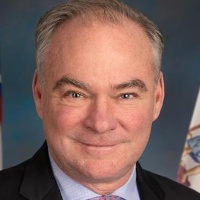
Timothy Kaine
Senator
VA
Timothy Kaine
Senator
VA
This bill prohibits the Secretary of Education from transferring the functions or responsibilities of four key offices—including those overseeing special, postsecondary, Indian, and elementary/secondary education—to other federal agencies. It also mandates rigorous quarterly reporting on the costs of any interagency agreements and restricts the Secretary’s travel funding if these reporting requirements are not met.
The 21st Century Dyslexia Act amends the Individuals with Disabilities Education Act (IDEA) to explicitly recognize dyslexia as a covered disability and ensure equitable access to educational accommodations for all students.
Bill Cassidy
Senator
LA
Bill Cassidy
Senator
LA
The 21st Century Dyslexia Act amends the Individuals with Disabilities Education Act (IDEA) to explicitly recognize dyslexia as a specific learning disability. This legislation establishes a formal definition of dyslexia and mandates equal access to educational accommodations and services for all eligible students, regardless of their socioeconomic or linguistic background.
The Expanding Capacity for Health Outcomes Act of 2026 extends funding and establishes new grant authorities to support technology-enabled collaborative learning models aimed at improving public health outcomes.
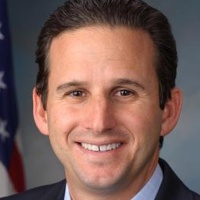
Brian Schatz
Senator
HI
Brian Schatz
Senator
HI
The Expanding Capacity for Health Outcomes Act of 2026 extends funding through 2031 for technology-enabled collaborative learning models that improve public health. It introduces new grant authority for networks of organizations to leverage shared data in addressing critical infectious and chronic diseases. This legislation aims to strengthen healthcare capacity by supporting data-driven, collaborative approaches to complex health challenges.
The POLAR Act establishes a dedicated Directorate for Polar Programs within the National Science Foundation to advance scientific research, infrastructure development, and workforce training in the Arctic and Antarctic.
Dan Sullivan
Senator
AK
Dan Sullivan
Senator
AK
The POLAR Act establishes a dedicated Directorate for Polar Programs within the National Science Foundation to advance scientific research, workforce development, and infrastructure in the Arctic and Antarctic. This legislation centralizes the management of U.S. polar operations, ensuring a strategic, coordinated approach to logistical support, safety, and international collaboration. By prioritizing key research areas and fostering partnerships with indigenous communities and federal agencies, the Act aims to strengthen the United States' influential presence and scientific capabilities in both polar regions.
The Title VIII Nursing Workforce Reauthorization Act of 2026 expands grant eligibility, modernizes educational resources, and increases funding to strengthen the nursing workforce and address critical staffing shortages.

Jeff Merkley
Senator
OR
Jeff Merkley
Senator
OR
The Title VIII Nursing Workforce Reauthorization Act of 2026 strengthens the nursing profession by expanding grant eligibility for advanced education and modernizing training resources, including simulation and telehealth technologies. The bill addresses critical workforce shortages by increasing funding for nursing faculty and student programs while broadening support for specialized care, such as services for sexual assault survivors. These updates ensure that nursing education remains robust and responsive to the evolving needs of the healthcare system through 2030.
The EMPOWER for Health Act reauthorizes and increases funding for essential health professions workforce programs through 2030 to strengthen the medical, nursing, and pediatric care pipelines.
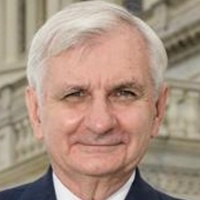
John Reed
Senator
RI
John Reed
Senator
RI
The EMPOWER for Health Act reauthorizes and increases funding for essential health workforce programs through 2030, supporting the training and development of medical, nursing, and pediatric professionals. The bill strengthens the healthcare pipeline by expanding scholarship and grant opportunities, particularly for disadvantaged students and those in underserved areas. Additionally, it modernizes pediatric specialty programs and updates educational standards to better address the evolving needs of the national health workforce.
The INSULIN Act of 2026 aims to lower healthcare costs by capping out-of-pocket insulin prices, increasing pharmacy benefit manager transparency, accelerating generic and biosimilar competition, and expanding access programs for the uninsured.
Jeanne Shaheen
Senator
NH
Jeanne Shaheen
Senator
NH
The Improving Needed Safeguards for Users of Lifesaving Insulin Now Act of 2026 aims to lower insulin costs by capping out-of-pocket expenses for insured patients and increasing transparency for pharmacy benefit managers. The bill also fosters competition by accelerating the approval of generic and biosimilar drugs and establishes new support programs to provide affordable insulin access for uninsured individuals.
The Hydropower Licensing Affordability Act limits federal agency requirements for hydropower licenses to measures that directly mitigate the specific adverse effects of the project.
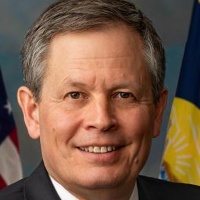
Steve Daines
Senator
MT
Steve Daines
Senator
MT
The Hydropower Licensing Affordability Act aims to streamline the federal licensing process for hydropower projects by narrowing the scope of regulatory requirements. It mandates that conditions imposed for Indian reservations and fishway prescriptions must be directly linked to mitigating the specific adverse effects of the project in question.
The National Coordination on Resilience for Security Act of 2026 establishes a Chief Resilience Officer within the National Security Council to coordinate federal efforts, develop a national resilience strategy, and improve support for communities facing natural hazards.
Christopher Coons
Senator
DE
Christopher Coons
Senator
DE
The National Coordination on Resilience for Security Act of 2026 establishes a Chief Resilience Officer within the National Security Council to lead a unified federal strategy against natural hazards. This legislation creates interagency working groups and a Partners Council to streamline federal resilience efforts, improve spending efficiency, and better support state, local, and tribal communities. Additionally, the Act mandates the development of a comprehensive National Resilience Strategy and an online clearinghouse to enhance national security through proactive, science-based adaptation.
The Welcome Back to the Health Care Workforce Act authorizes federal grants to support the integration, training, and career advancement of internationally educated health care professionals within the U.S. workforce.
Timothy Kaine
Senator
VA
Timothy Kaine
Senator
VA
The "Welcome Back to the Health Care Workforce Act" authorizes federal grants to help internationally educated health care professionals integrate into the U.S. workforce. By funding both system-level improvements and individual support services, the bill aims to address critical staffing shortages and improve health care access in underserved and rural communities.
The Small County PILT Parity Act adjusts population thresholds and payment formulas to ensure more equitable Payments in Lieu of Taxes (PILT) for the nation's smallest counties.
Steve Daines
Senator
MT
Steve Daines
Senator
MT
The Small County PILT Parity Act seeks to update the Payment in Lieu of Taxes (PILT) program by adjusting population thresholds for qualifying local governments. By lowering these figures and introducing a new payment calculation table, the bill aims to better support the unique financial needs of the nation's smallest counties.
The Lindsey O. Graham Sanctioning Russia Act of 2026 imposes comprehensive economic sanctions, trade restrictions, and financial penalties on Russia and its international enablers to isolate the nation and disrupt its military efforts.
Darline Graham Nordone
Senator
SC
Darline Graham Nordone
Senator
SC
The Lindsey O. Graham Sanctioning Russia Act of 2026 imposes sweeping economic sanctions and trade restrictions to isolate Russia and penalize those supporting its military efforts. The bill targets Russian financial institutions, energy sectors, and leadership while penalizing foreign entities that facilitate sanctions evasion. It aims to cripple Russia’s ability to finance its war in Ukraine through severe tariffs, asset freezes, and restricted access to U.S. markets.