This bill establishes a federal grant program to help state, local, territorial, and tribal governments hire, retain, and train prosecutors and support staff.
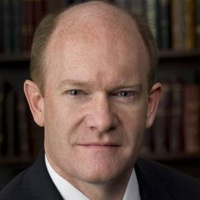
Christopher Coons
Senator
DE
The Helping Improve Recruitment and Retention Efforts for Prosecutors Act of 2025 establishes a federal grant program administered by the Department of Justice. This program aims to help state, local, territorial, and tribal governments hire, retain, and train prosecutors and support staff. Grants will be awarded competitively, with preference given to proposals focusing on new hiring or serving tribal, remote, or rural areas. The federal government will cover up to 75% of project costs, requiring a non-federal match.
New Federal Grant Program to Inject $10 Million Annually into Local Prosecutor Offices Starting 2026
The “Helping Improve Recruitment and Retention Efforts for Prosecutors Act of 2025” (HIRRE Prosecutors Act) establishes a new, competitive federal grant program designed to help state, local, territorial, and tribal governments staff up their prosecutor offices. Starting in fiscal year 2026 and running through 2030, the program authorizes $10 million annually, managed by the Department of Justice (DOJ), to be used exclusively for hiring, retaining, and training prosecutors and their support staff (SEC. 2).
Staffing Up the Front Lines of Justice
Think of this as targeted federal aid for the offices that handle everything from traffic court to serious felonies. The core idea is simple: if local prosecutor offices are understaffed, case backlogs grow, and justice moves slowly. This grant aims to fix that by providing cash specifically for payroll and training. The DOJ will prioritize applications that propose to hire new staff or rehire experienced prosecutors who were laid off due to local budget cuts. This means that if your county had to let go of a few experienced attorneys during a lean year, they now have a dedicated pot of money to bring them back on board (SEC. 2).
Crucially, the bill also recognizes that staffing challenges aren't the same everywhere. It gives preferential treatment to applications coming from tribal, remote, or rural areas. For folks living in smaller towns or remote jurisdictions, this could mean faster case processing and more consistent legal representation, as these areas often struggle the most to attract and keep legal talent due to lower salaries and isolation. This focus helps ensure the funds are distributed where the need is arguably greatest.
The Fine Print: Local Skin in the Game
While the federal government is footing most of the bill, local governments still have to show they’re committed. The federal share covers up to 75% of a project’s cost, requiring a 25% non-federal match. However, the Attorney General has the authority to waive this 25% match if an applicant’s financial situation justifies it. This waiver clause is a big deal because it gives the DOJ significant discretion, allowing them to fully fund projects in financially distressed areas, but it also creates a potential point of inconsistency if the standards for “justification” aren't crystal clear.
Another important safeguard is the “no supplanting” rule: grant funds cannot replace existing state, local, or tribal funds. They must be used to increase the total amount of money available for prosecutors, ensuring that federal money is additive, not just a substitute for local effort. For taxpayers, this means the money is intended to expand services, not just prop up a stagnant budget. The bill allows governments to use assets from federal forfeiture programs to meet their 25% matching requirement, which offers a flexible way for local offices to secure the funds without hitting local property taxes (SEC. 2).