Legislative Activity
Track Tracey's sponsored bills, co-sponsored legislation, and voting record
This resolution strongly condemns the rise of antisemitism in the United States and honors the memory of Yaron Lischinsky and Sarah Milgrim, who were murdered while promoting peace.
Addison McDowell
Representative
NC
Addison McDowell
Representative
NC
This resolution strongly condemns the rise of antisemitism in the United States and around the world. It specifically honors the memory of Yaron Lischinsky and Sarah Milgrim, who were tragically murdered while promoting peace. Ultimately, Congress reaffirms its commitment to combating all forms of hate and ensuring the vigorous enforcement of laws protecting religious freedom.
The AG RESEARCH Act establishes a competitive grant program to modernize and repair critical, aging agricultural research facilities across the nation.
Kim Schrier
Representative
WA
Kim Schrier
Representative
WA
The AG RESEARCH Act establishes a new competitive grant program to address the significant deferred maintenance backlog in U.S. agricultural research facilities. This program provides substantial mandatory and authorized funding to modernize, renovate, and equip these critical sites. The goal is to ensure that American agricultural research remains globally competitive and cutting-edge.
The TEENS Act modifies child labor laws to permit teenagers to work up to 24 hours per week between 7:00 a.m. and 9:00 p.m. during school weeks without being considered oppressive child labor.
Dusty Johnson
Representative
SD
Dusty Johnson
Representative
SD
The Teenagers Earning Everyday Necessary Skills (TEENS) Act modifies existing child labor laws to provide clearer guidelines for student employment during the school year. This bill sets a specific limit, stating that a teenager's work will not be deemed "oppressive child labor" based on hours if they work 24 hours or less per week. Furthermore, work hours must fall strictly between 7:00 a.m. and 9:00 p.m. on any day school is in session.
This act increases the penalty-free withdrawal limit from retirement accounts for first-time homebuyers from $\$10,000$ to $\$50,000$.
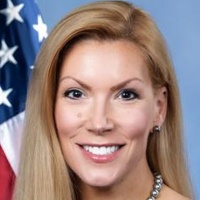
Beth Van Duyne
Representative
TX
Beth Van Duyne
Representative
TX
The Uplifting First-Time Homebuyers Act of 2025 significantly increases the penalty-free withdrawal limit from retirement accounts for first-time homebuyers. This legislation raises the maximum allowable distribution from $\$10,000$ to $\$50,000$. This change is designed to provide greater financial flexibility for individuals purchasing their first home, taking effect for tax years beginning after December 31, 2024.
This bill establishes a new excise tax on proceeds received by parties from third-party litigation financing agreements, effective after 2025.
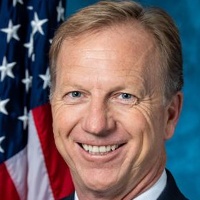
Kevin Hern
Representative
OK
Kevin Hern
Representative
OK
The Tackling Predatory Litigation Funding Act establishes a new federal excise tax on proceeds received from third-party litigation financing agreements. This tax is calculated at the highest income tax rate plus an additional 3.8 percentage points, applied annually to the proceeds received by a "covered party." The bill also institutes specific withholding requirements on payments made to financiers and reclassifies litigation funding proceeds to ensure this new tax structure is applied.
This Act prohibits life insurance companies from discriminating against individuals based solely on their status as a living kidney donor.
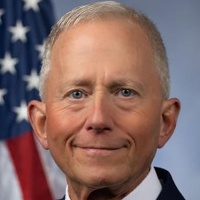
Jefferson Van Drew
Representative
NJ
Jefferson Van Drew
Representative
NJ
The Kidney Donation Anti-Discrimination Act prohibits life insurance companies from denying coverage, increasing premiums, or canceling policies solely because an individual is a living kidney donor. This federal law ensures that living donors are not penalized financially for their altruistic act, unless unrelated health risks are present. Individuals harmed by discrimination under this Act have the right to sue in federal court.
This bill restructures the Consumer Financial Protection Bureau (CFPB) from a single-director agency into an independent commission-led agency with specific expertise and political balance requirements.
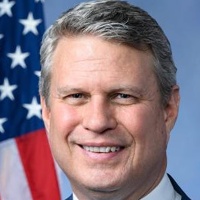
Bill Huizenga
Representative
MI
Bill Huizenga
Representative
MI
This bill, the Bureau of Consumer Financial Protection Commission Act, restructures the Consumer Financial Protection Bureau (CFPB) by replacing its single Director leadership with an independent, five-member commission appointed by the President and confirmed by the Senate. The legislation updates numerous federal laws to replace references to the "Director" with the "Commission" or "Bureau" to reflect this new governance structure. The commission will oversee the agency's core rulemaking and enforcement authority, with a Chair selected from among its members to manage day-to-day operations.
This resolution calls upon local communities to support organizations that aid Gold Shield Families—the loved ones of first responders who died in the line of duty.
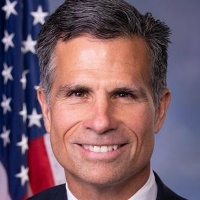
Daniel Meuser
Representative
PA
Daniel Meuser
Representative
PA
This resolution expresses gratitude to the families of first responders who died in the line of duty, known as Gold Shield Families. It recognizes the profound sacrifice made by these families and calls upon local communities to support the nonprofit organizations that provide them with essential resources and aid during their time of need. The bill emphasizes the nation's ongoing commitment to honoring both the fallen heroes and their surviving loved ones.
This Act enhances the FAA's Collegiate Training Initiative, establishes new grant programs, funds training equipment, creates retention incentives for air traffic controllers, and mandates improvements to mental health support and airport radar safety reporting.
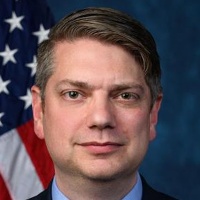
Nicholas Begich
Representative
AK
Nicholas Begich
Representative
AK
The Air Traffic Control Workforce Development Act of 2025 aims to strengthen the air traffic control pipeline by improving the Collegiate Training Initiative (CTI) program and establishing new grants for participating colleges. The bill also funds new training equipment and creates financial incentives to both encourage trainees to complete their certification and retain experienced controllers. Finally, it mandates improvements to mental health support for controllers and requires a report on the future of airport radar safety systems.
This Act requires Federal Housing Enterprises to use state-regulated title protection products for mortgages or hold extra capital reserves against those without such protection.
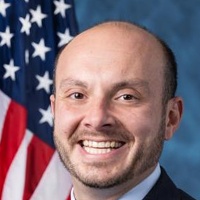
Andrew Garbarino
Representative
NY
Andrew Garbarino
Representative
NY
The Protecting America's Property Rights Act aims to enhance the security of mortgages purchased by Federal Housing Enterprises by requiring the use of state-regulated title protection products. If these regulated products are not used, the Enterprises must hold additional capital reserves against those mortgages. This legislation mandates the Director to quickly establish rules ensuring compliance with these new title risk management standards.
The LOCOMOTIVES Act centralizes federal authority over emission standards for existing locomotives and engines, limiting the ability of states to impose their own regulations on this equipment.
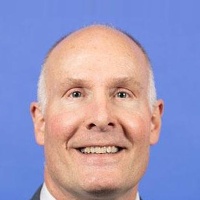
John Moolenaar
Representative
MI
John Moolenaar
Representative
MI
The Lifting Overburdensome Commerce Obstructions and Motives (LOCOMOTIVES) Act clarifies and strengthens federal authority over emission standards for existing locomotives and engines. This legislation limits the ability of states to set their own pollution control standards for certain railroad equipment. Specifically, it expands federal preemption to cover more nonroad engines and locomotives engaged in commerce.
This act establishes research grants and training programs to develop and implement PFAS-free, next-generation turnout gear to protect firefighters from occupational illness and injury.

Debbie Dingell
Representative
MI
Debbie Dingell
Representative
MI
The PFAS Alternatives Act aims to protect firefighters by funding research and development for next-generation turnout gear that eliminates harmful PFAS chemicals. The bill establishes grants through NIOSH to create safer, PFAS-free protective equipment and separate funding for training programs on the proper care of this new gear. Ultimately, this legislation seeks to reduce occupational illness and injury among fire and EMS personnel.
This bill extends key tax credits for biodiesel, renewable diesel, and alcohol fuels through 2026 while preventing taxpayers from claiming overlapping credits with the new clean fuel production credit.
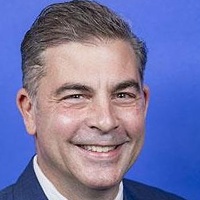
Mike Carey
Representative
OH
Mike Carey
Representative
OH
This bill extends key federal tax credits for biodiesel and renewable diesel production and mixtures through 2026. It ensures that these older credits will not be claimed concurrently with the newer clean fuel production credit (Section 45Z(a)). The legislation also extends the tax credit for second-generation alcohol fuels, coordinating its expiration with the new clean fuel rules.
The Prove It Act establishes a formal process for small businesses to challenge agency claims about the economic impact of proposed rules and strengthens requirements for agencies to consider indirect costs on small entities.
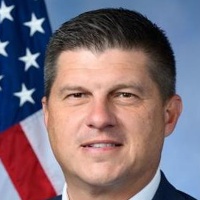
Brad Finstad
Representative
MN
Brad Finstad
Representative
MN
The Prove It Act aims to strengthen protections for small businesses against burdensome federal regulations. It establishes a formal process for small entities to challenge agency claims that a proposed rule will not significantly impact them. The bill also expands the required analysis of indirect costs and imposes consequences if agencies fail to periodically review existing rules on time.
This Act establishes the Regional Airport Expansion Program to provide federal grants for eligible general aviation or nonprimary commercial service airports serving communities of at least 75,000 people to upgrade capacity.
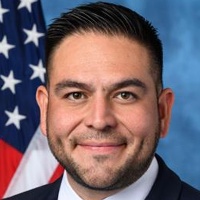
Gabriel (Gabe) Vasquez
Representative
NM
Gabriel (Gabe) Vasquez
Representative
NM
The Expanding Regional Airports Act establishes the Regional Airport Expansion Program to provide federal grants to eligible general aviation or nonprimary commercial service airports serving communities of at least 75,000 people. These funds are designated for projects that increase airport capacity, such as expanding passenger areas, lengthening runways, or upgrading infrastructure. The program mandates the distribution of between three and ten grants annually, supported by an authorized appropriation of $50 million each fiscal year.
This Act streamlines the permitting process for facilities handling interim hazardous waste related to domestically critical and supply-chain vulnerable energy resources.
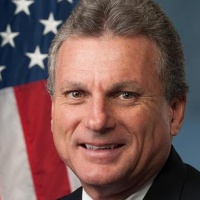
Earl Carter
Representative
GA
Earl Carter
Representative
GA
The Streamlining Critical Mineral Permitting Act aims to expedite the permitting process for facilities handling critical energy resources. It introduces a new definition for "critical energy resource," determined by the Secretary of Energy based on national necessity and supply chain vulnerability. This change specifically modifies how interim hazardous waste permits are handled for facilities processing these vital resources under the Solid Waste Disposal Act.
This bill limits the Medicare coinsurance amount for certain ambulatory surgical center services to the annual inpatient hospital deductible, effective January 1, 2026.
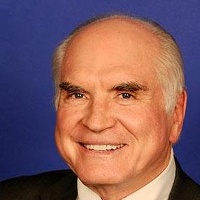
Mike Kelly
Representative
PA
Mike Kelly
Representative
PA
This bill amends Medicare rules to cap the out-of-pocket coinsurance amount beneficiaries must pay for certain services provided in an Ambulatory Surgical Center (ASC). If the standard ASC coinsurance exceeds the annual inpatient hospital deductible, the beneficiary's cost will be limited to that deductible amount. The Secretary will cover the difference owed to the ASC.
The USPS SERVES US Act reforms USPS rate-setting based on CPI, establishes penalties for service failures, improves service change oversight, creates a Customer Advocate office, and mandates changes to retiree health benefits fund investments.
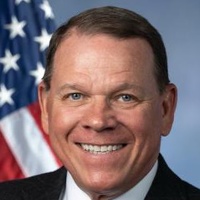
Sam Graves
Representative
MO
Sam Graves
Representative
MO
The USPS SERVES US Act aims to reform postal operations by linking annual rate increases to the Consumer Price Index (CPI) minus 0.5% and establishing penalties for service failures. The bill also creates an independent Office of the Customer Advocate within the Postal Regulatory Commission (PRC) to represent public interests. Furthermore, it mandates stricter procedures for service changes and overhauls how retiree health benefits funds are invested.
The Neighborhood Homes Investment Act establishes a new federal tax credit to incentivize the development and substantial rehabilitation of affordable starter homes in low-income communities by closing the financing gap between construction costs and sale prices.
Mike Kelly
Representative
PA
Mike Kelly
Representative
PA
The Neighborhood Homes Investment Act establishes a new federal tax credit designed to close the financing gap hindering the construction and rehabilitation of affordable starter homes in distressed communities. This credit incentivizes developers to build or substantially renovate housing in specific low-income census tracts and sell it affordably to qualified moderate-income homeowners. State agencies will manage the allocation of these credits, ensuring projects meet affordability standards and promoting revitalization in struggling neighborhoods.
This Act clarifies that the federal income tax exemption for certain tax-exempt organizations does not count as "Federal financial assistance."
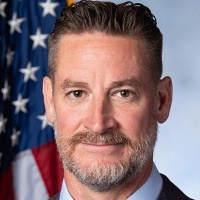
W. Steube
Representative
FL
W. Steube
Representative
FL
The Safeguarding Charity Act clarifies that the federal income tax exemption granted to many tax-exempt organizations, such as charities and social welfare groups, will no longer be counted as "Federal financial assistance." This change specifically redefines federal aid for the purpose of applying various federal laws and regulations moving forward. The Act ensures that the value of existing tax breaks is excluded from future calculations of government assistance received by these entities.