Legislative Activity
Track Tracey's sponsored bills, co-sponsored legislation, and voting record
This bill removes the current restriction preventing direct charitable rollovers from Individual Retirement Accounts (IRAs) to Donor Advised Funds (DAFs).

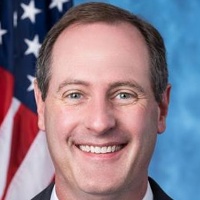
Adrian Smith
Representative
NE
Adrian Smith
Representative
NE
The IRA Charitable Rollover Facilitation and Enhancement Act of 2025 removes the current restriction preventing individuals from making direct charitable rollovers from their Individual Retirement Accounts (IRAs) to Donor Advised Funds (DAFs). This change immediately allows IRA owners to transfer retirement assets directly to DAFs for charitable purposes. The bill simplifies and enhances charitable giving options for IRA holders.
The Transportation Freedom Act incentivizes domestic auto manufacturing with tax breaks, repeals recent EPA emissions rules, eliminates state authority to set stricter emission standards, and mandates a feasibility-based process for setting future national fuel economy and greenhouse gas standards.
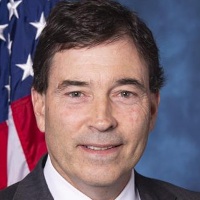
Troy Balderson
Representative
OH
Troy Balderson
Representative
OH
The Transportation Freedom Act seeks to bolster domestic auto manufacturing through significant tax incentives tied to high-wage American jobs and strong worker benefits. Simultaneously, the bill repeals recent EPA and NHTSA rules regarding multipollutant emissions and fuel economy standards for light, medium, and heavy-duty vehicles. Furthermore, it centralizes emission control by eliminating the authority of individual states to set standards stricter than the federal level. Finally, it mandates the establishment of new, feasibility-based fuel economy and greenhouse gas standards for future model years, explicitly prohibiting mandates for electric-only vehicle sales.
This act prohibits the Federal Motor Carrier Safety Administration from mandating speed limiting devices on interstate commercial vehicles over 26,000 pounds.
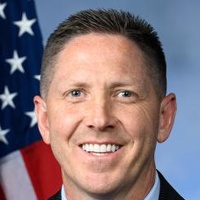
Josh Brecheen
Representative
OK
Josh Brecheen
Representative
OK
The DRIVE Act prohibits the Federal Motor Carrier Safety Administration from mandating speed limiting devices on heavy commercial vehicles engaged in interstate commerce. This legislation removes any federal requirement for trucks over 26,000 pounds to have their top speed electronically capped. In essence, the bill deregulates restrictions concerning speed control technology for large, cross-state eighteen-wheelers.
This Act mandates a study on expanding federal crop insurance for winter canola under double and rotational cropping systems while dedicating funding for research into supplemental and alternative crops.
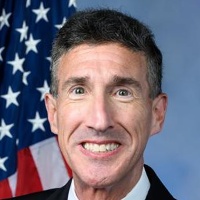
David Kustoff
Representative
TN
David Kustoff
Representative
TN
The Winter Canola Study Act of 2025 mandates a study on expanding federal crop insurance options to better support farmers who utilize double-cropping and rotational cropping systems involving winter canola. The Act also allocates dedicated funding through fiscal year 2029 for the National Institute of Food and Agriculture to research supplemental and alternative crops. Ultimately, this legislation aims to boost the sustainable production of winter canola as a feedstock for lower-carbon renewable fuels.
The Housing Supply Frameworks Act directs the federal government to create guidelines and best practices for state and local governments to reform restrictive zoning and land-use regulations to increase housing supply across all income levels.
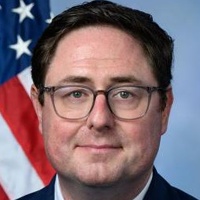
Mike Flood
Representative
NE
Mike Flood
Representative
NE
The Housing Supply Frameworks Act aims to address the national housing shortage by encouraging state and local governments to reform restrictive zoning and land use regulations. It directs the Department of Housing and Urban Development (HUD) to develop and publish comprehensive guidelines and best practices for these reforms. The Act also establishes reporting requirements to track the adoption of these new frameworks and authorizes funding to support these efforts.
This act updates the Conservation Reserve Enhancement Program (CREP) to allow flexible annual payment options, establish new payment structures for retiring water rights and dryland farming, mandate certain water conservation agreements, and exempt CREP rental payments from federal payment limits.

Lauren Boebert
Representative
CO
Lauren Boebert
Representative
CO
The Conservation Reserve Enhancement Program Improvement Act of 2025 updates the CREP to offer farmers more flexibility in how they receive annual contract payments. It establishes new payment formulas for agreements involving the retirement of water rights or dryland farming practices, potentially increasing payments for some existing contracts. Additionally, the bill mandates certain water conservation agreements and exempts CREP rental payments from federal payment limitations.
The Affordable Housing Credit Improvement Act of 2025 updates state allocation formulas, reforms tenant eligibility and credit determination rules, and enhances assistance for Native American and rural housing projects.
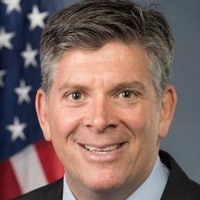
Darin LaHood
Representative
IL
Darin LaHood
Representative
IL
The Affordable Housing Credit Improvement Act of 2025 updates federal housing tax credit allocations to reflect current economic realities and boosts minimum state allotments. It reforms tenant eligibility rules to stabilize tenancy and enhance protections for vulnerable residents, including victims of abuse. The bill also provides disaster relief for property owners, increases incentives for housing the extremely low-income, and directs greater resources toward Native American and rural housing needs. Finally, it streamlines administrative processes and signals a future focus on data transparency and discouraging restrictive local zoning.
This Act officially recognizes peer support specialists, establishes a new Office of Recovery within SAMHSA led by someone with lived experience, and mandates a report on state criminal background check processes for these specialists.
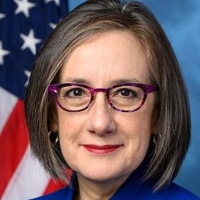
Andrea Salinas
Representative
OR
Andrea Salinas
Representative
OR
The PEER Support Act aims to formally recognize and strengthen the profession of peer support specialists who use their lived experience to help others in recovery. The bill establishes a new Office of Recovery within SAMHSA, led by an individual with lived recovery experience. Furthermore, it mandates the official classification of peer support specialist roles in the federal job system and directs a review of state criminal background check processes for these specialists.
This Act establishes a new federal crime and penalties for intentionally staging motor vehicle collisions involving commercial motor vehicles.
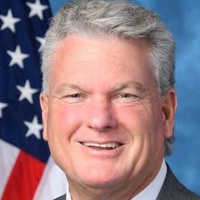
Mike Collins
Representative
GA
Mike Collins
Representative
GA
The Staged Accident Fraud Prevention Act of 2025 establishes a new federal crime targeting individuals who intentionally stage motor vehicle collisions involving commercial motor vehicles. This act sets significant penalties, including up to 20 years in prison for staging an accident, with mandatory minimum sentences for crashes resulting in serious injury or death. The legislation also includes provisions to prevent federal prosecution if the individual has already been tried in a state or local jurisdiction for the same incident.
The Religious Workforce Protection Act extends nonimmigrant status and provides job flexibility for religious workers caught in long green card backlogs, while also waiving the one-year foreign residence requirement for those who left due to the R-1 visa time limit.
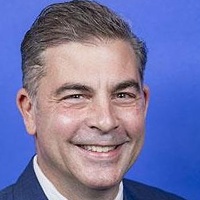
Mike Carey
Representative
OH
Mike Carey
Representative
OH
The Religious Workforce Protection Act aims to support religious workers facing long green card backlogs by allowing extensions of their nonimmigrant status beyond the usual five-year limit until their permanent residency application is processed. It also modifies job flexibility rules for certain delayed applicants and exempts religious workers who left the U.S. due to the five-year R-1 visa limit from the mandatory one-year foreign residence requirement before reapplying.
This bill repeals the requirement for financial institutions to collect and report specific data on small business loans to reduce compliance costs and improve small business access to credit.
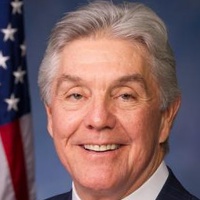
Roger Williams
Representative
TX
Roger Williams
Representative
TX
The 1071 Repeal to Protect Small Business Lending Act aims to eliminate the mandatory data collection and reporting requirements for small business loans previously established under Section 704B of the Equal Credit Opportunity Act. Proponents argue that these regulations impose unnecessary compliance costs on lenders, potentially hindering small business access to credit. This bill repeals those specific reporting mandates to reduce regulatory burdens on financial institutions.
The CARE Act of 2025 mandates Medicare to test a new payment model covering emergency response services provided by ground ambulance companies even when patient transport does not occur.
Mike Carey
Representative
OH
Mike Carey
Representative
OH
The CARE Act of 2025 mandates that the Center for Medicare and Medicaid Innovation (CMMI) test a new payment model for emergency services. This model will allow Medicare to pay ground ambulance providers for emergency responses, even when a patient does not ultimately require transport under Medicare Part B. The five-year demonstration aims to evaluate the impact of covering these non-transport emergency responses on patient access and resource utilization.
The RIFLE Act eliminates the federal tax on firearm transfers and makes corresponding technical changes to the tax code without affecting CPSC oversight of regulated firearms.
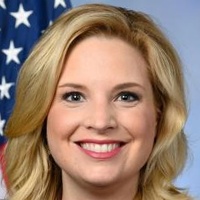
Ashley Hinson
Representative
IA
Ashley Hinson
Representative
IA
The Repealing Illegal Freedom and Liberty Excises Act (RIFLE Act) eliminates the existing federal tax on firearm transfers. This legislation strikes the relevant section from the Internal Revenue Code and makes necessary technical updates to related statutes. Importantly, this Act does not grant the Consumer Product Safety Commission any new authority over regulated firearms.
The EASE Act of 2025 mandates the testing of a new model to improve specialty healthcare access for rural and underserved Medicare and Medicaid beneficiaries using digital tools and coordinated care.
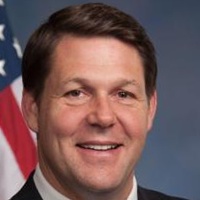
Jodey Arrington
Representative
TX
Jodey Arrington
Representative
TX
The EASE Act of 2025 mandates that the Center for Medicare and Medicaid Innovation (CMMI) test a new model to improve access to specialty health services. This "Specialty Health Care Services Access Model" will utilize digital tools, like telehealth, to connect eligible Medicare, Medicaid, and CHIP beneficiaries in rural or underserved areas with necessary specialty care. The model must be tested through a network of qualified, experienced, and primarily rural-based nonprofit providers.
This bill drastically tightens and expands U.S. sanctions against Iran across its leadership, military, and economy while severely restricting the President's authority to lift these restrictions.
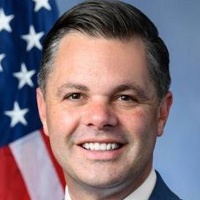
Zachary (Zach) Nunn
Representative
IA
Zachary (Zach) Nunn
Representative
IA
The Maximum Pressure Act dramatically tightens and expands U.S. sanctions against Iran across its military, missile, and economic sectors, codifying existing restrictions and severely limiting the President's authority to grant sanctions relief. It mandates immediate sanctions on top Iranian officials and increases penalties for international parties aiding Iran's weapons programs. Furthermore, the bill enhances oversight by requiring numerous detailed reports to Congress regarding Iran's terrorism financing, nuclear timeline, and economic influence, while also redirecting certain frozen Iranian funds to victims of state-sponsored terrorism.
This bill, the LIZARD Act of 2025, removes the dunes sagebrush lizard from the list of threatened and endangered species and bars future listing decisions for the species.
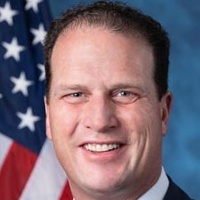
August Pfluger
Representative
TX
August Pfluger
Representative
TX
The LIZARD Act of 2025 mandates the immediate delisting of the dunes sagebrush lizard from the federal lists of threatened and endangered species. This legislation specifically prohibits the Secretary from ever determining the lizard to be a threatened or endangered species under the Endangered Species Act going forward.
This bill mandates that businesses receiving or sending goods must allow commercial truck drivers access to restrooms while on their property, and requires port terminal operators to provide adequate restroom facilities for drayage truck operators.
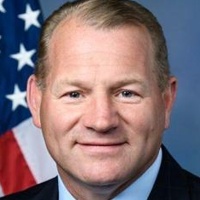
Troy Nehls
Representative
TX
Troy Nehls
Representative
TX
The Trucker Bathroom Access Act ensures that commercial truck drivers are allowed to use restrooms at businesses where they are delivering or picking up goods. This legislation also mandates that operators of marine terminals provide adequate and safe restroom facilities for drayage truck drivers working on port property. The goal is to guarantee basic sanitation access for professional drivers during their work hours.
This Act establishes a competitive grant program to test incentives aimed at increasing the purchase of naturally nutrient-rich dairy products by households using SNAP benefits.

Jim Costa
Representative
CA
Jim Costa
Representative
CA
The Dairy Nutrition Incentive Program Act of 2025 establishes a new federal program to test methods for increasing the purchase of nutrient-rich dairy products by households using SNAP benefits. The Secretary of Agriculture will award competitive grants to eligible entities to implement incentive projects at the point of sale. These projects must prioritize direct incentives that can only be spent on buying more eligible dairy items, and all projects will undergo rigorous independent evaluation. The Act also mandates the transition of existing dairy incentive projects into this new framework without interruption.
This Act establishes a 20% federal tax credit for converting eligible commercial buildings into affordable housing units, subject to state allocation and specific income restrictions.
Mike Carey
Representative
OH
Mike Carey
Representative
OH
The Revitalizing Downtowns and Main Streets Act establishes a new 20% federal tax credit for converting eligible, older commercial buildings into affordable housing. This incentive aims to increase housing supply by requiring that at least 20% of the converted units remain rent-restricted for low-income residents for 30 years. State agencies will allocate these credits, which are subject to a national cap of $12 billion, based on approved plans prioritizing financially necessary projects.
This bill establishes the Southwestern Power Administration Fund to consolidate and manage all SWPA receipts for operational and construction costs, with excess funds returned to the Treasury.
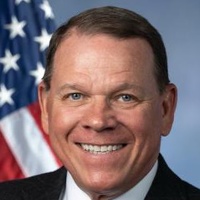
Sam Graves
Representative
MO
Sam Graves
Representative
MO
This bill establishes the **Southwestern Power Administration Fund** as a dedicated account within the U.S. Treasury to consolidate all revenues and existing balances of the Southwestern Power Administration (SWPA). The Fund will finance the SWPA's operational costs, including facility maintenance and new construction. The Secretary of Energy is authorized to use these funds for approved purposes, even ahead of annual appropriations, with excess funds being returned to the Treasury.