
Legislative Activity
Track Nancy's sponsored bills, co-sponsored legislation, and voting record
The Enhanced Iran Sanctions Act of 2025 mandates broad economic and immigration sanctions on foreign individuals, entities, and financial institutions that support Iran’s nuclear, missile, drone, or terrorist activities, while specifically targeting the country's petroleum and petrochemical sectors.
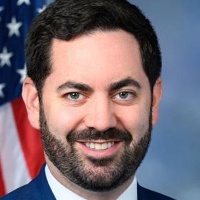
Michael Lawler
Representative
NY
Michael Lawler
Representative
NY
The Enhanced Iran Sanctions Act of 2025 strengthens U.S. policy by imposing mandatory sanctions on foreign persons and financial institutions that support Iran’s nuclear, ballistic missile, drone, and terrorist activities. The bill specifically targets Iran’s petroleum and petrochemical sectors to cut off funding for these malign programs. Additionally, it expands the State Department’s "Rewards for Justice" program to incentivize the reporting of individuals who evade these sanctions.
The Interstate Milk Freedom Act of 2026 prohibits federal interference with the interstate sale and transport of raw milk between states where such products are legally permitted.
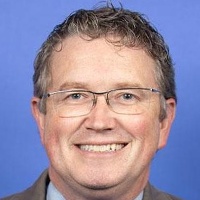
Thomas Massie
Representative
KY
Thomas Massie
Representative
KY
The Interstate Milk Freedom Act of 2026 prohibits federal interference in the interstate sale and transportation of unpasteurized milk and milk products. This protection applies when both the state of origin and the destination state permit the distribution of raw milk for human consumption and all state-level packaging and labeling laws are met. The bill preserves individual state authority while ensuring that compliant producers can move their products across state lines without federal restriction.
This Act prohibits federal funding for an Executive Order related to glyphosate and removes legal immunities for manufacturers facing civil lawsuits over harm caused by glyphosate or elemental phosphorus exposure.
Thomas Massie
Representative
KY
Thomas Massie
Representative
KY
The No Immunity for Glyphosate Act prohibits federal funding for a specific Executive Order concerning phosphorus and glyphosate-based herbicides. This legislation establishes a right for individuals harmed by exposure to these substances to file civil lawsuits against manufacturers and sellers. Crucially, it removes certain legal immunities and defenses that companies might otherwise use to avoid liability for damages caused by these products.
The Iran Human Rights, Internet Freedom, and Accountability Act of 2026 aims to support the Iranian people by expanding internet access, strengthening sanctions against regime officials, and establishing a Treasury initiative to combat Iranian government corruption and kleptocracy.
Michael Lawler
Representative
NY
Michael Lawler
Representative
NY
The Iran Human Rights, Internet Freedom, and Accountability Act of 2026 aims to support the Iranian people by expanding access to uncensored internet and communication technologies. The bill strengthens U.S. policy against regime repression by mandating investigations into human rights abuses and establishing a new Treasury initiative to combat corruption and money laundering by Iranian officials. Additionally, it enhances congressional oversight of sanctions and promotes independent media to counter state-sponsored censorship.
This Act establishes the United States-Israel Defense Technology Cooperation Initiative to accelerate joint research, development, and integration of defense technologies between the two nations.
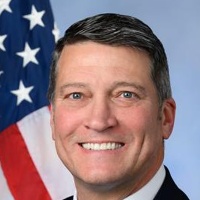
Ronny Jackson
Representative
TX
Ronny Jackson
Representative
TX
This bill establishes the United States-Israel Defense Technology Cooperation Initiative to accelerate joint research, development, and integration of critical defense technologies. The initiative focuses on key areas like AI, missile defense, and counter-drone systems to enhance the security and technological edge of both nations. It mandates regular reporting to Congress on progress and authorizes funding for fiscal years 2027 through 2029.
This act allows first-time homebuyers to take tax-free distributions of up to \$35,000 from a 529 college savings plan under specific conditions.
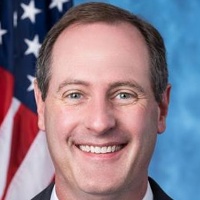
Tracey Mann
Representative
KS
Tracey Mann
Representative
KS
The First-Time Home Buyer Empowerment Act amends tax law to allow first-time homebuyers to take tax-free distributions from a 529 college savings plan for a home purchase. This special provision is subject to conditions, including a $35,000 lifetime limit per beneficiary. If the home is sold within five years, a recapture tax applies to recover the avoided income tax.
This bill mandates that national sports governing bodies require athletes to compete in events corresponding to their biological sex as defined at conception for the Olympics and other sanctioned competitions.
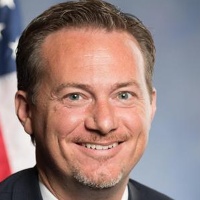
Michael Cloud
Representative
TX
Michael Cloud
Representative
TX
The SAFE Olympic Sports Act mandates that national governing bodies for sports require athletes to participate in competitions corresponding to their biological sex, defined as male or female determined at conception. This requirement applies to the Olympic Games, Paralympic Games, and other sanctioned events. Furthermore, the bill protects the sanctioning of previously established, single-sex amateur athletic competitions.
This bill mandates that unspent federal agency funds be split, with most going to debt reduction, some rolled over for one year, and a small portion used for employee retention bonuses, while also limiting future budget requests.
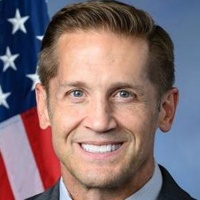
Rich McCormick
Representative
GA
Rich McCormick
Representative
GA
The Incentivize Savings Act mandates how federal agencies must handle unspent appropriations by dedicating the majority to debt reduction and allowing a portion for employee retention bonuses. This legislation also restricts future budget requests to only account for inflation unless the agency fully spends its prior allocation. Ultimately, the bill aims to encourage fiscal responsibility by linking unspent funds to debt reduction and limiting budget growth.
This bill establishes eligibility requirements for amateur athletic organizations based on biological sex, prohibiting individuals whose sex is male from competing in female-designated amateur athletic competitions.
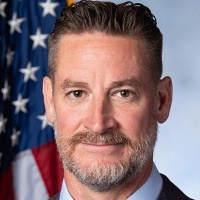
W. Steube
Representative
FL
W. Steube
Representative
FL
This Act establishes specific definitions for "female," "male," and "sex" based on biological reproductive systems for amateur athletics. It mandates that organizations recognized by the U.S. Olympic & Paralympic Committee must prohibit individuals identified as male from competing in competitions designated for females. This aims to protect competitive opportunities specifically for biological females in amateur sports.
The Whale CHARTS Act of 2026 expands federal efforts to map, monitor, and mitigate risks to migratory whales and other large cetaceans through new data collection, technology grants, and near real-time tracking programs.

Doris Matsui
Representative
CA
Doris Matsui
Representative
CA
The Whale CHARTS Act of 2026 expands federal efforts to protect migratory whales and other large cetaceans. This legislation mandates the creation of high-accuracy distribution maps for whale habitats and funds research into understudied species. It also establishes a competitive grant program to develop and deploy technologies that reduce harmful interactions between whales and ocean users, such as vessel strikes.
This bill mandates proof of U.S. citizenship for federal voter registration and requires photo identification showing citizenship status for voting in federal elections.

Chip Roy
Representative
TX
Chip Roy
Representative
TX
The Safeguard American Voter Eligibility Act (SAVE America Act) mandates that individuals must provide documentary proof of U.S. citizenship to register to vote in federal elections. It also establishes a federal requirement for voters to present a photo ID indicating U.S. citizenship when casting a ballot in federal elections. The bill outlines specific acceptable forms of proof and requires states to implement verification programs to ensure only citizens are registered and voting.
This Act mandates that federal agencies use specific sex-based terms like "female" or "mother" instead of "birthing person" in official communications.
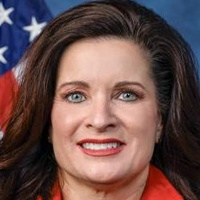
Sheri Biggs
Representative
SC
Sheri Biggs
Representative
SC
The Protecting Motherhood Act mandates that federal agencies use specific, sex-based terminology such as "mother," "woman," or "female" instead of the term "birthing person" in all official documents. This legislation defines the required terms to ensure consistency in federal communications regarding pregnancy and parenthood.
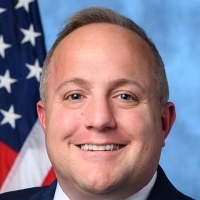
This bill directs the Secretary of Commerce to collect and publish standardized, up-to-date geospatial data on fishing and recreational vessel restrictions in federally managed ocean areas.
Russell Fry
Representative
SC
Russell Fry
Representative
SC
The Modernizing Access to Our Public Oceans Act directs the Secretary of Commerce to collect and publish comprehensive, up-to-date information on fishing restrictions in federally managed fisheries on a public website. This legislation also mandates the standardization of geospatial data related to ocean activities and marine protected areas. The goal is to improve accessibility and interoperability of critical ocean use information for the public, while explicitly preserving existing regulatory authority and Tribal rights.
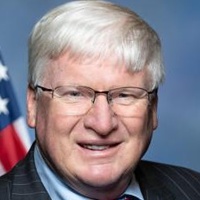
This bill mandates that U.S. citizenship or nationality, verified through documentation submitted to the SSA and DHS, is required for most federal public assistance benefits.
Glenn Grothman
Representative
WI
Glenn Grothman
Representative
WI
The Safeguarding Benefits for Americans Act of 2026 establishes U.S. citizenship or nationality as a mandatory requirement for receiving most federal public assistance benefits. This law mandates that applicants must attest to their citizenship status and provide documentation for verification against Social Security Administration and Department of Homeland Security records. These new citizenship verification rules will supersede existing eligibility laws unless those laws are more restrictive. Eligibility determinations under this new standard will begin one year after enactment.
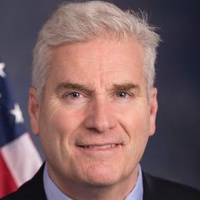
This bill, the SCAM Act, establishes new grounds and procedures for the government to revoke the citizenship of naturalized individuals who commit specific serious offenses or fraud within ten years of naturalization.
Tom Emmer
Representative
MN
Tom Emmer
Representative
MN
The SCAM Act establishes new grounds for the government to revoke the citizenship of naturalized individuals. It allows for denaturalization if a person commits fraud against the government, joins a terrorist organization, or commits an aggravated felony within ten years of naturalization. These actions are deemed proof that the individual lacked good moral character at the time they became a citizen. Revocation of citizenship under this Act is retroactive to the original date of naturalization.
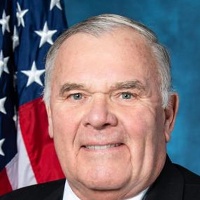
This bill delays the implementation of certain 2026 amendments to the hemp production provisions of the Agricultural Marketing Act of 1946 by extending the current delay period from one year to three years.
James Baird
Representative
IN
James Baird
Representative
IN
This bill, the Hemp Planting Predictability Act, seeks to amend the Agriculture Appropriations Act of 2026. Specifically, it delays the implementation of recent amendments affecting hemp production under the Agricultural Marketing Act of 1946. The delay for these changes is extended from one year to three years.
This bill expresses support for the Iranian people protesting for a free and democratic Iran while condemning the Islamic Republic's violent repression.
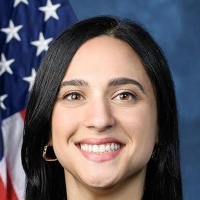
Yassamin Ansari
Representative
AZ
Yassamin Ansari
Representative
AZ
This resolution expresses strong support for the Iranian people protesting for freedom, democracy, and basic human rights against the repressive Islamic Republic. It condemns the regime's brutal crackdown on demonstrators and demands an end to violence and the release of political prisoners. Furthermore, it urges the U.S. government to work with allies to deter further lethal violence against protesters.
This bill modifies deposits into the Crime Victims Fund by excluding certain False Claims Act recoveries and mandates an Inspector General audit of the Fund's sustainability.
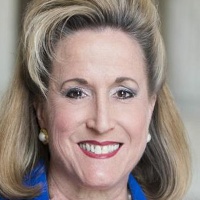
Ann Wagner
Representative
MO
Ann Wagner
Representative
MO
This bill amends the Victims of Crime Act of 1984 to temporarily exclude certain False Claims Act recoveries from being deposited into the Crime Victims Fund through fiscal year 2029. It also mandates a comprehensive audit by the Department of Justice Inspector General on the Fund's sustainability and the impact of recent legislative changes. The resulting report will provide recommendations for improving the Fund's effectiveness and oversight.
This bill mandates federal agencies to create detailed software inventories, undergo a government-wide assessment to find savings, and develop modernization plans to reduce software costs and reinvest savings into IT.

Shontel Brown
Representative
OH
Shontel Brown
Representative
OH
This Act mandates that federal agencies create and maintain detailed inventories of all their software assets to identify inefficiencies and waste. The Office of Management and Budget (OMB) will then conduct a comprehensive assessment of these inventories to find government-wide savings opportunities. Agencies must use these findings to develop plans to consolidate licenses and reinvest at least 25% of resulting savings into IT modernization.
This bill mandates that states provide SNAP recipient data to the Secretary of Agriculture upon request to enhance program oversight and enforcement.
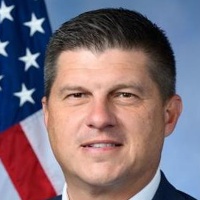
Brad Finstad
Representative
MN
Brad Finstad
Representative
MN
The SNAP Data Transparency and Oversight Act of 2025 mandates that states provide recipient-level SNAP data to the Secretary of Agriculture upon request as a condition of program participation. This ensures greater federal oversight and strengthens the ability to enforce program integrity and investigate potential fraud. Failure to comply may result in the withholding of federal administrative funds.