Legislative Activity
Track Nicholas's sponsored bills, co-sponsored legislation, and voting record
This Act mandates that electric utilities update their long-term planning to ensure a minimum of ten years of reliable power generation capacity, defined by strict fuel and operational standards.

Gabe Evans
Representative
CO
Gabe Evans
Representative
CO
The State Planning for Reliability and Affordability Act mandates that electric utilities must update their long-term energy plans to guarantee a minimum of ten years of reliable power availability. This reliability is defined by requiring power sources to generate electricity continuously for at least 30 days, supported by sufficient on-site or contracted fuel supplies. State regulators must review and adopt this new reliability standard within two years, though prior consideration of the standard may exempt them from these deadlines.
The Shipbuilding and Harbor Infrastructure for Prosperity and Security for America Act of 2025 establishes a centralized maritime authority, creates a dedicated funding trust, strengthens sealift capability, mandates increased use of U.S.-flagged vessels, invests heavily in domestic shipbuilding, and enhances workforce development and tax incentives for the maritime industry.
Trent Kelly
Representative
MS
Trent Kelly
Representative
MS
The **Shipbuilding and Harbor Infrastructure for Prosperity and Security for America Act of 2025** is a comprehensive bill designed to revitalize the U.S. maritime industry and secure critical supply chains. It establishes new centralized oversight for maritime policy, creates a dedicated Maritime Security Trust Fund financed by new vessel taxes, and mandates significant federal investment in domestic shipbuilding and workforce development. The legislation also imposes stricter cargo preference rules and tax incentives to ensure U.S.-flagged vessels dominate international commerce and defense sealift operations.
This Act promotes private employee ownership by extending tax deferrals for S corporation ESOP sales, ensuring ESOP-owned businesses retain small business status, and establishing new Treasury and Labor offices to provide assistance and advocacy.
Mike Kelly
Representative
PA
Mike Kelly
Representative
PA
The Promotion and Expansion of Private Employee Ownership Act of 2025 aims to significantly boost employee ownership in S corporations through Employee Stock Ownership Plans (ESOPs). The bill extends key tax deferral benefits for stock sales to ESOPs and removes a major restriction on this tax treatment. Furthermore, it establishes new government offices and an Advocate for Employee Ownership to provide technical assistance and resolve disputes, while ensuring ESOP-owned businesses retain small business status for federal programs.
This bill designates the United States Postal Service facility located at 216 Cumberland Street in Rochester, New York, as the "Minister Franklin Florence Memorial Post Office."
Joseph Morelle
Representative
NY
Joseph Morelle
Representative
NY
This bill officially designates the United States Postal Service facility located at 216 Cumberland Street in Rochester, New York, as the "Minister Franklin Florence Memorial Post Office." All official government records and documents will reflect this new name moving forward.
This Act mandates the CPSC to quickly establish federal safety standards for lithium-ion batteries used in small electric vehicles and personal mobility devices based on existing industry guidelines.

Ritchie Torres
Representative
NY
Ritchie Torres
Representative
NY
The Setting Consumer Standards for Lithium-Ion Batteries Act mandates the Consumer Product Safety Commission (CPSC) to rapidly adopt key industry standards as federal safety rules for lithium-ion batteries in small electric vehicles and personal mobility devices. This legislation ensures these standards automatically update to the newest industry revisions unless the CPSC finds a revision compromises safety. Furthermore, the CPSC must report to Congress five years after enactment regarding battery hazards and compliance.
This Act mandates that group health plans and insurers must cover diagnostic and supplemental breast examinations without any out-of-pocket cost-sharing requirements for plan years beginning on or after January 1, 2026.

Debbie Dingell
Representative
MI
Debbie Dingell
Representative
MI
The Access to Breast Cancer Diagnosis Act of 2025 ensures that group health plans and insurers must cover diagnostic and supplemental breast examinations with no out-of-pocket costs for patients. This means no deductibles, copayments, or coinsurance will apply to these necessary exams. These provisions take effect for plan years beginning on or after January 1, 2026.
The Safeguard American Voter Eligibility (SAVE) Act mandates that individuals registering to vote in federal elections must present documentary proof of U.S. citizenship.

Chip Roy
Representative
TX
Chip Roy
Representative
TX
The Safeguard American Voter Eligibility Act (SAVE Act) significantly amends federal law to require individuals registering to vote in federal elections to present documentary proof of U.S. citizenship. This legislation mandates that states actively clean their voter rolls and cooperate with federal agencies to verify citizenship status. It establishes new criminal penalties for officials who fail to enforce these documentation requirements.
The No Rogue Rulings Act of 2025 severely limits federal district courts from issuing injunctions that affect non-parties, with an exception for multi-state lawsuits against the executive branch heard by a randomly selected three-judge panel.
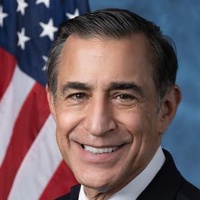
Darrell Issa
Representative
CA
Darrell Issa
Representative
CA
The No Rogue Rulings Act of 2025 significantly restricts federal district courts from issuing injunctions that affect parties not directly involved in a lawsuit. An exception allows a specially convened, randomly selected three-judge panel to issue broad injunctions in multi-state lawsuits against the executive branch. Decisions made by this panel regarding injunctions can be appealed directly to the Supreme Court or the relevant circuit court at the losing party's discretion.
The SOAR Act of 2025 reforms Medicare oxygen benefits by removing competitive bidding, establishing specific supplier responsibilities, enhancing fraud protection through electronic documentation, and enshrining patient rights for supplemental oxygen recipients.
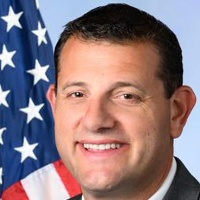
David Valadao
Representative
CA
David Valadao
Representative
CA
The SOAR Act of 2025 aims to significantly reform Medicare access to supplemental oxygen by removing it from the competitive bidding program and establishing new payment rates. The bill also mandates clearer documentation requirements for medical necessity using electronic templates and restores clinical judgment in claim audits. Finally, it establishes specific rights for oxygen beneficiaries and improves reimbursement for respiratory therapists.
The Affordable Housing Credit Improvement Act of 2025 updates state allocation formulas, reforms tenant eligibility and credit determination rules, and enhances assistance for Native American and rural housing projects.
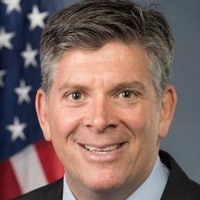
Darin LaHood
Representative
IL
Darin LaHood
Representative
IL
The Affordable Housing Credit Improvement Act of 2025 updates federal housing tax credit allocations to reflect current economic realities and boosts minimum state allotments. It reforms tenant eligibility rules to stabilize tenancy and enhance protections for vulnerable residents, including victims of abuse. The bill also provides disaster relief for property owners, increases incentives for housing the extremely low-income, and directs greater resources toward Native American and rural housing needs. Finally, it streamlines administrative processes and signals a future focus on data transparency and discouraging restrictive local zoning.
The Deliver for Veterans Act expands VA payment authority to cover adaptive vehicle shipping costs for eligible veterans and extends a limitation on certain pension payments.
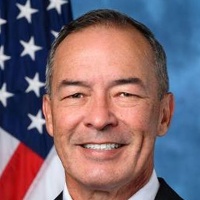
James (Jim) Moylan
Representative
GU
James (Jim) Moylan
Representative
GU
The Deliver for Veterans Act updates how the Department of Veterans Affairs supports eligible veterans by authorizing the VA to cover the full shipping costs for adaptive vehicles, in addition to the purchase price. This legislation also extends the expiration date for a specific limitation on certain veteran pension payments from late 2031 to March 2032.
This act establishes a new, increased tax credit and direct payment system for the production and use of renewable natural gas through 2035.
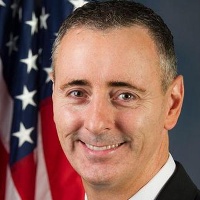
Brian Fitzpatrick
Representative
PA
Brian Fitzpatrick
Representative
PA
The Renewable Natural Gas Incentive Act of 2025 establishes a new, fixed tax credit of \$1.00 per gallon equivalent for the sale or use of qualifying renewable natural gas (RNG) as transportation fuel. This legislation updates the Internal Revenue Code to define RNG, set rules for blended fuels, and ensure producers register for the program. The direct payment option for businesses claiming this credit is set to expire after December 31, 2035.
This bill adjusts Medicare Advantage payment rates to compensate local areas that experienced significant, sudden increases in their hospital wage indexes due to reclassification, ensuring payment neutrality overall.

Claudia Tenney
Representative
NY
Claudia Tenney
Representative
NY
The Protecting Options for Seniors Act of 2025 addresses significant under-projection of Medicare Advantage (MA) local area growth caused by recent wage index reclassifications. This bill mandates a specific adjustment to MA payment rates starting in 2026 for areas experiencing rapid wage index increases exceeding 20 percent. While providing targeted financial boosts to these areas, the Act ensures the overall national benchmark average remains neutral. Furthermore, it requires increased transparency by mandating the separate reporting of Part A and Part B payments to area hospitals in annual public notices.
This bill drastically tightens and expands U.S. sanctions against Iran across its leadership, military, and economy while severely restricting the President's authority to lift these restrictions.
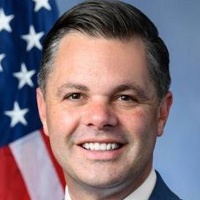
Zachary (Zach) Nunn
Representative
IA
Zachary (Zach) Nunn
Representative
IA
The Maximum Pressure Act dramatically tightens and expands U.S. sanctions against Iran across its military, missile, and economic sectors, codifying existing restrictions and severely limiting the President's authority to grant sanctions relief. It mandates immediate sanctions on top Iranian officials and increases penalties for international parties aiding Iran's weapons programs. Furthermore, the bill enhances oversight by requiring numerous detailed reports to Congress regarding Iran's terrorism financing, nuclear timeline, and economic influence, while also redirecting certain frozen Iranian funds to victims of state-sponsored terrorism.
This Act imposes sweeping, mandatory sanctions, tariffs, and investment prohibitions on the Russian Federation and its affiliates until Russia negotiates a lasting peace with Ukraine.
Brian Fitzpatrick
Representative
PA
Brian Fitzpatrick
Representative
PA
The Sanctioning Russia Act of 2025 imposes sweeping economic penalties on the Russian Federation in response to its aggression against Ukraine. This legislation mandates severe, immediate sanctions against key Russian officials, financial institutions, and energy sector entities, including asset freezes and trade prohibitions. Furthermore, the Act dramatically increases import duties on Russian goods and requires the President to review and reimpose these measures until Russia negotiates a lasting peace with Ukraine.
This Act establishes a competitive grant program to test incentives aimed at increasing the purchase of naturally nutrient-rich dairy products by households using SNAP benefits.

Jim Costa
Representative
CA
Jim Costa
Representative
CA
The Dairy Nutrition Incentive Program Act of 2025 establishes a new federal program to test methods for increasing the purchase of nutrient-rich dairy products by households using SNAP benefits. The Secretary of Agriculture will award competitive grants to eligible entities to implement incentive projects at the point of sale. These projects must prioritize direct incentives that can only be spent on buying more eligible dairy items, and all projects will undergo rigorous independent evaluation. The Act also mandates the transition of existing dairy incentive projects into this new framework without interruption.
The ABC Act mandates a comprehensive review and simplification of processes, forms, and communications across Medicare, Medicaid, CHIP, and Social Security to alleviate burdens on family caregivers.
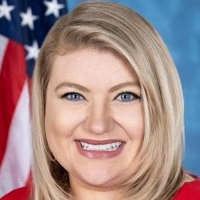
Katherine Cammack
Representative
FL
Katherine Cammack
Representative
FL
The ABC Act mandates a comprehensive review of Medicare, Medicaid, CHIP, and Social Security programs to significantly simplify application processes, forms, and communications for family caregivers. This effort requires federal agencies to streamline requirements, improve customer service, and enhance accessibility across their systems. The goal is to reduce the administrative burden on caregivers while ensuring clear and timely access to essential benefits. Agencies must report their findings and planned actions to Congress within two years of enactment.
The COMPLETE Care Act increases Medicare payments to primary care providers for integrating behavioral health services between 2027 and 2029 and provides technical assistance to support these practices.
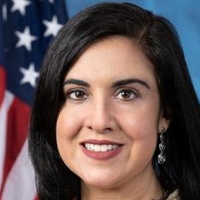
Nicole Malliotakis
Representative
NY
Nicole Malliotakis
Representative
NY
The COMPLETE Care Act aims to improve mental healthcare access by providing Medicare incentives for primary care providers to integrate behavioral health services into their practices between 2027 and 2029. This legislation offers increased Medicare payments for specific integrated services during those years, ensuring these bonuses do not trigger cuts elsewhere in the Medicare budget. Additionally, the bill mandates technical assistance to help primary care offices successfully adopt these new integrated care models.
This Act establishes a 20% federal tax credit for converting eligible commercial buildings into affordable housing units, subject to state allocation and specific income restrictions.

Mike Carey
Representative
OH
Mike Carey
Representative
OH
The Revitalizing Downtowns and Main Streets Act establishes a new 20% federal tax credit for converting eligible, older commercial buildings into affordable housing. This incentive aims to increase housing supply by requiring that at least 20% of the converted units remain rent-restricted for low-income residents for 30 years. State agencies will allocate these credits, which are subject to a national cap of $12 billion, based on approved plans prioritizing financially necessary projects.
This bill directs the Secretary of Transportation to develop and fund a comprehensive 10-year plan to modernize the aging infrastructure and facilities of the United States Merchant Marine Academy.
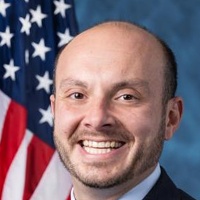
Andrew Garbarino
Representative
NY
Andrew Garbarino
Representative
NY
This bill directs the Secretary of Transportation to develop and implement a comprehensive 10-year Campus Modernization Plan for the United States Merchant Marine Academy. The plan must address critical infrastructure needs, including new training facilities, updated housing, and essential utility overhauls, to support modern maritime education and national security requirements. Congress authorizes up to \$1.02 billion from the Maritime Security Trust Fund between fiscal years 2026 and 2035 to execute this modernization effort.