Legislative Activity
Track Nicholas's sponsored bills, co-sponsored legislation, and voting record
The American Quantum Competitiveness Act directs the Secretary of Commerce to promote U.S. leadership in quantum technology by fostering secure, trusted supply chains and developing a national strategy for commercial growth.
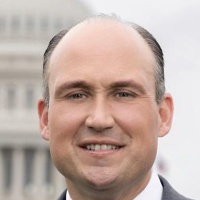
Nicholas Langworthy
Representative
NY
Nicholas Langworthy
Representative
NY
The American Quantum Competitiveness Act directs the Secretary of Commerce to promote U.S. leadership in quantum technology and secure the domestic supply chain for critical quantum components. The bill mandates the development of a national strategy to foster trusted partnerships and mitigate risks associated with foreign-sourced technology. Additionally, it requires periodic reporting to Congress on the state of the industry and recommendations for maintaining long-term economic competitiveness.
The FLOWS Act streamlines hydropower regulation by exempting routine maintenance and emergency repairs from FERC approval while establishing an expedited licensing process for small-scale, non-impoundment hydrokinetic energy projects.
Nicholas Langworthy
Representative
NY
Nicholas Langworthy
Representative
NY
The Fair Licensing for Operations of Water Structures (FLOWS) Act streamlines hydropower regulation by exempting routine maintenance and emergency repairs from unnecessary federal approval. Additionally, the bill establishes an expedited, simplified licensing process for small-scale, non-damming micro hydrokinetic energy projects. These measures aim to reduce regulatory burdens while maintaining essential safety and environmental oversight.
The Expedited Access to Biosimilars Act streamlines the FDA approval process for biosimilar products by reducing unnecessary clinical trial requirements and mandating written justification for any additional studies requested.
Nicholas Langworthy
Representative
NY
Nicholas Langworthy
Representative
NY
The Expedited Access to Biosimilars Act streamlines the FDA approval process for biosimilar products by reducing requirements for unnecessary clinical trials. The bill mandates that the FDA provide written justification if it determines additional clinical studies are required, ensuring a more efficient and transparent path to licensure.
This Act mandates updated threat analyses, strategy revisions, and performance metrics for enhancing security along the northern border.
Nicholas Langworthy
Representative
NY
Nicholas Langworthy
Representative
NY
The Northern Border Security Enhancement and Review Act mandates updated threat analyses of the northern border every two years, with the first due by September 2, 2026. Following each analysis, the Department of Homeland Security must update its border strategy or formally explain why an update is unnecessary. The bill also requires classified briefings for Congress and the development of performance measures for Air and Marine Operations along the northern border.
The BUSES Act establishes a national minimum 15-minute idling standard for buses, preempting stricter state and local rules, while also barring citizen lawsuits and bounty-based enforcement programs related to bus idling.
Nicholas Langworthy
Representative
NY
Nicholas Langworthy
Representative
NY
The BUSES Act establishes a national minimum idling standard of 15 minutes for over-the-road buses and school buses, preempting any stricter state or local rules. This legislation also bars private citizens from filing civil lawsuits over idling violations under the Clean Air Act and prohibits bounty-based enforcement programs targeting over-the-road bus idling.
This measure sets the rules for the House to consider multiple bills and a resolution focused on establishing fraud prevention measures, pausing federal payments, condemning government fraud, and considering a reconciliation bill.
Nicholas Langworthy
Representative
NY
Nicholas Langworthy
Representative
NY
This procedural action sets the stage for the House to consider multiple bills aimed at combating government fraud and improving program integrity. Key measures include establishing new fraud prevention functions within the Treasury and creating a permanent governmentwide Inspector General for Fraud, Accountability, and Recovery. The process also allows for debate on legislation to pause and segment federal payments and a resolution condemning fraud against the U.S. Government.
The CHECK Act of 2026 increases healthcare price transparency by mandating detailed data sharing between service providers and health plans, requiring clear explanations of benefits, and ensuring patients receive comprehensive, itemized medical bills.
Nicholas Langworthy
Representative
NY
Nicholas Langworthy
Representative
NY
The CHECK Act of 2026 increases healthcare transparency by mandating that administrative service providers, such as pharmacy benefit managers, share detailed pricing and claims data with health plans. It also requires health plans to provide clear, comprehensive explanations of benefits to patients and mandates that healthcare providers issue detailed, itemized bills before initiating any collection actions. These measures aim to eliminate hidden costs and hold providers accountable for billing accuracy.
This act revises federal building energy efficiency standards by prohibiting the denial of green building certifications based on fossil fuel use and repealing outdated regulations.
Nicholas Langworthy
Representative
NY
Nicholas Langworthy
Representative
NY
The Reliable Federal Infrastructure Act revises federal energy efficiency standards for government buildings. This bill ensures that the use of fossil fuels will not automatically disqualify a federal building from receiving a green building certification. It also repeals outdated energy efficiency regulations and sets a deadline for the Secretary of Energy to issue updated rules.
This resolution sets the expedited House procedures for considering four specific measures concerning Clean Air Act amendments and tax policies supporting working families.
Nicholas Langworthy
Representative
NY
Nicholas Langworthy
Representative
NY
This resolution sets the floor schedule for the House of Representatives to consider four specific measures. It establishes expedited procedures for debating and voting on three bills amending the Clean Air Act concerning air quality data, EPA review of legislation, and international emissions. Additionally, it provides a fast-track process for considering a resolution supporting tax policies for working families.
This bill formally elects Representatives Kiley and Fuller to specific standing committees of the House of Representatives.
Nicholas Langworthy
Representative
NY
Nicholas Langworthy
Representative
NY
This resolution officially appoints Representatives Kiley (CA) and Fuller to specific standing committees within the House of Representatives. Specifically, it assigns Representative Kiley to the Transportation and Infrastructure, Judiciary, and Education and Workforce Committees, while Representative Fuller joins the Transportation and Infrastructure and Small Business Committees.
The Pay TSA Act of 2026 establishes a dedicated trust fund to ensure consistent, protected funding for TSA personnel, operations, and security technology, even during government shutdowns.
Nicholas Langworthy
Representative
NY
Nicholas Langworthy
Representative
NY
The Pay TSA Act of 2026 establishes a dedicated Transportation Security Trust Fund to ensure that passenger security fees are used exclusively for aviation security, personnel support, and infrastructure modernization. By preventing these funds from being diverted for other government purposes, the bill guarantees a stable funding stream for the TSA. Additionally, the legislation ensures that critical security operations and personnel compensation continue uninterrupted during government shutdowns.
This resolution establishes the House consideration process for bills modernizing firearms laws, streamlining fiber optic cable authorization in marine sanctuaries, securing critical energy resources, and adjusting emergency declaration timelines.
Nicholas Langworthy
Representative
NY
Nicholas Langworthy
Representative
NY
This resolution establishes the expedited House consideration process for three separate bills addressing firearms modernization, undersea fiber optic cables in marine sanctuaries, and securing critical energy resources. It sets strict debate limits and waives most procedural objections for each measure. Additionally, the resolution alters the timeline for congressional review of specific national emergency declarations.
This Act establishes federal standards for using mass balance accounting to substantiate recycled content claims in product marketing, enforced by the FTC.
Nicholas Langworthy
Representative
NY
Nicholas Langworthy
Representative
NY
The Recycled Materials Attribution Act of 2026 establishes national standards for making recycled content claims in commerce. This bill recognizes mass balance accounting as an acceptable method for substantiating these claims, provided it adheres to a third-party certification system. The Federal Trade Commission (FTC) is tasked with updating its Green Guides to reflect these standards and will enforce prohibitions against misleading recycled content claims. Furthermore, the Act preempts state and local regulations concerning the enforcement of these federal standards.
This bill establishes federal preemption over state regulations for dietary supplements, preventing states from imposing requirements different from federal standards unless specifically exempted.
Nicholas Langworthy
Representative
NY
Nicholas Langworthy
Representative
NY
The Dietary Supplement Regulatory Uniformity Act establishes federal preemption over state regulations for dietary supplements, ensuring consistency with federal standards. This prevents states from enacting different or additional requirements than those set by the Federal Food, Drug, and Cosmetic Act. States may apply for exemptions if their requirements are more stringent or address a compelling local condition.
This act increases the maximum voluntary separation incentive payment for federal employees to up to six months of their prior pay.
Nicholas Langworthy
Representative
NY
Nicholas Langworthy
Representative
NY
This act establishes the Federal Workforce Early Separation Incentives Act, allowing federal agencies to offer voluntary separation incentive payments to employees. These payments can be up to six months of the employee's prior salary, as determined by the agency head.
This act nullifies New York State's jurisdiction over Seneca Nation reservations upon written agreement from the U.S. Attorney General and the Seneca Nation.
Nicholas Langworthy
Representative
NY
Nicholas Langworthy
Representative
NY
This act, the Seneca Nation Law Enforcement Efficiency Act, aims to restore full law enforcement jurisdiction to the Seneca Nation. It nullifies New York State's jurisdiction over Seneca Nation reservations, but this change only takes effect upon written agreement from both the U.S. Attorney General and the Seneca Nation.
This resolution sets the expedited House procedures for considering five separate bills concerning environmental review efficiency, hardrock mining, gray wolf delisting, bulk-power system reliability, electric generating unit retirement notice, and child trafficking enhancement.
Nicholas Langworthy
Representative
NY
Nicholas Langworthy
Representative
NY
This resolution establishes the rules for the House of Representatives to consider several distinct bills concerning environmental review efficiency, hardrock mining, gray wolf delisting, electric grid reliability, power plant retirements, and combating child trafficking. It waives most procedural objections and sets strict time limits for debate on each measure. The resolution streamlines the process, ensuring each bill moves quickly toward a final vote after limited discussion.
This act prohibits state and local governments from enacting regulations that restrict energy service based on the type or source of energy sold in interstate commerce.
Nicholas Langworthy
Representative
NY
Nicholas Langworthy
Representative
NY
The Energy Choice Act places federal restrictions on state and local governments, preventing them from enacting regulations that prohibit or limit energy service based on its type or source. This means local governments cannot ban or restrict access to energy services sold in interstate commerce. The legislation aims to ensure consistent access to various energy sources across jurisdictions.
This bill reauthorizes and increases the annual funding authorization for the West Valley Demonstration Project from 2027 through 2037.
Nicholas Langworthy
Representative
NY
Nicholas Langworthy
Representative
NY
This bill seeks to reauthorize the West Valley Demonstration Project by significantly increasing its annual funding authorization. It raises the yearly funding limit from $\$75$ million (for 2020-2026) to $\$150$ million. This increased authorization is set to cover the fiscal years 2027 through 2037.
This Act updates federal law to include area career and technical education schools alongside institutions of higher education when providing mental health and substance use disorder services.
Nicholas Langworthy
Representative
NY
Nicholas Langworthy
Representative
NY
The CTE Student Mental Health and Wellness Act updates federal law to expand mental health and substance use disorder services to include area career and technical education (CTE) schools alongside traditional institutions of higher education. This is achieved by replacing the term "institution of higher education" with the broader term "covered institution" throughout relevant sections of the Public Health Service Act. Essentially, the bill broadens the scope of federal support for student mental health programs to cover CTE students.