
Legislative Activity
Track Andy's sponsored bills, co-sponsored legislation, and voting record
This bill establishes a mandatory minimum annual funding level for the Consumer Financial Protection Bureau, based on a percentage of the Federal Reserve's operating expenses.

Elizabeth Warren
Senator
MA
Elizabeth Warren
Senator
MA
The Protecting American Consumers Act establishes a new, guaranteed minimum annual funding level for the Consumer Financial Protection Bureau (CFPB). This bill sets the compulsory funding floor at 12% of the Federal Reserve System's 2009 operating expenses, replacing the CFPB's previous funding structure.
This Act adds Parkinson's disease to the list of illnesses presumed to be proximately caused by employment in federal fire protection activities.
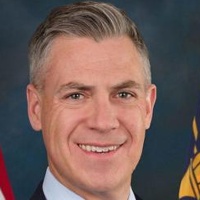
Jim Banks
Senator
IN
Jim Banks
Senator
IN
The Parkinson’s Protection for Firefighters Act adds Parkinson's disease to the list of illnesses presumed to be proximately caused by federal employment in fire protection activities. This legislative change ensures that federal firefighters diagnosed with Parkinson's disease receive appropriate recognition and benefits related to their service.
This resolution honors the life and legislative legacy of former Michigan Senator Donald W. Riegle, Jr., recognizing his decades of public service and key accomplishments.
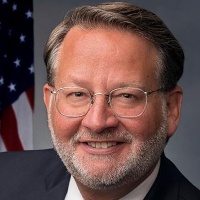
Gary Peters
Senator
MI
Gary Peters
Senator
MI
This resolution honors the life and extensive public service of the late Honorable Donald W. Riegle, Jr., former Senator for Michigan. It recognizes his decades in Congress, highlighting key legislative achievements such as co-sponsoring the Equal Credit Opportunity Act and leading significant banking reforms. The Senate expresses its profound sorrow and adjourns in his memory.
This resolution designates May 2026 as "Older Americans Month" to recognize the growing contributions and importance of older Americans to the nation.
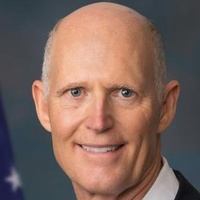
Rick Scott
Senator
FL
Rick Scott
Senator
FL
This resolution officially designates May 2026 as "Older Americans Month." It recognizes the significant growth, contributions, and ongoing value of older Americans to the nation. The designation encourages public recognition of their achievements and opportunities for them to share their wisdom with younger generations.
This bill increases the excise tax on stock buybacks from 1% to 25% for large oil and gas companies until the national average retail gasoline price drops below \$2.937 per gallon for five consecutive weeks.
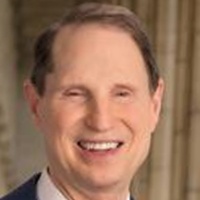
Ron Wyden
Senator
OR
Ron Wyden
Senator
OR
This Act significantly increases the excise tax on stock buybacks for large oil and gas companies from 1% to 25%. This higher tax applies specifically to corporations meeting a $1 billion average annual gross receipts threshold and primarily engaged in the oil or gas business. The 25% rate remains in effect until the national average weekly retail price of regular gasoline drops below a specified trigger point for five consecutive weeks.
This joint resolution nullifies the CMS rule implementing prior authorization for select services under the WISeR Model.
Ron Wyden
Senator
OR
Ron Wyden
Senator
OR
This joint resolution expresses Congressional disapproval of a new rule from the Centers for Medicare & Medicaid Services (CMS) that would have required prior authorization for specific services under the WISeR Model. By disapproving the rule, Congress ensures that this CMS requirement will not take effect.
This Act mandates regular cybersecurity vulnerability assessments of critical software and hardware at maritime facilities and requires facility owners to report on security risks and compliance.
Rick Scott
Senator
FL
Rick Scott
Senator
FL
The Maritime Cybersecurity Act mandates regular cybersecurity vulnerability assessments for software and hardware at covered maritime facilities. It requires facility owners to report on the use of technology from foreign entities of concern and certify compliance with cybersecurity standards. The Department of Homeland Security will use these assessments and reports to strengthen security against cyber threats in the marine transportation system.
This resolution honors the life, legacy, and public service of former California Senator John Seymour.

Alejandro Padilla
Senator
CA
Alejandro Padilla
Senator
CA
This resolution honors the life and legacy of the late former United States Senator John Seymour of California. It recognizes his extensive public service, highlighting his career in business, local government, and his tenure in the U.S. Senate. The Senate expresses its deep sorrow and directs that official copies of this resolution be delivered to his family.
The Jewish American Security Act aims to combat rising antisemitism through enhanced security grants for Jewish communities, new protections and educational requirements for Jewish students, and increased transparency from online platforms regarding hate speech.

Jacky Rosen
Senator
NV
Jacky Rosen
Senator
NV
The Jewish American Security Act addresses the rising threat of antisemitism across the nation. It mandates new protections for Jewish students against discrimination in educational settings and enhances security measures for Jewish communities through grant program modifications and threat assessments. Furthermore, the Act requires large online platforms to report on their content moderation practices regarding antisemitism and mandates government reports linking online activity to real-world violence.
This bill gradually raises the minimum salary threshold for executive, administrative, and professional employees to qualify for overtime pay exemptions and tightens the duties test for those exemptions.
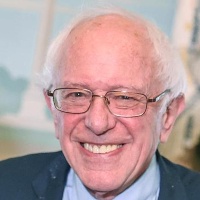
Bernard Sanders
Senator
VT
Bernard Sanders
Senator
VT
The Restoring Overtime Pay Act of 2026 significantly updates federal overtime exemptions for executive, administrative, and professional employees. It establishes a phased-in increase to the minimum salary threshold required for these "white-collar" roles to be exempt from overtime pay, eventually tying the threshold to national earnings data. Furthermore, the bill tightens the duties test by lowering the allowed percentage of time spent on non-exempt work from 40% to 20%.
This resolution affirms that access to mifepristone for medication abortion should be based on over 25 years of scientific evidence and should be equitable and transparent.
Elizabeth Warren
Senator
MA
Elizabeth Warren
Senator
MA
This Senate resolution expresses the sense that access to mifepristone should be based on over 25 years of proven safety and effectiveness supported by peer-reviewed science. It calls for equitable and transparent laws and policies governing access to this time-sensitive medication abortion care. The resolution affirms the FDA's authority to regulate the drug based on the best available evidence, free from political interference.
The IGNITE HBCU Excellence Act establishes competitive grants for Historically Black Colleges and Universities to fund long-term facility improvements, technology upgrades, and essential infrastructure maintenance.

Tim Scott
Senator
SC
Tim Scott
Senator
SC
The IGNITE HBCU Excellence Act establishes a competitive grant program managed by the Secretary of Education to fund long-term facility improvements at eligible Historically Black Colleges and Universities (HBCUs) and similar institutions. Grants prioritize entities with the greatest facility needs, the most limited fundraising capacity, and high Pell Grant enrollment. Funds can be used for construction, modernization, repairs, and technology infrastructure, while also requiring loan forgiveness for certain prior HBCU Capital Financing Program debts.
The Universal School Meals Program Act of 2026 establishes free breakfast and lunch for all students in participating schools, eliminates school meal debt, and updates federal poverty metrics used for various education and nutrition programs.
Bernard Sanders
Senator
VT
Bernard Sanders
Senator
VT
The Universal School Meals Program Act of 2026 establishes free breakfast and lunch for all students in participating schools, eliminating income-based eligibility and school meal debt. It also updates federal funding metrics by replacing free/reduced lunch data with new measures of economically disadvantaged students across various education and nutrition programs. This comprehensive bill aims to ensure universal access to nutrition while streamlining administrative requirements related to poverty tracking.
The American Cures Act authorizes and provides significant, inflation-adjusted funding for major federal health research programs through 2036, exempting these appropriations from automatic budget cuts.

Richard Durbin
Senator
IL
Richard Durbin
Senator
IL
The American Cures Act authorizes and provides substantial, dedicated funding for ten years (FY 2027-2036) to four major federal health research programs, including the NIH and CDC. These appropriations include automatic inflation adjustments starting in fiscal year 2037. Furthermore, the funding provided by this Act is explicitly exempt from automatic spending cuts (sequestration).
This resolution honors the life and legacy of former Idaho Senator, Governor, and Secretary of the Interior, Dirk Arthur Kempthorne.

Michael Crapo
Senator
ID
Michael Crapo
Senator
ID
This resolution honors the life and legacy of Dirk Arthur Kempthorne, recognizing his significant contributions as a former U.S. Senator, Governor of Idaho, and Secretary of the Interior. The Senate expresses its profound sorrow over his passing and offers condolences to his family. The resolution directs that this tribute be communicated to the House and his family, and the Senate will adjourn in his memory.
This Senate resolution declares the People's Republic of China as the foremost strategic competitor and outlines necessary U.S. policy actions to counter its security, economic, and technological threats globally.
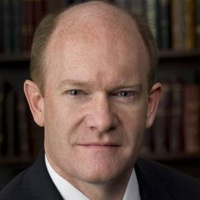
Christopher Coons
Senator
DE
Christopher Coons
Senator
DE
This Senate resolution declares the People's Republic of China (PRC) the foremost strategic competitor of the United States, citing threats across military, economic, and technological domains. It calls for countering these threats by making them a top foreign policy priority. The resolution urges strengthening deterrence, protecting U.S. economic interests against predatory practices, and reaffirming commitments to Indo-Pacific allies.
This resolution recognizes and celebrates the significant contributions of Asian Americans, Native Hawaiians, and Pacific Islanders to the history and culture of the United States.

Mazie Hirono
Senator
HI
Mazie Hirono
Senator
HI
This resolution officially recognizes Asian American, Native Hawaiian, and Pacific Islander Heritage Month in May 2026. It celebrates the significant and growing contributions of these communities to American history, culture, and government. The resolution also acknowledges important anniversaries and ongoing challenges faced by the community.
This joint resolution directs the President to remove U.S. Armed Forces from hostilities within or against Iran unless Congress has specifically authorized the action.
Christopher Coons
Senator
DE
Christopher Coons
Senator
DE
This joint resolution directs the President to remove U.S. Armed Forces from hostilities within or against Iran unless Congress has explicitly authorized the action. It asserts Congress's constitutional authority over declaring war and cites the War Powers Resolution regarding unauthorized military engagements. The bill permits necessary defensive actions, intelligence sharing, and support for attacked allies.
This act brings firearms under the regulatory authority of the Consumer Product Safety Commission by removing their exclusion from the definition of a "consumer product."
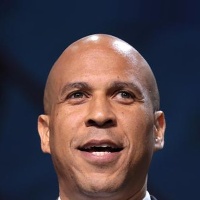
Cory Booker
Senator
NJ
Cory Booker
Senator
NJ
The Firearm Safety Act of 2026 amends the Consumer Product Safety Act to include firearms under the definition of a "consumer product." This action brings firearms under the regulatory authority of the Consumer Product Safety Commission.
This bill prohibits the use of U.S. foreign assistance funds for programs that violate human rights or undermine public health, while also nullifying specific related State Department rules.

Jeanne Shaheen
Senator
NH
Jeanne Shaheen
Senator
NH
This bill amends the Foreign Assistance Act to prohibit U.S. foreign assistance funds from supporting programs that violate human rights or undermine public health, including those involving coercive family planning. It specifically nullifies three recent Department of State rules related to foreign assistance. The Secretary of State is required to issue compliance guidance and report annually to Congress on any violations.