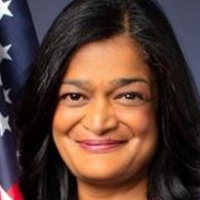
Legislative Activity
Track Pramila's sponsored bills, co-sponsored legislation, and voting record
This act mandates a public report from the FBI and State Department detailing responsibility for the death of Shireen Abu Akleh and any U.S. involvement.
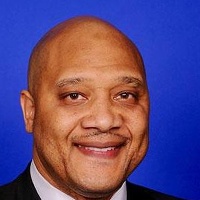
André Carson
Representative
IN
André Carson
Representative
IN
The Justice for Shireen Act mandates that the FBI Director and Secretary of State submit a comprehensive, unclassified report to Congress within 30 days regarding the death of Shireen Abu Akleh. This report must identify responsible parties and any U.S. materials implicated in the incident. The findings will also be made publicly available on the Department of State's website.
This act mandates a report by the Comptroller General investigating and detailing deaths resulting from the cessation of USAID activities.
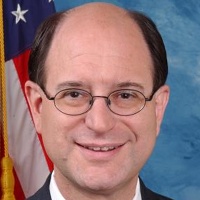
Brad Sherman
Representative
CA
Brad Sherman
Representative
CA
The Evan Anzoo Memorial Act mandates a comprehensive report by the Comptroller General investigating deaths resulting from the cessation of USAID activities. This report must estimate fatalities in 2025 and the subsequent five years, and specifically determine if ten named individuals died due to these actions. An interim update is required within 180 days, with the final report due one year after enactment.
This bill seeks to disapprove and nullify the Department of Veterans Affairs' final rule regarding "Reproductive Health Services."
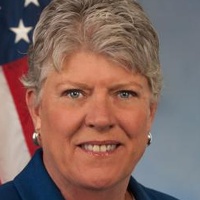
Julia Brownley
Representative
CA
Julia Brownley
Representative
CA
This resolution seeks to disapprove the Department of Veterans Affairs' final rule concerning "Reproductive Health Services" issued in September 2024. If enacted, this disapproval, made under the Congressional Review Act, would prevent the VA rule from taking legal effect.
This bill mandates the removal of U.S. Armed Forces from Venezuela unless explicitly authorized by Congress.
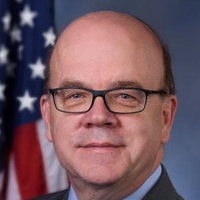
James McGovern
Representative
MA
James McGovern
Representative
MA
This bill mandates the President to withdraw all United States Armed Forces from Venezuela. This action is required unless Congress has formally declared war or passed specific legislation authorizing the use of military force in that country.
This resolution expresses the House's sense that protecting women's rights and leadership is critical for Haiti's stability while condemning current failures in centering their needs and calling for urgent human rights measures.
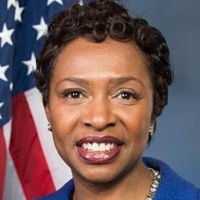
Yvette Clarke
Representative
NY
Yvette Clarke
Representative
NY
This resolution asserts that advancing the rights of women and girls in Haiti is crucial for the nation's stability and successful transition from crisis. It condemns the widespread gender-based violence and the exclusion of women from leadership roles in the transitional government. The bill calls for urgent measures to center women's needs, ensure their representation in government, and prioritize funding for survivor services and accountability for violence.
This resolution commemorates the Dalai Lama's 90th birthday as a "Day of Compassion" while reaffirming U.S. support for Tibetan human rights, religious freedom, and the Tibetan people's right to choose their own religious leaders without interference from China.
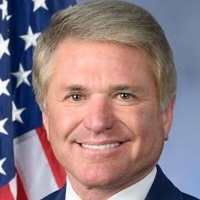
Michael McCaul
Representative
TX
Michael McCaul
Representative
TX
This resolution commemorates the 90th birthday of the Dalai Lama by designating July 6, 2025, as a "Day of Compassion." It strongly reaffirms U.S. support for the human rights, religious freedom, and cultural preservation of the Tibetan people. Furthermore, the resolution asserts that the selection of the next Dalai Lama is solely the right of the Tibetan Buddhist community, rejecting any interference by the People's Republic of China.
This bill impeaches Secretary of Homeland Security Kristi Lynn Arnold Noem for high crimes and misdemeanors, citing willful refusal to comply with oversight law, violating the Impoundment Control Act, directing unlawful ICE misconduct, and misusing federal funds for personal gain.
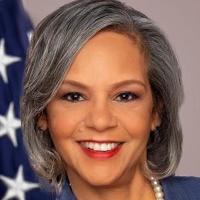
Robin Kelly
Representative
IL
Robin Kelly
Representative
IL
This resolution initiates impeachment proceedings against Secretary of Homeland Security Kristi Lynn Arnold Noem for high crimes and misdemeanors. The articles of impeachment charge her with willfully refusing to comply with Congressional oversight laws and violating the Impoundment Control Act by improperly withholding funds. Further articles allege she directed widespread misconduct by ICE agents that violated federal law and constitutional rights, and misused taxpayer funds for personal gain through improper contracting.
This resolution demands the President and Secretary of State provide the House with documents detailing the Administration's stance, policies, and related communications concerning U.S. interest in Greenland.
Dina Titus
Representative
NV
Dina Titus
Representative
NV
This resolution is an official inquiry demanding the President and Secretary of State provide the House of Representatives with specific documents regarding the Administration's stance on Greenland. It specifically seeks records concerning U.S. ownership plans, policy toward Danish sovereignty, and security assessments related to the U.S.-Denmark defense agreement. The bill also requires documentation of all related communications between U.S. officials and private citizens, Danish/Greenlandic authorities, or NATO allies.
This bill modifies deposits into the Crime Victims Fund by excluding certain False Claims Act recoveries and mandates an Inspector General audit of the Fund's sustainability.
Ann Wagner
Representative
MO
Ann Wagner
Representative
MO
This bill amends the Victims of Crime Act of 1984 to temporarily exclude certain False Claims Act recoveries from being deposited into the Crime Victims Fund through fiscal year 2029. It also mandates a comprehensive audit by the Department of Justice Inspector General on the Fund's sustainability and the impact of recent legislative changes. The resulting report will provide recommendations for improving the Fund's effectiveness and oversight.
This act prohibits the use of federal funds and official action for any invasion of NATO member territory.
William Keating
Representative
MA
William Keating
Representative
MA
The **No Funds for NATO Invasion Act** prohibits the use of any federal funds for an invasion of any territory belonging to a member nation of the North Atlantic Treaty Organization (NATO). Furthermore, the bill bars U.S. officials from taking any action to execute such an invasion.
This resolution declares elective declawing of cats inhumane and urges states to prohibit the practice except when medically necessary.
Jerrold Nadler
Representative
NY
Jerrold Nadler
Representative
NY
This resolution expresses strong opposition to elective declawing (onychectomy) of cats, deeming the procedure inhumane due to the lifelong pain and adverse behavioral effects it causes. It defines declawing broadly to include any procedure that disables a cat's claws and affirms that it should only be performed when medically necessary for the cat's health. The bill urges states to prohibit the practice on animal welfare and public health grounds, noting that humane alternatives exist.
This bill explicitly prohibits discrimination based on sex, sexual orientation, and gender identity in all places of public accommodation.
Bonnie Watson Coleman
Representative
NJ
Bonnie Watson Coleman
Representative
NJ
The Customer Non-Discrimination Act amends the Civil Rights Act of 1964 to explicitly prohibit discrimination in public accommodations based on sex, sexual orientation, and gender identity. This expansion covers a wide range of establishments, including retailers, service providers, and transportation services. The bill also provides clear definitions for these protected characteristics and clarifies that existing federal sex discrimination laws already cover these areas.
This act prohibits the use of federal funds to support any U.S. occupation, control, or administration of Venezuela, with specific exceptions for diplomatic property acquisition and existing humanitarian aid.
Raja Krishnamoorthi
Representative
IL
Raja Krishnamoorthi
Representative
IL
The No Occupation of Venezuela Act of 2026 (NOVA Act) strictly prohibits the use of U.S. Federal funds to support any form of U.S. military occupation, control, or administration over Venezuela. This ban includes funding for military deployments intended to assert sovereignty or control over Venezuelan territory or resources. The Act carves out narrow exceptions allowing for the acquisition or use of property for U.S. diplomatic or consular establishments, provided the Venezuelan government approves. Importantly, this legislation does not affect existing laws governing the provision of emergency humanitarian aid.
This act establishes a ten-year, \$50 billion program to fund grants for recruiting, hiring, and training public health nurses, particularly in underserved areas.
Melanie Stansbury
Representative
NM
Melanie Stansbury
Representative
NM
The Public Health Nursing Act establishes a ten-year, \$50 billion program to fund and expand the public health nursing workforce across the nation. This funding will provide grants to state, local, and territorial health departments to recruit, hire, and train registered nurses for essential public health services. Priority will be given to applicants serving medically underserved areas facing high rates of chronic disease, infant mortality, or maternal morbidity.
This resolution recognizes the 15th anniversary of the 2011 Tucson shooting, honoring the victims, survivors, and the ongoing advocacy of Gabby Giffords.
Debbie Wasserman Schultz
Representative
FL
Debbie Wasserman Schultz
Representative
FL
This resolution commemorates the 15th anniversary of the tragic January 8, 2011, Tucson shooting, honoring the six lives lost and the thirteen injured. It specifically commends the courage and ongoing advocacy of gun violence survivor and former Congresswoman Gabby Giffords. The resolution also recognizes the resilience of the community and reaffirms a commitment to ending political violence.
This act voids the recent renaming of the Kennedy Center and restricts the Board of Trustees from ever renaming the center again.
April McClain Delaney
Representative
MD
April McClain Delaney
Representative
MD
The Kennedy Center Protection Act voids the Board of Trustees' 2025 vote to rename the performing arts center. This legislation mandates the immediate removal of any signage reflecting the altered name and restores the official title to the "John F. Kennedy Center for the Performing Arts." Furthermore, it explicitly prohibits the Board from ever taking action to rename the center in the future.
This act prohibits naming or renaming any federal property after a currently serving President.
April McClain Delaney
Representative
MD
April McClain Delaney
Representative
MD
The Federal Property Integrity Act prohibits naming any federal building, land, or asset after a President currently serving in office. This new rule establishes a clear standard for naming federal property, ensuring such designations are not made while a President is actively serving.
This bill prohibits the use of federal funds for military force in or against Venezuela through 2026 unless Congress declares war or passes a specific authorizing law, with exceptions for defensive actions.
Seth Moulton
Representative
MA
Seth Moulton
Representative
MA
This bill prohibits the use of federal funds for military force in or against Venezuela through the end of 2026. This restriction remains in place unless Congress formally declares war or passes a new, specific authorization for military action that complies with the War Powers Resolution. An exception is made for necessary defensive actions, such as repelling a sudden attack.
This bill mandates the registration and public reporting of NIH-funded clinical trial results, establishes diversity goals for participant recruitment, and funds public education campaigns to address participation barriers.
Robin Kelly
Representative
IL
Robin Kelly
Representative
IL
The NIH Clinical Trial Integrity Act mandates the public registration and timely reporting of results for all NIH-funded clinical trials. It also establishes strict diversity goals for participant recruitment based on race, ethnicity, age, and sex, requiring detailed plans to achieve representation. Furthermore, the bill authorizes a study on eliminating participant cost barriers and funds a national campaign to boost public awareness of diverse trial participation.
This bill restricts immigration enforcement authority to federal officials, rescinding the ability of state and local entities to inquire about or apprehend individuals for immigration violations.
Mike Quigley
Representative
IL
Mike Quigley
Representative
IL
The PROTECT Immigration Act of 2025 aims to centralize immigration enforcement exclusively with federal officials. This legislation amends existing law to restrict state and local entities from inquiring about, apprehending, or detaining individuals based on immigration status, with only three specific statutory exceptions. Essentially, it removes the authority granted under Section 287(g) from non-federal personnel.