Legislative Activity
Track Glenn's sponsored bills, co-sponsored legislation, and voting record
This Act enables states to establish specialized Medicaid health homes for individuals with sickle cell disease, mandating dental and vision coverage for enrollees.
Neal Dunn
Representative
FL
Neal Dunn
Representative
FL
The Sickle Cell Disease Comprehensive Care Act enables states to establish specialized Medicaid health homes focused exclusively on individuals with sickle cell disease starting in 2026. If a state adopts this program, it must provide mandatory dental and vision coverage to enrolled patients, regardless of standard state Medicaid policies. States implementing these health homes will also be required to report on patient outcomes, access to care, and expenditures.
The SUN Act mandates timely and detailed congressional reporting and oversight for the domestic deployment of National Guard and reserve forces by the President, excluding deployments solely for natural disaster relief.
Sam Liccardo
Representative
CA
Sam Liccardo
Representative
CA
The Safeguarding the Use of the National Guard Act (SUN Act) enhances Congressional oversight of the President's domestic deployment of National Guard and reserve forces. It requires the President to submit a detailed report to Congress within 15 days outlining the legal justification, goals, costs, and impact of any domestic deployment. This reporting requirement is waived only when reserve forces are deployed specifically following a Presidential declaration under the Robert T. Stafford Act for a natural disaster.
This resolution terminates the President's declared crime emergency in the District of Columbia, asserting that the emergency is unwarranted and the legal basis for federal MPD control is flawed.
Jamie Raskin
Representative
MD
Jamie Raskin
Representative
MD
This resolution terminates the President's August 11, 2025, declaration of a crime emergency in the District of Columbia. Congress asserts that the President lacks the legal authority under the D.C. Home Rule Act to take operational control of the Metropolitan Police Department. Furthermore, the bill notes that local violent crime rates have been declining significantly.
This act mandates that the Department of Veterans Affairs must provide abortion care, counseling, and related services and medication to eligible veterans and certain other individuals.
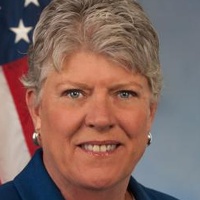
Julia Brownley
Representative
CA
Julia Brownley
Representative
CA
The Reproductive Freedom for Veterans Act mandates that the Department of Veterans Affairs (VA) must now provide abortion care, counseling, and related medication as part of the medical services offered to eligible veterans and certain other beneficiaries. This legislation formally amends existing VA health care provisions to include these reproductive health services.
This bill repeals specific prior health reconciliation provisions and expands eligibility for the Premium Tax Credit by removing the 400% income cap and adjusting the subsidy calculation formula.
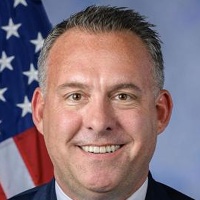
Adam Gray
Representative
CA
Adam Gray
Representative
CA
The Protecting Health Care and Lowering Costs Act of 2025 repeals specific prior reconciliation health provisions. This bill significantly expands eligibility for the Premium Tax Credit by eliminating the 400% Federal Poverty Level income cap. It also updates the subsidy calculation formula to ensure a smoother, linear adjustment of assistance across various income levels.
This act repeals the prohibition on Medicaid payments to certain healthcare entities and mandates retroactive payment for services already rendered under the repealed ban.
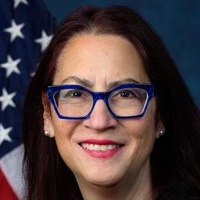
Laura Friedman
Representative
CA
Laura Friedman
Representative
CA
The Restoring Essential Healthcare Act repeals an outdated ban that prevented Medicaid from making payments to certain healthcare providers. This legislation ensures that these previously prohibited entities will now be reimbursed for medical services rendered between the enactment of the original ban and the passage of this Act. In short, it restores payment eligibility and retroactively covers past services.
This Act establishes the "Local Farmers Feeding Our Communities" program to strengthen local food security by funding agreements that support local producers and distribute fresh food to communities.
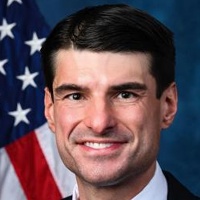
Robert Bresnahan
Representative
PA
Robert Bresnahan
Representative
PA
The Local Farmers Feeding our Communities Act establishes a new program to support local food producers and strengthen regional food security. This initiative requires the Secretary of Agriculture to fund agreements that ensure nutritious, locally sourced food is purchased and distributed widely, prioritizing small and beginning farmers. Funds must be used to buy minimally processed local products and provide technical assistance to producers. The program is backed by mandatory funding starting in Fiscal Year 2026.
The Facial Recognition Act of 2025 establishes federal regulations requiring court orders for most law enforcement use of facial recognition, mandates accuracy and bias testing, and requires public reporting to protect civil liberties.
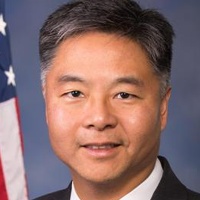
Ted Lieu
Representative
CA
Ted Lieu
Representative
CA
The Facial Recognition Act of 2025 establishes comprehensive federal regulations governing law enforcement's use of facial recognition technology, primarily requiring court orders for most searches and mandating the purging of certain outdated arrest records. The bill enforces strict limits to protect civil liberties, prohibits using the technology as the sole basis for probable cause, and institutes rigorous annual testing for accuracy and bias. Furthermore, it mandates public reporting on usage and allows citizens to sue for violations of these new privacy and accountability standards.
This bill mandates that all ICE and CBP enforcement staff wear body cameras that must remain on for their entire shift, establishes rules for footage retention and sharing, and sets penalties for non-compliance.
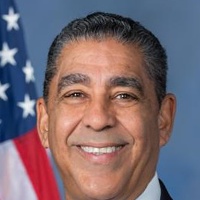
Adriano Espaillat
Representative
NY
Adriano Espaillat
Representative
NY
The Immigration Enforcement Staff Body Camera Accountability Act mandates that all ICE and CBP enforcement staff wear body cameras during official operations, requiring them to remain on for the entire shift. The bill directs agencies to quickly establish policies covering training and the use of AI in reviewing footage, while acknowledging technology limitations. Furthermore, recorded footage must be made available to all parties in related legal proceedings, and staff violating the "always-on" rule face disciplinary action.
This Act mandates the National Fire Academy Administrator to submit an annual report to Congress detailing course attendance, firefighter demographics, program statistics, and funding allocations.
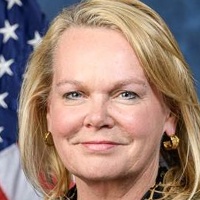
April McClain Delaney
Representative
MD
April McClain Delaney
Representative
MD
This bill, the National Fire Academy Reporting Act, mandates that the Administrator of the National Academy for Fire Prevention and Control submit an annual report to Congress. This report must detail the courses and programs offered, including attendance breakdowns by department type and firefighter status. It also requires specific reporting on course cancellations and the allocation of financial assistance and student aid.
The Hands Off Our Social Security Act prohibits unauthorized tampering with benefits, data mining, privatization, workforce reductions, and office closures without explicit Congressional approval.
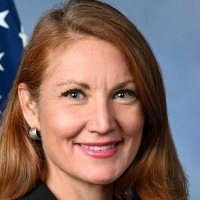
Melanie Stansbury
Representative
NM
Melanie Stansbury
Representative
NM
The Hands Off Our Social Security Act is designed to safeguard the functionality and integrity of the Social Security Administration (SSA). This bill prohibits the SSA from tampering with benefits, engaging in unauthorized data mining, or privatizing services. Furthermore, it prevents the agency from closing local offices or reducing staff without explicit approval from Congress. Ultimately, the Act ensures that essential services and communication channels remain accessible to beneficiaries.
The EACH Act of 2025 mandates that all federally funded health programs and facilities must cover and provide abortion services, while also prohibiting federal interference with private insurance coverage.
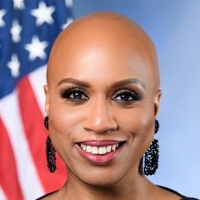
Ayanna Pressley
Representative
MA
Ayanna Pressley
Representative
MA
The EACH Act of 2025 aims to ensure equal access to abortion coverage by requiring all federally funded health programs and facilities to cover abortion services. This legislation prohibits federal interference with state or private insurance coverage of abortion and repeals Section 1303 of the Affordable Care Act. Ultimately, the bill seeks to eliminate financial and insurance barriers to abortion care, particularly for low-income individuals relying on programs like Medicaid.
This bill amends the Family and Medical Leave Act to explicitly qualify time taken for an employee's own organ donation surgery as a serious health condition.
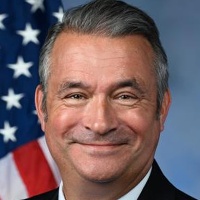
Don Bacon
Representative
NE
Don Bacon
Representative
NE
This bill amends the Family and Medical Leave Act (FMLA) to explicitly clarify that time taken off for an employee's own organ donation surgery qualifies as a serious health condition. This ensures both private and federal sector workers receive FMLA protection for recovery from organ donation. The legislation also specifies how federal employees must substitute existing paid leave when taking FMLA time for this purpose.
This Act prohibits insurance companies from discriminating against living organ donors when issuing life, disability, or long-term care policies and mandates the updating of educational materials regarding donation risks and insurance implications.
Don Bacon
Representative
NE
Don Bacon
Representative
NE
The Living Donor Protection Act of 2025 prohibits life, disability, and long-term care insurance companies from denying coverage or increasing premiums solely because an individual is a living organ donor. This legislation ensures that living donors are not financially penalized for their altruistic act. Additionally, the bill requires the Secretary of HHS to update educational materials to accurately reflect the insurance protections afforded to living donors.
This bill places a temporary moratorium on the closure or restriction of access to National Oceanic and Atmospheric Administration (NOAA) facilities until 180 days after a required justification report is submitted to Congress.
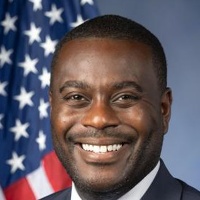
Gabe Amo
Representative
RI
Gabe Amo
Representative
RI
The Stop NOAA Closures Act places a temporary moratorium on the closure or restriction of access to any National Oceanic and Atmospheric Administration (NOAA) facilities. This freeze remains in effect until 180 days after key officials submit a required report to Congress detailing the criteria and process for any future facility changes. After the moratorium lifts, any major facility action will still require a 30-day advance notice and justification report to Congress, except in cases of immediate emergency threatening staff safety.
This Act establishes increased federal research, public education, and provider information dissemination regarding uterine fibroids, with a focus on addressing racial disparities and non-hysterectomy treatment options.
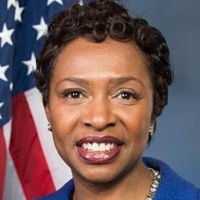
Yvette Clarke
Representative
NY
Yvette Clarke
Representative
NY
The Stephanie Tubbs Jones Uterine Fibroid Research and Education Act of 2025 aims to significantly increase federal research, public education, and provider awareness regarding uterine fibroids. The bill mandates expanded research coordination across federal agencies and authorizes funding to study the condition, which disproportionately affects minority women. It also requires the creation of public awareness campaigns detailing non-hysterectomy treatment options and mandates data collection on Medicaid/CHIP spending for fibroid treatments.
This resolution expresses support for designating July 10th as Journeyman Lineworkers Recognition Day to honor the dangerous and essential service provided by these workers, especially during crises.
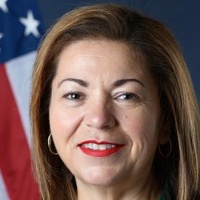
Linda Sánchez
Representative
CA
Linda Sánchez
Representative
CA
This resolution expresses support for designating July 10th as Journeyman Lineworkers Recognition Day. It honors the essential and dangerous work performed by these skilled professionals, especially their heroic efforts in restoring power after major disasters. The day serves to recognize their service and remember those who have lost their lives performing this vital work.
This resolution formally recognizes the significant and persistent wage gap disproportionately affecting Black women in the United States.
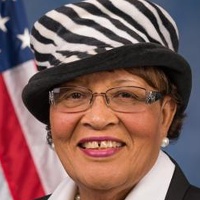
Alma Adams
Representative
NC
Alma Adams
Representative
NC
This resolution formally recognizes the significant and persistent wage disparity faced by Black women in the United States. It highlights that despite existing equal pay laws, Black women earn substantially less than their male counterparts, leading to massive lifetime earnings losses. Congress uses this measure to emphasize the urgent need to address both racial and gender discrimination to achieve true pay equity.
This Act mandates annual appropriations law training for certain federal employees in covered positions and establishes penalties for noncompliance.

Marcy Kaptur
Representative
OH
Marcy Kaptur
Representative
OH
The Appropriations Compliance and Training Act mandates annual training on federal appropriations law for certain high-level government employees in covered positions. This ensures employees handling federal funds understand key spending rules, such as the bona fide needs rule and relevant statutes. Agencies must track completion, and non-compliant employees face escalating penalties, including loss of spending authority and IT access.
The CONNECT for Health Act of 2025 permanently expands Medicare telehealth access by removing geographic restrictions, increasing practitioner flexibility, bolstering program integrity, and mandating supports for quality remote care delivery.
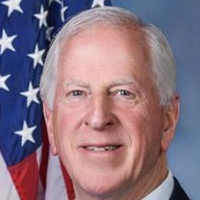
Mike Thompson
Representative
CA
Mike Thompson
Representative
CA
The CONNECT for Health Act of 2025 significantly expands and permanently secures access to Medicare telehealth services by eliminating outdated geographic restrictions and allowing more practitioners to offer remote care. The bill also strengthens program integrity by dedicating funds for telehealth oversight while clarifying rules around providing necessary technology to patients. Finally, it mandates the creation of tailored educational resources and public reporting to improve quality measurement and transparency in remote care delivery.