Legislative Activity
Track Josh's sponsored bills, co-sponsored legislation, and voting record
The Redistricting Reform Act of 2025 mandates the use of independent, nonpartisan commissions to draw fair congressional maps based on strict criteria, while establishing federal court oversight and administrative procedures to ensure compliance.
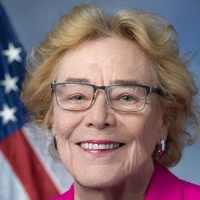
Zoe Lofgren
Representative
CA
Zoe Lofgren
Representative
CA
The Redistricting Reform Act of 2025 fundamentally overhauls congressional map-drawing by mandating the use of independent, non-partisan commissions in every state. This legislation establishes strict, prioritized criteria for map creation, explicitly banning partisan manipulation and requiring maps to prioritize community representation over political advantage. Furthermore, it sets firm deadlines for map enactment and establishes clear federal court procedures to intervene if states fail to adopt a lawful plan. Overall, the bill aims to ensure fairer congressional representation by removing map-drawing authority from state legislatures.
The Michelle Alyssa Go Act revises the Medicaid definition of an "institution for mental diseases" to allow federal funding for smaller mental health facilities (36 beds or less) that meet specific federal quality standards.

Dan Goldman
Representative
NY
Dan Goldman
Representative
NY
The Michelle Alyssa Go Act revises the definition of an "institution for mental diseases" under Medicaid to allow federal funding for smaller facilities. Specifically, it excludes mental health facilities with 36 beds or fewer from the IMD exclusion if they meet specific, evidence-based quality standards set by the Secretary of Health and Human Services. This change aims to increase access to care by making smaller, qualified treatment centers eligible for Medicaid reimbursement.
This resolution supports designating the week of September 21 through September 27, 2025, as "Gold Star Families Remembrance Week" to honor the families of fallen service members.
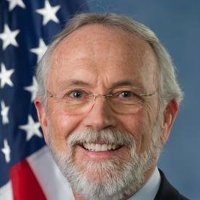
Dan Newhouse
Representative
WA
Dan Newhouse
Representative
WA
This resolution supports designating the week of September 21 through September 27, 2025, as "Gold Star Families Remembrance Week." The measure aims to officially recognize and honor the profound sacrifices made by families who have lost a loved one serving in the U.S. Armed Forces. It encourages communities nationwide to observe this week through acts of service and by celebrating the lives of these fallen service members.
The Preparing And Retaining All (PARA) Educators Act establishes a federal grant program to help states fund local efforts aimed at recruiting, retaining, and credentialing school paraprofessionals, prioritizing high-need and low-income districts.
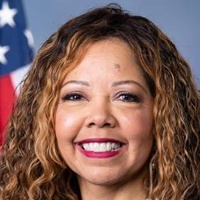
Lucy McBath
Representative
GA
Lucy McBath
Representative
GA
The Preparing And Retaining All (PARA) Educators Act establishes a new federal grant program to help states recruit and retain school paraprofessionals. Funds will be distributed to states based on their existing Title I allocations to support local districts. States must use these competitive subgrants to improve paraprofessional wages, offer professional development, and support credentialing, prioritizing high-need and rural schools. The law requires annual reporting on compensation improvements and retention efforts.
This resolution expresses support for designating the week of September 20 through September 27, 2025, as "National Estuaries Week" to recognize the vital economic and environmental importance of these coastal ecosystems.
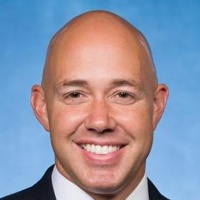
Brian Mast
Representative
FL
Brian Mast
Representative
FL
This resolution expresses strong support for designating the week of September 20 through September 27, 2025, as "National Estuaries Week." It highlights the critical economic and environmental value of estuaries, which support millions of jobs and provide vital natural protection for coastal communities. The bill aims to raise public awareness about the need to protect and restore these essential ecosystems.
This act amends the Fair Labor Standards Act to exclude direct sellers and qualified real estate agents from the definition of "employee."
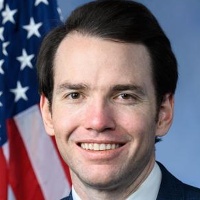
Kevin Kiley
Representative
CA
Kevin Kiley
Representative
CA
This act, the Direct Seller and Real Estate Agent Harmonization Act, amends the Fair Labor Standards Act to clarify employment status. Specifically, it excludes direct sellers and qualified real estate agents from the definition of "employee." This change aligns labor standards with existing IRS classifications for these professions.
This Act mandates that new passenger motor vehicles sold in the U.S. must include standard equipment capable of receiving AM broadcast radio signals.

Gus Bilirakis
Representative
FL
Gus Bilirakis
Representative
FL
The AM Radio for Every Vehicle Act of 2025 mandates that the Secretary of Transportation establish a rule requiring AM broadcast radio receivers to be installed as standard equipment in new passenger motor vehicles. This requirement aims to ensure public access to AM radio signals, which are often used for emergency alerts. The bill also directs a GAO study on the effectiveness of AM radio within the national emergency alert system compared to other technologies. Finally, the Act preempts state and local laws on this matter and includes a sunset provision eight years after enactment.
This bill amends the Social Security Act to provide Medicare coverage for FDA-approved multi-cancer early detection screening tests starting in 2028.
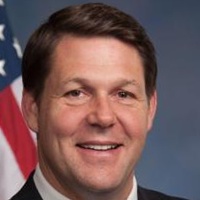
Jodey Arrington
Representative
TX
Jodey Arrington
Representative
TX
The Nancy Gardner Sewell Medicare Multi-Cancer Early Detection Screening Coverage Act amends the Social Security Act to provide Medicare Part B coverage for multi-cancer early detection screening tests starting January 1, 2028. This legislation establishes clear criteria for qualifying tests and outlines payment structures to ensure beneficiaries have access to these advanced diagnostic tools. Importantly, this coverage is designed to complement, rather than replace, existing Medicare-covered cancer screenings.
This bill mandates key federal agencies to coordinate housing research and submit a joint report to Congress outlining policy solutions for improving housing affordability and availability.
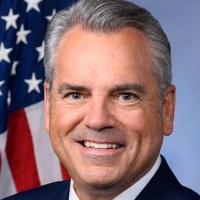
Mark Alford
Representative
MO
Mark Alford
Representative
MO
The Saving the American Dream Act mandates that key federal housing agencies collaborate to share research and data through a formal agreement. This legislation requires these agencies to jointly submit a comprehensive report to Congress outlining policy solutions for improving housing finance coordination, reducing mortgage costs, and addressing barriers to new home construction. The goal is to ensure federal housing policy is based on coordinated, evidence-based analysis.
This Act ensures the automatic continuation of pay for active duty military personnel and essential civilian support staff if Congress fails to pass a budget for fiscal year 2026.
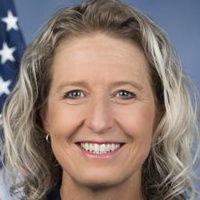
Jennifer Kiggans
Representative
VA
Jennifer Kiggans
Representative
VA
The Pay Our Troops Act of 2026 ensures that active duty military personnel and essential civilian support staff continue to receive their pay if Congress has not yet passed the full budget for fiscal year 2026. This act provides automatic continuing appropriations from the Treasury to prevent a lapse in military salaries due to budget delays. The funding automatically terminates once a new budget or continuing resolution is passed, or on January 1, 2027, whichever comes first.
The FAMILY Act establishes a national paid family and medical leave insurance program administered by the Social Security Administration, providing benefits for caregiving related to serious health conditions or victims of violence.
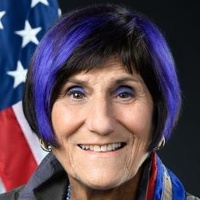
Rosa DeLauro
Representative
CT
Rosa DeLauro
Representative
CT
The FAMILY Act establishes a national Paid Family and Medical Leave Insurance program administered by a new office within the Social Security Administration. This program provides monthly benefits to eligible individuals who take time off for qualified caregiving reasons, including serious health conditions or victims of violence. The Act also sets forth detailed eligibility requirements, benefit calculation formulas, and job protection guarantees for employees utilizing the leave. Finally, it creates a funding mechanism to support existing state-level paid leave programs that meet federal standards.
This bill allows authorized VA healthcare professionals to prescribe and dispense controlled medications to veterans via telemedicine under specific conditions.
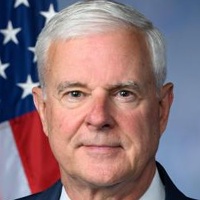
Steve Womack
Representative
AR
Steve Womack
Representative
AR
The Protecting Veteran Access to Telemedicine Services Act of 2025 allows authorized Department of Veterans Affairs (VA) healthcare professionals to prescribe and dispense controlled medications to eligible veterans via telemedicine. This provision removes the prior requirement for an initial in-person visit before prescribing these medications remotely. The VA is required to establish specific regulations detailing the process for this telemedicine delivery while ensuring compliance with existing federal drug control laws.
The AWARE Act directs the FTC to create educational guides for families on the safe and responsible use of AI chatbots by minors.
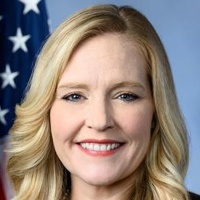
Erin Houchin
Representative
IN
Erin Houchin
Representative
IN
The AI Warnings And Resources for Education (AWARE) Act directs the Federal Trade Commission (FTC) to develop and release educational materials for families about the safe and responsible use of AI chatbots by minors. These resources must clearly explain safety risks, data privacy concerns, and offer best practices for parental supervision. The FTC is required to model these new guides after their existing "Youville" educational program.
This bill posthumously awards a Congressional Gold Medal to honor the groundbreaking civil rights achievements of Constance Baker Motley and authorizes the production and sale of bronze duplicates.
Rosa DeLauro
Representative
CT
Rosa DeLauro
Representative
CT
This bill, the Congressional Tribute to Constance Baker Motley Act of 2025, posthumously awards the Congressional Gold Medal to the pioneering civil rights attorney and federal judge, Constance Baker Motley. The legislation recognizes her historic achievements, including her role in *Brown v. Board of Education* and her service as the first African-American woman appointed as a federal judge. The Secretary of the Treasury is authorized to strike the medal, and provisions are made for selling bronze duplicates to cover production costs.
This Act mandates a comprehensive review of liquid cooling technologies for data centers to address growing energy demands driven by AI.
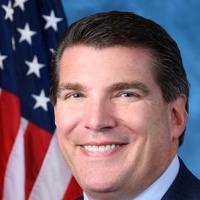
Jay Obernolte
Representative
CA
Jay Obernolte
Representative
CA
The Liquid Cooling for AI Act of 2025 addresses the rapidly growing energy demands of AI data centers by mandating a comprehensive review of liquid cooling technologies. This review, conducted by the GAO, will assess the costs, benefits, and market readiness of systems like direct-to-chip and immersion cooling. Ultimately, the bill seeks to establish federal standards and recommendations to promote the efficient and secure deployment of advanced cooling solutions necessary for future high-performance computing.
This bill mandates a study on the energy impact of growing AI and data centers, especially in rural areas, and explores solutions for infrastructure and alternative power sources.

Jim Costa
Representative
CA
Jim Costa
Representative
CA
The Unleashing Low-Cost Rural AI Act mandates a comprehensive study by the Secretary of Energy to assess the impact of growing AI and data center infrastructure on the nation's energy supply. This study must specifically examine energy needs, alternative power sources, and consumer costs, with a special focus on frontier and remote areas. The goal is to identify supply gaps and explore ways to expedite necessary infrastructure permitting.
The PART Act establishes new federal requirements for marking catalytic converters, creates a grant program for VIN stamping, tightens record-keeping for used parts dealers, and increases criminal penalties for theft and trafficking of catalytic converters.
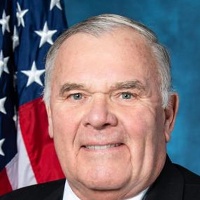
James Baird
Representative
IN
James Baird
Representative
IN
The PART Act aims to combat catalytic converter theft by requiring new vehicles to have traceable identifying markers on these parts. It establishes a federal grant program to help entities stamp identifying numbers onto existing converters. Furthermore, the bill imposes strict record-keeping requirements on businesses that buy used converters and creates new federal criminal penalties for stealing or trafficking stolen catalytic converters.
This bill extends enhanced financial assistance for purchasing health insurance through the Marketplace until the end of 2026.
Jennifer Kiggans
Representative
VA
Jennifer Kiggans
Representative
VA
The Bipartisan Premium Tax Credit Extension Act extends the enhanced financial assistance available for purchasing health insurance through the Marketplace. This legislation pushes the expiration date for these boosted premium tax credits, including those for higher earners, from the end of 2025 through the end of 2026. Essentially, it ensures continued, robust subsidies for Marketplace health coverage.
This Act establishes a comprehensive EPA program to research, guide, and assist in improving indoor air quality across all buildings, with a special focus on schools and childcare facilities.
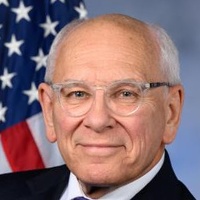
Paul Tonko
Representative
NY
Paul Tonko
Representative
NY
The Indoor Air Quality and Healthy Schools Act of 2025 establishes a comprehensive federal program, managed by the EPA Administrator, to assess, reduce, and prevent exposure to indoor air contaminants in all buildings, with a special focus on schools and childcare facilities. The Act mandates the creation of science-based guidelines for contaminants of concern and supports technical assistance, training, and voluntary "Healthy Building Certifications." It also directs the development of model building codes and a national assessment of air quality in educational settings to ensure healthier indoor environments nationwide.
The UNLOCK Act amends federal housing law to allow local governments to directly use certain federal funds for the construction of new low- and moderate-income housing.
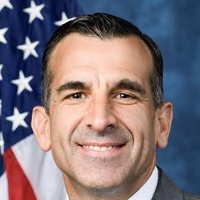
Sam Liccardo
Representative
CA
Sam Liccardo
Representative
CA
The UNLOCK Act amends the Housing and Community Development Act of 1974 to expand how federal housing funds can be used. This legislation now allows local entities to directly use these funds for the construction of new housing specifically for low- and moderate-income residents. The bill removes the requirement for these entities to partner with a nonprofit organization to carry out the new construction projects.