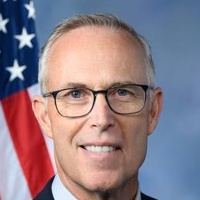
Legislative Activity
Track Jared's sponsored bills, co-sponsored legislation, and voting record
This act automatically reinstates Department of Energy financial assistance awards that were previously canceled based on the May 15, 2025 Secretarial Memorandum.
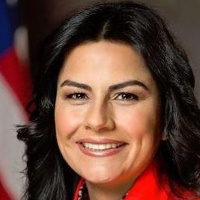
Nanette Barragán
Representative
CA
Nanette Barragán
Representative
CA
The Stop the Trump Electricity Price Hikes Act immediately reinstates financial assistance awards previously canceled by the Department of Energy (DOE). This action specifically reverses cancellations based on the May 15, 2025 Secretarial Memorandum. The bill ensures these awards continue as if they had never been terminated.
This Act waives the 10% early withdrawal penalty on Thrift Savings Plan distributions up to $30,000 during a federal government shutdown and provides special provisions for TSP hardship withdrawals and loan payments affected by the lapse in appropriations.
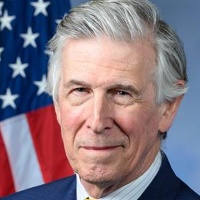
Donald Beyer
Representative
VA
Donald Beyer
Representative
VA
The Emergency Relief for Federal Workers Act of 2025 provides financial relief to federal employees affected by government shutdowns. This bill waives the 10% early withdrawal penalty on Thrift Savings Plan (TSP) distributions up to $30,000 during a qualifying shutdown. Additionally, it allows affected employees greater access to TSP hardship withdrawals and loans, and prevents missed TSP loan payments due to a shutdown from being treated as a taxable distribution.
This resolution supports designating September 30, 2025, as "Impact Aid Recognition Day" to celebrate the 75th anniversary of the federal program that financially supports school districts impacted by tax-exempt federal property and federally connected students.
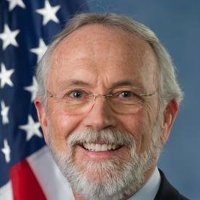
Dan Newhouse
Representative
WA
Dan Newhouse
Representative
WA
This resolution designates September 30, 2025, as "Impact Aid Recognition Day" to celebrate the 75th anniversary of the Impact Aid program. The program provides essential financial assistance to local school districts that educate students living on tax-exempt federal property. This recognition underscores Congress's continued commitment to ensuring quality education for federally connected students.
The Weatherization Resilience and Adaptation Program Act establishes a grant program to help low-income homeowners adapt their properties against climate-driven hazards using new resilience standards.
Kevin Mullin
Representative
CA
Kevin Mullin
Representative
CA
The Weatherization Resilience and Adaptation Program Act establishes a grant program to help low-income homeowners and eligible property owners adapt their homes against increasing climate-driven hazards like floods and extreme heat. This program requires the development of new resilience and adaptation standards in consultation with NIST. Funding is authorized to support these critical upgrades, ensuring vulnerable communities can better withstand the impacts of a changing climate.
This resolution formally reaffirms the foundational principle of the separation of church and state while opposing extreme right-wing Christian nationalism, citing key historical addresses and anniversaries.
Yassamin Ansari
Representative
AZ
Yassamin Ansari
Representative
AZ
This resolution formally reaffirms the foundational American principle of the separation of church and state, citing historical context and key figures. It strongly opposes the rise of extreme right-wing Christian nationalism as a threat to religious diversity and democracy. The measure also commemorates the 65th anniversary of President Kennedy's address on this separation and the 150th anniversary of a speech by President Grant. Ultimately, this is a statement recognizing core values rather than enacting new law.
The Wildfire Recovery Act ensures the federal government covers at least 75% of eligible fire management assistance costs and updates policies to allow pre-disaster reimbursement for pre-staged domestic assets.
Joe Neguse
Representative
CO
Joe Neguse
Representative
CO
The Wildfire Recovery Act ensures the federal government covers at least 75% of eligible fire management assistance costs for newly appropriated funds. It also mandates new rulemaking to establish clear standards for increasing federal disaster cost-sharing based on measurable financial impact. Finally, the bill updates FEMA policy to allow state, local, and Tribal governments to seek reimbursement for pre-staging their own equipment before a disaster is officially declared.
This bill prohibits active duty military and National Guard members operating under Title 32 from enforcing or assisting in the enforcement of immigration laws.
Andrea Salinas
Representative
OR
Andrea Salinas
Representative
OR
The National Guard Proper Use Act prohibits active duty military personnel and National Guard members serving under Title 32 orders from enforcing or assisting in the enforcement of immigration laws. This measure restricts the use of the Armed Forces for domestic immigration enforcement, aligning with existing statutes that govern such deployments.
This Act prohibits most immigration enforcement activities within 1,000 feet of protected emergency response locations unless exigent circumstances exist.
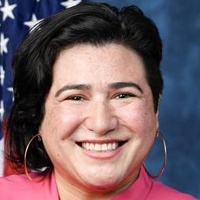
Emily Randall
Representative
WA
Emily Randall
Representative
WA
The Emergency Responder Protection Act establishes a 1,000-foot protected zone around emergency response locations, severely restricting immigration enforcement activities near disaster sites and aid centers. Immigration officers generally cannot conduct enforcement actions within this zone unless facing exigent circumstances, such as imminent risk of death or violence. The bill mandates strict operational rules, annual training for officers, and detailed reporting requirements to the DHS Inspector General and Congress regarding any enforcement actions taken near these protected areas. Violations of this rule may result in the termination of removal proceedings and the inadmissibility of evidence gathered.
This bill ensures that essential, furloughed federal employees receive unemployment compensation during government shutdowns in fiscal years 2026 or 2027, with the federal government reimbursing states for all paid benefits and administrative costs.
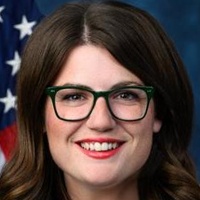
Sarah Elfreth
Representative
MD
Sarah Elfreth
Representative
MD
The Help Federal Employees During Shutdowns Act (Help FEDS Act) ensures that essential, non-paid federal employees working during a government shutdown can receive state unemployment compensation for the weeks they are actively working. This legislation mandates that the federal government fully reimburse states for all benefits paid out, plus administrative costs, directly from the Unemployment Trust Fund. Any employee who receives retroactive pay for a period they were also paid unemployment must repay those benefits to the state.
This bill reauthorizes the Every Kid Outdoors program, adjusting eligibility to focus on fifth graders and 10-11 year olds, while securing $25 million annually for program operation and targeted outreach.
Yassamin Ansari
Representative
AZ
Yassamin Ansari
Representative
AZ
The Every Kid Outdoors Reauthorization Act renews the popular program offering free access to national parks and federal recreation sites for eligible youth. This reauthorization specifically targets fifth graders or 10- and 11-year-old home-schooled learners. The bill authorizes $25 million annually to support the program, including funding for outreach and transportation assistance for underserved communities.
This resolution condemns using federal regulatory power or litigation to suppress lawful political speech critical of a party or the President, warning against authoritarianism.
Yassamin Ansari
Representative
AZ
Yassamin Ansari
Representative
AZ
This resolution strongly condemns attempts to use federal regulatory power or litigation to suppress lawful speech critical of a political party or the President. It reaffirms the fundamental importance of the First Amendment and warns that such actions resemble tactics used by authoritarian regimes. The bill urges government agencies to protect free expression and ensure accountability, not political censorship.
This bill establishes federal oversight, led by the FTC, requiring large entities to conduct impact assessments and report on high-stakes "covered algorithms" to ensure fairness and mitigate consumer harm.
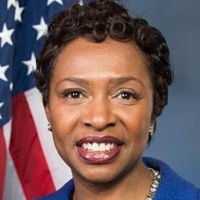
Yvette Clarke
Representative
NY
Yvette Clarke
Representative
NY
The Algorithmic Accountability Act of 2025 establishes federal oversight for large entities using complex automated systems, or "covered algorithms," that impact critical consumer decisions like employment or housing. It mandates that these entities conduct rigorous, ongoing impact assessments to test for bias, privacy risks, and performance issues. The Federal Trade Commission (FTC) is tasked with creating detailed regulations and enforcing compliance, including requiring covered entities to submit annual summary reports detailing their assessment findings. This Act ensures that significant algorithmic decisions are scrutinized for fairness and transparency without overriding stricter state or local regulations.
This joint resolution directs the President to remove U.S. Armed Forces from hostilities against certain designated groups and states unless Congress authorizes the use of force, while preserving the right to self-defense.
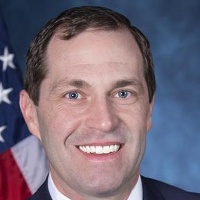
Jason Crow
Representative
CO
Jason Crow
Representative
CO
This joint resolution directs the President to remove U.S. Armed Forces from hostilities initiated after February 20, 2025, against designated terrorist groups or drug trafficking organizations without prior Congressional authorization. It asserts Congress's constitutional power to declare war and finds recent military strikes against vessels lacked proper justification. The bill allows for continued use of forces for self-defense or authorized counternarcotics support, but explicitly states drug trafficking alone does not constitute an armed attack.
This House resolution strongly condemns all forms of political violence and demands an end to dehumanizing rhetoric against political opponents.
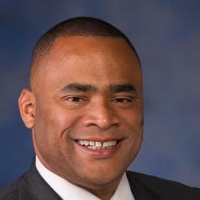
Marc Veasey
Representative
TX
Marc Veasey
Representative
TX
This House Resolution strongly condemns all forms of political violence and threats against elected officials and public figures, regardless of political affiliation. It affirms that disagreements must be resolved through peaceful and democratic means, not intimidation or force. The resolution urges law enforcement to prosecute those who commit or encourage such violence. Finally, it calls on all leaders to cease using dehumanizing rhetoric and promote civil discourse.
This bill establishes a mechanism to ensure the Federal Aviation Administration remains funded and operational during a lapse in appropriations.
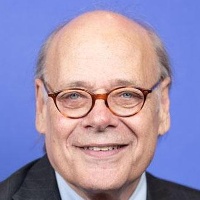
Steve Cohen
Representative
TN
Steve Cohen
Representative
TN
The Aviation Funding Stability Act of 2025 establishes an automatic mechanism to ensure the Federal Aviation Administration (FAA) remains funded during a lapse in appropriations. This allows the FAA to continue essential operations using existing funds from the Airport and Airway Trust Fund until a new budget or continuing resolution is enacted. Funding will cease after 30 days if no new appropriations are passed. This ensures continuity for core FAA programs, including operations, infrastructure, and grants.
The Redistricting Reform Act of 2025 mandates the use of independent, nonpartisan commissions to draw fair congressional maps based on strict criteria, while establishing federal court oversight and administrative procedures to ensure compliance.
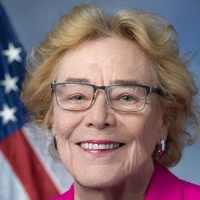
Zoe Lofgren
Representative
CA
Zoe Lofgren
Representative
CA
The Redistricting Reform Act of 2025 fundamentally overhauls congressional map-drawing by mandating the use of independent, non-partisan commissions in every state. This legislation establishes strict, prioritized criteria for map creation, explicitly banning partisan manipulation and requiring maps to prioritize community representation over political advantage. Furthermore, it sets firm deadlines for map enactment and establishes clear federal court procedures to intervene if states fail to adopt a lawful plan. Overall, the bill aims to ensure fairer congressional representation by removing map-drawing authority from state legislatures.
The Future Generations Protection Act mandates zero greenhouse gas emissions from new power plants, bans hydraulic fracturing starting in 2029, and restricts crude oil and natural gas exports while prioritizing a just transition away from fossil fuels.

Janice Schakowsky
Representative
IL
Janice Schakowsky
Representative
IL
The Future Generations Protection Act aims to combat climate change by immediately banning greenhouse gas emissions from new power plants and halting the approval of most new Liquefied Natural Gas (LNG) terminals. It also establishes a nationwide ban on hydraulic fracturing starting in 2029 and generally prohibits the export of domestically produced crude oil and natural gas, with limited exceptions for oil swaps and historical trade relationships. Furthermore, the Act mandates that the energy transition prioritize environmental justice, fairness for fossil fuel workers, and strong labor union involvement.
This bill mandates that federally funded higher education institutions update their harassment policies to explicitly cover technology-facilitated harassment and establishes a competitive grant program to fund anti-harassment initiatives.
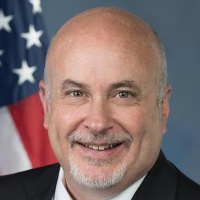
Mark Pocan
Representative
WI
Mark Pocan
Representative
WI
The Tyler Clementi Higher Education Anti-Harassment Act of 2025 mandates that colleges receiving federal funds update their policies to explicitly prohibit and detail procedures for addressing harassment based on protected characteristics, including technology-facilitated abuse. The bill also establishes a competitive grant program, funded up to $50 million annually, to support campus efforts in harassment prevention, training, and support services. This legislation adds new requirements without superseding existing civil rights protections.
This bill reauthorizes the Digital Coast Act through 2030, mandates free public availability of collected data, and expands required data to include underground infrastructure.
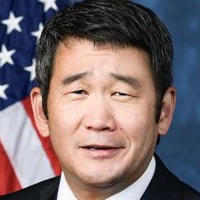
Dave Min
Representative
CA
Dave Min
Representative
CA
The Digital Coast Reauthorization Act of 2025 extends the authorization of the Digital Coast Act through 2030. This legislation mandates that all data provided under the Act must be fully and freely available once accessible. Furthermore, it explicitly expands the required data to include information on underground infrastructure and subsurface utilities.
This constitutional amendment grants Congress and the states the authority to regulate campaign contributions and expenditures, and to establish public financing systems for political campaigns.
Joe Neguse
Representative
CO
Joe Neguse
Representative
CO
This constitutional amendment seeks to grant Congress and the states the authority to regulate contributions and expenditures in political campaigns. It specifically allows for the establishment of public financing systems to offset the influence of private money in elections. The amendment ensures that any regulations enacted must not infringe upon the freedom of the press.