Legislative Activity
Track Andy's sponsored bills, co-sponsored legislation, and voting record
The "More Homes on the Market Act" increases the tax exclusion for profit from the sale of a primary residence, incentivizing homeowners to sell and increasing housing supply.
Jimmy Panetta
Representative
CA
Jimmy Panetta
Representative
CA
The "More Homes on the Market Act" increases the tax exclusion for profit from the sale of a primary residence, raising it to $500,000 for single filers and $1,000,000 for married couples filing jointly. These amounts will be adjusted for inflation starting in 2025. This change encourages homeowners to sell their properties, thereby increasing the availability of homes on the market.
Repeals the Impoundment Control Act of 1974, eliminating congressional oversight of presidential decisions to withhold funds.
Andrew Clyde
Representative
GA
Andrew Clyde
Representative
GA
This bill repeals the Impoundment Control Act of 1974, eliminating the requirements for the President to report to Congress on decisions to withhold or delay spending of appropriated funds. This removes the process by which Congress can approve or disapprove of these presidential actions.
The "Direct Medical Care Freedom Act of 2025" clarifies that direct medical care agreements are not health plans, allows fees paid for these agreements to be considered medical expenses, and requires these fees to be reported on W2 forms when provided through employment.

Chip Roy
Representative
TX
Chip Roy
Representative
TX
The Direct Medical Care Freedom Act of 2025 clarifies that direct medical care arrangements, where individuals pay a fixed periodic fee for medical services from practitioners, are not considered health plans under the Internal Revenue Code. It allows fees paid for these arrangements to be treated as medical expenses and mandates that fees for arrangements provided through employment are reported on employee W2 forms. This applies to primary care, specialty care, or other subsets of medical services, and will take effect for months beginning after December 31, 2024.
The "Freedom to Invest in Tomorrow's Workforce Act" expands the use of 529 savings accounts to cover expenses related to postsecondary credentialing programs, including tuition, fees, books, supplies, equipment, and testing fees.

Robert Wittman
Representative
VA
Robert Wittman
Representative
VA
The "Freedom to Invest in Tomorrow's Workforce Act" amends Section 529 savings accounts to include expenses related to postsecondary credentialing programs. This allows 529 funds to cover costs like tuition, fees, books, supplies, and testing fees for recognized programs and credentials, as defined by the bill. These changes would apply to distributions made after the bill is enacted.
The Senior Citizens Tax Elimination Act proposes to repeal federal income taxes on Social Security benefits while ensuring the Social Security and Railroad Retirement trust funds remain fully funded.

Thomas Massie
Representative
KY
Thomas Massie
Representative
KY
The Senior Citizens Tax Elimination Act proposes to repeal federal income taxes on Social Security benefits, ensuring these payments are no longer counted as gross income. To protect the financial stability of the Social Security and Railroad Retirement programs, the bill mandates automatic federal appropriations to offset any resulting revenue loss.
The Prison Rape Prevention Act of 2025 mandates that the Bureau of Prisons house and transport inmates based on biological sex and prohibits the use of federal funds for gender-related medical treatments.
Nancy Mace
Representative
SC
Nancy Mace
Representative
SC
The Prison Rape Prevention Act of 2025 mandates that the Bureau of Prisons house and transport inmates exclusively according to their biological sex. Additionally, the bill prohibits the Bureau from providing or funding gender-related medical treatments for prisoners.
The PATROL Act prevents the federal government from using the Rivers and Harbors Act of 1899 to legally challenge state-led efforts to construct physical border barriers.
Michael Cloud
Representative
TX
Michael Cloud
Representative
TX
The PATROL Act (Preventing Aliens Through Rivers or Land Act) prohibits the federal government from using the Rivers and Harbors Act of 1899 to legally challenge states that construct physical barriers along their international borders. This legislation aims to protect state-led border security initiatives, such as walls, fences, or floating buoys, from federal civil lawsuits.
The Fair Access to Banking Act prohibits large financial institutions and payment networks from denying services to law-abiding businesses based on subjective, non-financial, or political criteria.
Garland Barr
Representative
KY
Garland Barr
Representative
KY
The Fair Access to Banking Act prohibits large financial institutions and payment networks from denying services to law-abiding businesses based on subjective, politically motivated, or reputational criteria. The bill mandates that financial institutions use impartial, quantitative, risk-based standards to evaluate customers rather than category-based exclusions. To ensure compliance, the legislation establishes enforcement mechanisms through federal regulators and provides a legal pathway for businesses to sue for damages if they are unfairly denied access to financial services.
The Time of Service Act removes the expiration date for Post-9/11 GI Bill education benefits for all veterans who served on or after September 11, 2001.
W. Steube
Representative
FL
W. Steube
Representative
FL
The Time of Service Act removes the expiration date for Post-9/11 GI Bill education benefits for all veterans who served on or after September 11, 2001. By eliminating these time limitations, the bill ensures that all qualifying service members have lifelong access to their earned educational assistance.
This bill provides a 6.62 percent Medicare payment increase for physicians and practitioners from April through December 2025 to help stabilize medical practices.
Gregory Murphy
Representative
NC
Gregory Murphy
Representative
NC
The Medicare Patient Access and Practice Stabilization Act of 2025 aims to support healthcare providers by extending Medicare payment adjustments through the end of 2025. Specifically, the bill provides a 6.62 percent payment increase for services rendered between April 1, 2025, and December 31, 2025, to help practitioners adjust to evolving Medicare payment policies.
The BLOCK Act consolidates ten existing federal K-12 education formula grant programs into annual block grants for states beginning in fiscal year 2026.

Tim Burchett
Representative
TN
Tim Burchett
Representative
TN
The Building Lasting Opportunities for Community K12 (BLOCK) Act proposes transitioning federal K-12 education funding into a streamlined block grant system for states starting in fiscal year 2026. To achieve this, the bill repeals ten existing federal formula grant programs under the Elementary and Secondary Education Act. This shift aims to consolidate federal support and provide states with greater flexibility in managing their educational resources.
The SHUSH Act removes firearm silencers from the definition of "firearms" under federal law, eliminating the associated taxes, registration requirements, and state-level restrictions.
Michael Cloud
Representative
TX
Michael Cloud
Representative
TX
The SHUSH Act (Silencers Help Us Save Hearing Act) removes firearm silencers from the definition of "firearms" under federal law, effectively eliminating the associated registration requirements, transfer taxes, and federal restrictions. The bill also preempts state and local laws that impose specific regulations on silencers and removes enhanced criminal penalties related to their use.
This bill mandates the termination of the U.S. Department of Education effective December 31, 2026.
Thomas Massie
Representative
KY
Thomas Massie
Representative
KY
This bill proposes the complete termination of the United States Department of Education. If enacted, the agency would be officially dissolved on December 31, 2026.
This bill mandates federal investigations into potential violations of the partial-birth abortion ban, establishes mandatory reporting requirements for healthcare providers, and requires regular oversight reports to Congress.
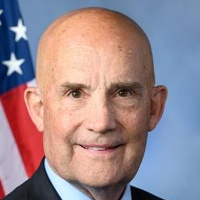
Keith Self
Representative
TX
Keith Self
Representative
TX
The Ensuring Justice for Victims of Partial-Birth Abortion Act mandates federal investigations into potential violations of the partial-birth abortion ban, including a specific inquiry into the 2022 discovery of fetal remains in Washington, D.C. The bill establishes new requirements for reporting suspected violations and mandates annual Department of Justice reporting on enforcement efforts. Additionally, it directs the Government Accountability Office to review and provide recommendations for strengthening the enforcement of existing federal abortion restrictions.
Recognizes and supports the contributions of Catholic schools in the U.S., celebrating their academic excellence, diverse communities, and the 51st annual National Catholic Schools Week.
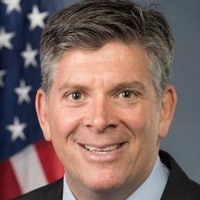
Darin LaHood
Representative
IL
Darin LaHood
Representative
IL
Recognizes and supports Catholic schools in the United States for their academic excellence, diverse communities, and values-based education. Designates January 26, 2025, to February 1, 2025, as National Catholic Schools Week, celebrating the commitment of Catholic schools, students, parents, and teachers to academic excellence and community service.
The 287(g) Program Protection Act mandates that the Department of Homeland Security enter into immigration enforcement agreements with state and local law enforcement agencies upon request and establishes new oversight, reporting, and funding requirements for the program.
Michael Cloud
Representative
TX
Michael Cloud
Representative
TX
The 287(g) Program Protection Act mandates that the Department of Homeland Security enter into immigration enforcement agreements with any state or local law enforcement agency that requests one. The bill streamlines the approval process, protects existing agreements from arbitrary termination, and requires the Secretary to provide annual performance reports and recruitment plans to expand the program. Additionally, it establishes uniform training standards and reallocates funding to support these state and local partnerships.
The Personalized Care Act of 2025 expands Health Savings Account (HSA) eligibility and contribution limits, allows HSA funds to cover insurance premiums and direct primary care fees, and reduces penalties for nonqualified distributions.
Chip Roy
Representative
TX
Chip Roy
Representative
TX
The Personalized Care Act of 2025 expands Health Savings Account (HSA) access by removing the high-deductible health plan requirement and significantly increasing annual contribution limits. The bill also broadens the scope of qualified medical expenses to include insurance premiums and direct primary care fees, while lowering the tax penalty for nonqualified distributions. These reforms aim to provide individuals with greater flexibility and control over their personal healthcare spending.
The Pregnancy Is Not an Illness Act of 2025 prohibits the FDA from classifying pregnancy as an illness when approving abortion drugs and voids existing approvals that relied on such a classification.
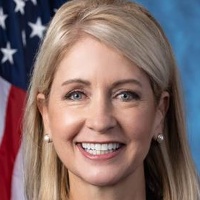
Mary Miller
Representative
IL
Mary Miller
Representative
IL
The Pregnancy Is Not an Illness Act of 2025 prohibits the FDA and the Department of Health and Human Services from classifying pregnancy as an illness when approving or regulating abortion drugs. The bill further mandates the immediate revocation of any existing abortion drug approvals that relied on such a classification, including the current approval of mifepristone.
This bill mandates that abortion providers offer patients the choice to bury or cremate fetal remains and establishes federal requirements and penalties for the proper disposal of such tissue.
Mary Miller
Representative
IL
Mary Miller
Representative
IL
The Dignity for Aborted Children Act mandates that abortion providers offer patients the choice to either personally arrange for the burial or cremation of fetal remains or release them to the provider for such disposal. The bill establishes strict federal requirements for the handling and documentation of these remains, imposing significant civil and criminal penalties on providers who fail to comply. Additionally, it requires providers to submit annual reports to the Department of Health and Human Services regarding abortion procedures and disposal methods.
The Parental Notification and Intervention Act of 2025 mandates parental notification and a 96-hour waiting period for abortions involving minors, while establishing a legal process for parents to seek court injunctions to block the procedure.
Mary Miller
Representative
IL
Mary Miller
Representative
IL
The Parental Notification and Intervention Act of 2025 mandates that parents or legal guardians be notified 96 hours prior to an abortion performed on an unemancipated minor, with limited exceptions for medical emergencies or documented abuse. The bill further empowers parents to seek federal court injunctions to block such procedures. It also preserves existing state laws that impose stricter notification or intervention requirements.