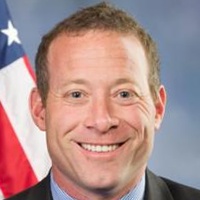
Legislative Activity
Track Josh's sponsored bills, co-sponsored legislation, and voting record
This bill mandates a comprehensive report detailing best practices for reducing mental health stigma and improving confidential support resources for law enforcement officers.
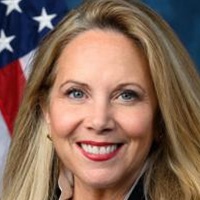
Laura Gillen
Representative
NY
Laura Gillen
Representative
NY
The Officer Wellness and Peer Support Act of 2026 mandates a comprehensive report from the Attorney General identifying best practices for improving mental health support within law enforcement. This report must focus on reducing stigma, encouraging resource utilization, and ensuring the confidentiality of services like peer counseling. The goal is to provide actionable recommendations for enhancing officer well-being across all levels of law enforcement.
This resolution supports designating May as Lyme and Tick-borne Disease Awareness Month to recognize the growing threat and call for stronger federal action to combat these illnesses.
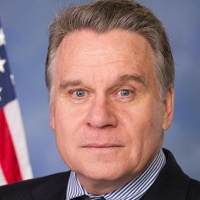
Christopher Smith
Representative
NJ
Christopher Smith
Representative
NJ
This resolution officially supports designating the month of May as "Lyme and Tick-borne Disease Awareness Month." It recognizes the significant and growing threat of Lyme disease across the United States. The bill commits to continuing efforts to raise public awareness and improve the federal response to these illnesses.
This bill affirms the strong U.S.-South Korea alliance, emphasizing its importance for security, economic growth, and shared values, while also recognizing the contributions of Korean Americans. It supports stronger ties and celebrates Korean culture.
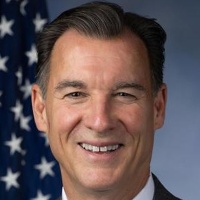
Thomas Suozzi
Representative
NY
Thomas Suozzi
Representative
NY
This bill reaffirms the strong alliance between the United States and the Republic of Korea, emphasizing its importance for security, economic growth, and shared values. It recognizes the deep economic ties, the contributions of Korean Americans, and continued commitment to the Mutual Defense Treaty. The bill also supports strengthening security, economic, and cultural bonds between the two nations, and celebrates Korean Culture-Kimchi Day.
This act establishes universal free breakfast and lunch programs in schools, eliminates meal debt, and updates poverty metrics across various federal education and nutrition programs.

Ilhan Omar
Representative
MN
Ilhan Omar
Representative
MN
The Universal School Meals Program Act of 2026 establishes permanent, universal free breakfast and lunch programs for all enrolled students at participating schools, eliminating income tests and meal debt collection. The bill significantly updates federal funding mechanisms by replacing reliance on free and reduced-price lunch data with new measures for identifying economically disadvantaged students across various education and social programs. Furthermore, it expands access to summer and afterschool meals while making technical amendments across several federal education and nutrition laws.
The GUARD Act expands federal grant funding for state, local, and tribal law enforcement to investigate elder financial fraud, "pig butchering" scams, and general financial fraud, while also mandating comprehensive federal reports on scam trends and enforcement efforts.
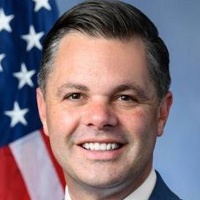
Zachary (Zach) Nunn
Representative
IA
Zachary (Zach) Nunn
Representative
IA
The GUARD Act expands the use of federal grant funds to help state, local, and tribal law enforcement investigate elder financial fraud, "pig butchering" scams, and general financial fraud. This legislation allows agencies to hire specialized staff, receive advanced training on emerging technologies, and acquire necessary investigative tools. Furthermore, the Act mandates comprehensive federal reports to Congress detailing the scope of these scams and the effectiveness of current enforcement efforts.
This bill directs key federal agencies to report annually on strategies to defend U.S. interests against financial crimes facilitated by adversarial actors using artificial intelligence.
Zachary (Zach) Nunn
Representative
IA
Zachary (Zach) Nunn
Representative
IA
The AI PLAN Act directs key federal agencies to develop a strategy to counter the national and economic security risks posed by adversarial actors using artificial intelligence for financial crimes. This involves submitting annual reports detailing current and needed resources, interagency coordination, and public-private partnerships. The bill also mandates follow-up recommendations for legislative action and best practices to mitigate these evolving AI-driven threats.
This Act establishes AI Innovation Labs within financial regulatory agencies to allow firms to test AI-driven financial products under modified regulations in exchange for alternative compliance strategies.
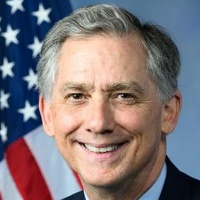
J. Hill
Representative
AR
J. Hill
Representative
AR
This Act establishes "AI Innovation Labs" within major financial regulatory agencies to allow regulated entities to test innovative financial products using artificial intelligence. Companies can apply for temporary waivers or modifications to existing regulations in exchange for following an approved alternative compliance strategy. The goal is to foster AI innovation in finance while ensuring consumer protection, market stability, and managing associated risks. Agencies must review applications within 120 days and submit annual reports on project outcomes.
This bill establishes the Combating Organized Retail Crime Act of 2025 to enhance federal prosecution tools against organized retail and supply chain crime and create a DHS-led coordination center to align law enforcement efforts.
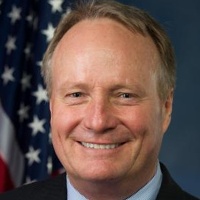
David Joyce
Representative
OH
David Joyce
Representative
OH
The Combating Organized Retail Crime Act of 2025 aims to combat sophisticated, cross-jurisdictional organized retail and supply chain theft. It achieves this by strengthening federal laws regarding money laundering and stolen property offenses, including lowering monetary thresholds for prosecution. Furthermore, the bill establishes a dedicated Center within the Department of Homeland Security to coordinate federal, state, and local enforcement efforts against these criminal organizations.
This bill reauthorizes the COPS ON THE BEAT grant program through fiscal year 2031 and establishes the Office of Community Oriented Policing Services as a distinct office within the Department of Justice.
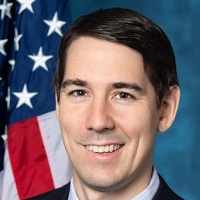
Josh Harder
Representative
CA
Josh Harder
Representative
CA
The COPS Reauthorization Act of 2026 updates and extends the funding for the COPS ON THE BEAT grant program through fiscal year 2031. It also formally establishes the Office of Community Oriented Policing Services (COPS Office) as a distinct entity within the Department of Justice, headed by a Presidentially-appointed Director. This legislation ensures continued support for community policing initiatives.
This Act authorizes the National Guard, upon a governor's request, to protect critical facilities and assets from unmanned aircraft threats.
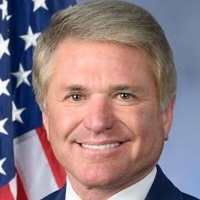
Michael McCaul
Representative
TX
Michael McCaul
Representative
TX
The Guard the Skies Act authorizes the National Guard to protect critical facilities and assets from threats posed by unmanned aircraft (drones). This authority is established at the request of a state's governor and requires consultation with the Secretary of Defense. The bill outlines specific conditions under which National Guard members can be activated and take action against threatening drones.
This resolution expresses support for designating July 15, 2026, as Glioblastoma Awareness Day to raise awareness and support research for this aggressive brain cancer.
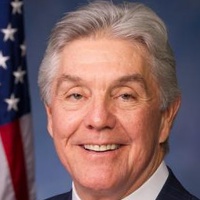
Roger Williams
Representative
TX
Roger Williams
Representative
TX
This resolution expresses support for designating July 15, 2026, as Glioblastoma Awareness Day. It aims to raise public awareness about glioblastoma, the most aggressive malignant brain tumor, and honor those affected by the disease. The bill encourages greater investment in research and collaboration to develop improved treatments and outcomes for patients.
This bill prohibits the use of "Buy Now, Pay Later" loans for the purchase of specified semiautomatic assault weapons, imposing significant penalties for violations.
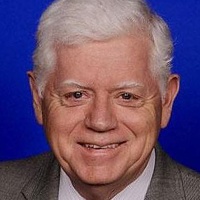
John Larson
Representative
CT
John Larson
Representative
CT
This bill, the Assault Weapon Financing Accountability Act, prohibits the use of "Buy Now, Pay Later" loans for the purchase of semiautomatic assault weapons. It makes it illegal for lenders to issue these loans and for gun dealers to knowingly accept them for these specific firearm sales. Violations carry a significant civil penalty of $100,000 per offense.
This act repeals Executive Order 14399 and cancels related contracts and funding.
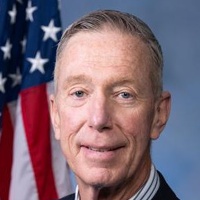
Stephen Lynch
Representative
MA
Stephen Lynch
Representative
MA
The Vote by Mail Protection Act of 2026 officially establishes its name and immediately repeals Executive Order 14399. This action cancels any existing contracts made under that order and prohibits the use of agency funds to support its related activities.
This bill expands the Committee on Foreign Investment in the United States (CFIUS) authority to review and presume national security risks from real estate transactions involving foreign adversaries near sensitive sites and on agricultural land.
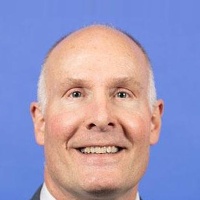
John Moolenaar
Representative
MI
John Moolenaar
Representative
MI
This Act strengthens national security by expanding the Committee on Foreign Investment in the United States (CFIUS) review of real estate transactions involving foreign adversaries. It specifically targets purchases of farmland and property near sensitive national security sites. The legislation introduces a presumption that such "elevated risk" transactions pose unresolvable risks, placing a high burden on CFIUS to prove otherwise. Furthermore, it mandates consideration of U.S. food security during transaction reviews and ensures state laws restricting foreign adversary land ownership remain in effect.
This resolution designates the week of May 4 through May 8, 2026, as Teacher Appreciation Week while recognizing the critical role and priorities of the nation's public school teachers.
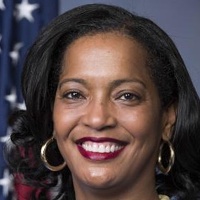
Jahana Hayes
Representative
CT
Jahana Hayes
Representative
CT
This resolution officially designates the week of May 4 through May 8, 2026, as Teacher Appreciation Week. It recognizes the vital role of public school teachers and highlights their key priorities, including support for existing federal protections and funding. Furthermore, the bill encourages leaders to engage directly with teachers to ensure their expertise informs education policy.
This resolution expresses support for designating May 2026 as National Brain Tumor Awareness Month to increase public awareness and support research for brain tumors.
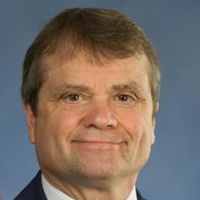
Mike Quigley
Representative
IL
Mike Quigley
Representative
IL
This resolution expresses support for designating May 2026 as National Brain Tumor Awareness Month. The measure aims to increase public awareness regarding the significant impact of brain tumors and the urgent need for advances in research and treatment. It honors those affected by brain tumors and supports efforts to improve outcomes for patients.
This bill nullifies three specific Department of State rules regarding foreign assistance, effectively voiding their implementation and preventing enforcement of similar future policies.
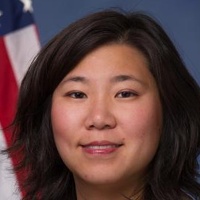
Grace Meng
Representative
NY
Grace Meng
Representative
NY
This Act nullifies three specific Department of State rules concerning foreign assistance, effectively treating them as if they never existed. It prohibits any federal agency from implementing or enforcing these rules, or any substantially similar future policies. The legislation aims to prevent the enforcement of rules related to "Protecting Life," "Discriminatory Equity Ideology," and "Gender Ideology" in foreign aid.
This resolution expresses support for designating April as Sikh History Month to recognize Sikh history, culture, and contributions while promoting public education and awareness.
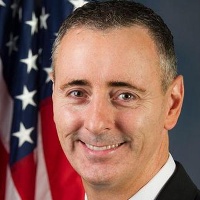
Brian Fitzpatrick
Representative
PA
Brian Fitzpatrick
Representative
PA
This resolution expresses support for designating April as Sikh History Month. The designation aims to recognize the rich history, culture, and significant contributions of Sikh Americans. It encourages public education to promote awareness, combat stereotypes, and foster respect for religious diversity.
This bill requires institutions applying for federal research and development awards to certify they do not operate a branch campus in specified foreign countries.
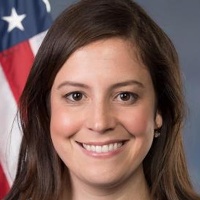
Elise Stefanik
Representative
NY
Elise Stefanik
Representative
NY
This bill amends existing law to require institutions of higher education to certify they do not operate certain branch campuses in specified foreign countries when applying for federal research and development awards. This certification requirement is intended to enhance research security. The bill specifically lists several countries, including China and Russia, for which this restriction applies.
This bill bans certain institutions of higher education from receiving federal research and development awards for five years if they accept foreign funding for specified national security-related research tasks.
Elise Stefanik
Representative
NY
Elise Stefanik
Representative
NY
This bill amends the National Defense Authorization Act to prohibit certain institutions of higher education from receiving federal research and development awards for five years. This ban is triggered if the institution receives funding from a specified foreign government or its entities to conduct research related to national security or military applications. The legislation specifically targets sensitive areas like artificial intelligence, biotechnology, and quantum information science.