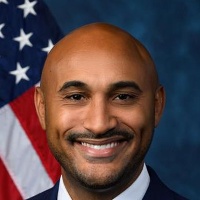
Legislative Activity
Track Shomari's sponsored bills, co-sponsored legislation, and voting record
This bill establishes a competitive grant program to fund training, recruitment, and retention efforts aimed at addressing critical workforce shortages in the public transportation industry.

Frederica Wilson
Representative
FL
Frederica Wilson
Representative
FL
The Transit Workforce Development Act establishes a competitive grant program through the Department of Transportation to address critical workforce shortages in public transit maintenance. This funding supports training, recruitment, and retention efforts for essential transit workers like mechanics and technicians. The bill also expands existing funding flexibility, allowing transit agencies to use more federal bus and facility funds specifically for broader workforce development training.
The Tech to Save Moms Act establishes grant programs and mandates studies to leverage technology, telehealth, and collaborative learning models to reduce maternal mortality and severe maternal morbidity, especially among minority groups.
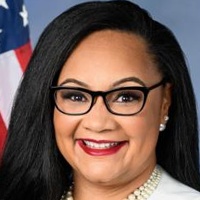
Nikema Williams
Representative
GA
Nikema Williams
Representative
GA
The Tech to Save Moms Act establishes grant programs to improve maternal health outcomes by leveraging technology for better identification, monitoring, and response to pregnancy-related risks. It directs the Secretary of HHS to fund projects using remote monitoring, telehealth, and digital tools to reduce maternal mortality and severe morbidity, with a focus on underserved populations. The legislation also mandates studies and reports on integrating technology into maternity care and improving telehealth models for Medicaid recipients.
This bill mandates comprehensive safety upgrades for civilian and military aviation, focusing on collision avoidance technology, air traffic control training, and enhanced airspace transparency, particularly around high-traffic airports.
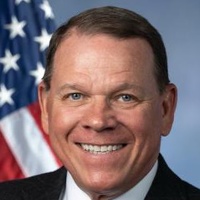
Sam Graves
Representative
MO
Sam Graves
Representative
MO
The Airspace Location and Enhanced Risk Transparency Act of 2026 mandates significant safety upgrades across both civilian and military aviation to prevent midair collisions. It requires the FAA to implement advanced collision avoidance systems and new air traffic controller training, while also compelling the Department of Defense to equip most military helicopters with transponders for increased visibility. The bill establishes new transparency measures, including public tracking of safety rule implementation and enhanced reporting on near-miss incidents, particularly around major airports like Reagan National.
This bill officially renames the USPS facility at 890 East 152nd Street in Cleveland, Ohio, as the Technical Sergeant Alma Gladys Minter Post Office Building.

Shontel Brown
Representative
OH
Shontel Brown
Representative
OH
This bill officially renames the United States Postal Service facility located at 890 East 152nd Street in Cleveland, Ohio. The building will now be known as the Technical Sergeant Alma Gladys Minter Post Office Building.
This bill establishes the HBCU Research Capacity Act to coordinate a government-wide strategy, create a federal grant clearinghouse, and mandate agency reviews to increase research funding and infrastructure at Historically Black Colleges and Universities.

J. Hill
Representative
AR
J. Hill
Representative
AR
The HBCU Research Capacity Act aims to significantly increase federal research funding and infrastructure at Historically Black Colleges and Universities (HBCUs). It mandates the creation of a centralized Federal Clearinghouse to connect HBCUs with grant opportunities and best practices. The bill also requires federal agencies to develop strategies and report annually on concrete actions taken to boost HBCU participation in research and development.
The Next Gen Road Safety Act authorizes federal grant funding for law enforcement to acquire technology and equipment designed to prevent and de-escalate high-speed vehicular pursuits.
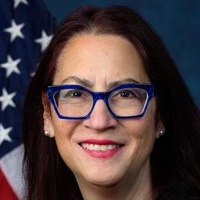
Laura Friedman
Representative
CA
Laura Friedman
Representative
CA
The Next Gen Road Safety Act authorizes federal grant funding for law enforcement agencies to acquire advanced technology and equipment. These resources are specifically intended to help police prevent and safely de-escalate high-speed vehicular pursuits, improving overall public safety.
This bill expands the CFTC's authority to collaborate with international regulators and federal agencies by broadening the definition of foreign futures authorities and establishing new frameworks for resource-sharing and personnel details.

Tracey Mann
Representative
KS
Tracey Mann
Representative
KS
The CFTC International Operational Improvements Act of 2026 updates the Commodity Exchange Act to broaden the definition of foreign futures authorities and enhance information-sharing capabilities. The bill also authorizes the CFTC to engage in resource-sharing and personnel exchanges with both U.S. federal agencies and foreign governmental entities. These measures aim to strengthen international regulatory cooperation and operational efficiency within the derivatives markets.
This resolution honors the essential contributions of social workers to the health, well-being, and social justice of American communities in recognition of Social Work Month and World Social Work Day 2026.
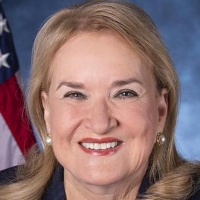
Sylvia Garcia
Representative
TX
Sylvia Garcia
Representative
TX
This resolution recognizes the essential contributions of the nation’s 728,000 social workers in promoting health, social justice, and well-being across American communities. It formally supports the goals and ideals of Social Work Month and World Social Work Day on March 17, 2026, while highlighting the urgent need for continued investment in the profession.
The Maternal Vaccination Act establishes a federal awareness and equity campaign to increase vaccination rates among pregnant and postpartum individuals and their children.
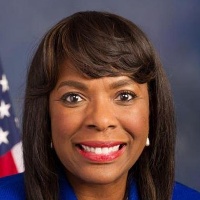
Terri Sewell
Representative
AL
Terri Sewell
Representative
AL
The Maternal Vaccination Act establishes a dedicated awareness and equity campaign to increase vaccination rates among pregnant and postpartum individuals. By providing targeted funding and expanding immunization program grants, the bill ensures that healthcare providers are better equipped to support maternal health, with a specific focus on reaching underserved and minority communities.
The Save Struggling Hospitals Act codifies a Medicare wage index adjustment to provide financial support for low-wage hospitals while ensuring budget neutrality and protecting existing index levels.

David Kustoff
Representative
TN
David Kustoff
Representative
TN
The Save Struggling Hospitals Act codifies the Medicare low-wage index hospital policy to provide financial support to facilities in lower-wage areas. By increasing the area wage index for hospitals in the bottom 25th percentile, the bill aims to stabilize funding while ensuring budget neutrality. Crucially, these adjustments are protected by safeguards that prevent significant wage index decreases for other hospitals.
This bill officially renames the U.S. Postal Service facility at 819 West Washington Boulevard in Los Angeles, California, as the "Jerry T. Hodges, Jr. Post Office Building."

Sydney Kamlager-Dove
Representative
CA
Sydney Kamlager-Dove
Representative
CA
This bill officially renames the United States Postal Service facility located at 819 West Washington Boulevard in Los Angeles, California. The building will henceforth be known as the "Jerry T. Hodges, Jr. Post Office Building."
The Protection and Advocacy for Student Success Act establishes a federal grant program to empower state advocacy systems to protect the educational rights and safety of students with disabilities.
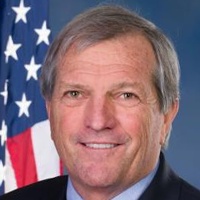
Mark DeSaulnier
Representative
CA
Mark DeSaulnier
Representative
CA
The Protection and Advocacy for Student Success Act establishes a national grant program to empower state protection and advocacy systems to defend the educational rights of students with disabilities. These grants support efforts to monitor school conditions, eliminate harmful practices like seclusion and restraint, and pursue legal remedies to ensure students receive the services they are entitled to under federal law.
The Perinatal Workforce Act establishes grant programs and national initiatives to grow, diversify, and train a culturally competent maternal health workforce to improve health equity and patient outcomes.
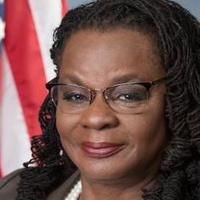
Gwen Moore
Representative
WI
Gwen Moore
Representative
WI
The Perinatal Workforce Act aims to improve maternal health outcomes by expanding and diversifying the perinatal health workforce. The bill establishes grant programs to support training for midwives, nurses, and other perinatal health workers, with a focus on recruiting individuals from underserved and minority communities. Additionally, it mandates national campaigns, federal coordination, and research to promote culturally congruent care and address systemic barriers to maternal health access.
The Data to Save Moms Act directs federal funding and research toward improving maternal health data collection, supporting maternal mortality review committees, and addressing disparities in maternal health outcomes for minority and underserved populations.
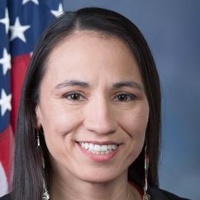
Sharice Davids
Representative
KS
Sharice Davids
Representative
KS
The Data to Save Moms Act aims to improve maternal health outcomes and eliminate disparities by enhancing data collection, research, and public awareness. The bill provides funding for Maternal Mortality Review Committees, supports community-based organizations addressing social determinants of health, and mandates training for providers on implicit bias and culturally congruent care. Additionally, it authorizes comprehensive studies and grant programs focused on high-risk populations, including racial and ethnic minority groups and American Indian and Alaska Native communities.
The Kira Johnson Act establishes grant programs and research initiatives to advance maternal health equity, reduce bias and discrimination in maternity care, and improve health outcomes for high-risk demographic groups.
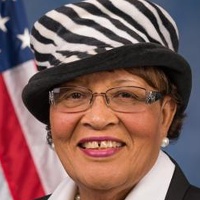
Alma Adams
Representative
NC
Alma Adams
Representative
NC
The Kira Johnson Act aims to eliminate maternal health disparities by funding community-based organizations that provide evidence-based support to high-risk populations. The legislation also establishes grant programs to implement anti-bias training for maternity care providers and creates compliance programs to address racism and discrimination in clinical settings. Through these initiatives, the bill seeks to ensure respectful, culturally congruent care and improve health outcomes for pregnant and postpartum individuals.
The Made in America Jobs Act of 2026 expands federal economic development grants to incentivize domestic manufacturing growth and the relocation of jobs from abroad to the United States.

Jeff Hurd
Representative
CO
Jeff Hurd
Representative
CO
The Made in America Jobs Act of 2026 amends the Public Works and Economic Development Act to prioritize domestic job growth. It expands federal grant eligibility to support projects that relocate overseas employment back to the United States and strengthen the domestic manufacturing sector.
The Muhammad Ali American Boxing Revival Act of 2026 establishes unified boxing organizations and mandates enhanced safety, medical, anti-doping, and fair-contract standards to improve the well-being and professional opportunities of boxers.

Brian Jack
Representative
GA
Brian Jack
Representative
GA
The Muhammad Ali American Boxing Revival Act of 2026 aims to modernize professional boxing by establishing "Unified Boxing Organizations" (UBOs) to provide boxers with improved safety standards, comprehensive medical support, and fair contract protections. The bill also mandates nationwide health and safety requirements, enforces stricter anti-doping protocols, and introduces measures to eliminate conflicts of interest within the sport. By standardizing regulations and championship titles, this legislation seeks to enhance boxer welfare and ensure greater accountability across the industry.
This bill eliminates interest on existing federal student loans, sets new federal loans to 0% interest starting in 2026, and establishes a Trust Fund to support zero-interest loans and supplemental Pell Grants.

Joe Courtney
Representative
CT
Joe Courtney
Representative
CT
The Student Loan Interest Elimination Act aims to significantly reduce student debt burdens by automatically stopping interest accrual on existing federal loans starting in 2026 and setting interest rates for new federal loans to 0%. The bill also establishes a dedicated Trust Fund, funded by loan repayments, to support zero-interest loans and provide supplemental Pell Grants to eligible students. Furthermore, it allows certain borrowers to refinance non-federal loans into interest-free federal consolidation loans, while granting the Secretary of Education expedited authority to implement these sweeping changes.
The Supporting VA Families Act provides Department of Veterans Affairs employees with four additional weeks of unpaid parental leave following the birth, adoption, or foster placement of a child.
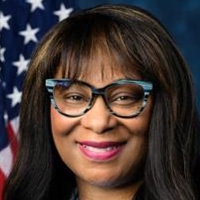
Janelle Bynum
Representative
OR
Janelle Bynum
Representative
OR
The Supporting VA Families Act establishes a supplemental parental leave program for Department of Veterans Affairs employees. This legislation provides eligible staff with four additional administrative weeks of unpaid leave following the birth, adoption, or foster care placement of a child. This benefit is designed to supplement, rather than replace, existing family and medical leave entitlements.
This bill extends WIC eligibility and enhanced food benefits for postpartum and breastfeeding mothers from one year to 24 months.
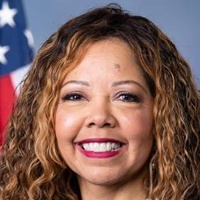
Lucy McBath
Representative
GA
Lucy McBath
Representative
GA
The Extending WIC for New Moms Act increases the duration of WIC eligibility for postpartum mothers from six months to 24 months. It also extends the period for receiving enhanced breastfeeding food packages to 24 months. Additionally, the bill mandates a comprehensive report to Congress evaluating the impact of these extensions on maternal and infant health outcomes.