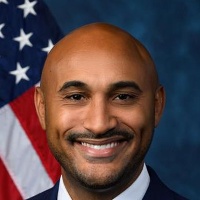
Legislative Activity
Track Shomari's sponsored bills, co-sponsored legislation, and voting record
This bill establishes the "Protecting Americas Herds Act" to create a competitive grant program supporting cooperative extension services in preparing for and responding to New World screwworm outbreaks.
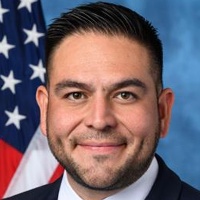
Gabriel (Gabe) Vasquez
Representative
NM
Gabriel (Gabe) Vasquez
Representative
NM
The "Protecting Americas Herds Act" establishes a competitive grant program administered by the Secretary of Agriculture. This program is designed to help cooperative extension services prepare for and respond to New World screwworm outbreaks. Funds will support training, livestock inspections, producer education, and technical assistance to prevent and manage infestations. Priority will be given to areas facing a heightened risk of introduction or spread.
This act establishes allowed evidence-based interventions and prohibits punitive measures for student absences to combat chronic absenteeism in K-12 education.
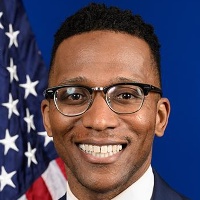
Christian Menefee
Representative
TX
Christian Menefee
Representative
TX
The All in For Attendance Act addresses the widespread problem of chronic student absenteeism by expanding federal support for proven, non-punitive interventions. The bill allows schools to use federal funds for strategies like data tracking, family engagement, and targeted support programs. Crucially, it also prohibits local educational agencies from imposing suspensions, fines, or academic penalties on students solely due to their absences.
This resolution expresses support for designating June 2026 as Black Music Month to celebrate the profound and enduring cultural contributions of Black American music.
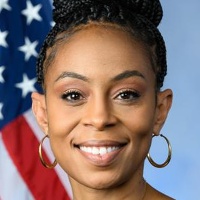
Shontel Brown
Representative
OH
Shontel Brown
Representative
OH
This resolution expresses support for designating June 2026 as "Black Music Month" to celebrate the profound and enduring contributions of Black American music to the nation's culture. It recognizes Black music's shaping influence across virtually every genre and its central role in the struggle for Black freedom. The resolution calls on the nation to observe the month by elevating Black artistry, promoting diversity, and honoring this deep-rooted musical legacy.
This bill directs the Assistant Secretary of Commerce to study and report to Congress on the technologies, economics, and performance of various broadband internet access services.
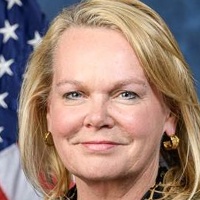
April McClain Delaney
Representative
MD
April McClain Delaney
Representative
MD
This bill, the Broadband Deployment and Economic Impact Study Act of 2026, directs the Assistant Secretary of Commerce for Communications and Information to conduct a comprehensive study on current broadband internet access technologies. The resulting report to Congress must analyze the workforce needs, economics, performance metrics, and consumer costs associated with technologies like fiber, wireless, and satellite. The goal is to provide Congress with detailed information on the landscape of broadband deployment.
This bill mandates that states operating the school lunch program must also participate in the Summer EBT program starting in 2027.
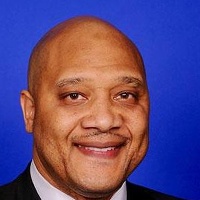
André Carson
Representative
IN
André Carson
Representative
IN
This bill amends the Richard B. Russell National School Lunch Act to mandate state participation in the Summer Electronic Benefits Transfer (EBT) program starting in the summer of 2027. While participation is voluntary through 2026, all states operating the school lunch program must implement Summer EBT thereafter. The legislation also updates administrative deadlines for program management and coverage for Indian Tribal organizations.
This proposed constitutional amendment establishes a federal right to vote for all eligible citizens and mandates that states adhere to federal election standards, including same-day registration and voting.
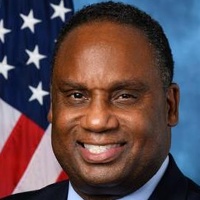
Jonathan Jackson
Representative
IL
Jonathan Jackson
Representative
IL
This proposed constitutional amendment establishes a fundamental federal right to vote for all eligible U.S. citizens. It prohibits denying or restricting this right and mandates that states administer elections according to federal standards, including requiring same-day registration and voting. Congress is authorized to pass legislation to enforce these provisions.
This act repeals the federal tax credit for contributions to scholarship organizations and eliminates the income exclusion for certain scholarship amounts received from those organizations.
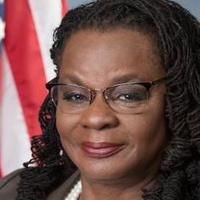
Gwen Moore
Representative
WI
Gwen Moore
Representative
WI
The Keep Public Funds in Public Schools Act of 2026 aims to redirect funding by eliminating federal tax incentives for private school scholarships. Specifically, it repeals the tax credit for contributions to scholarship-granting organizations and removes the income exclusion for certain scholarship amounts received. These changes are set to take effect starting in 2027.
This bill establishes six mandatory fee-free days annually for entry to federal recreational lands and waters to encourage public service and national pride.
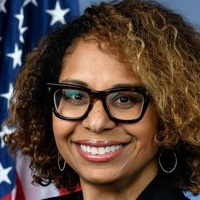
Sydney Kamlager-Dove
Representative
CA
Sydney Kamlager-Dove
Representative
CA
This bill, the "Encouraging Public Service in Our National Parks and Public Land Act," amends existing law to mandate six specific fee-free days annually for entry to federal recreational lands and waters. These free admission days are set to coincide with significant holidays like Martin Luther King Jr. Day and Veterans Day. The goal is to promote national pride and encourage public volunteerism by increasing access to these public lands.
This resolution expresses support for designating a week to promote shared responsibility and awareness for safely sharing the road with large trucks and buses.
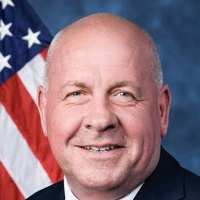
David Taylor
Representative
OH
David Taylor
Representative
OH
This resolution expresses support for designating a week as "Our Roads, Our Safety Week" to promote safer interactions between all road users and large commercial vehicles. It recognizes the essential role of trucks and buses in the economy while emphasizing that road safety is a shared responsibility. The bill encourages continued education and outreach to reduce preventable crashes involving commercial motor vehicles.
This bill establishes a National Science Foundation demonstration program to improve mentorship skills and practices for STEM faculty and researchers, while also expanding reporting requirements for scientific misconduct.
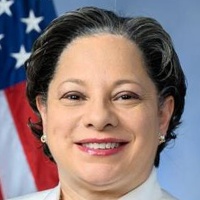
Jennifer McClellan
Representative
VA
Jennifer McClellan
Representative
VA
The Improving Mentorship in STEM Higher Education Act authorizes the National Science Foundation to establish a demonstration program providing competitive grants to improve mentorship skills and practices for STEM faculty and researchers. Special consideration for these grants will be given to minority-serving and emerging research institutions. The bill also expands National Science Foundation reporting requirements to include processes for addressing harassment and scientific misconduct.
This bill ensures that Critical Access Hospitals will not lose their designation solely due to changes in road or transportation infrastructure that affect their distance requirements.
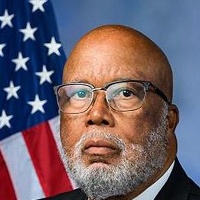
Bennie Thompson
Representative
MS
Bennie Thompson
Representative
MS
The Critical Access Hospital RIP Act of 2026 aims to protect critical access hospital (CAH) status for facilities that might otherwise lose it due to new or improved roadways. Specifically, it ensures that a CAH retains its designation if it only fails the distance requirement because of a transportation infrastructure improvement completed after the hospital was initially designated. This prevents necessary roadwork from inadvertently jeopardizing essential rural healthcare access.
This act establishes a pilot grant program to fund the renovation and development of vital community gathering places, known as "third spaces," especially in underserved areas.
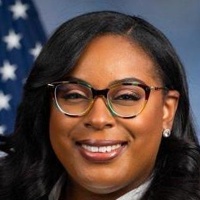
LaMonica McIver
Representative
NJ
LaMonica McIver
Representative
NJ
The RESTORE Third Spaces Act of 2026 establishes a three-year pilot grant program to renovate and develop vital community gathering places, known as "third spaces," outside of homes and workplaces. Administered by the Secretary of Commerce, the program prioritizes projects in underserved communities that strengthen local economies and combat social isolation. Grantees must ensure the resulting spaces remain free or low-cost to the public to foster social cohesion and civic engagement.
The American High-Speed Rail Act significantly expands federal support for high-speed rail development by increasing funding, broadening eligibility, updating safety and technology requirements, and facilitating property acquisition and freight right-of-way transfers.
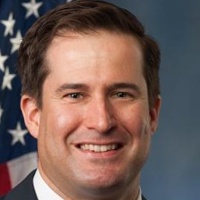
Seth Moulton
Representative
MA
Seth Moulton
Representative
MA
The American High-Speed Rail Act significantly expands federal support for high-speed and higher-speed rail development by increasing funding limits, broadening eligibility for public-private partnerships, and establishing new planning and safety requirements. The bill authorizes substantial funding through 2031 for corridor development and planning, while also creating pathways for acquiring necessary right-of-way property and ensuring labor protections on federally-funded infrastructure. It also refines definitions, setting the threshold for true "high-speed rail" at 186 mph or more, and introduces a new category for "higher-speed rail."
The Stay Cool Act coordinates federal heat response, funds community cooling centers and housing upgrades, and invests in urban green infrastructure to mitigate extreme heat risks.
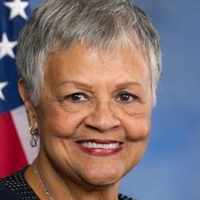
Bonnie Watson Coleman
Representative
NJ
Bonnie Watson Coleman
Representative
NJ
The **Stay Cool Act** is a comprehensive bill designed to combat the dangers of extreme heat through coordinated federal response, improved public warnings, and direct aid to vulnerable seniors. It establishes significant grant programs to fund community cooling centers, upgrade public housing with air conditioning, and develop urban green spaces and water features for neighborhood cooling. Overall, the legislation aims to increase community resilience, protect residents in federally assisted housing, and ensure more equitable access to safe, cool environments during heat emergencies.
This Act establishes a temporary zero-interest loan program to help eligible, long-standing rural hospitals replace, improve, or renovate their facilities.
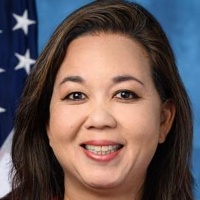
Jill Tokuda
Representative
HI
Jill Tokuda
Representative
HI
The Rural Hospital Revitalization Act of 2026 establishes a temporary, zero-interest loan program to help eligible, long-standing rural hospitals replace, improve, or renovate their facilities. Loans prioritize hospitals serving the most remote and underserved populations, offering a five-year interest-free period with potential renewals based on financial need and community impact. Following the initial period, loans are refinanced under standard terms unless the hospital remains financially vulnerable, in which case further interest-free extensions or technical assistance are provided.
This bill establishes a national public awareness campaign, the SCREEN for Type 1 Diabetes Act, to promote the detection, screening, and management of type 1 diabetes among the public and healthcare providers.
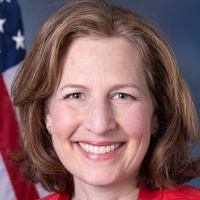
Kim Schrier
Representative
WA
Kim Schrier
Representative
WA
This bill, the SCREEN for Type 1 Diabetes Act of 2026, mandates the creation of a national public awareness campaign to promote the detection, screening, and management of type 1 diabetes. The campaign will utilize evidence-based materials and public service announcements targeted at both healthcare providers and the general public. It also authorizes funding for grants to support local efforts in increasing screening rates, particularly in highly affected communities.
This Act establishes a grant program to increase the number of school-based mental health providers in high-need elementary and secondary schools to improve student access to essential services.
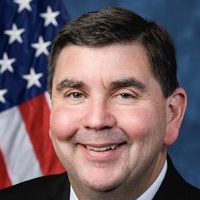
John Mannion
Representative
NY
John Mannion
Representative
NY
The Elementary and Secondary School Counseling Act establishes a federal grant program to increase the number of school-based mental health providers in high-need schools. This funding flows from the Department of Education to states, which then award competitive subgrants to local educational agencies. The goal is to help schools work toward recommended student-to-provider ratios for counselors, psychologists, and social workers. Funds must supplement existing resources and require state matching to support recruitment and retention efforts.
This bill authorizes the minting and sale of commemorative gold and silver coins to honor the 25th anniversary of the September 11, 2001, terrorist attacks, with surcharges supporting the National September 11 Memorial and Museum.

Dan Goldman
Representative
NY
Dan Goldman
Representative
NY
This bill authorizes the Secretary of the Treasury to mint and issue commemorative gold and silver coins marking the 25th anniversary of the September 11, 2001, terrorist attacks. The coins will honor the victims, first responders, and survivors, with designs selected in consultation with the National September 11 Memorial and Museum. All surcharges from the sale of these coins will be paid directly to the Memorial and Museum to support its operations and maintenance.
This bill nullifies a specific Endangered Species Committee decision regarding Gulf of America Oil and Gas Activities while maintaining pre-existing Endangered Species Act requirements and imposing a three-year ban on new exemptions for those activities.
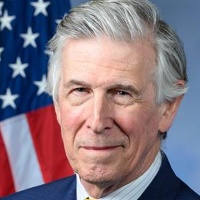
Donald Beyer
Representative
VA
Donald Beyer
Representative
VA
This bill nullifies a specific decision and order from the Endangered Species Committee regarding certain oil and gas activities. It also imposes a three-year ban on the Committee issuing new exemptions for these activities under the Endangered Species Act. Importantly, all pre-existing Endangered Species Act requirements remain fully in effect for these activities.
This bill mandates the NIH to study and report on the development of a standardized, noninvasive HPV test for men to close a critical gap in cancer prevention and public health equity.
LaMonica McIver
Representative
NJ
LaMonica McIver
Representative
NJ
The Closing the HPV Testing Gap Act directs the National Institutes of Health (NIH) to conduct a comprehensive study on developing a standardized, noninvasive HPV test for men. This action aims to close a critical gap in cancer prevention and public health surveillance, which currently lacks FDA-approved testing for men. The resulting report will provide recommendations for research, implementation, and interagency coordination to advance gender equity in cancer prevention efforts.