Legislative Activity
Track Russ's sponsored bills, co-sponsored legislation, and voting record
The Credit Union Board Modernization Act updates federal requirements to allow credit unions to determine board meeting frequency based on their age and financial performance ratings.
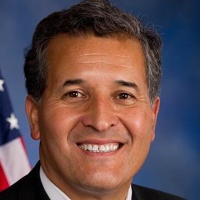
Juan Vargas
Representative
CA
Juan Vargas
Representative
CA
The Credit Union Board Modernization Act updates federal requirements for board of directors meetings, moving away from a mandatory monthly schedule. Under this bill, meeting frequency will be determined by a credit union’s age and its financial performance ratings, allowing high-performing institutions greater operational flexibility while maintaining oversight for newer or lower-rated credit unions.
Repeals a mandate requiring kill switches in cars.
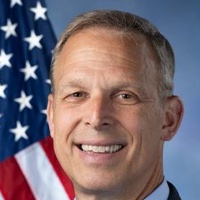
Scott Perry
Representative
PA
Scott Perry
Representative
PA
The "No Kill Switches in Cars Act" repeals a section of the Infrastructure Investment and Jobs Act. The repealed section required the Department of Transportation to create a rule mandating that all new cars have advanced drunk and impaired driving prevention technology. This bill prohibits the government from requiring car manufacturers to install kill switches in vehicles.
The Marc Fischer Memorial Act mandates the implementation of a comprehensive digital mail scanning strategy across all federal prisons to detect and interdict synthetic drugs like fentanyl.
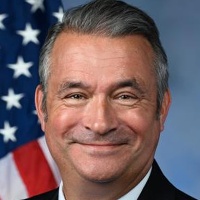
Don Bacon
Representative
NE
Don Bacon
Representative
NE
The Marc Fischer Memorial Act mandates that the Bureau of Prisons implement a comprehensive strategy to achieve 100% digital scanning of all inmate mail to interdict fentanyl and other synthetic drugs. By transitioning to digital mail processing, the Act aims to protect staff and inmates from lethal exposure, improve institutional security, and alleviate the administrative burden on correctional personnel.
This joint resolution nullifies the Forest Service’s "Law Enforcement; Criminal Prohibitions" rule, preventing it from taking effect.
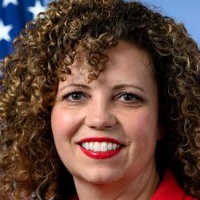
Celeste Maloy
Representative
UT
Celeste Maloy
Representative
UT
This joint resolution exercises congressional authority to nullify a U.S. Forest Service rule titled "Law Enforcement; Criminal Prohibitions." By passing this measure, Congress prevents the rule from taking effect and ensures it has no force or effect.
The Fair Access to Banking Act prohibits large financial institutions and payment networks from denying services to law-abiding businesses based on subjective, non-financial, or political criteria.
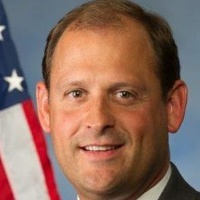
Garland Barr
Representative
KY
Garland Barr
Representative
KY
The Fair Access to Banking Act prohibits large financial institutions and payment networks from denying services to law-abiding businesses based on subjective, politically motivated, or reputational criteria. The bill mandates that financial institutions use impartial, quantitative, risk-based standards to evaluate customers rather than category-based exclusions. To ensure compliance, the legislation establishes enforcement mechanisms through federal regulators and provides a legal pathway for businesses to sue for damages if they are unfairly denied access to financial services.
This bill mandates the reinstatement of cancelled mineral leases and streamlines the regulatory review process for mining operations within the Superior National Forest in Minnesota.
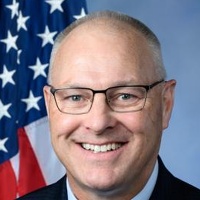
Pete Stauber
Representative
MN
Pete Stauber
Representative
MN
The Superior National Forest Restoration Act of 2025 seeks to reopen federal lands in Minnesota to mineral leasing by rescinding previous withdrawal orders and mandating the reissuance of cancelled mineral leases. The bill also establishes strict 18-month timelines for the federal government to complete environmental and regulatory reviews for new mine plans. Additionally, it directs the immediate issuance of preference right leases for previously rejected applications to facilitate mineral exploration and development.
The Aerial Firefighting Enhancement Act of 2025 extends and expands the Department of Defense’s authority to sell excess aircraft and parts to support wildfire suppression efforts through 2035.
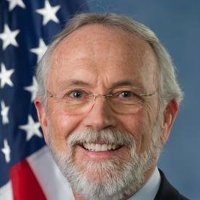
Dan Newhouse
Representative
WA
Dan Newhouse
Representative
WA
The Aerial Firefighting Enhancement Act of 2025 extends the Department of Defense’s authority to sell excess aircraft and parts for wildfire suppression through 2035. This legislation expands the permitted use of these aircraft to include water dropping and mandates their exclusive use for firefighting operations.
This Act authorizes the minting of commemorative coins to honor America’s 250th anniversary, with proceeds supporting the Stephen Siller Tunnel to Towers Foundation’s programs for Gold Star families, veterans, and first responders.
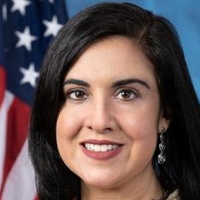
Nicole Malliotakis
Representative
NY
Nicole Malliotakis
Representative
NY
The 250 Years of Service and Sacrifice Commemorative Coin Act authorizes the U.S. Treasury to mint and issue commemorative coins in 2028 to honor America’s semiquincentennial and the legacy of those who serve. Proceeds from the sale of these coins will benefit the Stephen Siller Tunnel to Towers Foundation, supporting programs for Gold Star families, veterans, and first responders. The program is designed to be self-sustaining, ensuring no net cost to the federal government.
The Dismantle DEI Act of 2025 immediately rescinds federal diversity, equity, and inclusion (DEI) mandates across executive offices, contracting, grants, and education, while banning related training and imposing penalties for non-compliance.
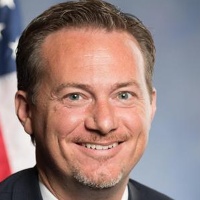
Michael Cloud
Representative
TX
Michael Cloud
Representative
TX
The Dismantle DEI Act of 2025 aims to immediately rescind diversity, equity, and inclusion (DEI) mandates across the federal government, including shutting down related offices and banning specific ideological training for federal personnel and contractors. The bill prohibits the use of federal funds for DEI activities by grant recipients and mandates that federal advisory committees cease all such practices or face termination. Furthermore, it establishes strong enforcement mechanisms, allowing individuals to sue violators and seek financial penalties for non-compliance.
This bill directs the Secretary of State to designate specific Mexican drug cartels as foreign terrorist organizations and requires a formal report on their eligibility for such a designation.

Chip Roy
Representative
TX
Chip Roy
Representative
TX
The Drug Cartel Terrorist Designation Act directs the Secretary of State to designate four major Mexican drug cartels as foreign terrorist organizations. The bill mandates a comprehensive report to Congress evaluating these groups against federal terrorism criteria and requires the designation of any additional cartels that meet these standards. It also clarifies that these designations do not expand asylum eligibility for individuals.
This bill mandates the termination of the U.S. Department of Education effective December 31, 2026.

Thomas Massie
Representative
KY
Thomas Massie
Representative
KY
This bill proposes the complete termination of the United States Department of Education. If enacted, the agency would be officially dissolved on December 31, 2026.
The Personalized Care Act of 2025 expands Health Savings Account (HSA) eligibility and contribution limits, allows HSA funds to cover insurance premiums and direct primary care fees, and reduces penalties for nonqualified distributions.
Chip Roy
Representative
TX
Chip Roy
Representative
TX
The Personalized Care Act of 2025 expands Health Savings Account (HSA) access by removing the high-deductible health plan requirement and significantly increasing annual contribution limits. The bill also broadens the scope of qualified medical expenses to include insurance premiums and direct primary care fees, while lowering the tax penalty for nonqualified distributions. These reforms aim to provide individuals with greater flexibility and control over their personal healthcare spending.
The Life at Conception Act declares that the constitutional right to life begins at the moment of fertilization and applies to every member of the species *homo sapiens* at all stages of development.
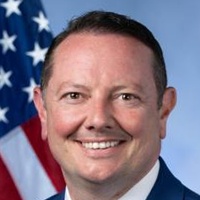
Eric Burlison
Representative
MO
Eric Burlison
Representative
MO
The Life at Conception Act declares that the constitutional right to life begins at the moment of fertilization, defining all human beings as persons from that point forward. The bill establishes legal personhood for every member of the species *homo sapiens* at all stages of development. Additionally, it explicitly prohibits the prosecution of any woman for the death of her unborn child.
The Born-Alive Abortion Survivors Protection Act requires health care practitioners to provide the same level of care to infants born alive after an abortion attempt as they would to any other newborn, mandating immediate hospitalization and imposing penalties for violations, while protecting the mother from prosecution. It also allows the mother of a child born alive to file a civil action against anyone who violated the act.
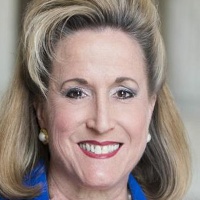
Ann Wagner
Representative
MO
Ann Wagner
Representative
MO
The "Born-Alive Abortion Survivors Protection Act" ensures that infants born alive after an abortion receive the same medical care as any other newborn, mandating immediate hospitalization and requiring healthcare practitioners to report any failures to comply. Violators face fines, imprisonment, and potential prosecution for homicide or attempted homicide, while the mother of the child cannot be prosecuted. The bill also allows the woman who had the abortion to file a civil action against anyone who violated the act. It defines abortion and attempts at abortion, and renames "Partial-Birth Abortions" to "Abortions" in relevant sections of the U.S. Code.
The Main Street Tax Certainty Act makes the 20% pass-through business income deduction permanent by removing its scheduled expiration after 2025.
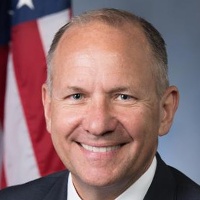
Lloyd Smucker
Representative
PA
Lloyd Smucker
Representative
PA
The Main Street Tax Certainty Act makes the 20% pass-through business income deduction permanent. By removing the current 2025 expiration date, this legislation ensures long-term tax relief for owners of qualified pass-through entities.
The SAVE Moms and Babies Act of 2025 prohibits the FDA from approving new abortion drugs and imposes strict federal restrictions on the distribution, usage, and reporting requirements for existing abortion medications.
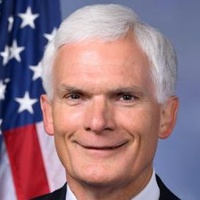
Robert Latta
Representative
OH
Robert Latta
Representative
OH
The SAVE Moms and Babies Act of 2025 prohibits the FDA from approving new abortion drugs and restricts the use of existing ones. The bill mandates strict safety protocols, including in-person administration requirements, expanded adverse event reporting, and limitations on gestational age for drug use.
The Heartbeat Protection Act of 2025 prohibits physicians from performing abortions once a fetal heartbeat is detectable, subject to specific exceptions and federal penalties.
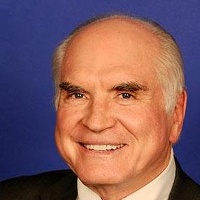
Mike Kelly
Representative
PA
Mike Kelly
Representative
PA
The Heartbeat Protection Act of 2025 prohibits physicians from performing an abortion if a fetal heartbeat is detectable, subject to specific exceptions for medical emergencies, rape, and incest. Physicians who knowingly violate this federal law face potential fines and imprisonment, though the legislation explicitly protects the mother from prosecution. The bill also mandates strict documentation and record-keeping requirements for all heartbeat determinations and exception claims.
The Spectrum Pipeline Act of 2025 mandates the identification, reallocation, and auction of federal radio spectrum to expand commercial wireless broadband and unlicensed services while modernizing federal relocation processes.
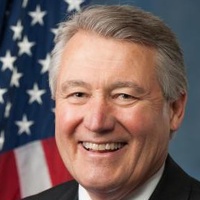
Rick Allen
Representative
GA
Rick Allen
Representative
GA
The Spectrum Pipeline Act of 2025 mandates the identification and reallocation of at least 2,500 megahertz of federal radio spectrum for commercial wireless broadband and unlicensed use, such as Wi-Fi. The bill establishes a clear auction schedule for this spectrum and modernizes the Spectrum Relocation Fund to expedite the transition of federal equipment. Additionally, it extends the FCC’s auction authority to ensure the successful deployment of these frequencies for high-power mobile services.
The National Constitutional Carry Act prohibits state and local governments from restricting the public carry of firearms by individuals who are legally eligible to possess them under federal law.
Thomas Massie
Representative
KY
Thomas Massie
Representative
KY
The National Constitutional Carry Act seeks to protect the Second Amendment right of law-abiding citizens to carry firearms in public for self-defense. The bill prohibits state and local governments from imposing criminal or civil penalties on individuals who are legally eligible to possess firearms. By overriding restrictive local regulations, the legislation aims to ensure a uniform standard for the right to bear arms across the United States.
This bill prohibits federal funding for abortions and for health insurance plans that cover abortions, clarifies these prohibitions under the Affordable Care Act, and requires health plans to disclose the extent of their abortion coverage and any related surcharges.
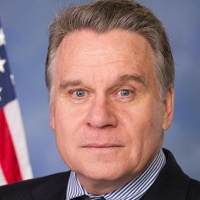
Christopher Smith
Representative
NJ
Christopher Smith
Representative
NJ
The "No Taxpayer Funding for Abortion and Abortion Insurance Full Disclosure Act of 2025" seeks to prohibit the use of federal funds for abortions and for health plans that cover abortions, while allowing individuals and entities to purchase separate abortion coverage with non-federal funds. It clarifies that premium tax credits and cost-sharing reductions under the Affordable Care Act (ACA) cannot be used for health plans that include abortion coverage. The Act also revises notice requirements for health plans, mandating clear disclosure of abortion coverage and any associated premium surcharges to enrollees. Exceptions to the funding restrictions are included for cases of rape, incest, or when the mother's life is in danger.