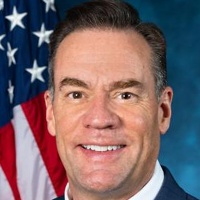
Legislative Activity
Track Russ's sponsored bills, co-sponsored legislation, and voting record
This resolution condemns the Iranian regime’s terrorism and human rights abuses while affirming support for the Iranian people’s right to establish a democratic, secular, and non-nuclear republic.
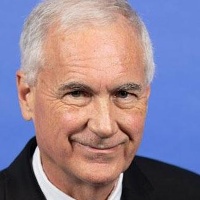
Tom McClintock
Representative
CA
Tom McClintock
Representative
CA
This resolution condemns the Iranian regime for its ongoing human rights abuses, state-sponsored terrorism, and regional instability. It expresses strong support for the Iranian people's struggle for a democratic, secular, and non-nuclear republic. Furthermore, the bill advocates for international accountability for the regime's crimes and calls for the protection of Iranian political refugees.
The "Supporting Farm Operations Act of 2025" freezes wage rates for H-2A nonimmigrant workers at 2023 levels through 2026 and clarifies job classification for wage determination.

John Moolenaar
Representative
MI
John Moolenaar
Representative
MI
The "Supporting Farm Operations Act of 2025" freezes the wage rate for H-2A nonimmigrant workers at the level it was on December 31, 2023, through December 31, 2026. Additionally, the bill directs the Secretary of Labor to use a primary duties evaluation when deciding the required wage for employees who perform multiple duties or tasks.
To award a Congressional Gold Medal to the 761st Tank Battalion, the first Black soldiers to serve in an American armored unit, for their valor and crucial contributions to the Allied victory in Europe.
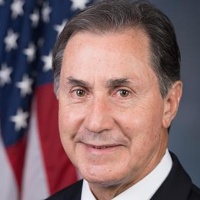
Gary Palmer
Representative
AL
Gary Palmer
Representative
AL
This bill authorizes the Speaker of the House and the President pro tempore of the Senate to award a Congressional Gold Medal to the 761st Tank Battalion, also known as the "Black Panthers," in recognition of their courageous service and crucial contributions during World War II. The medal will be given to the National Museum of African American History and Culture for display, honoring the 761st as the first Black soldiers to serve in an American armored unit and their significant role in the Allied victory in Europe. The bill also allows for the creation and sale of bronze duplicates of the medal to support the United States Mint Public Enterprise Fund.
The "Broadband Buildout Accountability Act" shields the Broadband Equity, Access, and Deployment Program from FOIA requests, excluding standard public information requirements.
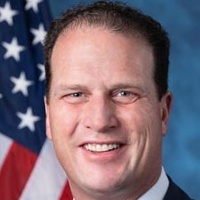
August Pfluger
Representative
TX
August Pfluger
Representative
TX
The Broadband Buildout Accountability Act exempts the Broadband Equity, Access, and Deployment Program from the Freedom of Information Act (FOIA), with one specific exception. This exception pertains to 5 U.S. Code § 552, suggesting a limited allowance for information disclosure under specific circumstances within the program.
The DEFUND Act of 2025 terminates U.S. membership in the United Nations and affiliated organizations, prohibits funding and participation in UN activities, and revokes diplomatic immunity for UN personnel.

Chip Roy
Representative
TX
Chip Roy
Representative
TX
The DEFUND Act of 2025 terminates U.S. membership in the United Nations and all affiliated organizations, repeals existing acts that enable U.S. participation, and prohibits future funding or involvement in UN activities, including peacekeeping operations and conventions. It also revokes diplomatic immunity for UN personnel within the U.S. and requires the Secretary of State to notify the UN of these changes. The bill further prevents the U.S. from reentering the UN without Senate approval and a guaranteed right to withdraw.
This bill authorizes the creation of a Congressional Gold Medal to honor the volunteers and communities involved with the North Platte Canteen during World War II.

Adrian Smith
Representative
NE
Adrian Smith
Representative
NE
The North Platte Canteen Congressional Gold Medal Act recognizes and honors the volunteers and donors of the North Platte Canteen in Nebraska during World War II with a Congressional Gold Medal. This medal will be presented by the Speaker of the House and the President pro tempore of the Senate, and then displayed at the Lincoln County Historical Museum. The Act also authorizes the creation and sale of bronze duplicates of the gold medal to cover production costs, with proceeds deposited into the Mint's Public Enterprise Fund.
This bill expands Post-9/11 GI Bill eligibility to National Guard members performing specific full-time duties.
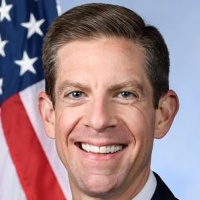
Mike Levin
Representative
CA
Mike Levin
Representative
CA
The Guard and Reserve GI Bill Parity Act of 2025 expands Post-9/11 GI Bill eligibility to National Guard members performing specific full-time duties. This expansion applies to service performed on or after September 11, 2001. The changes will take effect one year after the enactment of this Act, with the time limitation for using educational assistance applied as if enacted immediately after the Post-9/11 Veterans Educational Assistance Act of 2008.
Removes federal immunity for COVID-19 vaccine manufacturers, allowing individuals to sue for vaccine-related losses, while preserving access to existing compensation programs.
Chip Roy
Representative
TX
Chip Roy
Representative
TX
The LIABLE Act removes federal immunity and liability limitations for COVID-19 vaccine manufacturers, allowing individuals to sue for losses caused by the vaccines. Individuals can still seek compensation through existing federal programs, and doing so does not prevent civil action. This applies to any COVID-19 vaccine licensed or authorized by the FDA and is retroactive.
The "CURD Act" formally defines "natural cheese" to help consumers distinguish it from processed cheese, ensuring consistent labeling and preventing misuse of the term.
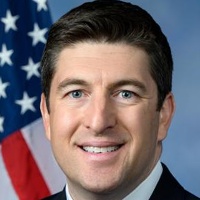
Bryan Steil
Representative
WI
Bryan Steil
Representative
WI
The "Codifying Useful Regulatory Definitions Act" defines "natural cheese" to differentiate it from processed cheese products, setting standards for its composition, ingredients, and labeling. It ensures that only products meeting the defined criteria can be labeled as "natural cheese," while allowing "natural" or "all-natural" claims consistent with existing regulations. This act aims to provide clarity for consumers and consistency in labeling requirements across the country.
The Secure Rural Schools Reauthorization Act of 2025 extends federal funding and program authorities for states and counties containing national forest land through 2026.
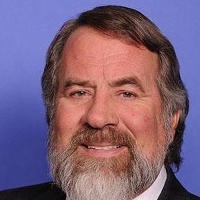
Doug LaMalfa
Representative
CA
Doug LaMalfa
Representative
CA
The Secure Rural Schools Reauthorization Act of 2025 extends critical federal funding for states and counties containing national forest land through 2026. This legislation ensures the continuation of essential community services and maintains the authority for resource advisory committees and local special projects.
Prohibits securities exchanges from processing transactions involving securities issued by "natural asset companies" that manage land for conservation and ecological performance.

Mark Green
Representative
TN
Mark Green
Representative
TN
The "Protect America's Lands Act" prevents national securities exchanges from handling transactions of securities issued by "natural asset companies." These companies manage land for conservation and aim to enhance the value of natural assets and ecosystem services. The bill defines specific criteria for what constitutes a "natural asset company" to ensure the prohibition is appropriately applied.
This resolution expresses Congressional opposition to imposing new performance fees or royalties on local radio stations and businesses for broadcasting or playing music.
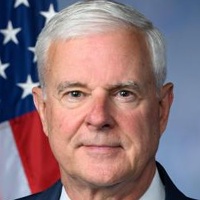
Steve Womack
Representative
AR
Steve Womack
Representative
AR
The Local Radio Freedom Act expresses Congressional opposition to imposing new performance fees, taxes, or royalties on local radio stations and businesses for playing music. It argues that the current system of free airplay provides essential promotional value to artists and that new fees would threaten the financial viability of local broadcasters and the vital community services they provide.
The "Death Tax Repeal Act" eliminates estate and generation-skipping transfer taxes, adjusts gift tax calculations, and sets a $10,000,000 lifetime gift exemption.
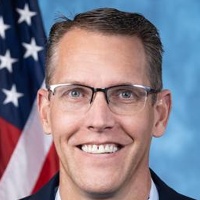
Randy Feenstra
Representative
IA
Randy Feenstra
Representative
IA
The "Death Tax Repeal Act" eliminates both estate and generation-skipping transfer taxes, effective from the date of enactment. It adjusts gift tax calculations by setting the lifetime gift exemption at $10,000,000, with inflation adjustments after 2011. The Act also includes transitional rules for applying certain sections of the Internal Revenue Code during the enactment year.
The "More Homes on the Market Act" increases the tax exclusion for profit from the sale of a primary residence, incentivizing homeowners to sell and increasing housing supply.
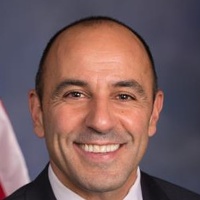
Jimmy Panetta
Representative
CA
Jimmy Panetta
Representative
CA
The "More Homes on the Market Act" increases the tax exclusion for profit from the sale of a primary residence, raising it to $500,000 for single filers and $1,000,000 for married couples filing jointly. These amounts will be adjusted for inflation starting in 2025. This change encourages homeowners to sell their properties, thereby increasing the availability of homes on the market.
This Act allows schools participating in the National School Lunch Program to offer organic or non-organic whole milk alongside other options, while clarifying saturated fat accounting and restricting milk sourcing from China state-owned enterprises.
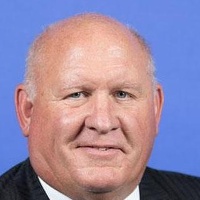
Glenn Thompson
Representative
PA
Glenn Thompson
Representative
PA
The Whole Milk for Healthy Kids Act of 2025 expands milk options available to students in the National School Lunch Program by allowing schools to offer organic or non-organic whole milk. This legislation provides greater flexibility for schools in providing fluid milk choices while maintaining accommodations for students with special dietary needs. Importantly, the saturated fat content of these offered milk options will not count toward the meal's overall saturated fat limits.
This Act prohibits federal agencies from imposing water use restrictions or demanding water rights transfers as conditions for land use agreements, reinforcing state authority over water allocation.
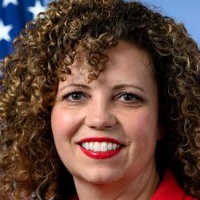
Celeste Maloy
Representative
UT
Celeste Maloy
Representative
UT
The Water Rights Protection Act affirms the long-standing authority of states in evaluating, regulating, and allocating water use. It prohibits federal agencies from imposing restrictions on water rights that exceed those established under state law when issuing land use agreements. Furthermore, the Act explicitly forbids federal agencies from conditioning permits on the transfer of state-recognized water rights to the United States. This legislation ensures federal actions remain consistent with state water law without altering existing reserved water rights or certain federal environmental laws.
The "National Right-to-Work Act" prohibits mandatory union membership as a condition of employment, protecting employees' rights to choose whether or not to join or support a labor union.
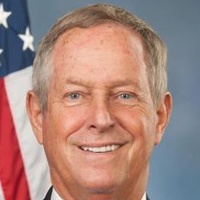
Joe Wilson
Representative
SC
Joe Wilson
Representative
SC
The "National Right-to-Work Act" amends both the National Labor Relations Act and the Railway Labor Act to protect an employee's right to choose whether or not to join or support a labor union. It eliminates the possibility of mandatory union membership or dues payments as a condition of employment, ensuring that employees cannot be forced to join or support a union against their will.
The "Future in Logging Careers Act" modifies child labor laws, exempting 16 and 17-year-olds working in hazardous logging occupations from certain restrictions if their employer is their parent or guardian.

Jared Golden
Representative
ME
Jared Golden
Representative
ME
The "Future in Logging Careers Act" amends the Fair Labor Standards Act of 1938, defining "timber harvesting employer" and "mechanized timber harvesting employer". It modifies child labor provisions for 16 and 17-year-olds in hazardous logging occupations, except when employed by their parent or guardian. These provisions are applicable based on the type of timber harvesting activities performed by the employer.
The WEST Act of 2025 nullifies a Bureau of Land Management rule concerning conservation and landscape health.
Celeste Maloy
Representative
UT
Celeste Maloy
Representative
UT
The WEST Act of 2025 nullifies the Bureau of Land Management's Conservation and Landscape Health rule. This prevents the rule from being implemented.
Prohibits designating Big Cypress National Preserve as wilderness.
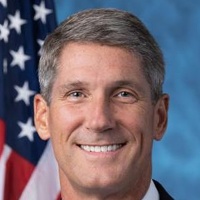
C. Franklin
Representative
FL
C. Franklin
Representative
FL
This bill prohibits the Big Cypress National Preserve in Florida from being designated as wilderness or included in the National Wilderness Preservation System. This ensures the area will not receive the specific protections and management guidelines associated with wilderness areas.