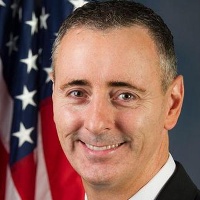
Legislative Activity
Track Brian's sponsored bills, co-sponsored legislation, and voting record
The PHIT Act of 2025 allows taxpayers to deduct up to \$1,000 annually for qualified expenses related to physical fitness, gym memberships, and exercise instruction to promote healthier lifestyles.
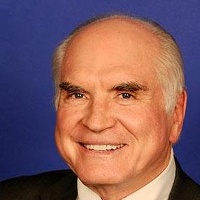
Mike Kelly
Representative
PA
Mike Kelly
Representative
PA
The Personal Health Investment Today Act of 2025 (PHIT Act) aims to improve public health by incentivizing healthier lifestyles, particularly to combat obesity. This bill allows taxpayers to treat certain qualified sports and fitness expenses, such as gym memberships and instruction fees, as deductible medical expenses. Deductions are capped annually at \$1,000 per individual or \$2,000 for joint filers.
This Act establishes a framework for U.S.-Taiwan tourism cooperation and mandates a report on the feasibility of establishing U.S. preclearance facilities in Taiwan.
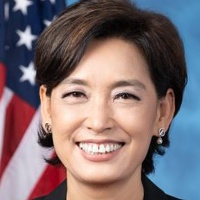
Young Kim
Representative
CA
Young Kim
Representative
CA
This Act establishes the **Taiwan Travel and Tourism Coordination Act** to strengthen tourism cooperation between the United States and Taiwan through joint initiatives. It mandates the Assistant Secretary of Commerce for Travel and Tourism to engage with Taiwanese officials to ease travel and support industry partners. Furthermore, the bill requires a comprehensive report on the feasibility and impact of establishing U.S. preclearance facilities in Taiwan.
This Act mandates a disclaimer on standard mortgage applications directing service members to inquire about VA Home Loan eligibility.
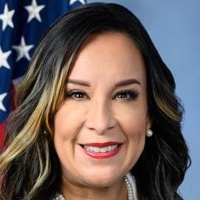
Mónica De La Cruz
Representative
TX
Mónica De La Cruz
Representative
TX
The VA Home Loan Awareness Act of 2025 mandates the addition of a disclaimer on standard mortgage applications, informing applicants who indicate military service that they may qualify for a VA Home Loan. This ensures veterans and service members are immediately directed to explore their VA loan eligibility when applying for a mortgage. The bill also requires the GAO to study the effectiveness of this new disclaimer requirement among lenders.
This resolution formally recognizes the 250th anniversary of the United States Marine Corps, honoring its legacy, service, and core values.
Jack Bergman
Representative
MI
Jack Bergman
Representative
MI
This resolution formally recognizes the upcoming 250th anniversary of the United States Marine Corps in 2025. Congress is honoring the Corps' long history, core values of honor, courage, and commitment, and its consistent readiness to defend the nation. The bill encourages the public to join in celebrating this significant milestone and acknowledging the service and sacrifice of all Marines.
The American Families United Act grants immigration judges and the Secretary of Homeland Security greater discretion to prevent the removal of family members of U.S. citizens when separation would cause hardship, while also allowing for the reopening of certain prior cases.
Veronica Escobar
Representative
TX
Veronica Escobar
Representative
TX
The American Families United Act grants immigration officials increased discretion to halt removal proceedings or grant immigration benefits for family members of U.S. citizens when separation would cause hardship. This discretion is presumed to be met if the action results in family separation, though certain serious criminal grounds remain disqualifying. The Act also allows individuals to file motions to reopen or reconsider past immigration decisions if the outcome would have been different under these new provisions, subject to a two-year filing deadline.
This bill imposes terrorism sanctions on the Popular Resistance Committees (PRC) for their role in the October 7th attacks and mandates a report on designating the PRC and the Lions Den as terrorist entities.
Brad Sherman
Representative
CA
Brad Sherman
Representative
CA
This Act imposes immediate sanctions, including asset freezes and visa bans, on the Popular Resistance Committees (PRC) for their involvement in terrorism, particularly the October 7th attacks. It also mandates a report from the Secretary of State on designating the Lions Den and the PRC as Specially Designated Global Terrorists. Furthermore, the bill requires ongoing reviews to identify and potentially sanction successor or affiliated terrorist groups.
This act establishes a federally funded national public safety campaign utilizing television, radio, and digital media to warn against illegally passing stopped school buses.
Pete Stauber
Representative
MN
Pete Stauber
Representative
MN
The Brake for Kids Act of 2025 establishes a national public safety messaging campaign to raise awareness about the dangers of illegally passing a stopped school bus. This initiative will be funded using existing allocations from the Infrastructure Investment and Jobs Act. The required campaign must utilize broad outreach methods, including national television, radio, social media, and edge service advertising.
The Paycheck Fairness Act strengthens equal pay enforcement by tightening defenses against pay discrimination, expanding protections against retaliation, increasing penalties for violations, and requiring comprehensive data collection and training initiatives.
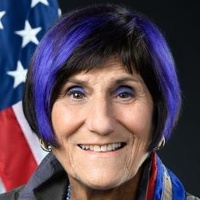
Rosa DeLauro
Representative
CT
Rosa DeLauro
Representative
CT
The Paycheck Fairness Act significantly strengthens federal equal pay protections by broadening definitions of sex discrimination, tightening employer defenses against pay disparities, and increasing penalties for violations. It also prohibits employers from using salary history in hiring decisions and mandates new data collection by the EEOC to better enforce anti-discrimination laws. Furthermore, the bill establishes new training and outreach programs to combat systemic wage bias.
The Unity through Service Act of 2025 establishes an Interagency Council to unify and expand recruitment efforts across military, national, and public service sectors while improving transition opportunities for participants.
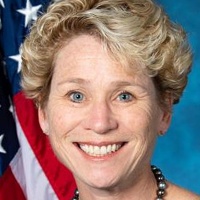
Chrissy Houlahan
Representative
PA
Chrissy Houlahan
Representative
PA
The Unity through Service Act of 2025 establishes an Interagency Council on Service to advise the President on strengthening recruitment across military, national, and public service opportunities. The bill mandates joint market research between defense and national service agencies and improves transition assistance for separating service members into public sector jobs. Ultimately, the Act aims to foster civic duty by coordinating federal efforts to promote and measure the impact of all forms of national service.
This Act establishes a special refugee processing pathway for persecuted Uyghurs and other minorities from China's Xinjiang region and clarifies asylum standards for Chinese nationals facing government retaliation.
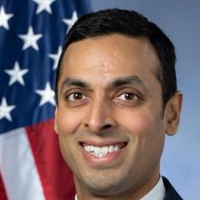
Suhas Subramanyam
Representative
VA
Suhas Subramanyam
Representative
VA
The Uyghur Human Rights Protection Act establishes a special Priority 2 refugee processing pathway for individuals facing persecution by the Chinese government in the Xinjiang Uyghur Autonomous Region (XUAR). It eases certain immigration hurdles for these applicants and clarifies that actions taken by the PRC against those seeking U.S. benefits can be considered persecution based on political opinion. Furthermore, the Act encourages U.S. allies to create similar accommodations for those fleeing the situation in XUAR. This legislation is set to terminate ten years after its enactment.
This Act establishes grants through the NSF to research and develop improved mathematical and statistical modeling education in public schools, alongside a comprehensive study on K-12 modeling instruction.
Chrissy Houlahan
Representative
PA
Chrissy Houlahan
Representative
PA
The Mathematical and Statistical Modeling Education Act aims to modernize K-12 math and statistics education by funding research grants through the NSF to develop innovative teaching methods focused on modeling and data science. The bill directs the NSF to support teacher training and curriculum development that connects classroom learning to real-world STEM careers. Additionally, it mandates a comprehensive study by the National Academies on improving modeling education across all grade levels and communicating its importance to the public. All activities authorized under this Act must use existing NSF funds and conclude by September 30, 2029.
The WING Act of 2025 establishes a research program to develop and implement solutions for maintaining accurate weather radar detection despite obstructions like wind turbines and buildings.
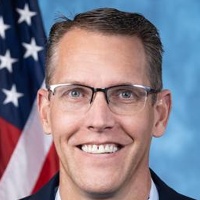
Randy Feenstra
Representative
IA
Randy Feenstra
Representative
IA
The Weather Innovation for the Next Generation Act of 2025 (WING Act) establishes a new research program to ensure the accuracy of weather radar systems despite physical obstructions like wind turbines and buildings. This initiative directs the National Weather Service to develop and test new technologies and forecasting methods to mitigate issues such as beam blockage and ghost echoes. The program will prioritize proven fixes and require annual reports to Congress until its conclusion in 2030.
This bill mandates the National Weather Service to replace its current instant messaging system with a modern, commercially available, public cloud-hosted solution by October 1, 2027, funded through existing appropriations.
Randy Feenstra
Representative
IA
Randy Feenstra
Representative
IA
This bill, the National Weather Service Communications Improvement Act, mandates the replacement of the current NWSChat instant messaging system with a modern, commercially available, public cloud-hosted solution by October 1, 2027. The new system must meet standards for scalability and usability. Funding for this upgrade, up to \$3 million annually from 2026 to 2029, will be sourced from the existing NWS Operations, Research, and Facilities budget.
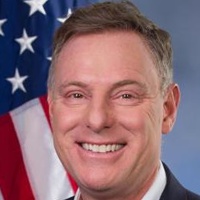
This Act mandates that states verify the continued existence of Medicaid providers by checking the federal Death Master File at enrollment and quarterly thereafter to prevent fraudulent payments.
Scott Peters
Representative
CA
Scott Peters
Representative
CA
The Medicare and Medicaid Fraud Prevention Act mandates that states implement rigorous screening for all enrolled healthcare providers. Specifically, this legislation requires states to verify that all Medicaid providers are alive by checking the federal Death Master File upon enrollment and at least quarterly thereafter. This measure aims to prevent fraudulent payments made to deceased individuals or entities.
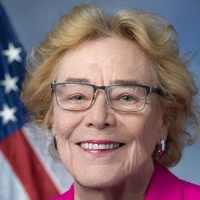
This resolution officially recognizes the cultural and historical significance of Nowruz, celebrating the Iranian New Year while supporting the human rights and freedoms of the Iranian people.
Zoe Lofgren
Representative
CA
Zoe Lofgren
Representative
CA
This resolution officially recognizes the cultural and historical significance of Nowruz, the traditional Iranian New Year celebrated by millions worldwide. Congress acknowledges the enduring contributions of Persian civilization and Iranian Americans to the United States. Furthermore, the resolution supports the Iranian people's pursuit of fundamental human rights, including freedom of expression and internet access.
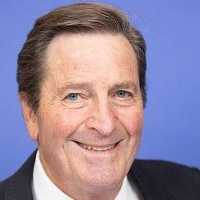
This bill officially establishes March 21st as National Rosie the Riveter Day to honor the millions of women who joined the workforce during World War II.
John Garamendi
Representative
CA
John Garamendi
Representative
CA
This Act officially establishes **National Rosie the Riveter Day** to honor the over six million American women who joined the workforce during World War II. The President is required to issue an annual proclamation recognizing their crucial contributions despite facing discrimination. This new observance day will be held annually on March 21st during Women's History Month to inspire future generations.
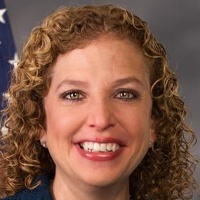
This bill reauthorizes and extends funding for the BIRD Energy Foundation and the U.S.-Israel Energy Center, while expanding the scope of joint energy cooperation projects between the two nations through 2035.
Debbie Wasserman Schultz
Representative
FL
Debbie Wasserman Schultz
Representative
FL
This bill reauthorizes and extends key U.S.-Israel energy cooperation programs, including BIRD Energy, through 2031 and expands the scope of joint research. It increases funding authorizations for strategic partnership projects and the Energy Center. Furthermore, the legislation adds crucial modern energy areas like hydrogen, fusion, and grid modernization to the official list of eligible cooperative fields through 2035.
This Act authorizes the Treasury to mint and sell commemorative gold, silver, and clad coins honoring the National Fallen Firefighters Memorial, with surcharges benefiting the National Fallen Firefighters Foundation.
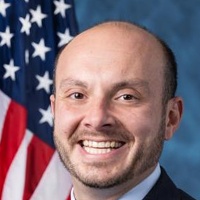
Andrew Garbarino
Representative
NY
Andrew Garbarino
Representative
NY
The National Fallen Firefighters Memorial Coin Act authorizes the Secretary of the Treasury to mint and issue special commemorative gold, silver, and clad coins honoring the National Fallen Firefighters Memorial. These coins will be sold to the public, with surcharges from the sales benefiting the National Fallen Firefighters Foundation. The Treasury must ensure that the production and issuance of these coins result in no net cost to the U.S. Government.
This Act simplifies disaster assistance by removing the requirement to check all potential funding sources when preventing duplicate benefit payments for the same loss.
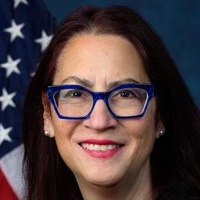
Laura Friedman
Representative
CA
Laura Friedman
Representative
CA
The Don't Penalize Victims Act simplifies the process for determining eligibility for federal disaster assistance. It removes language that required agencies to check every potential funding source to prevent duplication of benefits. This change streamlines aid distribution by focusing on preventing double payments for the same disaster loss.
This Act establishes a tax credit for distributors who carry programming from qualifying independent programmers and mandates a biennial FCC report on the landscape of independent programming distribution.
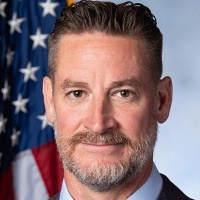
W. Steube
Representative
FL
W. Steube
Representative
FL
The Independent Programmers Tax Incentive Act establishes a new tax credit for distributors who carry programming from qualifying independent content creators. This legislation aims to encourage broader carriage of smaller programmers by offering financial incentives to distributors like cable and streaming services. Additionally, the bill mandates the FCC to submit biennial reports to Congress regarding the distribution landscape for these independent programmers.