Legislative Activity
Track Sarah's sponsored bills, co-sponsored legislation, and voting record
The RAIL Act enhances national rail safety by mandating stricter inspection standards, increasing civil penalties for violations, requiring improved defect detection technology, and establishing minimum crew size requirements for freight trains.
Emilia Sykes
Representative
OH
Emilia Sykes
Representative
OH
The Reducing Accidents In Locomotives (RAIL) Act aims to enhance national rail safety by mandating stricter inspection protocols, upgrading defect detection technology, and establishing minimum two-person crew requirements for freight trains. The bill also increases civil penalties for safety violations, mandates the phase-out of older, less-safe tank cars, and expands federal funding for hazardous materials training for first responders.
The NO BAN Act prohibits religious discrimination in immigration and establishes stricter oversight and evidentiary requirements for the President’s authority to suspend or restrict entry into the United States.
Judy Chu
Representative
CA
Judy Chu
Representative
CA
The NO BAN Act prohibits discrimination in immigration based on religion, race, sex, nationality, or place of birth. It also places strict limitations on the President’s authority to suspend or restrict entry into the United States, requiring evidence-based justification, congressional oversight, and public reporting. These measures ensure that any future immigration restrictions are narrowly tailored and subject to judicial review.
This bill provides a 6.62 percent Medicare payment increase for physicians and practitioners from April through December 2025 to help stabilize medical practices.
Gregory Murphy
Representative
NC
Gregory Murphy
Representative
NC
The Medicare Patient Access and Practice Stabilization Act of 2025 aims to support healthcare providers by extending Medicare payment adjustments through the end of 2025. Specifically, the bill provides a 6.62 percent payment increase for services rendered between April 1, 2025, and December 31, 2025, to help practitioners adjust to evolving Medicare payment policies.
The Keep Our PACT Act mandates long-term federal funding for Title I schools and special education services to ensure consistent, reliable support for students across the United States.
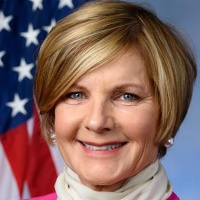
Susie Lee
Representative
NV
Susie Lee
Representative
NV
The Keep Our PACT Act ensures reliable, long-term federal investment in public education by establishing mandatory funding for Title I grants for low-income schools and special education services under the Individuals with Disabilities Education Act (IDEA). By transitioning these programs to mandatory spending through 2035, the bill guarantees that the federal government meets its commitment to support students and school districts without relying on annual appropriations.
The Federal Firefighters Families First Act aims to improve pay equity, cap the regular workweek at 60 hours, and include scheduled overtime in retirement benefit calculations for federal firefighters.

Gerald Connolly
Representative
VA
Gerald Connolly
Representative
VA
The Federal Firefighters Families First Act aims to improve pay equity, recruitment, and retention for federal firefighters by modernizing pay computation and establishing a maximum 60-hour regular workweek. Additionally, the bill ensures that regularly scheduled overtime is included in the calculation of federal retirement annuities. These measures seek to align federal firefighter compensation more closely with municipal standards and provide greater financial security for their families.
This bill expresses the House of Representatives' desire to keep the United States Postal Service (USPS) as an independent entity within the Federal Government, protecting it from privatization. It emphasizes the USPS's importance to the mailing industry, its role in connecting communities, and the potential negative impacts of privatization on prices, services, and infrastructure.
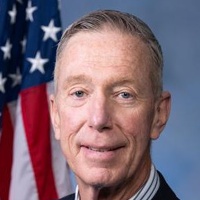
Stephen Lynch
Representative
MA
Stephen Lynch
Representative
MA
This bill expresses the House of Representatives' view that Congress should act to maintain the United States Postal Service (USPS) as an independent entity within the Federal Government. It emphasizes the USPS's role as a self-sustaining service vital to the economy and national connectivity. The resolution discourages privatization, citing concerns about increased costs, reduced services, and damage to critical infrastructure.
Expresses the House of Representatives' disapproval of the President's decision to withdraw the United States from the Paris Agreement, urging the President to reverse his decision and Congress to prioritize climate change leadership.
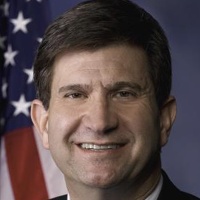
Bradley Schneider
Representative
IL
Bradley Schneider
Representative
IL
This bill expresses the House of Representatives' disapproval of the President's decision to withdraw the United States from the Paris Agreement, recognizing climate change as a threat and highlighting the increasing costs of extreme weather events. It commends entities supporting the Agreement, urges the President to reconsider, and encourages Congress to prioritize U.S. leadership on climate change.
The 911 SAVES Act mandates the reclassification of public safety telecommunicators as "Protective Service Occupations" within the federal Standard Occupational Classification system to accurately reflect their critical role in emergency response.
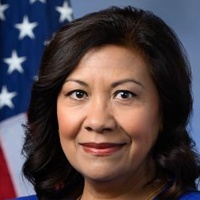
Norma Torres
Representative
CA
Norma Torres
Representative
CA
The 911 SAVES Act mandates that the Office of Management and Budget reclassify public safety telecommunicators as "Protective Service Occupations" within the federal Standard Occupational Classification system. This legislation recognizes the critical, high-stress, and lifesaving nature of 911 dispatchers, correcting their current misclassification to better reflect their essential role in emergency response.
The Child Care Workforce and Facilities Act of 2025 authorizes competitive grants to states and tribal entities to expand the child care workforce and improve facilities in underserved "child care deserts."
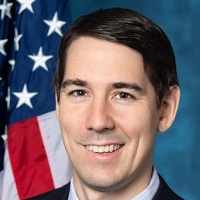
Josh Harder
Representative
CA
Josh Harder
Representative
CA
The Child Care Workforce and Facilities Act of 2025 authorizes $100 million in competitive grants to States and Tribal entities to increase access to quality child care in underserved "child care deserts." These funds support projects aimed at expanding the child care workforce through education and credentialing, as well as the construction, renovation, or expansion of child care facilities. The initiative seeks to improve child care affordability, availability, and provider retention while supplementing existing federal and state resources.
The BRAVE Act mandates the Department of Veterans Affairs to establish a mental health outreach system that provides targeted resources and information to veterans who have experienced traumatic or highly stressful events.

Robert Wittman
Representative
VA
Robert Wittman
Representative
VA
The BRAVE Act mandates that the Department of Veterans Affairs establish a specialized mental health outreach system for veterans who have experienced traumatic or highly stressful events. By allowing veterans to opt in for targeted resources, the program aims to improve access to mental health care in coordination with Department of Defense transition services. The VA is required to implement this system within two years of the bill's enactment.
The Saving the Civil Service Act protects the merit-based federal workforce by restricting the ability of agencies to reclassify competitive service positions into the excepted service.
Gerald Connolly
Representative
VA
Gerald Connolly
Representative
VA
The Saving the Civil Service Act protects the merit-based federal workforce by restricting the ability of agencies to reclassify competitive service positions into the excepted service. The bill establishes strict oversight, limits the number of positions that can be transferred, and mandates employee consent for such reclassifications. These measures ensure that federal staffing remains professional and protected from arbitrary political interference.
The FAIR Act mandates a 3.3 percent basic pay increase and a 1 percent locality pay adjustment for federal civilian employees in 2026.
Gerald Connolly
Representative
VA
Gerald Connolly
Representative
VA
The FAIR Act (Federal Adjustment of Income Rates Act) proposes a 2026 pay adjustment for federal civilian employees. This legislation mandates a 3.3 percent increase in basic pay for both statutory and prevailing rate employees, alongside a 1 percent increase in locality pay.
This Act directs the Secretary of the Treasury to mint commemorative coins in 2028 to honor the diverse women who served on the Home Front during World War II, with proceeds supporting the Rosie the Riveter WWII Home Front National Historical Park.

John Garamendi
Representative
CA
John Garamendi
Representative
CA
The Rosie the Riveter Commemorative Coin Act directs the Secretary of the Treasury to mint and issue a series of commemorative coins in 2028 to honor the diverse women who served on the Home Front during World War II. Proceeds from the sale of these coins will support the Rosie the Riveter Trust in its efforts to maintain the Rosie the Riveter/WWII Home Front National Historical Park and fund educational programs. This initiative ensures the legacy of these essential workers is preserved and recognized through a national numismatic program.
This bill prohibits the Department of Education from using appropriated funds to reorganize, decentralize, or reduce its current staffing and operational structure.
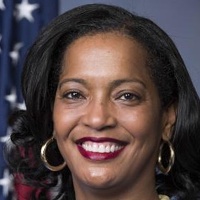
Jahana Hayes
Representative
CT
Jahana Hayes
Representative
CT
The Department of Education Protection Act prohibits the Department of Education from using federal funds to reorganize, decentralize, or reduce its staffing and operations. This legislation mandates that the Department must maintain the structure, authority, and functions that were in place as of January 1, 2025.
The TRUST in Congress Act requires Members of Congress, their spouses, and their dependent children to place certain investment assets into qualified blind trusts to prevent conflicts of interest.
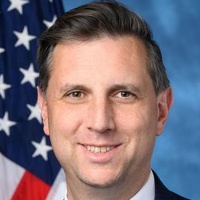
Seth Magaziner
Representative
RI
Seth Magaziner
Representative
RI
The TRUST in Congress Act requires Members of Congress, their spouses, and their dependent children to place covered financial investments into qualified blind trusts to prevent conflicts of interest. The bill establishes strict deadlines for asset transfers and mandates public certification of compliance. These measures ensure that lawmakers cannot influence or benefit from their personal investments while serving in office.
This bill establishes a federal grant program and dedicated emergency funds to support the rescue, rehabilitation, and rapid response efforts for stranded sea turtles.
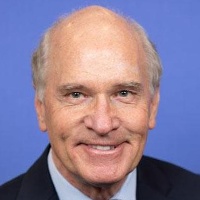
William Keating
Representative
MA
William Keating
Representative
MA
The Sea Turtle Rescue Assistance and Rehabilitation Act of 2025 establishes a dedicated grant program and emergency fund to support the rescue and rehabilitation of stranded sea turtles. By amending the Marine Mammal Protection Act, this legislation provides critical resources and standardized support for organizations dedicated to sea turtle conservation. The act ensures that both marine mammals and sea turtles have the necessary financial backing to respond effectively to stranding events.
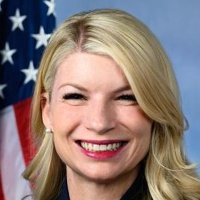
Allows Members of the House of Representatives, Delegates, and the Resident Commissioner to designate a proxy to vote on their behalf in the House, in committee, and in the Committee of the Whole for a period of 12 weeks following the birth of a child or in the event of a pregnancy-related serious medical condition.
Brittany Pettersen
Representative
CO
Brittany Pettersen
Representative
CO
The "Proxy Voting for New Parents Resolution" allows Members of the House, Delegates, and the Resident Commissioner who have recently given birth or whose spouse has given birth to designate another Member to vote on their behalf in the House, in committee, and in the Committee of the Whole for a period of 12 weeks. This proxy voting authority can begin before the birth if a doctor advises that the pregnancy presents a serious medical condition or that she is unable to travel safely. The resolution outlines specific procedures for designating, changing, and revoking proxy designations, ensuring transparency and adherence to instructions. Members whose votes are cast by proxy will not be counted for quorum purposes.
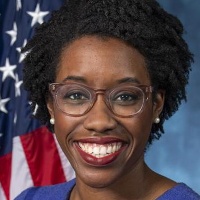
The Health Care Affordability Act of 2025 expands access to premium tax credits by removing income eligibility caps and implementing a new sliding-scale contribution formula.
Lauren Underwood
Representative
IL
Lauren Underwood
Representative
IL
The Health Care Affordability Act of 2025 expands access to health insurance by removing the 400% federal poverty level income cap for premium tax credits. It also introduces a new sliding-scale contribution formula to ensure that insurance costs remain affordable for households across all income levels. These changes are set to take effect for taxable years beginning after December 31, 2025.
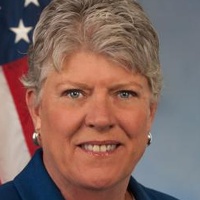
The "Equal Access to Contraception for Veterans Act" ensures veterans do not overpay for contraception, aligning their costs with what the Secretary pays or providing it without cost-sharing if required by the Public Health Service Act.
Julia Brownley
Representative
CA
Julia Brownley
Representative
CA
The Equal Access to Contraception for Veterans Act ensures veterans do not pay more for contraception than the Secretary of Veterans Affairs pays for the medication. Additionally, it eliminates copayments for contraceptive items if health insurance coverage is required without cost-sharing under the Public Health Service Act.
The Washington, D.C. Admission Act provides for the admission of the State of Washington, Douglass Commonwealth into the Union while establishing a reduced federal Capital district and outlining the legal framework for the transition.

Eleanor Norton
Representative
DC
Eleanor Norton
Representative
DC
The Washington, D.C. Admission Act proposes admitting the State of Washington, Douglass Commonwealth into the Union, while maintaining a reduced federal district to serve as the nation’s capital. The bill establishes a comprehensive framework for the transition, including the election of congressional representatives, the transfer of local government authority, and the gradual shift of federal responsibilities to the new state. This legislation aims to grant D.C. residents full voting representation in Congress while ensuring the continued security and operation of the federal seat of government.